Software
Houzz Logo Print
bettaponic

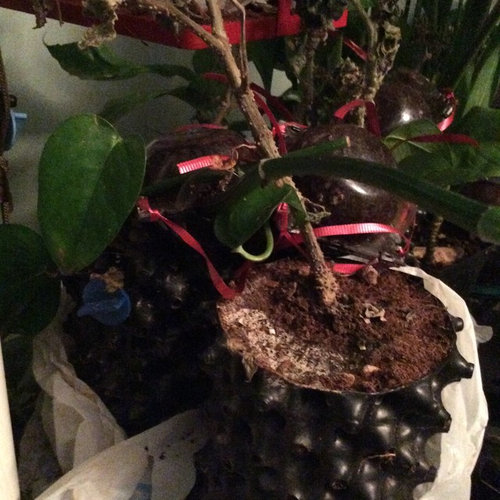
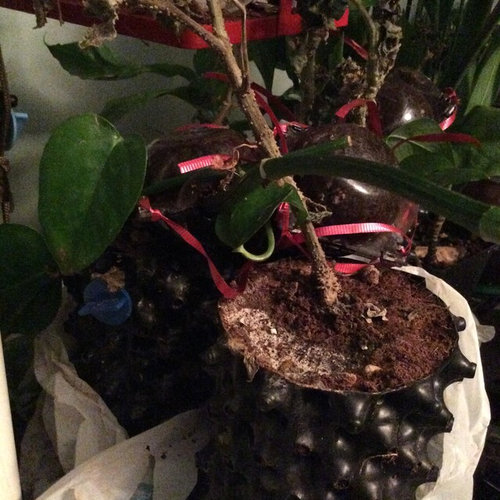
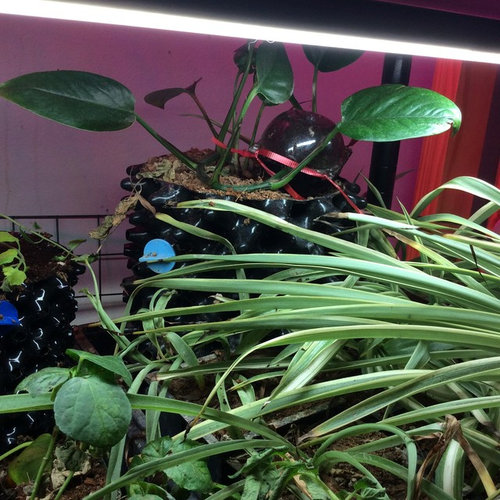
How long should these take to root?

These are Jade Pothos that some have been in for two weeks and others for a week. This is Coco Coir with Grow stone. I used clones rooting hormone and jellyfish cutting inoculate for them. I am watering them when they dry off. They are in fifty percent humidity and about 80 degrees Fahrenheit. I am using a seedling fertilizer for them. How long should it take them to root?

Comments (16)

  • 9 years ago

    6-8 weeks. Even slower in the winter time.

  • 9 years ago

    Thank you, I am looking forward to more Pothos.

  • 9 years ago
    last modified: 9 years ago

    I'm unfamiliar w/ any of the products you cite; don't why any of that would be necessary.

    I root Pothos in water & transfer to mix when the roots are an inch long. Then I just pinch back the vines from time to time, placing the cuttings directly into the parent pot. They'll root readily if given a bit of time.

    I'm guessing TLBeans' suggestion is probably right. Btwn a month or 2. Maybe 3 weeks in summer?

    Fast drainage is required; serious neglect is recommended, Pothos like that, being ignored except for occasional water.

  • 9 years ago

    Most of my Pothos are in an aquarium, but I have found faster growth in Coco Coir. I am trying to get away from water rooting. I think I will be able to get past that growth stop I get in water. My grow room has summer conditions.

  • 9 years ago

    I have found coco peat to be superior for rooting pothos. But they are also super easy to root in water first. Whe I choose to skip the water, I go for straight coco peat or a mix of coco peat and pumice. Plants will root in no time.

  • 9 years ago

    If you root in water, like Karen says, just transfer them once the root is about a half inch long. I don't know why yours stop growing in water though. I have containers of pothos vines in water that have grown as full as a regular houseplant.

  • 9 years ago
    last modified: 9 years ago

    I'm suspicious of that whitish goo on top of your mix (6-9 position as if a clock). would make me want to get rid of all that mix.

    Just my two cents, but all those additives seem like overkill. Especially rooting hormone, w/ plants which are known to root so readily under virtually any conditions. Perplexing, seems like gardening on steroids.

  • 9 years ago

    My problem after transplanting Pothos, is that after potting them is that they stop growing for a month or so. Then they start growing at their fast speed. I am a big fan of inoculating roots when young. I have read that using rooting hormone encourages rooting faster. The white stuff I am pretty sure is just my natural rooting hormone I spilled. I am getting rid of that pot soon. That is a Tomato that neared the end of its lifespan.

  • 9 years ago

    So you begrudge them a month of adjusting time? What's the big hurry, are you entering a competition? Where's the fire? So if you changed cities &/or countries & lived somewhere entirely different than before, you wouldn't allow yourself any time to adjust? Hum ...

    Inoculating them against what? from what? Inoculating is what one does w/ vaccines, so not sure what you're meaning to say. Like inoculating against disease?

    A reminder, don't believe everything you read; that's probably just marketing by makers of RH.

    Many folks who use rooting hormone actually do so not for the speed of rooting hormone, but for the anti-fungal agent RH often contains. That said, same anti-fungal properties can be achieved w/ household Cinnamon, way cheaper too!

  • 9 years ago

    I am a big believer in a healthy rhizosphere. I just want big healthy plants. I also want to minimize transplant shock. A healthy rhizospere increases growth rate and increases disease resistance.

  • 9 years ago

    Transplant shock on Pothos? Really? OK, if you think so.

    So does that mean that unlike you, we just want small sickly plants?

    Disease resistance to what? Do you have hundreds of plants? Was a time I had 200+. But I'm not in Petrie dish, nor greenhouse, just apartment; never had any of those issues. Good luck.

  • 9 years ago
    last modified: 9 years ago

    I like having a healhy although rhizosphere. Most plants have a healthy rhizosphere in the wild. The rhizosphere encourages healthy roots. I like having large vines. I am not saying you are a Petri dish, but all the fungi and bacteria are not all in the air. I use a medium that does not have all the same microbes.

  • 9 years ago

    I like amending all of my fresh repots with Jobe's Organic Fast Start Granular Fertilizer. It adds many beneficial microbes and fungi to the soil that helps my plants get off to a great start. Many gardeners hear the words fungus or bacteria and freak out; using all kinds of fungicides or whatever-cides to treat their plants that most likely didn't need treating to begin with. I'm not saying that using such products is necessarily bad, but they are most definitely getting used much more than they need to be. These products kill off harmful fungi, but they also kill off beneficial ones, too. As for me, I never use any kinds of fungicides, herbicides, or pesticides. Ever. Because I never need them. When you let your plants form those symbiotic relationships with those beneficial microbes, then there's no need for such drastic measures.

    I just pruned my 'Manjula' pothos today. I didn't give it any special treatment. Instead of rooting those cuttings first, I just jabbed a hole in the soil with an old screwdriver and then inserted the cuttings; making sure to cover at least one node. After that, the plant takes care of the rest.

  • 9 years ago
    last modified: 9 years ago

    I have bad luck with rooting cuttings so I switched to air Layering. I have gotten fully ready Tomatoes in two weeks. I don't use herbicides. I have insectial soap. I also have copper sulfate. I stopped spraying. I now use foliar feeding. I found that aspirin helps boost immune system. Combined with rhizosphere relationship should be enough. I do sometimes have spider mite problem then spray. I use hydro supplements. I also feed the soil with carbs, sugars, and carbon. The carbon helps the mycorrhizae. The sugar and carbs helps cycle nutrients and have better fruiting for fruiting plants.

  • 9 years ago

    I made sure to cover a node when I air layered them.

Sponsored
Hope Restoration & General Contracting
Average rating: 4.7 out of 5 stars35 Reviews
Columbus Design-Build, Kitchen & Bath Remodeling, Historic Renovations