

2017 Spring Cool Season Grow List
Here's the cool-season varieties I'm growing this year:
BEETS:
Gourmet Blend (Botanical Interests, varieties are Bull's Blood, Chioggia, Golden)
McGregor's Favorite
BROCCOLI:
Packman
Purple Peacock
BRUSSELS SPROUTS:
Jade Crpss
Red Rubine
CABBAGE:
Copenhagen Early Market
Early Golden Acre
Pixie Baby Cabbage
CARROTS:
Amarillo
Calliope Blend (Bontanical Interests, 5-color mix)
Cosmic Purple
Purple Sun
Scarlet Nantes
Tendersweet
CAULIFLOWER:
Chef's Choice Blend (Botanical Interests, varieties are Snowball Y, Green Macerata and Purple of Sicily)
CRESS:
Belle Isle Upland Cress
Curly Cress Garden Cress
KALE:
Dazzling Blue
Groninger Blue
Redbor
Red Russian
Scarlet
Smooth German
Vates Dwarf Blue Curled
LETTUCE:
Butterhead Types:
Crawford
Gulley's Favorite
Manoa
Red-Eared Butterheart
Iceberg Types:
Grand Rapids
Great Lakes
Hanson Improved
Red Iceberg
Romaine:
Ruby Glow
Summercrisp Types:
Cherokee
Crispino
Jester
Mottistone
Red Ball Jets
MUSTARD GREENS:
Must Have Mustards (a mix from Botanical Interests)
Purple Rapa Pop Mix
ONIONS:
Short Day:
Early White
Texas 1015Y Supersweet
Red Creole
Intermediate Day:
Candy
Red Candy Apple
Super Star
Long Day:
Copra
Highlander
Red River
PEAS:
Cascadia
Magnolia Blossom
Sugar Snap
Super Snappy
Super Sugar Snap
POTATOES:
Kennebec
Norkotah
Red Pontiac
Yukon Gold
RADISH:
Easter Egg Blend
Rat-tailed Radish (grown for pods and as a companion plant for squash)
Sparkler
RUTABAGA:
American Purple Top
Joan
SPINACH:
Bloomsdale Longstanding
Monstrueux of Viroflay
TURNIP:
Golden Globe
There, I don't think I left anything out. Well, I didn't include cool-season herbs and cat grass. They may get their own separate list. Or not.
Dawn
Comments (30)
 9 years ago
Wow Dawn that is an impressive list! NO GARLIC? Isn't garlic the ultimate cool season crop?
If I grew half that much cool season stuff I wouldn't have room for any warm season veggies when the time rolled around to plant!
Here is my list for this spring:
ASPARAGUS:
Mary Washington
Jersey Knight
Jersey Supreme
Purple Passion
Pacific Purple
BROCCOLI:
Early Dividend
Bay Meadows
Aspabroc
CAULIFLOWER:
Cheddar
PEAS:
Mammoth Melting Snow Peas
ONIONS:
Candy
Red Candy Apple
Superstar
Red Marble Cipollini
Pontiac
Evergreen Hardy White Bunching
POTATOES:
German Butterball
Austrian Crescent fingerling
French Fingerling
Yukon Gold
GARLIC:
German White
Music
Estonia Red
Metechi
Chesnok Red
Siberian
Spanish Roja
Russian Red
Silverskin
Persian Star
Purple Glazer
LEEKS:
King Richard
Bandit
LETTUCE:
Dragoon
Breen
Jericho
Sparx
RADISH:
Easter Egg Blend
French Breakfast
Cherry Bell
No Brussels Sprouts or carrots until fall for me this year.
Related Professionals
Muskogee Landscape Architects & Landscape Designers · South Sioux City Landscape Architects & Landscape Designers · Toledo Landscape Architects & Landscape Designers · Napa Landscape Architects & Landscape Designers · Colorado Springs Landscape Architects & Landscape Designers · Lagrange Landscape Architects & Landscape Designers · Murfreesboro Landscape Contractors · Olean Landscape Contractors · Providence Landscape Contractors · Oshkosh Landscape Contractors · Olympia Landscape Contractors · Toronto Landscape Contractors · Norfolk Accessory Dwelling Units · Duluth Accessory Dwelling Units · Longview Accessory Dwelling UnitsOkiedawn OK Zone 7
Original Author9 years agoAs much as I can squeeze in. I have two large fenced garden spots, one with well-amended clay and the other with barely amended sandy-silty vole-infested soil. Most of the cool-season crops will go in the front garden this Spring, with most of the warm season stuff in the back garden.
Many cool season crops don't need that much space. I can cram tons of carrots, beets, turnips, rutabagas, radishes, etc. into a fairly small space using Square Foot Gardening/John Jeavons' Biointensive type spacing. It is the same with lettuce. Except for Tim's precious iceberg (honestly, it isn't worth growing in my mind, but he loves the crunch of it), lettuce likewise can be sowed closely and most of it can be harvested using the cut-and-come-again method.
I grow most of the other greens up at the west end of the garden, which the last 2 or 3 years has rapidly become too shady for almost all warm-season crops, where the shade of the adjacent pecan tree (a huge monster) keeps them cool and shaded in the late Spring/early Summer months and slows down their urge to bolt. I plant the kale, spinach, lettuce, collards (oops, I don't think I listed my collar green varieties) and mustards thickly so that when you look at them, all you see is a thick carpet of plants with no soil visible. It keeps the soil cool and keeps it moist. The less sun that hits the soil, the fewer weeds. Potatoes get their own raised bed and so do onions.
The brassica/crucifer family of crops do take up a lot of space, but they finish up by May and can be replaced then with warm season crops like melons, okra, southern peas and watermelons. I only grow brassicas/crucifers under insect netting or row cover now in order to keep the caterpillars off of them. Before that, I sometimes interplanted them with warm season crops and let the warm season crops take over and fill in the space as the cool season crops came in, but I haven't done that since I started using the insect netting/row covers more consistently.
The peas are trellised, except for Cascadia which is a short variety, so I can run the trellis along the north side of a raised bed and plant the peas on it, filling in the rest of the bed with any other cool-season crop of my choosing.
I also grow some in containers. Both lettuce and kale grow superbly well in containers, freeing up more room in the ground for other things. Sometimes I grow the lettuce as a ground cover beneath/between/around the tomatoes, and sometimes I grow the carrots the same way. Some things, like curly cress and garden cress really don't use much space.
Being so far south, the heat often arrives insanely early down here in zone 7b, so I plant as many cool-season crops as I can as early as I can in order to get a harvest as early as possible and in order to, hopefully, beat the heat. The worst years are those with a long, cool Spring and fairly slow growth of cool-season plants. That drives me stark, raving mad because it means the cool-season plants will not hurry up and get out of my way so I can plant the warm season plants. In a year like that, I've been known to harvest a lot of the cool-season crops as baby crops, freeing up more space for warm season crops, or I'll go through a bed and harvest every other cool-season plant and squeeze in summer plants in between the cool-season ones. By the time the warm-season plants are large enough to start hogging the space, the cool-season ones are about done for the year anyway.
We had a run of really early heat in the early 2000s, where the weathermen kept droning on every year about it being the warmest winter here ever, and I gave up growing almost all cool-season veggies in the spring for a few years (except for onions and taters) because it was getting too hot to early. Weather, though still warm in winter, has been more normal the last few years and we have had actual rainfall coming from the skies, so every year it seems like I grow more and more cool-season crops every Spring. I'll keep doing it until the heat starts arriving too early again and, when that happens, then I'll switch the majority of the cool-season crops to fall.
In order for cool-season crops to do well down here, they have to be planted early and then the weather must be perfectly cooperative. I'm gambling that we'll have cooperative weather this year. If we don't, like if we stay far too dry or get too hot too early, I can be pretty ruthless about yanking out cool-season stuff and moving on to warm-season stuff.
- 9 years ago
Dawn, you mentioned that you sometimes grow carrots with your tomatoes. It reminds me of that book, "Carrots Love Tomatoes", which I need to get. Do you follow Jeavons' spacing rules for that? I was trying to figure out just how close I could try to interplant them. I've grown green onions up close and around them when I ran out of space, and there never seemed to be a problem, but then green onions are shallow.
Okiedawn OK Zone 7
Original Author9 years agoLone Jack, I planted garlic in fall so it makes the fall list, not the spring list. I mostly plant it out back in the sandy soil and forget about it until harvest time. It is the one thing the voles won't eat, and it seems to protect the fig tree roots from the voles as well. I think I have German Purple, Inchelium Red, Purple Glazer and Silverskin, but I've been saving cloves and replanting each fall for so long that I may have forgotten what some of the varieties are.
I never think to list Asparagus either, as it sprouts and grows on its own with no help from me. I have Jersey Knight and Purple Passion.
Our cool-season can be shockingly short so I cram in all the cool-season plants I can as early as I can and then hope the weather doesn't suddently turn summery very early and stay that way. In some of our worst springs here, we have started hitting the 90s in April, and in one horrible year it happened in February, so cool-season plantings can be a big gamble.
I may add some fingerling potatoes. I'm waiting to see what ones arrive in the stores here. They may be in stores now, but I haven't been to a store since last weekend. Usually TSC has 4-6 varieties, so I'm just waiting to see.
Oh, and I always forget to list the rhubarb. I have Victoria rhubarb, grown in containers, which is the only way to keep the plants alive in our summer heat.
I kinda want to grow Lancelot leeks, but haven't yet figured out where to put them this year. Maybe I'll add a raised bed for the leeks. I need to decide soon.
We're on acreage, so gardening space is unlimited within these constraints: it must be fenced to keep the wildlife out and, for root crops, raised beds lined with hardware cloth are the only way to get a guaranteed crop. Some years the voles don't touch the potatoes, but some years they devour them. With about 10 wooded acres on our place and wooded acreage on all our neighbors' places, pine voles are plentiful to the point of being ridiculous. So are gophers. And moles, though the cats wipe out the moles in about 1 day after they appear so the moles are more of an annoyance just because they create tunnels the other rodents then use. It really sucks to have to deal with all of them. At least we don't have groundhogs and chipmunks. Root crops (and anything with roots they like to eat, which includes dahlias and even purslane and portulaca) are never a guaranteed harvest thanks to the voles. Normally, the voles are the worst after autumns with big mast crops, and we've had two years in a row with huge mast crops, so I'm expecting a billion voles this year. I think the voles must feed on the acorns all winter and then reproduce like mad.
I also grow in tons of containers. Some years I have 60 or more, but even in a year when I don't have a lot of containers, I have at least 30 large ones.
If we get too hot too early for the cool-season crops to produce well, I just yank them out and move on to warm-season stuff. Our weather is so incredibly variable that you never really know what to expect in terms of how long the cool season will last so I just try to go with the flow and do the best I can with whatever weather we get.
 9 years ago
My list (* indicates new to me):
Beets: Bull's Blood, Crosby’s Egyptian Beet* (impulse buy, early)
Broccoli: Blue Wind* (50 DTM), Happy Rich* (57 DTM), Piracicaba (56 DTM) if I see Packman transplants I may buy some. I have several other varieties on hand, so I may start others.
I will buy Rubine Brussels sprouts if I find them.
Cabbage: Golden Acre (65 DTM), Cour Di Bue Cabbage (DTM 70), maybe All Seasons (90 DTM), Nero Di Toscana Cabbage (this is basically dinosaur kale, but Baker Creek classifies it as cabbage) (60 DTM)
Carrot: Coral carrot* (55DTM), Coreless Amsterdam* (57 DTM), Napoli (58 DTM), Parisian (round)* (55 DTM), Pusa Asita Black Carrot and Pusa Rudhira Red Carrot (these have long DTMs, they didn't survive chickens last spring and didn't have enough time to mature in fall, so I've never gotten to taste them.)
Celery: Kintsai, Light Green Chinese Celery (leaf celery)
Collards: Yellow Cabbage Collard, Top Bunch F1, Georgia collards
Greens:
Claytonia
Cress, Wrinkled Crinkled Crumpled
Flowering brassica, Yu Choy Sum
Kailaan Open Pollinated (Asian kale)*
komatsuna, Summer fest hybrid*
Mache, Dutch Vit* and Mache, Medalian
mizuna
Orach, Aurora
Pac Choi: Purple Magic, Pac Choi, Red Violet Hybrid, Yokatta-Na F1
salad burnet (I think the chickens have killed my plants. Perennial.)
Sorrel
Tatsoi, Red
Kale: Black Magic*, Arkansas Purple Kale, Tronchuda* (heat tolerant?), Red Russian
Lettuce:
Leaf: Black seeded Simpson, Bronze Beauty, Chadwick's Rodan (my favorite), Cracoviensis*, Drunken Woman*, Midnight Ruffles*
Summer Crisp: Carioka*, Cherokee*, Nevada*
Parsnips: Cobham Improved Marrow*, Turga*
Parsley Root: Hamburg Rooted Parsley*
Peas:
Shelling: Little Marvel pea, Perfection 326 (66 days), tall telephone, Tom Thumb
Edible pod: golden sweet snow, Oregon Sugar Pod II and whateve else is left from last year.
Potatoes: Probably- Yukon Gold, Red Pontiac, Kennebec
Rutabaga: Gilfeather*
Salsify: Mammoth Sandwich Island, Purple Salsify*
Spinach: Baby Leaf Hybrid, Bloomsdale Longstanding, Dash hybrid*, Okame Spinach*
Swiss Chard: Argentata Chard, Barese* (Dwarf, early), rainbow Swiss chard mix, Ruby Red, White Ribbed
Turnips: Tokyo Cross Hybrid Turnip(35 DTM), Tokyo Market* (25-30 DTM)
- 9 years agolast modified: 9 years ago
Dawn - For whatever reason I don't have voles on my wooded property but I do have plenty of moles. Maybe the winters are too cold for voles? My cat doesn't seem to want to hunt moles although she is rough on the mice, bunnies, and skinks. Every time I see a skink it is always missing it's tail! I 'try' to control the moles by a combination of 'isolate and spear' and the rodent smoke bombs. Last year the moles undermined some of my garlic in the fall with their tunneling and the cloves dropped down too far to sprout and reach the surface so I try to at least keep them away from my gardens.
I love the fingerling potatoes! I don't believe I have seen any fingerling seed potatoes at TSC here but I'll have to look closer this year. I have a good old timey garden supply store near my work that carries a pretty good variety of seed potatoes and Dixondale onions as well as a huge variety of seeds and starting supplies.
My 5+ acre property is also mostly wooded except for a little over 1 acre closest to the road which is where 2/3 of my garden is. I grow all in raised beds. I'll post a picture below. This is the first year in awhile that I haven't put any new beds in over the winter (so far anyway!) but I do have plenty of room to add more. In the picture there are a total of 16 raised beds and there are 4 more small ones to the left of the driveway out of the picture where I grow my Horseradish and vining/sprawling crops like melons and winter squash.
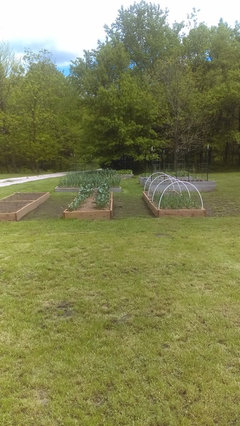 Garden pictures · More Info
  9 years ago
very nice garden, so tidy !
I am glad to see all these lists and if I could type fast I would put mine up but I cant so maybe later. Still working on my crop succession plant schedule. I use that term lightly since I never know exactly what when with our weather.
Okiedawn OK Zone 7
Original Author9 years agoMary, The spacing I use depends on the carrot variety (small or skinny ones tolerate closer spacing) and also on whether they are in a dedicated carrot bed or growing alongside tomatoes and lettuce. I am not rigid and roped into one certain plant spacing for anything. I even vary it depending on how good the soil is in any given bed.
Usually if the carrots are in a dedicated bed, I thin them to 12 to 16 carrots per square foot, depending on the variety and the soil. If they are in a long row running along the south side of a tomato bed (like an edging plant), I grow either single or double rows with the carrots thinned to 2 or 3" within the row and the rows about 8" apart.
Amy, Nice list. Packman transplants are hard to find now. Last year I saw some at an independent garden center but on the racks of Bonnie Plants in all the big box stores and many local feed stores, their replacement for Packman last year was Lieutenant (which I bought and tried since Tim was then a police lieutenant, and it grew and produced just fine). I was surprised---I had expected for this part of the country that BP would sub Blue Wind for Packman, but that's not what they did.
Lone Jack, Nice garden! Deer aren't a problem? We have so many deer here and they will eat every single plant in my garden down to the ground in just a couple of nights if they get past the fence....and that includes 5' tall sunflower plants, pumpkins plants (who'd think they'd eat those coarse leaves?), etc. My DH's best friend refers to my garden as "the prison garden" because it has an 8' tall fence. I don't care. As long as the fence keeps the deer out, that's all that matters. Sometimes the deer get so frustrated that they cannot get into the garden that they hurl themselves against the fence, sometimes while I am in the garden. Others stand 10-20' away and stomp their feet and blow air out through their nostrils to try to scare me out of the garden. Before the deer found us, I had 6 or 7 wonderful years of growing everything and anything I wanted without having to have a tall fence or even think about the deer. Those days are long gone now.
I blame a lot of our deer and other wildlife issues on the Red River, which sits to our west (not very far), east (a bit farther away), and south (much farther away). All the wildlife that inhabits the river bottom lands, including some Wildlife Management Area land, travel through our neighborhood a lot, especially in winter/early spring and most especially in drought years.
Our cats are hit and miss with all the wildlife. Our best mouser (and he goes after rats, voles, gophers, moles, etc.) is Pumpkin, who will be three years old this summer. He likes to toy with them and play with them but eventually kills them. Voles are his favorite. He keeps the front garden pretty clean and the back garden less so. The older cats mostly have retired and sleep in the sun while Pumpkin and his older brother, Tiny Baby (no longer Tiny and no longer a baby) bare the brunt of rodent work. They don't mess with snakes or lizards much, having learned encounters with venomous snakes are painful and sometimes deadly. (So, at least they have a little sense.) The big problem is we must have the cats inside well before dark to keep them from tangling with skunks, possums, coons, bobcats, coyotes, etc. That means that nighttime rodent control must be done by owls, coyotes, feral cats, bobcats, etc. and with literally thousands of acres of mixed woodland/grassland to roam, there's never enough predators to keep any given area rodent-free.
Wildlife here is so funny. Sometimes at night the coyotes sit right outside our bedroom window and howl, as if they know the dogs are sleeping there next to the bay window and will be annoyed by their closeness. At times, the deer have come and looked in our windows (we find their tracks right there at the window). At other times, mostly in drought, the deer that regularly pass through our place will stand in the driveway and stare at the back door as if willing me to come out and feed them. Sometimes Tim will come in from work and say "your buddies are hanging out in the driveway waiting to be fed". It is worst in the drought years when I'm not canning and putting stuff on the compost pile because the deer are always hungry and obviously aren't finding much on the compost pile. I never let my guard down and let myself think that I can let them get close to me physically though. A few years ago an elderly couple here who let the deer drink from their swimming pool came outside and the deer attacked them. Then the deer attacked the deputy who came to assist the people. He ended up having to shoot the deer as it tried to attack him. At one point, the deer got an antler stuck in the elderly man's belt and was dragging him down the driveway before the deputy arrived. That occurred after the elderly couple had retreated to the garage to avoid the deer, and that buck came into the garage after them. If I wasn't cautious enough around the deer before that happened, I've gone out of my way to be very careful around them ever since.
Kim, That's why I don't have a succession schedule. I just watch and wait, and when there's an opportunity to take out something that is finishing up, I remove it and then stick something else in that space. With the weather being so variable, I'd lose my mind if I was trying to adhere to any sort of schedule. Succession planting does sometimes push me to take out something earlier than I otherwise would, but it pays off because the next crop is sure to be productive too.
Dawn
- 9 years ago
Thanks for the compliments!! That picture was taken early in the season in May I think. It doesn't look so tidy later in the year when it turns into more like a jungle.
I don't have too much trouble with deer (I'm knocking on wood). They don't seem to bother the Asparagus, brassicas, potatoes, garlic, onions, peppers, or even the tomatoes. They did nibble on my carrot tops last fall but that was pretty late and it didn't seem to bother them.
The last time I grew sweet corn a few years ago it really seemed to draw the deer in and they chowed on the corn, beans, and tomatoes. So I stopped growing corn and haven't really had a problem since. I use repellant scents hung on PVC hoops to keep them away from the beans and cucumbers and that seems to work. Raccoons and Possums seem to like the ripe or not quite ripe melons which makes it challenging to protect them but I can usually manage to a least get our share.
We do also have a lot of Coyotes which might help to keep the deer numbers down and I harvest a couple most years. There is a 100 acre field of corn or soy beans just to the east of my property which might help to keep them fat and happy part of the year. On the other side of that corn field is a 320 acre botanical garden that also has a substantial harvest garden so I guess they might have plenty to eat elsewhere. Still knocking on wood here!!
- 9 years ago
You and I and everyone here know that I will not be sticking to a strict schedule LOL. However since I am not very good at this Yet I have to write things down or I forget. Like last year I mixed all my carrots together....sounds fine except some got done about 20 days earlier. This year all varieties get planted separate so that will free up a block of space to stick something else in. And my onions. I ordered the mix and planted them mixed. This year separate. I hope it helps as much as I think it will to open up a whole section to replant. And I have to write down what to have ready for where and when. I want to make a real big market this year so no slacking. Study plan get it done. And pray for rain.
Okiedawn OK Zone 7
Original Author9 years agoLone Jack, Many of us are fond of the jungle look. I find jungle gardens to be immensely productive, and the big jungle helps shade out the weeds.
We try to tolerate wildlife (hence the 8' fence) but there have been times when coons, in particular, have run into a piece of flying lead, freeing their spirits to go on to the happy corn hunting ground in heaven or wherever coons go when they die. Honestly, though, we shot them more because they were preying on our chickens than on the garden. In a perfect world we could exist with all wildlife, but we don't live in a perfect world and at our house we don't tolerate venomous snakes or skunks either, both for rather obvious reasons.
A couple of years ago there was a very bad outbreak of canine distemper among the coon population on the Texas side of the river. I never heard that the disease traveled across the river (which often is so low in drought, and we were in drought then, that you can walk across the river bed from Texas to Oklahoma and never get your feet wet), but I think it must have. Ever since then, our coon population hasn't been 10% of what it was before. I have been immensely happy about that.
We have coyotes, but they run in cycles so one year is a great rabbit year and there's not that many coyotes and then the next year it seems like there's tons of coyotes and not many rabbits. A big game changer here is the huge population explosion of feral hogs. They are wreaking havoc on property along and close to the river bottom lands and it seems like they sort of run off/scare off a lot of the wildlife. I'm not sure yet if that is good or bad. However even in our worst coyote year, we still have tons and tons of deer.
We once had some farms near us as well as some pecan orchards, but most are gone now and most of that land has reverted more to native pasture land inhabited by a lot of wildlife and, sometimes, cattle. I am not sure if having the farms mostly gone is good or bad. Drought causes many more wildlife problems than we have in an average year, so the long drought here from 2011-2014 was miserable with wildlife. We tried to keep food and water out for as much of the wildlife as we could, but we couldn't feed them all. I feel like the repeated flooding of the Red River in 2015 and 2016, while very unfortunate for the folks who lost homes and other property to the river, was good overall because it seemed to send the wildlife elsewhere. It's been fairly quiet lately except for the coyotes. I like quiet.
Kim, I think your assessment of ways you can improve is spot on. I like to plant each variety in its own block precisely so I can fill that block with something else when one variety is done.
I'm just hoping and praying no errant crop dusters hit you and your neighbors with herbicides this year. Once in a lifetime is more than enough.
I hope you get rain when you need it and that you don't get it when you don't.
Do y'all ever notice how much we talk about the weather around here? We talk about it all the time, but we can't do a single thing about it. Well, we can hide from the tornadoes, but y'all know what I mean. Our plants are sitting ducks during the gardening season. I've had The Weather Channel on today on and off for background noise and there's been tornadoes in various places, including Mississippi. It seems awfully early for that!
Dawn
- 9 years ago
LoneJack, your garden is beautiful. I love it. It's all so neat and pretty.
Dawn, actually I was curious about how close you plant your carrots to your tomatoes. 8 inches, 10 inches?? I understand about the rows/spacing, but I didn't want to get them too close to the tomato plants where something was inhibited. I'd like to be able to squeeze some as close to the tomatoes as possible.
I couldn't help myself; I ordered the book, "Carrots Love Tomatoes". I've heard it is one of the best books for companion planting, and boy are my plants going to have companions this year.
Amy, I pulled up that spreadsheet from google. I couldn't tell you how many years it has been since I worked with Excel. I have MS Office software, but for some crazy reason it won't load on this new laptop. It won't take the serial number. I bought it probably 10-12 years ago, so maybe it just isn't compatible, but it wouldn't work on my last laptop either due to the serial number issue. I wouldn't use the MS Office software enough to justify buying it again.
- 9 years ago
Google has a suite that you can substitute for MS Office. I think the only thing it doesn't have is a database. The basics are pretty standard. There is also Open Office, an open source suite (also free) that can be downloaded. I have used that on our desk top. We got a new desktop in October and my son put MS Office on it, so I have to learn it all over again.
Okiedawn OK Zone 7
Original Author9 years agoI probably have planted some carrots within 10" of the tomatoes. You have to be careful about putting them too close to the tomato plants or the tomato plants will shade them out by the end of May, and sometimes sooner. I try to keep them on the south side of the tomatoes so that they get enough sun, but sometimes carrots just end up wherever the seed washed away to. Since my whole front garden slopes (sharply) lots of things end up downhill from where I originally sowed the seed.
I think you will love "Carrots Love Tomatoes" and, if you haven't read the companion book, "Roses Love Garlic", you need it too. Louise Riotte was one of my favorite garden writers. She lived in Ardmore and passed away the year before we built our home here. I think of her every time we drive past Riotte Plumbing because I assume it is owned by someone related to her.
I've read a lot of her other books. As far as I know, she wrote about a dozen books published under her own name, most on companion planting and/or old-timey gardening knowledge. She also ghost wrote other books, including some of Jerry Baker's. Among her books that I've read, in addition to the two listed above, are "Sleeping With A Sunflower", "Catfish Ponds and Lily Pads", "Astrological Gardening" and several of the little How To booklets published as a part of the Storey's Country Wisdom bulletins, like "Grow the Best Strawberries" and "Berries: Black & Rasp". Reading her books is like listening to an older family member who's been gardening forever and who is just trying to share with you all that he/she has learned over the decades.
- 9 years ago
Dawn, I had not heard of her other books, nor did I realize she was from Oklahoma. Oklahoma has had quite a few gardening experts when I stop to think about it. I'll have to look into her other books. Sometimes Stillwater Milling will carry those little small books; some are not much more than large pamphlets, but each one covers one particular subject. I like those.
 9 years ago
This was a fun thread to read!
LoneJack, your garden is so pretty. I'm sure it's even more beautiful when it's a jungle.
So...carrots with tomatoes, huh? Do you usually plant your carrots at the same time as your tomatoes? For some reason I though carrots had to be planted earlier--that summer is too hot for them. Or do the tomatoes shade the carrots enough?
Okiedawn OK Zone 7
Original Author9 years agoMary, I found a lot of her books at the Half-Price Book stores in Texas shortly after we moved here. Well, I think I had one of them before we moved here. I don't know if the Half-Price Book stores have made it as far north as you live, but they do have an online HPB marketplace and I find tons and tons of gardening books on there for much less than half their original price, especially the older books.
Hazel, The first time I grew lettuce and tomatoes in the same bed as tomato plants (picture them as a living ground cover beneath the tomato plants), I transplanted my tomato plants into the ground in early March (we were in zone 8 in Texas then) and then I broadcast sowed lettuce and carrot seed all over the bed...around tomato plants, beside them, between them, etc. After everything sprouted and was growing I thinned out the plantings. Over time, as the plants grew bigger and bigger, I thinned and thinned. We always ate the thinnings, even the tiny carrots. Eventually most of the lettuce had been pulled and eaten (the lettuce season in zone 8 is even shorter than it is in zone 7 since the heat arrives earlier) and only the carrots were left. I harvested them as they matured and then, being one who wishes to get as much from the soil as possible, I sowed bunching onion seed and kohlrabi seed underneath the tomato plants to replace the summer-harvested carrots with new crops for the rest of the summer and for fall.
When I grow lettuce and carrots with tomatoes here in OK, I do it a little differently now that we're in zone 7. I sow the lettuce seeds in paper cups. By the time I am putting my tomato plants in the ground (still in the month of March, but later in March than when we were in Texas), I have good-sized lettuce plants in the paper cups already. I transplant tomato plants into the ground and put their cages around them, staking the cages to the ground. Then I strategically plant leaf type lettuce in between the tomato plants, but outside the tomato cages, using my transplants in cups. I transplant crisphead/summercrisp types along the northern edge of the raised beds so they will benefit in May and June from the shade of the taller tomato plants sitting just a bit south of them. I sow carrot seeds in March right after I transplant the tomato plants and lettuce plants, but I sow them along the southern edge of the raised bed so they don't get shaded too much by the tomato and lettuce plants. Last year I never got around to sowing the carrot seeds because tons of moss rose and basil plants came up in the area I was going to grow those carrots, so I skipped the carrots and kept the basil and moss rose, but the lettuce plants did fine. We had all the lettuce we could eat and plenty to feed the chickens daily for months.
I am pretty sure that the very first time I sowed lettuce seeds and carrot seeds with my tomato plants in Texas it was because I read something Louise Riotte had written about growing them that way. Prior to that, I was more of a traditional row gardener, though I had just converted to raised beds filled with highly amended soil, which is one of the first steps to switching from traditional grade-level row gardening to raised bed biointensive gardening. Now, everything I grow is intermingled with other plants in some way.
The only crop I grow purely alone in its own rows with nothing else growing with it nowadays (because it is more practical to do so) is sweet corn. For about a decade, I only grew my corn as a Three, well really a Four sisters garden. Back then, I planted the corn, then planted pumpkin plants to grow on the ground like a ground cover. Then, when the corn stalks were about half-grown, I sowed bean seeds beside the corn plants to climb the corn plants. At around the same time I planted the corn, I sowed sunflower seeds in rows along a couple of side of the corn planting to help attract beneficial insects. If you can make the timing of the beans work out, it is great, but you have to time it so you are harvesting your ears of corn before the bean plants begin wrapping themselves around the ears. You also have to grow a tall, sturdy variety that can handle the weight of the bean plants. Texas Honey June is great for this type of planting. And, harvesting corn without stepping on pumpkin vines and pumpkins is difficult. Once the SVBs arrive, you lose the pumpkins anyway unless you're growing Seminole or some other C. moschata. So, while I enjoyed the Four Sisters garden and it was a great way to squeeze in more crops than usual in the space allowed, it was hard to work with. The pumpkin plants don't really keep the coons out of the corn as much as I had hoped (but milk thistle plants planted all the way around the corn planting will do so), and if the beans grow too fast they impede the corn harvest. It was fun while it lasted, but now I grow my corn alone, which makes the weeding and harvesting a lot easier.
I still squeeze in too many plants together of all kinds in all the raised beds. A raised bed of tomatoes is never just tomatoes---the tomatoes will have some (not all) of the following in there with them basil, cilantro, peppers, carrots, lettuce, marigolds, moss rose, purple coneflowers, Laura Bush petunias (you must prune these aggressively or they'll climb the tomato cages), bat-faced cuphea, shorter zinnias, garlic, bunching onions, lemon balm, catnip (pruned often to keep it shorter), etc. I grow strawberries on the south side of asparagus, etc. Mixing things up in the garden does create a crazy quilt of raised beds as opposed to straight rows or blocks of single plants, but it makes me happy and I feel like it confuses the pests too as it makes it harder for them to find their target plants.
Sometimes I wish I was the person who has neat, tidy little blocks of individual veggies growing next to each other looking picture-perfect instead of a crazy jumbled mess, but that's never going to happen. I have a big crazy jungle and I don't really regret it. I gotta be me.
Dawn 9 years ago
Dawn, I had no idea that lettuce would transplant easily. I wonder if I could fit some (or carrots) around my determinate tomatoes in the grow bags.
- 9 years ago
I'm almost afraid to post a grow list, because there's no guarantee I'll get any of it to grow. The beets are a particular worry to me, because my mom loves them so much. I need way more than 3 this year.
Beets - will choose 2 out of Ruby Queen, Detroit Supreme, Early Wonder, Detroit Dark Red
Carrots - RedCored Chantenay, Parisian if I can get my hands on them
Onion - Blushing Bunch, White Lisbon
Peas - Cascadia
Cabbage - Pak Choi or Baby Choi
Broccoli - maybe...
Lettuce - Black Seeded Simpson, for sure. Other possibilities - Little Gem, 4 Seasons, Parris Island, Salad Bowl, Grand Rapids, Tom Thumb (want to get them to head up), Red Sails, Cimarron, Bronze Mingonette
I'm dying to try potatoes, but that may have to be pushed off until next year. Finances are tight. - 9 years ago
Last year I planted carrots leaving spaces for tomatoes that I planted later and that 30 foot row worked really well. I harvested carrots until July 1 out of that bed.
- 9 years ago
Luvncannin, I am holding out hope that I can get carrots to grow for me. Maybe some beets, too. Oranges, reds, and purples seem to be the color to shoot for this year.
Okiedawn OK Zone 7
Original Author9 years agoRebecca, Lettuce transplants very easily. To ensure I have no problems, I always start the seedlings in paper cups I can plant (I use the tiny Dixie cups sold to go in bathroom cup dispensers) or in peat pellets. That way, no matter the age of the plants, I can transplant them with no real root disturbance. Lettuce seedlings generally need more light that the light shelf can get them and will get leggy fast, so as soon as the first tiny sprouts appear, I move them outdoors. I can carry then indoors, if needed, but since they're pretty cold-tolerant, I really don't need to carry them in very much if at all.
Mary, Sow the seed slightly later than OSU recommends and you'll be fine. Carrot seed is slow to germinate in cold soils, but much quicker in warmer soils so the trade-off when planting later is minimal. It can take carrot seeds up to 30 days to germinate in cool soils but significantly less in warm soils, so you can get seedlings up before the end of March from a mid-March sowing or you can get seedlings up before the end of March from an early-March sowing. The difference is that the extended amount of time the seeds spend in cool soil between early and late March increases the chance something will happen to the seeds.
Honestly, carrots are fairly easy if you sow them when the soil is a bit warmer. Look at how easily the closely related Queen Ann's Lace self-sows itself around by the hundreds and thousands of plants everywhere every year.
Kim, I occasionally have harvested carrots even later than that---well into July in one year without an appreciable loss in quality, but it must have been a fairly wet, cool summer.
Dawn
- 9 years ago
Dawn, I will hold off on the carrots till mid-March then. I did up a whole foil roasting pan of more peppers and herbs today. Parsley is coming up, but Lavender is not, and Rosemary is not. I think I'm going to have to re-sow that in some metro-mix. Early Girl seed is not germinating, but the seed from Lowe's was pelleted. I thought I had other Early Girl seed. I hate messing with that pelleted seed, but I re-sowed it. I forgot that I had cilantro seed soaking, and it was in the cup for a couple of days. I took it out, spread it on a paper towel, and put it in a baggie. Those little puppies were breaking open with teensie tiny sprouts. So, I put those in paper cups. Everything else is looking good and coming up.
- 9 years ago
Yes the quality was changing pretty fast for me so I didnt want to risk it so we pulled them all and i washed cut and put in cold water so we could enjoy them easilyy. They dont last long around littleman.
Okiedawn OK Zone 7
Original Author9 years agoMary, I bet the roasted veggies were yummy. We like roasted veggies a lot, especially when drizzled with olive oil and then sprinkled with the herbs of our choosing.
It wouldn't surprise me if some normally winter-hardy herbs did freeze out back during the big cold spell. We dropped to 4 degrees at our house and to 2 degrees at our Mesonet station. We do not often drop to the single digits here in zone 7b, and I expect a lot of gardeners will have some unpleasant surprises this spring when some plants do not return. I am sure my fig tree in the back garden frozen back to the ground.
With pelleted seed, I just soak it in water for up to an hour or so (and often just for a few minutes) to soften the kaolin clay. Then I pick up a pellet and squeeze it between two fingers while holding it over a flat filled with seed-starting mix. The clay basically dissolves in my hand and the seed pops up and lands on the soil. Pellet problem solved. Of course, that works well with tomato seeds since they are larger. It also works with pepper seeds. It wouldn't work with tiny seeds like those of carrots or lettuce. I'm glad all your seeds are sprouting so well. Mine are too and it makes me happy each morning to see the tiny plants when I go in the spare room to turn on the lights.
Kim, You probably never will be able to grow enough carrots for him since he loves them so. It is a shame the summer heat kills their sweetness, but at least we can grow a second crop for fall in our climate.
Dawn
- 9 years ago
I know it. He loves carrots and loves feeding them to the bunny. We are still pulling carrots, small but good.
I had to rethink our heat situation here. At first I felt cheated as a gardener but really we are very fortunate because we have 2 mini seasons. When I listen to people up north I feel sorry for them. One medium length season. How boring and unchallenging.
- 9 years ago
I didn't realize that about pelleted seeds. My first experience with them was last year when I started some fall tomatoes from seed I'd bought off the rack at WalMart. As I recall, I had trouble with them, too. I will know now to soak them and break them.



Turbo Cat (7a)