Software
Houzz Logo Print
eeyore94sooregon

Knife suggestions

9 years ago

So apparently I have been using all the wrong knives to cut my desert roses. I've used razor blades, pocket knives, sharp kitchen knives, and scissors and nothing seems to work. I make a mess and they get butchered. Any suggestions on something that actually works?


Comments (34)

  • 9 years ago

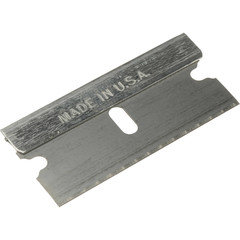
    Yes X-Acto blades are perfect. Lay the plant on its side, if you can, for a cleaner cut. I use single edged razor blades, as well. Be sure to wipe any blade with alcohol after each cut. There will often be a reaction as the fluids come in contact with the metal, turning the blade black.

    eeyore94sooregon thanked Maria Elena (Caribbean - USDA Zone 13a)
  • 9 years ago

    The Xacto Knife is what I use also. It is about 1/2" wide and the blade retracts and can be replaced.

    The knife needs to be thin and you do not want to use secateurs unless the heel is facing upwards toward the piece being removed and beveled blade toward branch being kept. It will crush the branch on heel side.

    Rick

    eeyore94sooregon thanked rcharles_gw (Canada)
  • 9 years ago

    Thank you, Xacto knife it is.

  • 9 years ago

    Hi Alma,

    Razor Blades & Xacto Knives are made of the same materials, and there is some sort of chemical reaction when they come in contact with the Adenium sap. That's why you have to wipe the blade off after every cut, then you end up having paper towels with Black stuff all over them.

    IMO it's a hassle, and a mess. A more ideal solution is to buy a "Grafting Knife" with a stainless steel blade (no corrosive reaction).

    I would recommend this one.

    https://www.amazon.com/Victorinox-Florist-Grafting-Knife/dp/B0007LL4SY/ref=sr_1_3?ie=UTF8&qid=1486513128&sr=8-3&keywords=grafting+knife

    "Victorinox" is the company that makes "Swiss Army Knives"; among many others.

    Rob


    eeyore94sooregon thanked halocline
  • 9 years ago

    I wipe mine down with Alcohol, every cut. This is true about the black substance created and have not bothered with the wiping, removing it. I do think the Grafting knife would be a great choice and I appreciate you posting this, Rob. Going to get one. Thanks

    Rick

  • 9 years ago

    I will look into that. Thank you. Hopefully I won't have to use it like I've had to lately. Only for cutting back and pruning.

  • 9 years ago

    Rob, does that stay sharp, because that is part of my problem.

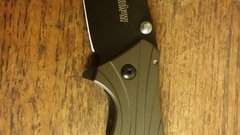
    this is what my husband found for me. What do you guys think?

  • 9 years ago

    I love Kershaw. I carry one on duty

    eeyore94sooregon thanked User
  • 9 years ago

    Yes, Kershaw's a good brand, and I'm sure it's sharp. I'm not sure about that Black finish, but if it's Stainless Steel; you should be good to go.

    And yes, the Victorinox should be razor sharp, and since it's got a straight blade; it would be easy enough to sharpen should the need arise. However, Stainless Steel usually keep's an edge pretty well. It all comes down to the hardness of the steel (HRC numbers on the Rockwell Scale).

    https://en.wikipedia.org/wiki/Rockwell_scale

    Rob

    eeyore94sooregon thanked halocline
  • 9 years ago
    last modified: 9 years ago

    Okay good! I will use that and later buy an Xacto knife. Or that one from amazon that you suggested, Rob.

    JAIRO, what do you do?

  • 9 years ago

    Guys, please don't lose sight of the fact that the primary purpose of wiping down the blade before each cut has nothing at all to do with corrosion or the "black stuff." Wiping down the blade has everything to do with preventing the passing on of virus and pathogens from one plant to another.

    A stainless steel blade, like the one pictured, is great for its non-corrosive factor. But do wipe it down between cuts. I personally prefer single edge razor blades for the thinness of the metal, which provides a very clean cut. Kept clean, they will last a while.

    Maria Elena

    eeyore94sooregon thanked Maria Elena (Caribbean - USDA Zone 13a)
  • 9 years ago

    I'm also thinking of working on just one plant; when cleaning the blade unnecessarily often is a pain, but yes, when working w/ multiple plants; sanitation is good practice.

    Using the right tool for any job; just makes life easier. If I'm going to do some grafting, I'm going to use a grafting knife. For my Bonsai; I don't have just one type of "Shear", but multiple cutting tools. The average person might say "Oh,one is enough". But in truth, it would only make my job harder.

    Rob

    eeyore94sooregon thanked halocline
  • 9 years ago
    last modified: 9 years ago

    Cleaning the knife w Alcohol w each cut would be necessary on one plant, although may seem tedious. With cutting out rot, grafting, etc., I think it is best to err on the side of caution is of utmost importance here.

    I like the possibility of the knife not getting this black build up and maybe easier cleaning w alcohol, having a non reactive blade to sap. Definitely going to give it a go.

    For myself. A blade with the thinnest thickness is of most importance to myself, as well as one that retain it's edge longer.

    Even taken a small spoon and sharpened it's tip edge to use as a scoop type instrument for taking out rot.

    Rick

    eeyore94sooregon thanked rcharles_gw (Canada)
  • 9 years ago

    I'm having problems with them retaining their edge. Last nice pocket knife I used didn't retain its sharpness through the whole plant. So that is why I sought out the advice of a decent knife.

  • 9 years ago

    I don't believe it's the knife. The sap build up on the blade will make it seem dull. Adenium sap is very sticky, and can gum up your blade.

    Rob

    eeyore94sooregon thanked halocline
  • 9 years ago

    One thing I'd add: rest the plant against some thick folded cloth while cutting so it doesn't rip against the table surface while you're doing the surgery.

    eeyore94sooregon thanked User
  • 9 years ago

    Good points, thank you. Well I'm hopeful that I won't have to do it again anytime soon.

  • 9 years ago
    last modified: 9 years ago

    Maybe I'm here to learn and maybe I'm here to help. We'll see.

    At the flower shop (40 years ago) I cut a million cut roses with a paring knife that had a bird beak hook to it. The hook helped keep the stems from slipping off the blade tip as we pulled back on the knife. I had never seen a bird beak knife before that job, but I've always had one ever since. I don't recall sharpening it. On my live roses at home I've never used anything but an anvil cutter. I don't even know how I'd use a knife on live roses.

    One more thing, I believe there's an old lumberman's adage about spending 10% of your time sharpening your equipment. I used to have some tree trimmers whose saws seemed to cut through oak trees like butter. I found out they used only Corona saws and spent their lunch hour sharpening them. At night they sprayed them with WD-40 for the night.

    eeyore94sooregon thanked dchall_san_antonio
  • 9 years ago
    last modified: 9 years ago

    Hawksbill -

    https://www.amazon.com/Antonini-Professional-Hawksbill-Grafting-Handle/dp/B00DT9ZD7O/ref=sr_1_21?ie=UTF8&qid=1486680640&sr=8-21&keywords=grafting+knife

    I have numerous wood carving knives and chisels, and different sharpening tools for them since they're odd shaped. For a straight edge, or kitchen knives I use my two sided Whetstone for sharpening.

    https://www.amazon.com/Whetstone-Cutlery-Two-Sided-Stone/dp/B0055B2RGO/ref=sr_1_6?ie=UTF8&qid=1486681149&sr=8-6&keywords=whetstone+knife+sharpener

    Rob

    eeyore94sooregon thanked halocline
  • 9 years ago

    More and more options. Thank you! I will look at those also

  • 9 years ago

    You shouldn't have a "mess" with any tool so long as the blade is sharp. The type of blade/knife you use will depend on the type of cuts. That can range from a scalpel to a large kitchen knife.

  • 9 years ago

    Eeysore

    i had the same problem too with deciding choice of appropriate knife to use. Eventually I ended up with about 20 knives of different shape and sizes. Recently I resorted to making my own. It does not involve much skill. Just patience. An angle grinder for cutting and sharpening. I use used hacksaw blades. Cut the blade into 6in lengths. 3in for the blade and 3 to be used as handle. Not advisable to have longer than 3in for the blade because otherwise blade too wobbly when cutting cos of the thinness of the blade. Just sharpen on one side so when you make a cut for grafting it has a straight edge. My works well for me. Very sharp. I am afraid it needs wiping down with each cut cos of the 'black grunge'. Good thing is it cost me nought.

    eeyore94sooregon thanked Kawolski Yu
  • 9 years ago

    Sounds like a project my for husband. Lol, I will definitely show him your suggestion. And sounds pretty cheap too. I know what you mean about all the different knives, only I hadn't bought any, just what was laying around. But everything quickly dulled, Making it so hard to cut, but as suggested up above, it was probably just the sap.

  • 8 years ago

    Maria Elena said, "I personally prefer single edge razor blades for the thinness of the
    metal, which provides a very clean cut. Kept clean, they will last a
    while."

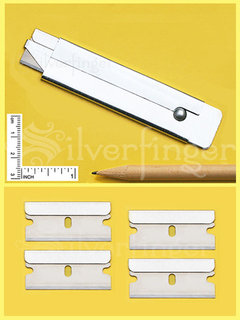
    Maria Elena, do you just hold the single-edge razor blade in your fingers? Or do you have some kind of blade holder such as a box-cutter-type thing?


    Thanks!

    Carol in Jacksonville

  • 8 years ago

    I use single edge razors, no holder (but you can use one for safety), and an X-Acto blade kit for small root & branch pruning jobs. That includes most potted C&S.


  • 8 years ago

    What about a scalpel thats what i use went down to the local art supplies bought the handle and 6 blades they stay sharp and very cheep some thimes to sharp i cut to deep cost me $25.00 Aust they will be cheeper n US every thing is cheep there.

  • 8 years ago
    last modified: 8 years ago

    Thanks, Maria Elena and Peter.

    Peter, I think you bought what in the US is called an X-ACTO knife (pronounced "zacto"). Jairo mentioned using one near the top of this thread. Perfect tool!

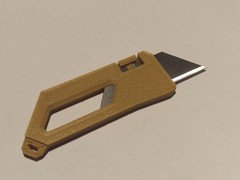
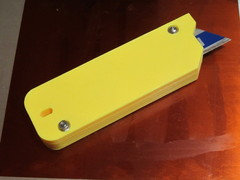
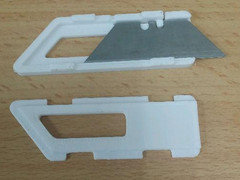
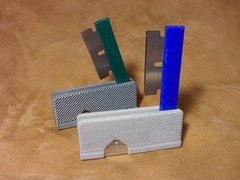
    X-ACTO knives

    Carol

  • 8 years ago
    last modified: 8 years ago

    Hi, Carol -

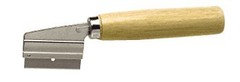
    If you are going to use a handle, get one that doesn't interfere with / bump into the cut. You want to slice clean through without the handle interfering. I never thought about it but that would be exactly why I don't use one. The rounded blonde handle ... I like it best ... and the last one pictured look suitable. Alma posted a very sexy knife in her Feb 7 comment.

    When I prune a plant, I seldom just cut in mid air. I lay the plant down and cut the branches like I'm slicing a carrot. I just find it a cleaner way to cut ... Better control and no jaggedness on the plant.

    You want to cut at an angle, where the nodes are stacked, leaving a node on the plant at the top & bottom of your cut. Branching will come from those and surrounding nodes. Don't forget to wipe your blade with an alcohol dampened cloth after each cut and before putting it away.

    As a precaution, try not to expose your skin to the white sap (lactea) ... some people are allergic. You may opt to wear gloves. If not, always wash your hands thoroughly when finished.

    All the very best to you!

    Maria Elena

  • 8 years ago

    Thanks, Maria. You always have good advice. I remember reading recently your advice to lay the plant on some stacked towels or fabric to cushion them while working (cutting) so you don't damage the caudex or other branches. (I think that suggestion was from you?) Great idea! I already had some old towels on the back porch I was planning to use for that.

    I already have an X-ACTO knive and some single razor blades, so I'm going to try those before purchasing any handles. I understand what you mean, though. You don't want the handle to interfere with getting a flush cut when removing unwanted branches or roots, or getting the proper angle when pruning a branch.

    I found some grafted adenium yesterday - (can you believe it!) - but there is some significant growth below the graft (rootstock growth) which I will remove today using all of these wonderful tips and tricks.

    Carol

  • 8 years ago

    ;-p

    It wasn't me, Carol ... I think that was our buddy Pagan. I just place the plant on a piece of wood. The caudex never gets damaged. If you're pruning below the graft to get rid of unwanted growth, I recommend a flush cut (you're not trying to get branching) in mid air (no need to uproot to lay flat), wipe away the lactea, wait 1/2-hr, and SEAL the cut with Elmer's Waterproof Wood Glue. It keeps the wound permanently smooth, not wrinkled and atrophied ... think newly purchased rose bushes with the cut wax-sealed.

    Maria Elena

  • 8 years ago
    last modified: 8 years ago

    Thanks, Maria. Your post could not be more timely.... I just finished putting holes in the pots and I'm headed out to cut.

    Hmmmm.... wait a half-hour after cutting. I do have the wood glue at-the-ready but I wouldn't have known to wait. Again, thanks!

    You're right about the cloth: it was Pagan, in this very thread, on February 9. Thanks, Pagan!

    Carol

  • 8 years ago
    last modified: 8 years ago

    Carol,

    You got me looking at knives! Here's an inexpensive stainless Hawk Bill on Amazon for $6.99 - As an "Add On" with $25 purchase. I think I'm going to try this one:

    https://www.amazon.com/Whetstone-Cutlery-Blade-Stainless-Folding/dp/B002I6C9ZS/ref=sr_1_9?ie=UTF8&qid=1496168928&sr=8-9&keywords=pruning+knife
    Maria Elena

  • 8 years ago

    Ceramic folding knife. About one pound at the cheap-cheap shop. Easy to disinfect and sharp.

Sponsored
Grow Landscapes
Average rating: 4.5 out of 5 stars8 Reviews
Planning Your Outdoor Space in Loundon County?