Software
Houzz Logo Print
chris749

Lawn Problem

9 years ago
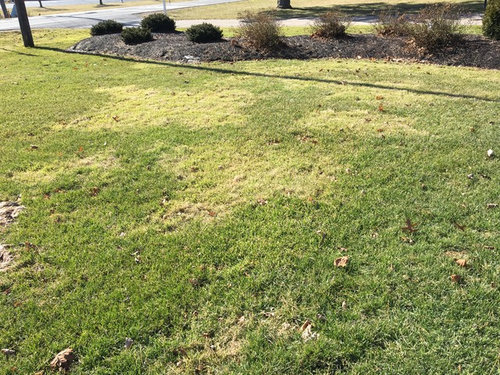
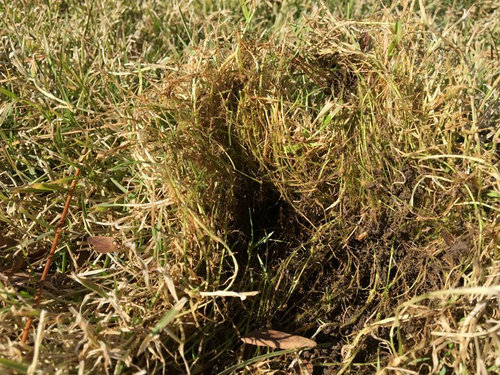
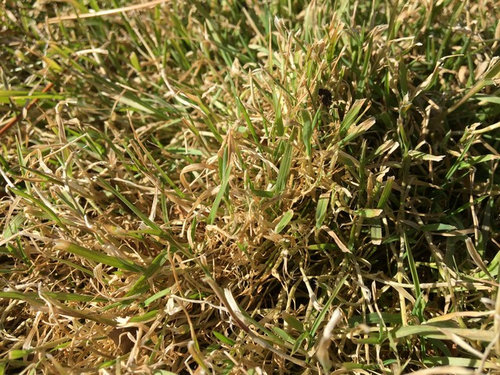
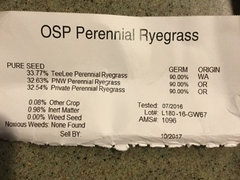
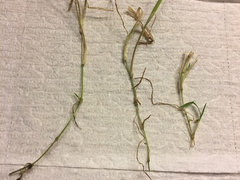
This lawn issue arose last year. I have some off color patches that started last year. I don't know how to deal with them. I am trying to make lawn the envy of the neighborhood but this is my first house and I can't seem to figure how to fix. Here are the pictures. The lawn pulls up easy in these lighter area like carpet. Seems to creep along the soil rather than go deep like bluegrass.

Comments (30)

  • 9 years ago
    last modified: 9 years ago

    Yes Bluegrass, Northern Ohio, July/Aug, Was watering every day and had an issue where a line broke one time, switched to a once a week soak after I learned a long soak once a week is better watered for about 45min in 20 min shift with 20 min off in between (20 water 20 wait 25 water on Sundays). I mow at 3" but it has a 44" deck and my lawn is a bit bumpy. I had a company Trugreen fertilize. Soil is a bit clay.

    I had a tree sprayed for Japanese beetles when I bought the house cause the guy had already paid for it.

  • 9 years ago

    I should mention I cancelled TruGreen as I felt they were always out. Seemed excessive.

  • 9 years ago

    We can use your location to rule out some types of grass that could cause your problem. We're left with creeping bentgrass or something else I've never heard of. Since it is a grass you're going to need a grass killer to kill it. Unfortunately Kentucky bluegrass is also a grass, so you have to be careful at the fringe where the two grasses meet. You will lose some KBG. We call that tough love.

    The other part of this is what to do with the large bare spots. Now is a poor time to renovate. Again, August is the time, because if you renovate now, two issues will arise. One is that the tender new KBG roots will suffer in the summer heat and could be all dead by July. The other issue is spring is when the crabgrass seeds are trying to germinate. When you put grass seed down in the spring, the first thing to germinate is the crabgrass. As the turfgrass roots weaken in the summer heat, the crabgrass will move in. By the end of July you might have a full crabgrass lawn.

    There are two things you can do. You can live with the problem all summer until August. Or you can kill it in April, buy sod to cover the bare spots, and have a slightly mismatched color for now (unless you are lucky to get exactly the same KBG variety as what you have now). If you get sod, get seed to match the sod so you can overseed the entire lawn with the same seed next August.

    chris749 thanked dchall_san_antonio
  • 9 years ago
    last modified: 9 years ago

    If you want the envy of the neighborhood lawn, get a soil test from Logan Labs in Ohio and post the results here on this forum. Check out some of the other posts about soil tests to see what kind of replies you get.

    Generally for the envy lawn you need the right watering, mowing, and fertilizing.

    Watering: Deep and infrequent is the mantra for watering. This is for all turf grass all over the place. Deep means 1 inch all at one time. Put some cat food or tuna cans around the yard, and time how long it takes your sprinkler(s) to fill all the cans. Memorize that time. That will be the time you water from now on. My hose, sprinkler and water pressure takes 8 full hours to fill the cans. Your time will likely be less. I like gentle watering. As for watering frequency, that depends on the daytime air temperature. With temps in the 90s, deep water once per week. With temps in the 80s, deep water once every 2 weeks. With temps in the 70s, deep water once every 3 weeks. With temps below 70, deep water once a month. Note that you have to keep up with quickly changing temps in the spring and fall. This deep and infrequent schedule works in Phoenix and in Vermont, so it should work for you. The reason for deep and infrequent is to grow deeper, more drought resistant roots and to allow the soil to dry completely at the surface for several days before watering again. If it rains, reset your calendar to account for the rainfall.

    Mowing: Mulch mow KBG every week on your mower's highest setting.

    Fertilizing: Fertilize on Memorial Day, Labor Day, and after the grass stops growing in the fall but before it goes completely dormant. Now that I say that I hope some KBG expert will hop in here. Seems to me they fertilize KBG in the summer, too. I like organic fertilizers all the time, and you can definitely have the envy lawn with only organics. If you decide to go with chemical fertilizers, I would urge you to do an app of organics in addition to the chemicals. The organics are what keep your soil microbes healthy.

    To continue, you do not need to do annual composting, aerating, dethatching, or anything special unless you have a definite issue, for example, grubs or disease. If you follow the rules above you should not have disease, although sometimes Mother Nature steps in and creates conditions perfect for disease.

    chris749 thanked dchall_san_antonio
  • 9 years ago

    creeping bentgrass behaves like that. When it gets warmer, I would try to hit those areas with multiple rounds of Tenacity. Keep in mind that bentgrass also seeds where it grows and it may be an ongoing battle.


    I live in NE Ohio also and have had the same thing. Tenacity is very effective on it but it will take at least 3 applications and even so, new bentgrass may sprout year after year in the same spot until you can get KBG to fill in or established in the void.

    chris749 thanked mishmosh
  • 9 years ago

    +1 mishmosh, Tenacity is great for bentgrass control in KBG.

    chris749 thanked User
  • 9 years ago
    last modified: 9 years ago

    So I can do the tenacity thing. I just read up on it. It seems it works on newly seeded turf. Given the patches are so large like 2' x 3' should I risk overseedijg with a slit seeder right now in February and hope it starts to fill in or just wait it out. It was a mild winter so I am sitting in the 40s with night time about 30 degrees. Or is that just asking for trouble... I had someone recommend it. Dchall recommended waiting so that is my inclination... I also read on a Michigan university Scott's makes a crabgrass preventer that works on new seed lawns. They said it is effective.

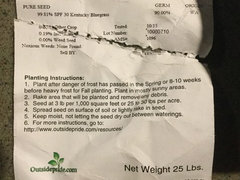
    I have this in a freezer right now.

  • 9 years ago
    last modified: 9 years ago

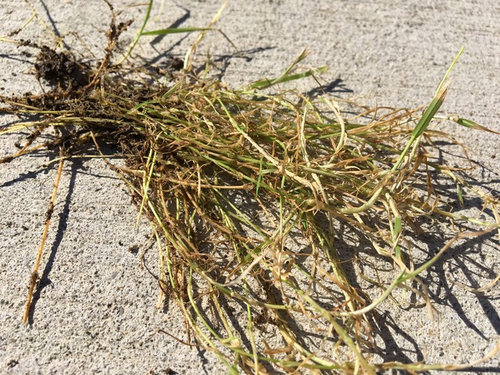
    Here is a close up of some strands if it helps identify.

    It is really long I don't know seems like it's growing sideways

  • 9 years ago

    The seed safe Scotts crabgrass preventer is the same AI as Tenacity but in granular form - mesotrione.

    chris749 thanked User
  • 9 years ago

    So back to the original would it be worthwhile overseeing now in Feb? Or would I be inviting problems? I was not sure if the grass would have enough time to establish before summer and start to fill in where the bent grass (if correctly identified) is killed by the tenacity.

  • 9 years ago
    last modified: 9 years ago

    So back to the original would it be worthwhile overseeing now in Feb?

    That's an individual judgment call. You are the one to determine if the cost, labour and effort expended is acceptable to you if the end result is a total failure. Although fall seeding has a highest success rate and early seeding (dormant) has a higher success rate than late spring or summer seeding, there are no guaranties. Keep in mind that unless the unwanted grass is eliminated prior to seeding, it is going to remain dominant. A post emergent (mesotrione, glyphosate, dicamba, etc.) only works when the plant is actively growing. February in N. Ohio probably isn't an especially active time for plants. Also keep in mind that there is a difference between applying post emergent and pre-emergent mesotrione in eradicating unwanted plants. A pre emergent will not kill already existing plants and may not prevent many unwanted grasses from seeding.

    In your situation, particularly for a February seeding, are you willing to physically remove the unwanted grass (sod cutter - machine or hand tool) and add soil or sand to fill before seeding?

    chris749 thanked User
  • 9 years ago

    Oh thanks you pointed me to something I need to consider. I apologize as I am new to this. I undrstand from your post the intended path I would need to take is to remove the existing bent grass; I can't just over seed and let the KBG and rye take over. How long would the bare spots be visible? If I do do that should I do it now? Now through march in my area is highs of 45 - 60 in day and low of about 30 at night based on reports I am seeing.


    Would it be better to just sod the sections and overseed in fall? Would I have weird coloring this way? I am trying to figure the best way to handle this step by step as I get more active in the forum and learn things.

  • 9 years ago
    last modified: 9 years ago

    Kill or remove with this style tool. This time of year, removing is your best option. If you seed, the bare spots will be visible until the new grass establishes. It takes up to 6 weeks for KBG to germinate and another month or so before it will grow tall enough to mow. KBG also doesn't do much of any spreading until the second or third year. That's the best I have regarding the visibility question.

    Whether you seed or sod, unless you know what cultivars were used to originally establish your lawn and unless you can find a seed or sod of those cultivars, the patches are going to be different in color, texture and blade width. Eventually (3 years or so) if you overseed the entire lawn with the same cultivars it will blend in.

    My personal experience: I had a couple of areas of poa trivialis. Selective herbicides did not work. Even glysophate and reseeding was not successful, as the triv eventually re-established and kept spreading. I ended up cutting the areas out with the above tool (removing an additional one foot border around the spots) and filled with sod. I overseeded the entire lawn with my original cultivar (although I think consistent overseeding with any cultivar would work, I had started my lawn from scratch years ago and kept a record of the seed cultivars I used) and after three years, the areas have pretty much blended in.

    chris749 thanked User
  • 9 years ago
    last modified: 9 years ago

    If I rip that up and overseed the entire lawn this month should I mow the lawn any lower than normal so the new stuff fills in faster?

  • 9 years ago

    Please define "rip" if you are planning on doing something other than sod removal.

    Scalping the lawn will aid in successful overseeding established lawn areas. It will also benefit any weed seeds to establish as spring is prime weed establishment time.

    chris749 thanked User
  • 9 years ago

    Yeah so rip up meaning using the tool indicated to remove the bent grass areas.

  • 9 years ago

    now is a terrible time. you can't even control it with tenacity in winter. reoundup may not even work... grass is mostly dormant. wait until spring. either round it up or use tenacity to kill it. use tenacity when reseeding.

    chris749 thanked mishmosh
  • 9 years ago

    Ok, will do. But should I reseed in the spring or is too risky and I should just wait for the fall or do both?

  • 9 years ago

    The only risk in seeding in the spring is that you might have to do it again in the fall. You can mitigate some of that risk by using something that doesn't take long to germinate, by using Tenacity to hold some of the weeds at bay and by using preventive fungicide since you will have to water frequently to keep the young grass alive. It's an investment of time and money that may or may not pay off. Granted, all seeding projects are a gamble, but the odds are significantly more in your favor in the fall.

    Going back to your first post, you said you want to make your lawn the envy of the neighborhood. With that goal in mind, I would seed the bare patches so you have something green through the summer and plan on a full renovation in the fall. Since it's a temporary thing I wouldn't put too much time and money into it, just throw some seed down, cover it with peat moss and try to keep it moist. With a Mid-August renovation you'll have to start fallowing late July, so it won't live for long anyway.

  • 9 years ago

    Ok so if I do a full renovation where can go to learn how to do it step by step and get my knowledge up before tackling it in a few months.

  • 9 years ago

    Do you have a sprinkler system? If so, renovation is much easier.

    chris749 thanked mishmosh
  • 9 years ago

    Ok so if I do a full renovation where can go to learn how to do it step by step and get my knowledge up before tackling it in a few months.

    Let me write that up for you, give me a couple days, been meaning to get an article up on full renovation.

    chris749 thanked User
  • 9 years ago

    Oh that would be awesome!!

  • 9 years ago

    I do have a sprinkler system in the front lawn.

  • 9 years ago

    I'll try not to steal his thunder completely, but generally you kill the existing lawn, rake up the dead stuff, level as needed, seed, and water. There's more to it, but it's not anything to be afraid of.

    chris749 thanked dchall_san_antonio
  • 9 years ago
    last modified: 9 years ago

    I personally would only do the front. There are a lot of personal opinions on how you should approach soil prep but your top concerns should be optimizing germination and weed minimization. Grassy weeds in particular can be challenging. The purest stand you can get is worth your efforts because each passing year, there will be more and more contamination. Not just bentgrass. Poa annua and poa trivialis. Read up on those. It is entirely possible to renovate and end up in worse shape if you are not careful. Tenacity is your friend.

    chris749 thanked mishmosh
  • 9 years ago
    last modified: 9 years ago

    Yeah I was thinking only the front. I could get some jumpstart KGB mixed with some peren rye and the spf Kentucky to fill in the cut spots. The plan I am thinking would be to cover with mulchmaster shredded straw. I think that might fill in the fastest. I travel a lot so I have a husqvarna automow 450x getting installed so I will have to keep it out of the front for the first month.


    So March once above 55 degrees.

    1 Cut out the bent grass

    go extra six inches outside impacted area

    2 apply a few inches of Scott's turf builder lawn soil

    3 lay down Scott's starter food plus weed preventer

    4 lay seed 30% Jumpstart KGB 30% SPF 30 KGB and 30% peren rye

    5 cover with mulch master shredded straw.

    6 water thee times per day for 10 min each.

    7 mow when it hits 3.5 inches cut down to 2.5 inch and maintain there

  • 9 years ago

    Also after I get this spring thing figured out I will post pictures. I will start another thread on the fall project.

  • 9 years ago

    Here's the article on renovation.Hope I didn't forget anything.

    http://lawniac.com/lawn-renovation

    Dchall stole my thunder completely :-)

Sponsored
Peabody Landscape Group
Average rating: 3.5 out of 5 stars8 Reviews
Franklin County's Reliable Landscape Design & Contracting