Software
Houzz Logo Print

Comments (19)

  • 9 years ago

    Yes, it might be intermediate.

  • 9 years ago
    last modified: 9 years ago

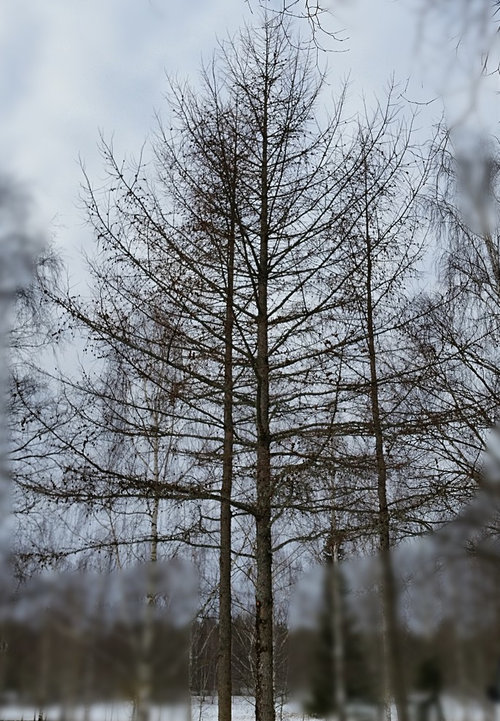
    While such a thread is up, will note that I'm pretty sure I saw two huge Larix decidua in Bel Air, MD, a few days ago. Will go back to confirm later in spring. If so they would be the biggest ones I've seen south of the Mason-Dixon. (granted, not that far south of it!) If there are any notable ones at US National Arboretum, VA State arboretum, etc., I must have missed them. They were about as big as the ones at Longwood.

  • 9 years ago
    last modified: 9 years ago

    Two No. 1's?

    Episode Three: How to recognise different types of trees from quite a long way away

    http://www.ibras.dk/montypython/episode03.htm#2

  • 9 years ago
    last modified: 9 years ago

    My post was indeed, though, a call for more substantive responses. Spruceman unforunately no longer posts here and seemed to have the best knowledge of such conifers in the DC area proper. Beng...I recall you posting pictures of various conifers especially out your way in western MD, but never a large Larix. Am I wrong? Didn't someone post that the old Larix decidua at Oatlands was dead?

  • 9 years ago
    last modified: 9 years ago

    Actually just remembered to check the MD big tree registry, strange thing is I am wondering if one of the trees I saw was the MD state champion. I was driving so I only got a quick glimpse and impression that the silhouette had to be a larch, then a block later saw another one. It was also just after sunset so the light wasn't great. They are in the vicinity of Bel Air United Methodist. Will go back when I can.

  • 9 years ago
    last modified: 9 years ago

    What I wrote was perfectly grammatical

    It's from Monty Python, I don't know where grammar comes into it.

    My post was indeed, though, a call for more substantive responses

    One can always hope for particular outcomes, but may often not get them. That's just the way it is.

  • 9 years ago

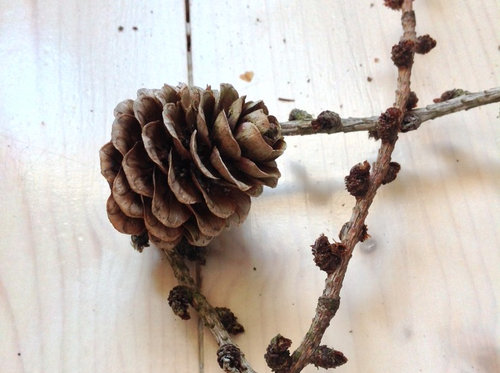
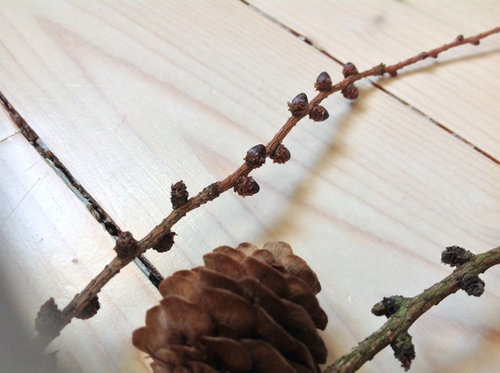
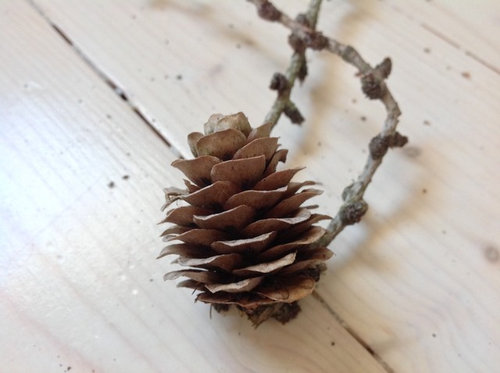
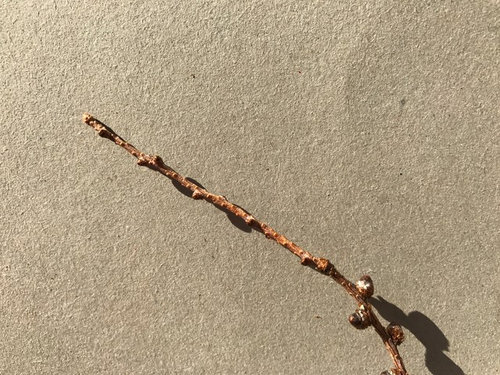
    dalecarlica, one way to distinguish larch species is the amount of reflex (bending back) of the cone scales at their tips -- no reflex for European (decidua) to noticeable reflex in Japanese larch & intermediate for the hybrid -- what you show seems intermediate...


    David, the MD big tree site shows the following Euro larch champ (91' tall) in Bel Air:

    http://www.mdbigtrees.com/tree_detail.aspx?tree=TR20120920134016027

    Is that what you saw? From there you can go to the top menu "tree listings" & look for other species.


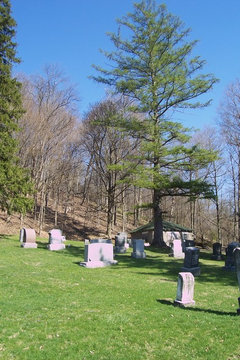
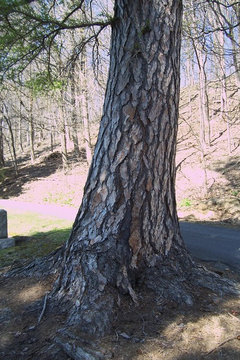
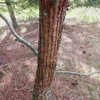
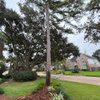
    Below I show what I believe is L. decidua in Bedford, PA which is taller/bigger than MD's champ:

    Trunk:

  • 9 years ago

    Any sign of cones on that last one?

  • 9 years ago

    Yes beng, I think it was the one I saw. The funny thing though is there's another big one right around the block. I will try to get pictures of them the next time I'm over there.

  • 9 years ago
    last modified: 9 years ago

    bboy, I actually posted a cone pic from it some time ago, but a gardenweb search can't find my posting (their search function is very poor) & can't find it anymore on my computer -- prb'ly deleted during a file cleanup. However, I based my ID on the lack of any reflex on the cone scales...

  • 9 years ago
    last modified: 9 years ago

    Bark and habit remind me of L. occidentalis but that produces cones with protruding awns. And I don't know that it would grow in that location.

  • 9 years ago

    Bedford is at 1600' so the summers would be reasonably mild. Other types of larches apparently self seed in central or NW PA and NE Ohio. Doesn't seem possible to rule out the western species.

    http://forums.gardenweb.com/discussions/1894630/picture-of-some-beautiful-wild-larches


  • 9 years ago
    last modified: 9 years ago

    David:

    I am still here, but have had some "distractions" that have kept me from posting as I used to. Anyway, I have kept my eye out for larches for a long time. I have planted a bunch here at my place north of Winchester, and they are, so far, growing nicely.

    As for older and larger ones, there are very few. At Oatlands, the oldest was destroyed by a storm a number of years ago. it was growing with two Norway spruce at the bottom of the old garden next to the grave sites. It was not huge, but in my memory, I would guess it might have been 70 feet tall or a bit more, and maybe 20 inches in diameter. There is a story that I heard one guide tell--that Thomas Jefferson gave the original owner of Oatlands a larch, but she said that it was the one near the top of the garden. But if there was such a tree, it was the one destroyed by the storm. The one she pointed to is much, much too young.

    At the VA Arboretum, there are a few larch. There are two in the section of the conifer walk that goes around the "green" to the south of the building complex. One is a straight hybrid, maybe 70 feet tall, and the other a European, not so straight and tall. Not far from the parking lot there is a Japanese larch of a similar age, and perhaps a bit smaller than the other two. There is another smaller one, that I think is mislabeled, but at the moment the species name on the label escapes me.

    If anyone can get out into West Virginia, you can see some quite tall larches planted with the Norway spruce at the Rothkugel Plantation. These are well over 100 feet tall--maybe 110 to 120. These were planted in 1907. I don't need to describe the Rothkugel here because a Google search will turn up all the info. Most of these are higher up from the parking space and to the left of the top of the ravine that the trail follows, on a high flat area.

    I planted some larch at my timberland about 30 years ago, but have had bad luck with them. Most of the European have some kind of disease that affects the needles, leading to mid and late summer defoliation, and it seems, death. I have not researched what this is. One growing in a more open area is still healthy. The Japanese there fared better--were not affected by this disease--but most were destroyed by an early heavy, wet snowfall. I have a few remaining, and they may be approaching 60 feet now, and are quite nice. Wonderful late fall golden color.

    --Spruce

  • 9 years ago

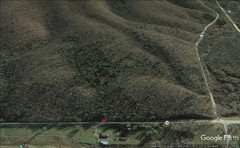
    beng, at least you can make out the general area of the "Plantation" because of the Norway's in a winter photograph.


  • 9 years ago

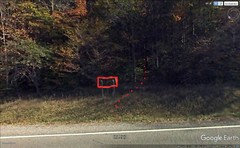
    Thanks, conifer50 -- got it. I actually saw those two wooden posts, but the street-view I saw (and your pic) looked like there was no sign between them -- maybe a shadow effect.....

  • 9 years ago

    beng, the "sign" is missing in the "street view"....I guess vandalism is a trait of some of the locals!

  • 9 years ago
    last modified: 9 years ago

    Conifer guys:

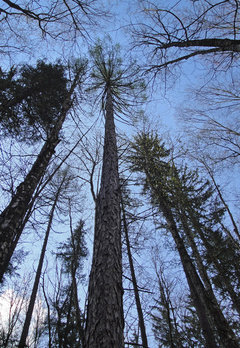
    Yep, as for the plantation, you got it. The Norway spruce are scattered among hardwoods, and a few larch. This looks nothing like the regular row plantations. The original plantation was a mix of black locust, Norway spruce, and larch, but most of the larch didn't survive, and many of the Norway spruce didn't. Hardwoods then filled in. Here is a picture with a larch in the center.

    To the immediate left, the tree is a red maple, and between the two, in the distance, so to speak, is another larch. Of course, the Norway spruce are obvious.


    --Spruce