Software
Houzz Logo Print
dfaustclancy

Pacifica CA Back Yard Suggestions

9 years ago
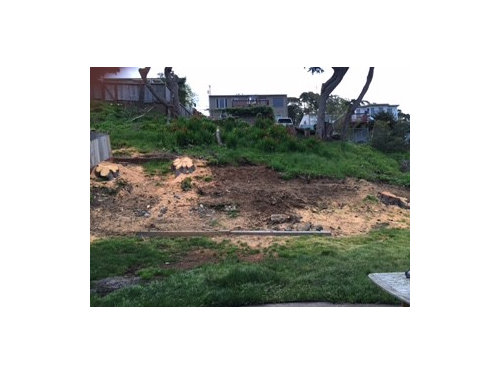
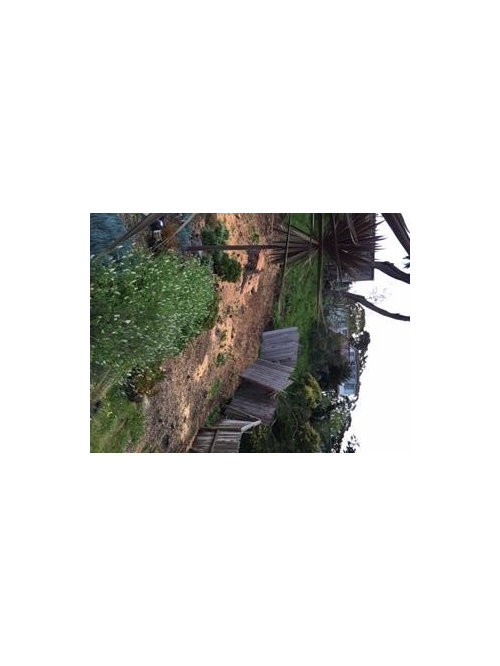
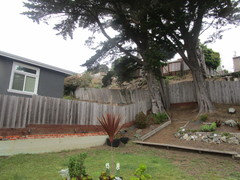
Just had several trees that fell during the terrible storms removed. Giant 7' root systems upended and ruined all of the plantings that were in place. When root balls were ground down, filled the area with sawdust and tree grindings which will take years to break down. I'm afraid that the soil won't have any nitrogen at all due to the constant breakdown of this organic material by microbes. Need some high nitrogen fertilizer for starters. Need some suggestions for what to plant on this hillside and the side area garden. Must keep in mind that this is a rental property and that the tenant, even though she is a gardener, does not want to spend all weekend on maintenance. It looks like crocosmia is on the hillside above my property. I like the fact that there are crocosmia red flowers in the spring and nice looking greenery for the majority of the year. So maybe I am looking for groundcover intersperced with bulbs? What types of flowering shrubs are relatively care-free? House is near the Manor Drive area, so lots of fog which provides moisture, house faces West. Am afraid to plant anything until sawdust and grindings have a few years to break down! Maybe best bet is to sink a few pots in the soil and put fresh soil and compost in those, and plant a few things in there for two years until sawdust completely rotted. Am stymied! I really would appreciate some help on this. Any and all answers welcome.

Comments (30)

  • 9 years ago

    I think you would best be served by a landscape architect given the potential erosion issues on that slope.

  • 9 years ago

    And you are over-estimating the impact that the sawdust may have. Just mix well with the existing soil, add some high N fertilizer and you can plant immediately.

  • 9 years ago
    last modified: 9 years ago

    Those wood chips and sawdust are a great addition. They do bind up a tiny bit of the surface nitrogen, but such a tiny amount that it won't matter. Presumably you are going to plant low-water use natives and Mediterraneans which prefer lean soil anyway. There's absolutely nothing to worry about. While they are breaking down and after they have completely disappeared, they'll help hold moisture in the soil. Unless you see evidence of nitrogen deficiency, you shouldn't add any nitrogen.

    I agree that if erosion is an issue, you should consult a landscape architect.

    There are many colorful, suitable shrubs that will cover that hillside and can be interplanted with perennials and bulbs. I use a mixture of manzanitas, ceanothus, rosemary, baccharia, cistus, and sages on my (very) little slope. Where I can use more height; toyons, upright cistus, and rhus integrifolia.

  • 9 years ago

    Fresh wood material on top of the ground has little effect on soil nitrogen beneath the surface. So except in the spots where the stumps were ground you can rake sawdust aside when planting, then rake it back around the newly installed plants. Or leave it raked aside if you don't like how it looks, use something else to mulch the new plantings.

    If there is enough slope for possible soil movement during heavy winter rains you might want to purchase and install jute erosion netting for the exposed section.

  • 9 years ago

    "They do bind up a tiny bit of the surface nitrogen, but such a tiny amount that it won't matter."

    Not if they are incorporated into the soil. Wood based products and mulches worked into the soil can have a significant impact on N availability and it is always recommended to add nitrogen to offset if that is the case. On the surface, these materials have little to no impact and just raking them aside as indicated above is sufficient.

  • 9 years ago

    Absolutely! Don't dig them in, don't add nitrogen unless you see signs of deficiency, just spread the chips and dust on the surface to hold soil moisture. They'll actually disappear into the soil without your help faster than you think. They are also green wood from a living tree so they themselves contain more water and nitrogen than sawdust from dried wood. It's always sad to lose a big tree, but the chips and sawdust are a great benefit to your garden.

  • 9 years ago

    It does not look like a groomed gardening area. Can you plant some native type dune grass?

  • 9 years ago

    What would a native-type dune grass be?


  • 9 years ago

    I think emmarene might be suggesting some of the carex species. Carex testacea, I believe, is native to the central coast region.

    dfaustclancy thanked Josue (Zone 9b, Central, inland California)
  • 9 years ago

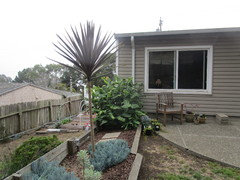
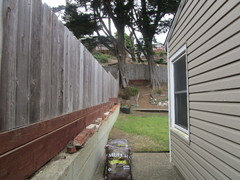
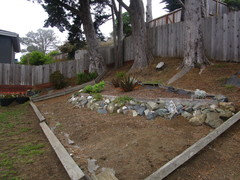
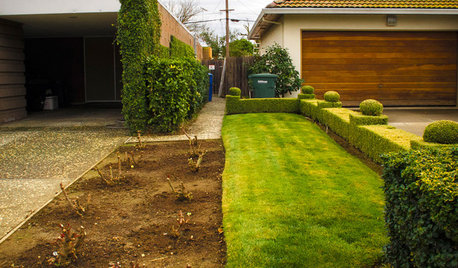
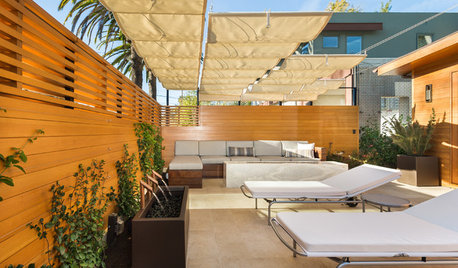
    The picture I originally posted is way too big for anyone to really get a handle on what is needed in this back yard. I am posting new photos that show the way the yard looked BEFORE all of the trees fell and giant root balls had to be ground and removed. It is truly unfortunate that all of the plantings are long gone and the pretty rock wall gone, and nothing left AT ALL. The back fence will be put back into place along with the other fencing that had trees fall on it, so some semblance of order will be restored. You can see by these older photos how much care and love was lavished on this back area by my tenant. Now -- nothing. Starting over from scratch. Now that you've had a chance to view what the yard used to look like, what do you think? Am looking for a planting plan. I am a gardener in MA (Zone 5) but Pacifica is Zone 10a I believe. Very different! Does this help you visualize what could be here? Thanks again for all of your comments


    . They were enlightening regarding the life of raw sawdust in the garden. (not long if not thickly spread). I trust actual gardeners more than articles!

    These last two pictures address the slope where five trees 'used to be'. So sad that the trees and the garden - gone! Help me to visualize what COULD be here. Thanks so much.

  • 9 years ago

    The loss of those trees I think will be a blessing for your yard. In five years your yard will be better than it ever was. In Pacifica No garden needs more shade or competing tree roots.

    dfaustclancy thanked calistoga_al ca 15 usda 9
  • 9 years ago

    I still think a retaining wall is in order for the sloped area, especially if you would like peace of mind regarding backyard soil stability.

  • 9 years ago

    So back fence is now gone.......will it be replaced? If not, any sun loving plant could work there and in your zone, that would include a very broad selection. Slope erosion is not really a concern if the slope is planted, but the longer you leave it open and unprotected and exposed to whatever rains you might now be experiencing, that could become an issue.

    Species of dune grass native to CA would include the species Lymus (particularly Leymus mollis) and Poa macrantha. Carex is not a dune grass and Carex testacea is not a CA native (originates in New Zealand) but various species of carex are native to CA and could be an appropriate plant to include.

  • 9 years ago

    You got a perfect climate for succulents. Aloes,Crassula's, and then you can grow the Cordyline hybrids,the various Flax hybrids- I like the yellow,Aeoniums...just a whole pallete in a z10,maybe you are 10b so close to the beach.

    You CAN grow the Tree Aloe's. They thrive right to the coast. Hercule's is great.

    You could mix those with coastal natives...Channel Islands in soucal provide many exotic looking natives that like cool and frost free. Coreopsis gigantea and Huechera maxima are a start.

    Let me at that yard!

  • 9 years ago
    last modified: 9 years ago

    Are you opposed to having any type of new tree? I know they are not necessary but some low trees or just tall shrubs would break up the monotony of the fence line. It just would seem so bleak without them. Considering that you are an out of state landlord I think you should hire a local designer but I hear they are hard to come by in the SF area.

    I take back my dune grass comment. I thought this was just a large waste area. I'm sure your renter wants something more appealing than that.

    dfaustclancy thanked emmarene9
  • 9 years ago

    Perfectly willing to accept low trees, flowering shrubs, bulbs, groundcovers. Even thought maybe time to have that area terraced with two or more terraces and concrete stones between the terracing. "Bleak" is the perfect word for how it looks right now and how I felt when I saw the pictures.... Will miss the tall trees, but it had to be done. You G.W.ebbers are the most creative people I know. Happy to be part of your community. Thanks so much for your comments and for your ideas.

  • 9 years ago

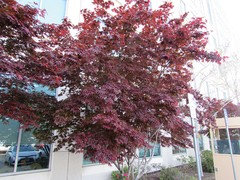
    You have the various Japanese maples...but all but the green do need to be watered. I'm trying to go on..as little care as possible,maximum results. Also- I can feel the Pacifica cool fog from those photos. You don't need more large shade making tree's.

    There is also natives. Plenty will never need watering past their first year in ground.

  • 9 years ago

    I think terracing is an excellent idea.

  • 9 years ago

    It's a rental. Why plant anything?

  • 9 years ago

    Why shower? You're only going to get dirty again....


  • 9 years ago

    hoovb, I was a longtime renter. My husband and I would take those bare yards and install irrigation and landscaping. Sometimes, even hardscape. At our own expense, I might add. Would you would ask me why we bothered?

    dfaustclancy thanked gyr_falcon
  • 9 years ago

    I disagree on the Japanese maples. Many all green's thrive on very little water once they are established. That close to the coast? Once going they are drought tolerant. Inland,if they get some shade the all green is a low water need plant. The most common red is good,but not up to the all green. And the more finely dissected Japanese maples are for specialists care.

  • 9 years ago

    I beg to differ - I have grown and sold JM's for many years and even here in the damp and cool PNW these are not considered "low water need" trees regardless of color. At best they can be described as having 'moderate' drought tolerance once established, but will require irrigation during extended dry periods. And I live on the water!!

    btw, leaf color of any plant does not make it any more or less drought tolerant. Sun tolerance, yes: drought tolerance, no. Also the laceleaf or dissectum varieties require no more specialized care than any other type of Acer palmatum.

  • 9 years ago

    The lace leaf have in no way the vigor of the species all green. They NEVER grow the big root system of the all green. Most are of dwarf to semi dwarf stature.

    I'm not sure why you haven't seen a much hardier results with the green. I mean,when the tops of some of the fine or expensive varieties die..its the green rootstalk that take over.

    I guess we dont agree.

  • 9 years ago

    Of course the laceleafs will not produce the same size root system!! They are dwarfs. But the size of the root system has nothing to do vigor or hardiness or drought tolerance - it is only a reflection of the size of the canopy it has to support. Larger growing trees need a larger root system. The laceleafs are just as tough and hardy and as vigorous - for their size - as the larger growing species.

    And since all named forms of Japanese maples are grafted and to the species rootstock, like any grafted tree, if the scion or topgrowth fails, it will be the root stock that takes over. That doesn't necessarily make it any hardier. And seldom does just the topgrowth fail on a JM - typically whatever kills off the topgrowth will kill the roortstock as well.

    No, we don't agree. 25 years of growing and selling these trees has made me pretty confident in my assessment of them.

  • 9 years ago
    last modified: 9 years ago

    Well,I've grown a few in ground and in pots..and in California,most will tell you,the Green is an easy grow- the others not so easy. The blood red Osgood is next easiest..

    I saw this yesterday.

  • 9 years ago

    LOL!! you can find red leaved Japanese maples - even the weeping dissectums - in Orange County and in San Diego. Somebody is not giving you the full scoop.

    btw, that is 'Bloodgood', not 'Osgood'. And check out Lakes Nursery in Sacramento - they are a JM specialty nursery and their list of red leaved maples for a California climate is extensive. Red leaved JM's on the whole tend to be more sun and heat tolerant than their green counterparts.

  • 9 years ago

    Yes,and you better believe those people make sure they are well taken care of. When you take those on in a climate that gets less then 10" of rain? Dont make a mistake.

    The PNW and Pacifica are a good match...but even Pacifica isn't that kind to commercial-rental type landscaping with Japanese maples other then the Green and Bloodgood.

  • PRO
    9 years ago

    Spring is the best time to prepare your landscape. It sounds like you have a really good idea of what steps you need to take next. Before planting anything, it is important that you come up with a plan for your landscape and take the time to consider the plants you want in your landscape and where they should be planted. This way, it becomes easier to create a landscape that's not only low-maintenance but which will also thrive for many years. We have a couple of blog posts on our site that you could use as a checklist to get started. Check out our Guide To Picking The Right Plants For your Landscape, and a Spring Guide To Caring For Your Lawn And Landscape. Look under the "blog" tab on our website. Hope this helps!