Software
Houzz Logo Print
janice8bcharlestonsc

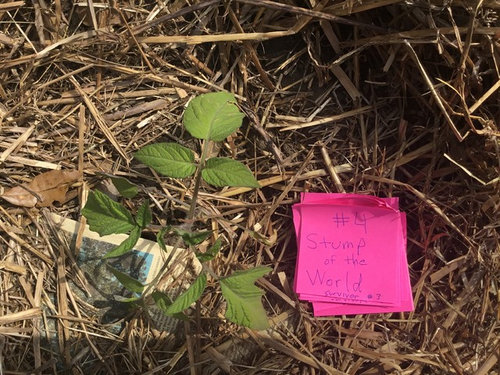
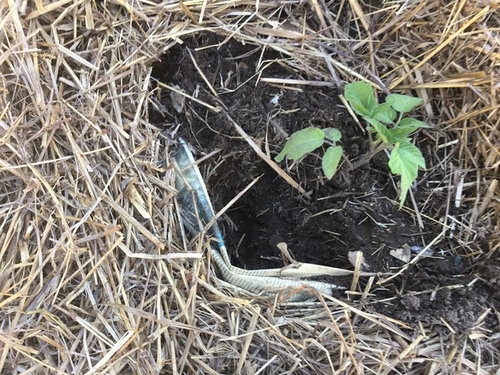
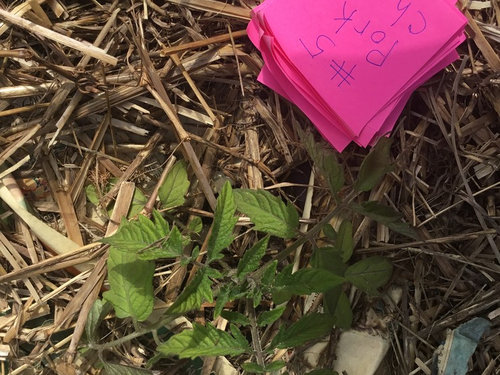
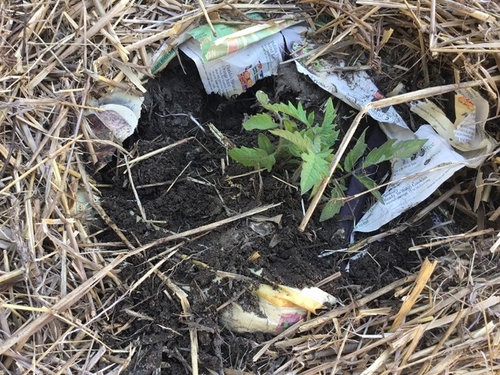
Some night critter is messing with tomatoes

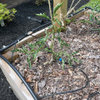
Before

After

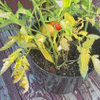
Another before

After

I think I know what caused it. I gave one row of plants and the Pink Accordian some water with fish emulsion in it. The plants that got hit (3 out of 4) are in that row. Whatever decided to make a mess was after the emulsion. The plants are disrupted, but seem to be slightly dislodged with roots and growing tips intact. I suspect large bird of prey. We have hawks, owls, egrets and herons near by. What do you think? How should I use fish emulsion in the future? Switch to seaweed based fertilizer?

Comments (29)

  • 9 years ago

    thx

  • 9 years ago
    last modified: 9 years ago

    it's one of the downsides to using organic fertilizers.. they usually bring animals following the smell. there's not much you can do except try using it in the morning so most of the smell is gone by the night time. maybe try to stick a PVC pipe next to each plant 6-8" deep and pour it in to the pipe, and use it like a feeding tube ;) may help, but rodents have good sense of smell..

    at least when the plants get bigger you won't have to worry too much, it's when they're small that they risk pulling them out of the ground as they search for the scent that leads no where.. depending on how many plants you have, maybe even consider making a cage of some chicken wire to put around each plant when you feed them. you might find yourself needing them anyway once the plants start fruiting ;)

    janice8bcharlestonsc thanked stevie
  • 9 years ago

    Oh I've tried fish emulsion once and never again! First my dogs dug up my veggies and second, the stinge was way too much for my family, lol. I have a small backyard and we didn't even go out to enjoy my new outdoor living room until it aired out. I switched to a fish pellets and it works great.

    janice8bcharlestonsc thanked Elena
  • 9 years ago
    last modified: 9 years ago

    it doesn't smell that bad. maybe if you stick your nose in the bottle. heck, i've used it indoors and only smells for a couple hours. plants go crazy for it..the pros outweigh the cons in my opinion. good stuff, whether food or plant nutrients don't always have to smell like roses. :)

    janice8bcharlestonsc thanked stevie
  • 9 years ago

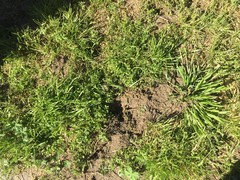
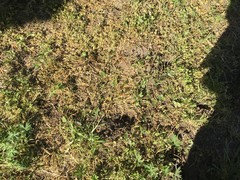
    I am hoping the critter was just passing through. But, thinking back, something started digging holes in the backyard about six weeks ago. Would a raccoon hunt for a mole?. Here are two photos.

  • 9 years ago
    last modified: 9 years ago

    could be squirrels, they are always making holes like that. they are either looking for food they have saved, or are saving. i have a lot of them in my area (big nut tree in my neighbors yard) and they're constantly making holes in the ground..

    janice8bcharlestonsc thanked stevie
  • 9 years ago

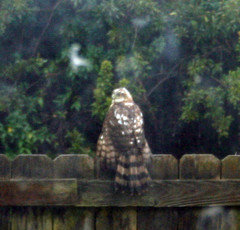
    We get serious hunters. This is from a couple years ago, but shows potential. That is about 20 ft from my garden. The birds of prey like to sit up there and watch what is going on in the small creek just beyond that fence.

  • 9 years ago

    Those holes look like skunks looking for grubs. Here, they usually follow the edges of flower beds, where the mulch meets the lawn. They push the grass, mulch into little piles as they dig shallow holes looking for the insects.

    janice8bcharlestonsc thanked ncrealestateguy
  • 9 years ago

    There aren't a lot of birds in SC that would be interested in eating putrefying fish, and those that are would not likely be active at night. Most birds operate by sight and sound and have a poor sense of smell except for carrion eaters, and even vultures, etc. use their eyes in conjunction with their sense of smell. Without an actual carcass, I doubt they'd be interested.

    I suppose something like a seagull might be a potential culprit, but to me, stuff being rooted up/pushed aside and digging is a sign of mammalian activity. Skunks, squirrels, raccoons, etc. Skunks and racoons would be attracted to the fish odor. Squirrels wouldn't, but a lot of the other disturbed areas could be due to squirrels--squirrels and chipmunks dig up a few of my seedlings every year as. collateral damage in their busy digging activities.

    janice8bcharlestonsc thanked gorbelly
  • 9 years ago
    last modified: 9 years ago

    Those holes in your yard are from armadillos digging for grubs and other insects. n Very common sight here and yes, Charleston SC has them. They are most active at night and early in the morning so I'm betting that somewhere not too far away you will find a home burrow.

    Dave

    PS - and they love fish emulsion smell but don't ask how I know that ;-)

    janice8bcharlestonsc thanked digdirt2
  • 9 years ago

    Huh. It hadn't occurred to me that SC is armadillo territory. Neat.

    janice8bcharlestonsc thanked gorbelly
  • 9 years ago

    Can armadillos climb a fence?

  • 9 years ago

    No they just rapidly dig under it. They have big claws. And it is amazing the small holes they can slip through.

    Dave

  • 9 years ago

    They can climb. They probably prefer to dig, but people report seeing them climb all the time. To exclude them with a fence, you need to bury it a certain distance into the ground AND tilt the top part of the fence outward.

  • 9 years ago

    About how much damage can they do? Given these already act like my yard belongs to them, what is worst case?

    I left some planting holes open, I am in the middle of plant out. The holes have four stinky tablespoons of espoma tomato tone and biostarter. If he lives nearby, he will not be able to resist.

  • 9 years ago

    Some info...

    The first sightings of
    Armadillos in SC came in the late 1980’s and early 1990’s
    in the lowcountry near Jasper and Barnwell counties
    (Platt and Snyder, 1995). Today, they have expanded
    their range but remain limited mainly to the lowcountry
    west of the Santee River and into the western piedmont
    counties such as Edgefield and Saluda. A few unconfirmed
    sightings have been made as far north as Anderson
    county and in Clarendon county east of the Santee
    (personal communications with Extension agents, wildlife
    biologists, and maintenance staff with the SC Department
    of Transportation). Although not sighted there yet,
    Georgetown, Horry and Williamsburg counties will be the
    most likely next stops for this animal. North Carolina
    already has records of them in several counties along the
    southern border (NC Wildlife Commission, 2013).

  • 9 years ago

    They eat a lot of pests. I wonder whether it would work to lay down panels of chicken wire on the soil around your tomatoes while they are still young and vulnerable and weight them down with stones or bricks. Maybe that would discourage critters from digging in the soil but still make it easy enough for you to lift the panels away when you need to fertilize, etc.?

    I have no idea how smart armadilloes are and whether or not they would figure out to move the stones/bricks. Raccoons might.

  • 9 years ago

    Janice -

    Birds of prey hunt by sight, not smell. A great horned owl or a redtail hawk is not going to be grubbing up the dirt near a tomato plant.

    It's going to be some small omnivore or insectivore attracted by the smell of the fish emulsion or the bugs attracted by the fish emulsion.

    janice8bcharlestonsc thanked User
  • 9 years ago

    I'm pondering fertilizing non organic this year. Thanks.

    this has been a challenging start to 2017.

  • 9 years ago

    Raccoons also dig, looking for grubs. I have seen them even dig the lawn.

    But in the garden I have seen only squirrels messing around. Once they got the peanuts and corn that I had planted.Luckily i have not seen a single squirrel around here. There lots of Chicken hawks around

    Trick them (whatever they are) by spray real super hot pepper. I bet they won't like it. lol

    sey

  • 9 years ago

    Gorbelly,

    Regarding laying down chicken panels....and weighting them. I use cages. I would prefer modifying the cage, maybe the lower three feet. Then secure the cage. There is always the possibility of just digging under though.

    Today was very windy. The plants did not like it.

    Also saw a huge snake on Tuesday. Looked like a rat snake, big and healthy. I believe I saw the same snake or its cousin last year, but it was much smaller. Back in 2009, a snake encounter would have had me in the house stewing for at least 24 hours. Not any more. I guess I am now desensitized. I stared that snake down, he finally bolted and retreated. In the wrong direction, back into my garden. I went in there anyway.


  • 9 years ago
    last modified: 9 years ago

    > I'm pondering fertilizing non organic this year. Thanks

    there are many alternatives to organic fish fertilizers..soy protein hydrolysate is another good option and fairly inexpensive.

    Jobes makes a great fertilizer with it. even has kelp and beneficial fungi.. Link
    it's water soluble and price is reasonable. i believe i picked some up at walmart last year for around $5-6. i also think Miracle-gro (the green box, it's organic) also uses Soy protein hydrolysate.

    if you want to stick with fish, Espoma also makes a fish fertilizer without the smell. Link ..it is not as cheap as the other fish emulsions because it's fish hydrolylate (and they use whole catfish, and not the typical 5-1-1 fish emulsion which kills most of the vitamins due to heating process).

    there is also fish pellets which i've used in the past.. Link
    tomatoes go gang-busters over it and doesn't smell like the liquid does, it works best if you put it at the time of planting, buried in the hole.
    personally, i would use whatever means necessarily to continue using fish/kelp. no other fertilizer makes plants grow like it, in my opinion. this year that is all i will be using along with Kelp meal. which you may also want to try, it's more of a supplement/micro-nutrient though. ironically, it smells just like the beach/ocean it comes from.. your luck, it may attract seagulls instead (haha)..

  • 9 years ago

    janice: Back in 2009, a snake encounter would have had me in the house stewing for at least 24 hours. Not any more. I guess I am now desensitized.

    Oh, I would be thrilled to see a big old rat snake in the yard! Better some snakes than voles.

    janice8bcharlestonsc thanked gorbelly
  • 9 years ago

    Yes, the snakes are on my team.

    My husband does not buy the armadillos theory. His reasoning is he has not seen one. We typically see representative road kill.


  • 9 years ago

    Could easily be skunks, raccoons, etc. Both are good climbers.

  • 9 years ago

    Stevie: Thanks for all the info on the fert alternatives. I may run a test on a weed to see if the critter threat is still out there. I like the idea of a feeding tube. A turkey baster might work for delivery. Then just collapse the sand to seal it

  • 9 years ago

    I have come up with a plan. After I fertilize my new plants, I will dump a good amount over the fence. I hope any interested passerbys will get intercepted by the smelly stuff on their own side of the fence. If by chance they decide to make the climb, I will have a bowl/bucket of more fertilizer for them . My hope is it will bury its face and have the smell so strong on itself that it cannot distinguish any smells in my garden anymore and leave.

Sponsored
Peabody Landscape Group
Average rating: 3.5 out of 5 stars8 Reviews
Columbus' Reliable Landscape Design & Contracting