Software
Houzz Logo Print
kc270

Is This an Example of Overloading a Top Load Washing Machine?

9 years ago
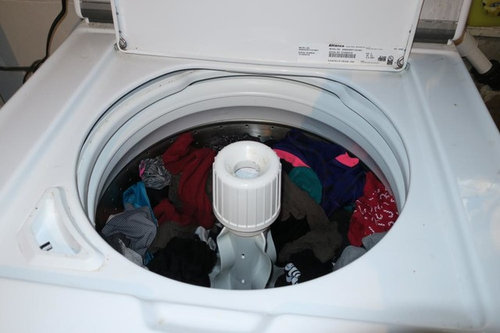
The washer is a Speed Queen AWNE92SP113TW01. It has a 3.3 cubic feet tub.

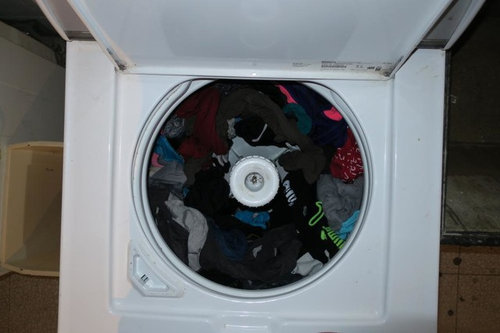
From the photos below, taken after the wash cycle completed, does it look as though the washer was filled too much with laundry.

I am trying to figure out a rule of thumb for loading this machine. Would loading the drum no more than 3/4 full with dry laundry be something to use as a guide?


Comments (19)

  • 9 years ago
    last modified: 9 years ago

    If that is stuffed in there and wet, I'd say that is too full. In my old Maytag, I would fill up the tub, to the top of the agitator fins. I would places the clothes in there and maybe slightly pushed down, but not by much. When the load was done, all the clothes were pressed against the sides of the tub with a lot of open space around the agitator.

    Did you pack the dry laundry in there or loosely fill to the top of the fins. The clothes need to circulate in the wash water.

  • 9 years ago

    I did not load the washer. One of my kids did. I think they were trying to avoid doing two loads and over stuffed the washer. My rule for them (and me) is to fill the washer no more than 3/4 of the way to the top of the tub with loose, dry laundry. Any more than that and the laundry cannot circulate, as you noted.

    Plus, I am concerned overloading strains the mechanical components of the washer. I had a 1996 era Kenmore (made by Whirlpool) washer that would require clutch replacements when the washer was overloaded on a regular bases. A repair person told me overloading the tub accelerates wear on the clutch.

    I posted the question and photos to find out if I am off target in saying that the tub should only be loaded 3/4 full.

  • 9 years ago

    This is my life. I tell mine to separate dark and light :-)) and then drop loosely to the second from the top row of holes. No pushing or packing. I have a SQ TL.

  • 9 years ago

    It looks overloaded to me. Kids aren't the ones paying the repair bill, or buying a new washer. Had to lecture our own son too many times about that.

  • 9 years ago

    Wow, looks like your kid literally stuffed as much laundry as they could in there. Definitely overloaded by twice the amount it should be.

  • 9 years ago
    last modified: 9 years ago

    Yes, I agree with everyone else. Your kids for sure overloaded it. I also have a TL SQ. (AWN432) I think that like you suggested, 75% full dry, is probably a full load. With lightly soiled items, you could probably push it to 80% but that would be about maximum I'd think. Good luck with retraining the kids. One of mine in particular likes to pull the same stunt and it frustrates me to no end!

  • 9 years ago

    Well, if I was a kid, I might think that loading it up like that makes a lot of sense. I would not understand, why do 2 loads when there really is room for all of the clothes in the tub, if I just make room for them. Hahaha. Your kids might need a science lesson on the mechanics of a washing machine.

    Animation of a machine in action, and hover the curser over the parts and they say what they are.
    http://www.partselect.com/JustForFun/How-A-Washer-Works.aspx

  • 9 years ago

    Looks a bit much from the pics but I'd have to see it agitating the load to offer a proper opinion. Appears to be synthetic and knitted items such as sweaters, which typically don't adhere to the basket when spinning stops as much as towels/cottons.

  • 9 years ago

    If it is synthetics they need more room and more water than say cottons because they are resistant to water.

    Like Dadoes says its hard to tell without seeing it in motion.

  • 9 years ago

    At the end, I was fixing the Kenmore (Whirlpool) so often, I should have replaced the fasteners with wingnuts to speed up the repair process. I do have a sign I made in large print right above the washer stating how to load it properly, but of course since it was just their dad who put the note there, it can't be taken seriousely because they are sure I really don't know much of anything about washing machines. Yay for kids who do their own laundry, but like someone else said, they aren't going to pay the bills they overload and put premature wear on the machine.

    I told my daughter she is doing loads designed for a laundromat's front loader super capacity machine, not a home top loader,

  • 9 years ago

    KC270, which clutch on your Kenmore exhibited a problem related to overloading? The spin clutch and basket brake aren't affected by overloading. The agitator dogs (which drive the upper spiral section), possibly. The motor coupler, possibly.

  • 9 years ago
    last modified: 9 years ago

    Dadoes - I got in-person and also online advice from machine repair techs stating that with my particular model washer, the clutch (and/or basket drive) would cause a washer to slip and not spin dry, and this was typically due to wear on the clutch from overloading the machine. It was my experience that replacing the clutch restored the spin dry action. Mine was a direct drive model, and as far as I know, there was only one clutch on this machine, and it attached to the washer's transmission.

    The agitator dogs never were never a problem - the agitator always worked fine. I did have a motor coupler fail once, but did not need a clutch at that time.

    For approximately the first 16 years or so that we owned it, the washer spinning action was trouble free, except for a timer that needed to be replaced. After that (and also coinciding with my kids starting to wash their own clothes), the breakdowns became a yearly occurrence.

    You may have had experience with a Kenmore washer made by a different manufacturer. That would account for the two clutches you referred to vs my Kenmore with a single clutch.

    When I saw that huge load in the washer, I almost started to regret replacing the Kenmore last year with another old school top load washer, instead of a large capacity front loader.

  • 9 years ago

    Hmm, that's interesting and filed for reference. :-)

    I'm very familiar with the direct-drive machines, have worked on numerous of them (Whirlpool, KitchenAid, Roper, etc.). I referred to the agitator dogs and motor coupler in the question because it's more reasonable to me that they'd by affected by overloading. Overloading causes more significant impediment to the agitator oscillating than it does to the spin clutch.

  • 9 years ago

    I am wondering if the combination of overloading and using a detergent that is not low sudsing may have caused the clutch(es) to wear out faster because of suds locking.

  • 9 years ago

    I would suspect a worn basket drive clutch to be caused by a failed neutral drain pack. This would cause the machine to begin spinning while the bath water is still being pumped out, putting quite a strain on the clutch pads.

    MRB

  • 4 years ago
    last modified: 4 years ago

    Load the DRY clothes loosely till they reach the last level of holes on the walls of the tub. If the tub has no holes, use the bottom of the tub collar/rim as a marker of a full load.

    Front loader? Load the tub 3/4th full of DRY, loosely loaded clothes. There. Easy, it's not rocket science. Why is this so hard for many people to figure out on their own?

    For great results every time, count the amount of garments you have in a correctly loaded wash load. Use that as a gauge. With my small washer, I use the fourteen t-shirt rule. One pair of jeans equates to four t shirts. Two skivvies equate to one t shirt, etc.

    Another thing....Not only should you wash similar fabrics, colors and weight types together, you should wash garment types together....shirts with shirts, towels only with towels, etc

    And uh um..,..That washer in the photo is only slightly overloaded, but you're on the right track, you just got slightly de-railed

  • 4 years ago
    last modified: 4 years ago

    As the current owner of a 2017 analog SQ, I would say loading to the last level of holes would be overloading the machine unless you know how to manipulate the water level, something you can not do with a digital model. The default water level in a SQ (analog at least) is below the second row of holes in the tub. Using the reset on the water level control you can get the water level to just above the top level of holes during the wash portion of the cycle, and to about the rim during the rinse portion of the cycle. If you are handy with mechanicals, you can adjust the machine's default level of water level, which I have not done. There are Youtube videos which demonstrate how to do this. Even when increasing the water level, I believe it is advisable to keep the dry load at or below the second row of holes. You want the load to be able to move a bit so there is less likely a chance of wear and tear on the fabrics and linens.

  • 4 years ago

    This is an old thread, but it bears repeating should someone come along this thread that the photo shown at the top in the original post is IMO overloading. I have the AWN432 Speed Queen TL washer like armjim does and I'd say to actively try not to overload it. My eldest dd does this on a regular basis and does not seem to learn. It's her clothes and she can ruin them if she wants to--all I have to say on that one. Plus they can't get fully clean inside an overloaded washing machine.

    But for the rest of us we don't overload, not only to protect the laundry, but washer itself. Overloading a TL washer is asking for trouble. It's a lot of weight and strain, even for a Speed Queen. Never had an unbalanced load in this washer, but I don't like to put that extra wear and tear on it.