Software
Houzz Logo Print
rouge21_gw

Grass for winter interest

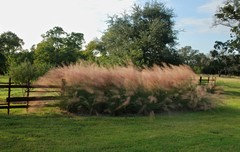
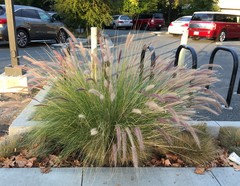
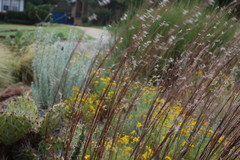
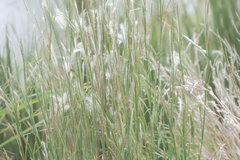
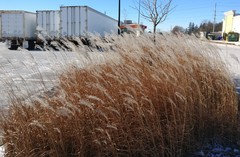
I was walking into a university athletic centre this past weekend and it was hard not to notice this mass planting of grass:

Comments (62)

  • 9 years ago
    last modified: 9 years ago

    I really love how the grass seed heads just go in so many different directions, like a huge flight of apostrophes. That other grass. b...something "Blonde Ambition" looks similar.

    rouge21_gw (CDN Z5b/6a) thanked Marie Tulin Boston burbs z 6a
  • 9 years ago

    Yes Marie, Bouteloua - such a fun name.

    rouge21_gw (CDN Z5b/6a) thanked peren.all Zone 5a Ontario Canada
  • 9 years ago

    So nice to see another "mood" of those grass! Thanks for the update Rouge.

    rouge21_gw (CDN Z5b/6a) thanked posierosie_zone7a
  • 9 years ago
    last modified: 9 years ago

    I think its great we are seeing this done in cities along streets etc. It saves on maintenance and especially on watering.

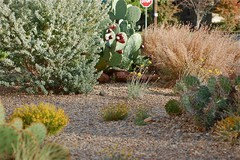
    I know the picture below is not an example of a wide swath of grasses or even an unusual variety but each time when I drive by this public parking lot my eyes are drawn to it...the interesting shadows they cast throughout the day, the movement of the stalks and seed heads with any breath of air makes this a worthwhile planting through all 4 seasons.

  • 9 years ago

    Yep, there are a few traffic islands completely filled with Stipa gigantea (golden oats) in Norwich - a wonderful sight when caught in the sun.

  • 9 years ago

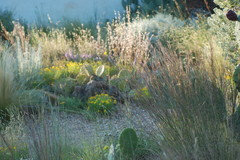
    This has been a look here in Texas for awhile but I still get aroused by a good stand of big grass. Here is some displays of Muhlenbergia 'Pink Flamingo" (a natural intergrade between M. capillaries and M. lindheimeri) down by a development. It is the only good thing about that development. They destroyed a great swimming hole and now it is behind gates and in someones backyard.


    rouge21_gw (CDN Z5b/6a) thanked wantonamara Z8 CenTex
  • 9 years ago

    That is spectacular 'wantonamara'.

  • 9 years ago

    The wind , an it has been windy, does amazing things to it.

  • 9 years ago
    last modified: 9 years ago

    John Greenlee has said two of his favorite grasses for Mediterranean climates are Festuca mairei and Pennisetum spathulatum. They are both evergreen to semi evergreen, depending on climate. They do well when planted together in about a 70/30 ratio. The Festuca is hardy to at least z5 and the Pennisetum is a little harder to pin down - one source says it's hardy to 0F and others seem more conservative.

    Here are links to Greenlee website. It's one where the photos rotate so you can see the grasses in different seasons. The photos suggest they will look fabulous in the winter landscape anywhere they are hardy, evergreen or not.

    Festuca mairei Pennisetum spathiolatum

    I am growing both of them for the first time so I can't say how they will look in the winter, but they are certainly handsome grasses. The flowers of the Pennisetum are on long tall flexible stems and are so pretty!

    Otherwise, I've long been in love with Pennisetum alopecuroides and it's cultivar Hameln. I love its graceful fountain shape all summer, but it has a wonderful fall and winter presence. In my Z9 garden it looks good until at least January and if I let it linger until end of January/early February before cutting it back, it starts growing no later than early March. That means there is no more than a month or two each year when it doesn't have much of a presence. My experience with Panicum Heavy Metal is similar. Though Panicum Northwind (below) is new to me this year I think it's early fall display certainly shows promise.

    This is Panicum Heavy Metal now in early fall.

    And Pennisetum ''Hameln' showing early fall colors before winter turns it straw colored.

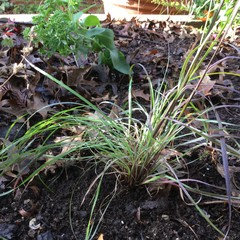
    If Climate Change moves you into Z6 the you can grow the brown carexes. I love most of them! They are evergreen and get even more colorful in the wintertime. Right now I am trying out Carex 'Cappuccino' and I am loving it. This is a first year plant and it hasn't flowered yet and it is far from full size, but it is ever so graceful. It's not easy to get a photo that shows how many pretty colors it has, but you can see its promise.

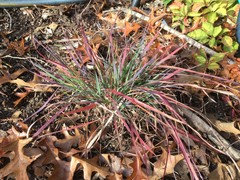
    Carex buchananii 'Red Rooster' is an upright brown Carex that is really pretty too. This is another first year plant recently planted up from a 4" mail order plant so it's small too.

    rouge21_gw (CDN Z5b/6a) thanked echolane
  • 9 years ago

    I have enjoyed Stipa barbata. But it took a step back this year. It kinda grew up from the dirt and did not make an inflorescence this year. The seeds are huge. the grass is slow grow. I have a bunch of babies started from last years seed. .

    rouge21_gw (CDN Z5b/6a) thanked wantonamara Z8 CenTex
  • 9 years ago

    Stipa barbata looks so interesting! Annie's Annuals has a great pair of photos of it and a good writeup. I'll have to watch for it.

    rouge21_gw (CDN Z5b/6a) thanked echolane
  • 9 years ago

    I have some seed, I think. I could send them. To bad you are in CA. , I have been busted once for sending plants across state lines and they made me sign a paper saying , that I would not do it again so sorry, I can't mail you my babies.

    rouge21_gw (CDN Z5b/6a) thanked wantonamara Z8 CenTex
  • 9 years ago

    I'm drawn back to that first photo dated in March and thinking how remarkably good those grasses look after going dormant months prior. I'm not sure how many grasses could look this good for those many months of hard winter weather and I think it's one of the things to think about when choosing grasses for a particular site. I have only one grass in my garden that is a real dud in the winter and if it were only a plain green mound in summer instead of a sparkling variegated one, I wouldn't keep it. Luckily it's not the only grass in my garden so I can afford to keep it.

    Pennisetum alopecuroides was the first grass I tried in my garden and it was a fortunate choice, not just because of its graceful fountain shape and pretty late season flowers, but almost especially because of its wonderful winter presence. It will always have a place in my garden.

    rouge21_gw (CDN Z5b/6a) thanked echolane
  • 9 years ago

    I'm a prairie person and I want to burn off the original grass photo (well in January or February usually)...fan the flames! That's what grasses are for...and wow do they respond to it!

  • 9 years ago

    People with large expensive buildings nearby get really antsy when fire happens.

  • 9 years ago

    Yeah, I don't get that attitude, fire shaped the prairies :)

  • 9 years ago

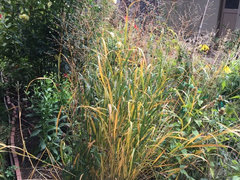
    At the local commuter train station. (To the right of the sidewalk, not in the picture, are the train tracks).

    At

  • 9 years ago

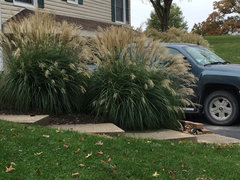
    Miscanthus Adaigo maidengrass at my basement garage. You can see it on the other side too, just above the pickup. Unremarkable in spring and summer, GREAT in fall and winter. Zone5b, North Missouri.

    rouge21_gw (CDN Z5b/6a) thanked littlebug zone 5 Missouri
  • 9 years ago

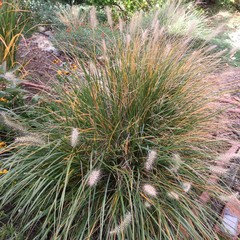
    At Chipotle Restaurant in Palo Alto, only one of two plants was alive in an otherwise neglected landscape of dead grasses. I took a photo of the pretty one, Pennisetum setaceum, looking unfazed by the bleakness surrounding. Would have been a gorgeous display if the strip had all been planted in a group of these. The other plant, a lone Miscanthus, was alive, but had been oddly pruned so no photo was taken.

    rouge21_gw (CDN Z5b/6a) thanked echolane
  • 8 years ago

    I love the pictures of the grasses above! I've always been hesitant to employ grasses in my landscaping, mainly because I do not have a large enough space for a good effect. But one of the other discussions by my eco-garden friends make me feel like I have a lot more to learn about making an educated choice in grasses, instead of just picking the one I am most visually attracted to. So, still a lot to learn.

  • 8 years ago

    Try the tiny fescues and deschampsia (Tatra Gold is a fave of mine) also the little uncinia (for bronze and rusty tones without large clumps of carex testacea.

    Just one plant makes a statement - see molinia arundinacea 'Skyracer'...or (in a pot) the much smaller molinia 'Edith Dudszus'.

  • 8 years ago

    A lot of the smaller bluestems are good for small spaces too.

  • 8 years ago

    Great discussion!

  • 8 years ago

    Yes Camp, I could not get M. a. 'Skyracer' so I got the equally beautiful statement making Molinia a. 'Karl Foerster'. It is approx. 8'

    then with fall colour a couple of years ago with Delphinium trying to rebloom very late season.

    I adore the much smaller Molinia c. 'Variegata' as well.

    The smaller bluestems are a favorite of mine too mara.

  • 8 years ago

    I am too far south for the really beautiful shows of fall color, d@ng it all. I am about to send my carefully collected orange turning one to a friend in Oklahoma. It just turns brown here in Central Texas. My native tall green blue stems turn a beautiful red. I would love a blue foliaged bluestem that turn a color. The only one so far has been Los Lunas who turns a pink during fall and I actually get a color from it. I think it is from SOUTHERN New Mexico which is key, I think. I think the others are dependent on the hardening off of cool nights earlier in the fall.. We are just getting coolish at nights and the grasses are already brown colored.

  • 8 years ago

    Bummer! I think fall is my favorite time of year for grasses and it wouldn't be the same with no color change. But winter color is okay too.

    Can you grow Stipa arundinacea? Don't ask me to spell its new name though..... It looks almost like fall colors all year. I quite like it.

    rouge21_gw (CDN Z5b/6a) thanked echolane
  • 8 years ago

    anemanthele lessoniana - but it is a seeding beast. Does well in shade.

    rouge21_gw (CDN Z5b/6a) thanked User
  • 8 years ago
    last modified: 8 years ago

    I haven't found it to be all that bad in terms of seeding about. Always a few, but not anything like the famously invasive Stipa tenuissima.

  • 8 years ago

    I have it in the wood, where it can be more free range...along with milium effusum (another generous seeder)...but both can be pulled out without having roots which delve into the centre of the earth (Blue Lyme grass - a former nemesis). I also have tenuissima in my gravel garden - weeding is my eternal summer occupation - hours and hours.

    rouge21_gw (CDN Z5b/6a) thanked User
  • 8 years ago

    I have S. trnuissima and it hardly seeds at all here. Some, but very manageable. It is hard to seed in my yard. I think the secret is no watering and hot hot hot.

    rouge21_gw (CDN Z5b/6a) thanked wantonamara Z8 CenTex
  • 8 years ago
    last modified: 8 years ago

    Camp, this is OT but I know you are following this thread Do you want me to collect some Palafoxia calls , a pink airy annual that is a tall meadow plant that likes lean dry soil and sun. It germinates in heat. and grows in the latter part of the summer blooming from august to November. Email me or PM me. TxR says it is this years favorite addition to her garden.

  • 8 years ago
    last modified: 8 years ago

    The lack of good color was in those small blue stems. I think you said that nurserymen in Ca. didn't carry them because of the lack of autumn color. They don't carry them here either and I think for the same reason. I always wondered why and after growing MANY of TxR's seeds and putting them out and becoming discouraged, now I know why.

  • 8 years ago
    last modified: 8 years ago

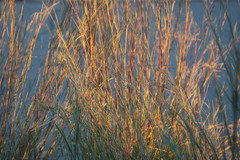
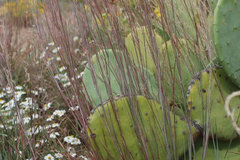
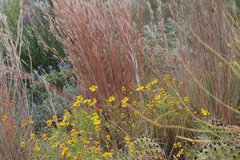
    I pulled up some Little Bluestem pictures showing various colors and growth habits.

    Since I have a prairie sort of yard and am not looking for formal organization or neatness, its fun to watch for the variety of the different kinds I've bought, those from unnamed types around here and among the volunteers--- its amazing how much variety there is in color and height, time of bloom, when they color up, spacing of seeds etc. No other grass I grow has this kind of variety.

    The first three are very tall native ones from around here yet even these vary in height. These were shot as they are coloring up and putting up tall stems but no seeds fuzzing up yet.


    I think this is a volunteer from Blue Heaven, those are more deeply turquoise in summer rather than powder blue and the seeds are sparsely spaced along the stems compared to other kinds. They are the reddest in fall and turn fairly early.

    Prairie Blues--nice blue in summer and color up in shades of pinks
    Blue Heaven type, a volunteer
    Blue Heaven type again.

    I'm not sure what these are. Volunteers but not as red as Blue Heaven but different than Prairie Blues or The Blues
    I love them in late afternoon light, the ones blurred in the background bloomed sooner than these in the foreground which were just starting to turn in October.
    Very late afternoon light. They just glow.

    rouge21_gw (CDN Z5b/6a) thanked User
  • 8 years ago
    last modified: 8 years ago

    Los Lunas from High Country Gardens, turns light pink but tends to flop up front in the deep sandy soil so I moved them to the hard clay out back. They don't have great fall color but are very blue in summer, they seed about quite a bit.

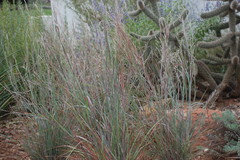
    The Blues (by the big cactus). This is an old picture, I've dug these 3 plants out because I didn't care for them so much, they form big bushy, rounded plants that don't look like Little Bluestem 'exclamation marks' and there's so many seeds they look dusty and heavy to me in winter, they don't color up well at all in fall, they get so loaded with seeds they also tend to flop and they seed about volunteers like crazy. I do use them along the driveway in a tough spot because I had so many plants the next year. Of all the purchased types, these are the most aggressive and my least favorite.

    From seeds purchased from Plants of the SW

    Andropogon ternarius--Splitbeard Bluestem. This grass should be used more in gardens, my photo doesn't do it justice at all. It is stiffly upright and gets lots of very white fluffy seeds that light up like small Christmas lights in the sun-- they literally glow white. Gorgeous backlit! I planted several seedlings by a large mature Pink Muhly and the effect is stunning (I need to take a picture) so I am planting more seed to make a bigger swath to replace the flopping Los lunas. They bloom the first year, quick to mature. I plan to replace the floppy Little Bluestem 'The Blues' along the driveway with these stiffly straight guys. From one plant I dug up out in the country along the roadside, I now have several.

    rouge21_gw (CDN Z5b/6a) thanked User
  • 8 years ago
    last modified: 8 years ago

    Not a very good picture of the Palafoxia sent to me via seeds from wantonamara but--its a hard plant to shoot and must be seen in person. As the season went on, it got a lot more small pink blooms than shown here in front of the Desert Spoon. They get rather tall by the end of the season with a big woody central stem and lots of branches, sort of like a big, airy pink tumbleweed, definitely on the 'wild side' and subtle in color, it would probably look washed out and out of place among flashier plants. I finally pulled out most of them today because they were petered out but two are still heavily covered in pink blooms. They bloom for a long period of time from midsummer to November. I LOVE THIS PLANT! And so does my husband. Around late September the entire plant is a subtle color that seems purple-pink, I think thats because of the stems? Anyway its a nice effect that looks fantastic among grasses because they are very airy.

    rouge21_gw (CDN Z5b/6a) thanked User
  • 8 years ago

    I had said John Greenlee, the grass guru, had responded to my question about why I never seemed to see LBS in our local nurseries. He said its period of fall color was so brief as to be unnoticeable. Nevertheless, I finally succumbed to LBS Blue Heaven this fall, buying seven plants from Santa Rosa Gardens (A big thank you to Tex for introducing me to this wonderful resource). They are coloring nicely during the three weeks I've had them, so I am hoping John Greenlee is wrong about Northern California, or at least my cold No. Calif garden. I'll know more next year when they are bigger.

    Wantonamara, you indicate you are Z8. I am Z9. If I am getting good fall color, why aren't you? Could I be experiencing a much poorer version of good fall color and don't even realize it? I really don't think so; i would find that a bit hard to believe, particularly as I get such good fall color in my other plants.

    Lovely photos, as usual, Tex.

  • 8 years ago

    Lovely pics, Tex. I have been growing a few of the knapweeds and thistles this year. along with scabious...for growing in grass. As well as the palafox, I have been on a desperate search for another little annual - Dahlberg daisies. I cannot fathom why we have so few US natives for sale in the UK. My entire woodland clearing spaces are an ongoing experiment to see what forbs will hold up in grass ( and exactly what types of grass are another different story). Bulbs are really proving to be absolute winner - I am moving away from the usual spring bulbs and looking hard at ZA dieramas, watsonias, ixias, sparaxis, babiana...and also camassias, which have been tremendous and work well in a fast draining sandy but rich soil. I feel I am in uncharted waters though - no books or blogs are attempting wild wood rehabs (meadows everywhere but there is no hope of emulating an english wildflower meadow in rich alluvial woodland soil). Also, I have no money but a fair bit of time and energy to raise annuals as plugs and station plant them in autumn (have already done the cornflowers, larkspur and scabious).

    Autumn colours - not really much to write home about here in temperate England. Plenty of buttery golds and yellows...but rarely do we see the bronze, crimsons, scarlets of a good maple show...and any that we do get are already long over. The grasses tend to go from blue/green/gold, straight to a sort of beige and buff colour...but under a cool dove-grey cloudy UK sky, this always seems OK. Apart from the beeches, autumn is strangely muted in East Anglia, and we never get the extremes of temperature that occur in the US.

    Since I am a shallow sort of stylist, I crossed off the more limiting ecological choices of going native and decided that anything which was not totally thuggish is fair game for this corner of intensively farmed industrial Norfolk. In fact, although my neighbour farmer has set-aside land and is probably less dependent on pesticides than most, I am effectively in a bit of a desert, so all and any pollinators, regardless of country of origin, can only add to the diversity.

  • 8 years ago
    last modified: 8 years ago

    Echo lane , I think we do not do the colors in Bluestem because these bluestem that color up that are mentioned are from further north. I am Z 8b an you 9 BUT, I suspect, that we stay hotter longer than you. Our cold comes in short blasts later in the winter, otherwise we are delightfully in the 60's and 70's, mostly 70's.. We are just now getting cooler nights. We were sleeping with an AC last week. OKC is usually 10º cooler at nights during this period. Not always but they cooled quicker also. Their summer often breaks in August- September while ours normally breaks in October. This fall was actually cooler sooner but not enough to effect the grasses. I am leaning to collect grasses from further south if we are talking bluestem. these are the weather details that I do find fascinating. Another anomaly is that Grasses grow shorter here.

  • 8 years ago
    last modified: 8 years ago

    The fall color of bluestem isn't why I like them. What I like is the texture, form and blue color in summer along with the seeds that shimmer and most especially the winter interest so I don't agree with Greenlee on the brief coloring in fall being a reason not to grow it. I'm more into the summer blue than the fall colors which are very subtle anyway, the biggest attraction is the texture.

    wantanamara, I can't remember having a summer breaking in August unless you mean dropping from the 100's and upper 90's to the low and mid 90's or an 88 or 89 if we are really lucky. Usually its mid to late September about the time we finally get some rain that it starts to change over but even so, not what you'd call cool or cold.

    The LBS were turning while it was still hot but they aren't all that colorful really, not compared to tree leaves which usually don't turn here until November. The photos you see of the named varieties are obviously hyped or else they don't color up like that here in Oklahoma because of the climate.

    The colors are very subtle, copper, purple-ish pink-ish or reddish, nothing to get excited over if you are really into color and in mid day sun, quite frankly, they are downright dull. You need the sun in a photo done just right or a cloudy day to bring out the color or have them planted to contrast against something neutral like other dormant grasses in other subtle shades. The 'reds' aren't real red like I've seen in pictures, they are more like a reddish brown, they only appear red on a prairie when everything else is beige, white, or ochre.

    I don't get red with the switch grasses, Shenandoah has never turned red for me, mostly I get yellow with the switch grasses as they start going dormant and then they go beige.

    The named Big Bluestems I've bought so far do turn red in September. Not as strikingly red as the photos I've seen but the plants are still fairly small so there is no impact. I think once they are big I will know if its red or just 'reddish' in a comparative way.

    rouge21_gw (CDN Z5b/6a) thanked User
  • 8 years ago
    last modified: 8 years ago

    One of the notable features of my climate is that our nighttime temps are significantly cooler than daytime temps, which is great for those really hot summer days. As fall approaches we might stay quite warm during the days but our nights can get quite cold as the season advances. This helps produce the good fall colors my garden enjoys. If Central Texas doesn't typically cool off much at night that might explain why Z8 gardens are less colorful than Z9 gardens??

    As far as the reddish fall color of LBS, it'll be a nice bonus if it happens but I will only be disappointed if they don't have a good winter presence. Meanwhile, as I begin my acquaintance with them, they are showing quite a variety of color and non-color. These are Blue Heaven.

    The first has some burgundy color at the very tip of the longer stem that is just out of the photo and there is that one stem that is a deep burgundy, but it's otherwise green. It's four other mates are nearly all green, like the one shown below. I've had the five of them not much over two weeks.

    This one has been in my garden several weeks longer and it is showing much more color.

    Below is Standing Ovation. It's been showing nice reddish color for many weeks now and is finally looking more like winter is nearer.

    I think Standing Ovation and the older Blue Heaven are proving John Greenlee wrong, at least as far as I am concerned. Perhaps they would be putting on a bigger show in a Colorado garden, but they are colorful enough to please me.

  • 8 years ago

    Can someone tell me what’s in the picture rogue took?

  • 8 years ago

    Milly Rey, Peren.all IDed it back in midOctober:

    "Very nice! I don't grow it but it appears to be a Pennisetum likely Pennisetum alopecuroides."

    I don't grow it, so can't confirm, but Peren.all is quite good at ID from photos.

  • 8 years ago

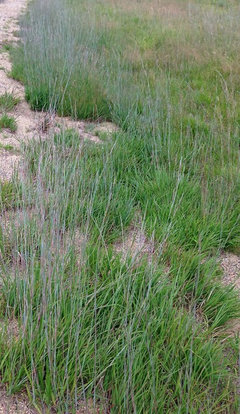
    I mostly don't grow grasses in the garden since they give me contact dermatitis (grow Carex and other grass-like plants instead), but do enjoy some of the wild grasses that occur here. Despite my growing conditions being so different from TR2's and 'Mara's, little bluestem is one of the grasses that grows in sandy spots all on its own, often along roads since sand accumulates there from winter road maintenance (and they don't seem to mind the salt). I had admired the plants but not known its ID until I saw photos here a couple of years ago. Here is one set of plants near the house that I enjoy. Since they are on the road verge, they usually get mowed at some point, but I enjoy them regardless. They contrast well with the other grasses and Carex nearby, and have a lovely combo of frosty blue and purple-red.

    little bluestem 7/24

    rouge21_gw (CDN Z5b/6a) thanked NHBabs z4b-5a NH
  • 8 years ago

    I meant this one: “At the local commuter train station.”

  • 8 years ago

    Milly Rey “At the local commuter train station.” It would be a Miscanthus sp.

  • 7 years ago

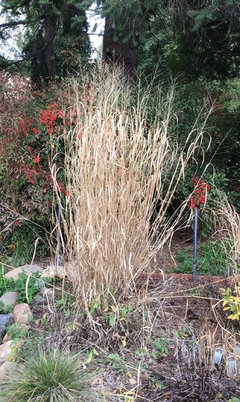
    littlebug wrote: Unremarkable in spring and summer, GREAT in fall and winter

    A common planting in an industrial plaza but the seed heads are so eye catching in the winter winds. (I am glad to see that the property landscape company doesn't cut it back until the spring).

  • 7 years ago
    last modified: 7 years ago

    Late to the party here, and no pics. I do love ornamental grasses - I enjoy the visual as well as auditory effects they offer.


    I'm particularly fond of Zebra grass (Miscanthus zinesis 'Zebrinus') and it's lookalike, Porcupine grass (Miscanthus sinesis 'Strictus'). "Little Zebra" is a terrific cultivar for smaller spaces (although that's relative...Little Zebra is still a good 4-5 feet high). Also love Bloodgrass (Imperata cylindrica); I bought a lot of it for this house. For a groundcover-type effect, the sedges are quite nice (although technically not a grass) and take drier shade in stride once established. At my other house I had more Pennisetum, but I kind of feel "eh" about it now - I like it but don't love it. Oh, and can't forget Chasmanthium for dry shade! (cool seed heads, too)


    Totally not a grass, but for a grass-like effect in a smaller package, Siberian iris are fantastic; bonus points for gorgeous flowers (none better cultivar than "Caesar's Brother" IMO).

    rouge21_gw (CDN Z5b/6a) thanked porkchop_z5b_MI
  • 7 years ago
    last modified: 7 years ago
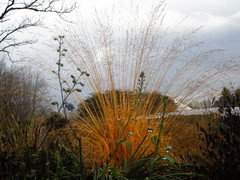
    I think this is the thread, along with some other inspiration, that sent me on a grass planting craze last year. I planted I think 14 little bluestem divisions in front of my house, and 7 switchgrass divisions off to the side, specifically for the standing winter foliage. Hopefully next winter they will be large enough to make good photos.

  • 7 years ago
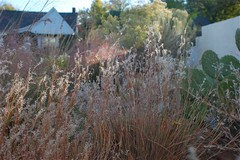
    I will add a couple of photos of the very attractive winter appearance of two different cultivars of Panicum. I am really impressed with how great they still look even though we are in mid-January! I will hate to cut them down about a month from now.


    First is ‘Heavy Metal’, is a long time favorite of mine.


    And this is ‘Northwind’, a recent addition to my garden and so different. At first I wasn’t too keen on its summer habit of hiding its flowers inside its foliage, but that’s completely forgiven in light of its very strong winter presence.


    rouge21_gw (CDN Z5b/6a) thanked echolane