Software
Houzz Logo Print
edlincoln

What trees take particularly well to pruning?

9 years ago

Lots of people here ask for fast trees that won't go above a certain height. Naturally the only way to achieve this is pruning. Pruning a tree or shrub to keep it small is a LOT of work and has drawbacks, but some may be up for this. It would be nice to have suggestions we could give them.

What trees take particularly well to pruning? Trees with lots of dormant buds, that bloom on old wood, can regrow from stumps, rarely catch diseases from pruning cuts and are good at "releadering". Generally trees that can recover well from pruning mistakes and don't have to be allowed to keep their natural shape to look decent.

Comments (14)

  • 9 years ago
    last modified: 9 years ago

    What other trees are suitable?

    Also...I'm not just thinking of a pruned hedge. I'm talking about someone in an urban lot who wants to fit in one more tree near the house or the power lines knowing it's size will have to be limited someday.

  • 9 years ago
    last modified: 9 years ago

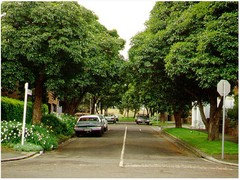
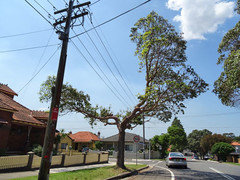
    It's not what you asked, but I know one beautiful evergreen street tree here, Lophostemon confertus, that is often planted under power lines then absolutely butchered by the authorities...makes me want to cry.


  • 9 years ago

    :( the Bradford Pear family seems unaffected by its frequently broken limbs.

  • 9 years ago
    last modified: 9 years ago

    Just a few thoughts.
    For an average gardener, pruning to size may only be practical if it can be
    done standing on the ground. That's perhaps part of the reason why grafted
    ornamental trees on a 4' standard has become (somewhat) popular. If the canopy
    itself grows to 4' tall before the growth slows down, then the overall height
    of 8' can be maintained with long-handled pruning tools without climbing on a ladder
    (the rootstock won't grow taller) There is a reasonably broad selection of
    evergreen/conifer and deciduous grafted ornamental trees in this mature tree size range on the
    market. The 'only' remaining issue is to control the spread of the canopy by
    pruning, my reading so far indicates that this is not always easy to do with
    wide-spreading scions.

    8' overall height is
    quite small, and I believe there is a market for garden trees that grow
    to 2 storeys (about 16') tall at maturity. I had a white ash that grew
    naturally to such a size, it was such a delight watching wildlife/birds from
    close-up from a second storey bedroom window. It is however, not really
    practical for an average gardener to prune a tree to a 2-storey size, I was
    simply lucky with my white ash tree. There are a variety of dwarfing rootstocks for various fruit
    trees for a range of mature tree sizes, but I am not aware of any dwarfing rootstocks
    for ornamental garden trees that grow to 2 storeys at maturity, I'd love to have a 2-storey short mature oak tree :-)

    Anyway, there is a reasonable solution for 8' garden trees in the form of standard grafted ornamental trees, IMHO. For the up to 16' mature tree size range and beyond, there are the various fruit trees grafted on a variety of dwarfing rootstocks (although this is a somewhat limited selection)

  • 9 years ago

    Pruning for size, at least for trees and the majority of shrubs, is a bad idea. Some trees that take well to pruning that I can think of would be willow, sycamore, some maples, and mulberry. Shrubs that can be pruned for size, to keep a constant size, not hard pruning, would be boxwood, forsythia, knock out roses, loropetalum, ligustrum, holly, and nandina. When planting under power lines, the things that come to mind are shrub standards (such as rose of sharon or saucer magnolia), dwarf crepe myrtles, dissectum japanese maples, and grafted ornamental fruit such as weeping cherry, ornamental peach, and ornamental cherry.

  • 9 years ago

    I feel this is probably like lots of things teens do. Bad idea or not, people do it.

    There are probably trees where it is less horrible then for others. The trees that spring to mind to me would be yew or holly. Maybe crab-apple? I see lots of small deformed apple trees, and they don't look that bad to me. There may be a difference between trees that are more likely to survive extensive inept pruning and ones that look good after that sort of treatment. The latter is an aesthetic judgment based on our expectations. I find old apple trees look fine despite rather extensive pruning because I'm used tothat look and expect it from them.

    Just playing with google and looking up what trees have the qualities I would think help in this area, ginkgo and flowering quince come up. Anyone with actual experience know if these trees take to extensive pruning?

  • 9 years ago

    If by flowering Quince you mean Chaenomeles then it is isn't really a tree but a shrub. It takes well to pruning and over here it is frequently seen espaliered against a wall or fence to save space.

  • 9 years ago

    I believe this has been done for centuries on Japanese maples and pines.

  • 9 years ago

    Not sure what type of Quince...an article said they bloom off of old wood, which would seem to be an advantage for something you are going to prune aggressively.


    There is an enormous body of work telling you how to prune pines to keep it small...but I'm not sure pines actually take the best to pruning. They don't have dormant buds, so I'd think they'd be less forgiving of pruning errors then a deciduous tree. Bark beetles that can be attracted by injured trees are a problem in parts of the US. I do wonder if people started to do it with pines precisely becaus it was a challenge and therefore impressive...

  • 9 years ago
    last modified: 9 years ago

    "If by flowering Quince you mean Chaenomeles then it is isn't really a tree but a shrub. It takes well to pruning and over here it is frequently seen espaliered against a wall or fence to save space"

    Yes flowering quince is a shrub. Frequently planted here along with forsythia, but I have also seen it espaliered. I assume it could be grown as a standard as well.

  • 9 years ago

    The classic plants that take well to shearing have a couple of common traits.

    Small leaves, as evidenced by buxus. wait, what about privets? they have large leaves.

    more importantly, density of nodes and latent buds. Nearly every plant that is considered a classic clipped hedge or topiary has an astonishing density of nodes from which new growth can sprout. this is something that most trees just don't have.

    There are plants that grow to a range of different heights. Maackia isn't going to be all that different at maturity from Cornus or Cercis, and a few Acer (primarily in the Japanese groups), but there are many maples that are going to be much larger.

    The better question is less which plants can deal with pruning better, but why people don't plant the things that are better selections for their location, and the answers to that one are going to drive you crazy, because you're expecting people to demonstrate the same degree of reason you think they should...and people just don't operate that way.

  • 9 years ago

    Ed,

    "they bloom off of old wood, which would seem to be an advantage for something you are going to prune aggressively"

    It's the opposite. If you prune something that blooms on old wood, you cut off the buds. You would want something that blooms on new wood, so your pruning would have less impact, right? At least, that's the theory on Hydrangea and why I couldn't get blooms on H. macrophylla, winter kill and bloomed on old wood = no bloom.

  • 9 years ago

    "wait, what about privets? they have large leaves."

    Most have small leaves that are similar to buxus. For example, look at ligustrum sinense and ligustrum japonicum.