Software
Houzz Logo Print
sam_md

Good, Bad or Ugly ID

9 years ago
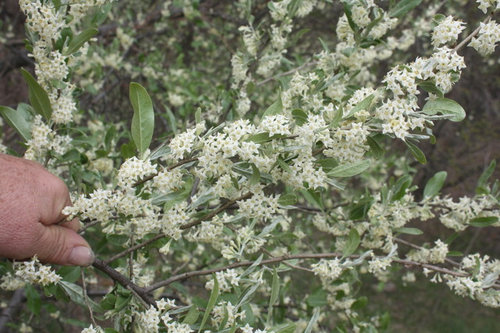
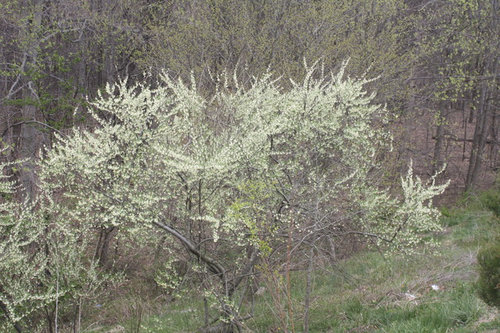
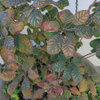
Large, arching shrub, some thorny, some not. Part of a highway planting. Blooming today, flowers are fragrant but short-lived. Underside of leaf is silvery. What do you know about this shrub?


Comments (24)

  • 9 years ago

    Invasive in VA and I kill an awful lot of it along the margins of the wooded areas around the public garden.

  • 9 years ago

    Eleagnus species.

  • 9 years ago

    So we're gonna call this one Autumn Olive, right? The other Elaeagnus species are not blooming yet. It's kind of a thug without redeeming graces. At one time planted for conservation & wildlife habitat purposes, that's no longer the case. So, here's another one to mark off the list.

  • 9 years ago

    I believe it's been used to reclaim strip mining sites in WV where nothing else will grow. So that's one redeeming grace. But since there are no strip mines in eastern VA, I'd strongly prefer AO not be planted here because it spreads aggressively.

  • 9 years ago

    It was used as a reclamation species because it fixes nitrogen....turning useless atmospheric N into something the plants can use. That's why it can aggressively overcome surrounding vegetation.

  • 9 years ago

    Wonderful! I know as a gardener, and someone who will be running a "native plant" ad campaign later in the growing season, that I should hate this plant. However, I just can't. It provides delicious fruit, beautiful spring flowers (with a nice fragrance), and almost year-round beauty with the silver-tinged leaves. It can be grown as an informal shrub to harvest fruit, it can be grown as a small multi-trunk tree, or a formally sheared shrub. It can also be grown in soil with a nitrogen deficiency, and can help surrounding plants that are suffering from nitrogen deficiencies because it fixes nitrogen with its roots. Read my article "Autumn Olive: A Nuisance Plant With Potential" . I tried to make it brief, but there really is so much more that I could add to it.

  • 9 years ago
    last modified: 9 years ago

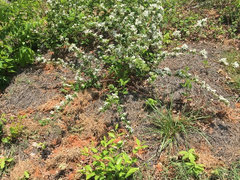
    Interesting. I live in a new construction home. To the right of my home there is a small wooded area, one of these popped up this year and is in full bloom on the hill next to my driveway. I saw the thorns and said I wanted to cut it down this weekend. (little people) it seems to have gotten huge in such a short period of time. The flowers are pretty though.

  • 9 years ago

    Don't cut it down! Move it to a more suitable spot, maybe on the hill at the back of your house. They are good for erosion control.

  • 9 years ago

    They are a pretty good size.

  • 9 years ago

    They transplant rather easily. Just take a shovel and cut all the way down around the plant, sloping down until it breaks lose. Then pick it up (by the soil, not by the plant), move it to its new location and water thoroughly. Keep it watered for the rest of the season, and it should do well.

  • 9 years ago
    last modified: 9 years ago

    I'd edit that 3rd sentence above to say ... "Then pick it up (by the soil, not by the plant), and heave it into the nearest dumpster!"

    Autumn Olive is widely recognized as one of the worst invasive shrubs in the eastern U.S.

  • 9 years ago

    Yes, but its positive qualities outweigh its negative ones. I have planted two on purpose. Can't wait until I get flowers like the one in the above post!

  • 9 years ago

    Lololololol oh my goodness I needed that laugh!!!!!!! Lmao!!

  • 9 years ago

    I didn't plant this thing it showed up, granted I need some erosion control on that slope but considering we have been here two years and I do not remember it last year the size of it is scary.

  • 9 years ago

    Just did a quick Google search almost everything says.. Cut it down!

  • 9 years ago

    Yes, but did you read my post? While the majority of people do say "cut it down", you need to think about a situation before you just default to what everyone else does. For example, here many people butcher their trees. Not just people, but local city and state maintained parks as well. Now, if no one thought about it, and just followed along blindly, every tree in the area would end up butchered. While it does pose an environmental problem, and sometimes can grow wildly if not maintained, the positive qualities of this plant outweigh its downsides. Please, take a moment and think before you just jump on an action.

    Bad Qualities:

    • Thorns (not always applicable)
    • Reseeds/Invasive

    Good Qualities:

    • Erosion control (that's why it was introduced to the U.S. in 1830)
    • Fixes nitrgoen, making it good for annual beds and grasses
    • Beautiful flowers with a nice, sweet, honeysuckle-like fragrance
    • Edible fruit
    • Attracts birds
    • Evergreen or semi-evergreen, year-round interest
    • Easy to obtain and care for after and during establishment
    • Can be grown as a small multi-trunk tree or a nice, formal, sheared shrub
    • Fruits have numerous health benefits
    • Fruits are also rather delicious in my opinion if you can get past the seeds

    So, you decide for yourself. Don't follow along blindly.

  • 9 years ago

    ^5 What lacey said.

  • 9 years ago

    "If it's wildly invasive, that's the only relevant point. No pros outweigh that single fact."

    So, can you explain why you think that, or do you just want to differ from my opinion to start an argument?

  • 9 years ago

    Fact: wildly invasive

    Opinion: it's a great tree

    I think you said all there is to say, Logan.

  • 9 years ago

    "it's a great tree"

    No, it's a great shrub.

  • 9 years ago


    NC State link declares it to be a weed, the search to find this link took about two seconds.

  • 9 years ago

    LOL! Touche, Logan. Guess I was still pondering your 'well, it's some kind of deciduous conifer' comment. :-)

  • 9 years ago

    "NC State link declares it to be a weed, the search to find this link took about two seconds."

    Makes no difference to me. I already knew that. I can go on to explain why I think trying to stop the invasion is a waste of time and resources, if you wish. Not that I don't like our native plants as well. I'm all for trying to plant natives.

    "Touche, Logan. Guess I was still pondering your 'well, it's some kind of deciduous conifer' comment. :-)"

    Yes, well, as everyone knows plant ID isn't usually my strength.