Software
Houzz Logo Print
ptangwai

Removing winter protection

9 years ago

So there are various ways of protecting roses for the winter (like covering in leaves, or mounding dirt). Question: what is the best/easiest way to remove that protection?

My roses had some shredded leaves piled up, but a lot of whole leaves managed to blow in and collect around the base and in the canes of my roses as well. The stuff outside the rose is easy to remove, but it's a bit of a pain the work the leaves out of the canes. Is there an easy way? Do you just get a leaf blower?

Similarly with mounded soil: how do you remove that soil in the spring, especially the soil that has canes all around it? Do you rake out what you can and then hose it? Or do you just leave it mounded a bit?

After the messiness with leaves I think I will use mounded soil next year!

Thanks!

Comments (6)

  • 9 years ago

    What zone are you in?

  • 9 years ago
    last modified: 9 years ago

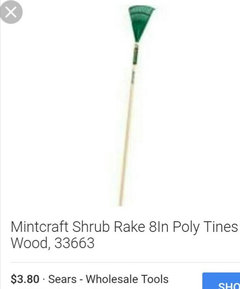
    I remember some one saying they bought a child's size rake for this and cleaning up debris between their plants easily !

    if you buy a blower get the vac type and it'll mulch up your leaves for you and you can top dress your beds with it

  • 9 years ago
    last modified: 9 years ago

    Lily is right. A electric leave blower has a vacuum setting too for shredded leaves.

    In cold climate rose growing it is a good Idea to use leaves or soil as winter protection. Mounded soil works great also. I have a small rake that is made for this called a shrub rake from Sears. It is small 8 inches 1/4 " and Quarter inch thin.

    It is as narrow as the mower wheel and is very thin for getting in between rose canes.

  • 9 years ago

    Hi PTW - I'm presuming you're in zone 6 or colder to be messing with winter protection. The reason I use organic material for my winter protection is precisely so I don't really have to do much of anything with it in the spring. I have so many roses that I really have to use the lazy method, and it suits my style anyway. I tend to lay filled leaf bags around the edges of my beds for windbreaks (or stand them around truly wimpy tea roses), and then rake in some oak leaves around the base of the roses inside the beds. Basically, I consider this "premulching" my garden beds for spring, since I don't really have time to do that kind of mulching once spring hits. Sometime in early March, I roll the filled leaf bags to a back corner of the yard, and just sort of fluff out the leaves to expose the base of the rose as I'm pruning. The leaves stay there all year as mulch anyway, so it's a conservation of effort.

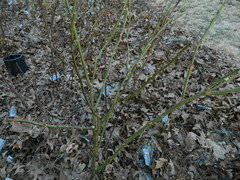
    Here's a random shot of a pruned rose in spring showing the leaf mulch around the base - if there isn't enough leaf cover left after winter I spread out some extra from the leaf bags as needed. You can see the tags alone by roses that I had to prune to the ground, and the leaf mulch around Savoy Hotel here who had a lot of surviving cane. Usually I don't find that many roses that have leaves stuck in their canes since so few of them have much surviving cane after winter anyway, but if the leaves get stuck in the branches I do a little wiggle of the branches to dislodge any stray leaves that our stiff spring winds don't blow away. I find that keeping the leaves there is harder than removing them, at least in windy Nebraska.

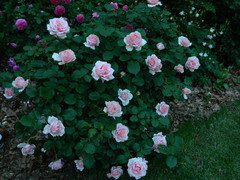
    Here's the same rose in a blooming season. I find I don't notice the leaf mulch once the rose gets going, but again that suits my style.

    My rule of thumb about winter protection is to not put anything down in the garden bed that I don't want to stay there. If you put soil, then that soil becomes part of the garden bed to enhance organic material (you could use compost as an even richer benefit to your garden beds). When spring hits, you can either brush it off the base of the rose as you prune, or just let the spring rains wash it away. Planting extra soil around the base of the rose generally doesn't hurt it, and in fact we can do that deliberately to reduce moisture loss of new bare root plantings. If you'd rather have a tidier look than soil or leaves, you could do the same with hardwood mulch. Or if you're in a climate where anything next to the rose canes can cause moisture damage, you could use just the bags of leaves approach around the edges of the rose and/or beds, and just roll them away intact in the spring.

    Of course, this is the lazy method, but I find I have more fun with my roses if I don't do things that feel like work. There's no single best way to remove protection, just pick protections that map well onto your finished effect you want for your garden.

    Cynthia

  • 9 years ago

    altorama - I am in the north part of Toronto which used to be considered 5b but is now more considered 6a (under the Canadian system. In the US system I am basically in z5).

    Lilyfinch - I actually did buy one of those little shrub rakes this spring and it definitely helps, but it still tends to get caught up in the canes when the leaves are on the crown.

    nippstress - I do have a leaf vac that shreds, but the bags are so small and now the zipper is broken so it's not very useful right now. I need to find a way to attach some kind of hose to the leaf vac to help control where the mulched leaves end up. As for the leaves stuck in my shrubs, my worry is more the whole leaves that keep blowing in and forming a water resistant barrier combined with some of the shredded leaves, plus the risk of rot because it is pretty moist around here. That has already killed some patches of my lawn over the winter. The leaves around here do not seem to break down that quickly.

    I do want to keep using leaves as a winter mulch and then to decay and feed my beds, and the shredded ones work ok (need to find a new way to shred though). It's the ones that blow in to form mats that I am struggling with a bit. I wonder if I should mound up compost for the winter and put the shredded leaves a bit further away, and then in the spring it's easy to wash away the compost and have it in my garden bed already.