Software
Houzz Logo Print
janice8bcharlestonsc

Fertilizing for Sandy Soil

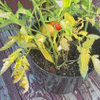
I noticed my plants had slowed down growing/budding and blossom drops seemed to be increasing, even after the huge rain we had Monday followed by lower temps.

I fertilized yesterday, which was about 4 days early in a two week cycle, with liquid Espoma GROW!. That seemed to do the trick. Plants started showing fruit tonight on many plants that seemed to be just sitting there before.

I try to wait 2 weeks between feeding, only because this seems to be a good general guideline. Since my soil is very sandy, is it possible a good rain can flush all the nutrients from the soil? The plants seem to be reacting strongly to the fertlizer. Should I shorten the cycle if the plants look like they need it, or if there has been significant rainfall? Espoma Start and Tomato tone was adding to Planting holes at plant out. Is it possible that is also depleted/flushed due to rain? Thanks.

Comments (9)

  • 9 years ago
    last modified: 9 years ago

    This is the problem with soluble fertilizer, especially in containers, whether it accumulates or gets washed away. Sure it is possible and likely to wash all the solubilized nutrients
    away in a downpour, in a soil that has a very small field capacity like yours with
    rain basically washing a lot of the soluble fertilizer (away). Massive algal blooms result from soluble nitrates getting washed into rivers as well as problems of intrusion into the water table. A third
    of the nitrogen (soluble part) and the majority of the potassium in
    Tomato tone would be effected for example. But ... It rained Monday heavily and
    cooled down, you fertilized Tuesday, and on Wednesday you begin to see
    fruit set and a reduction in blossom drop.

    Run by us why you
    think the fruit set and perkier plants are due to the fertilizer shot
    and not the temperatures and plants being better hydrated now, and showing the results of the better temperature range at
    least in part? A day for results is unbelievably fast and my plants always have a nice look to them after a nice rain!

    I would be more
    holistic when thinking about the soluble fertilizer, and this is their problem, that they wash away and it is basically like
    caring for an invalid on an intravenous magnifying mismatch.

    When the plant is faced setting fruit there is an increased demand,
    which increases until harvest begins and then it drops off slowly.
    Don't be afraid to ramp up the rate of use, by a factor of two to three
    throughout this period, which happens without us noticing, usually with
    the plants increasing use of water and constant concentration of applied
    soluble fertilizer (a plant goes from say a quart and a half to a gallon daily
    of drinking).

    I wouldn't conclude they were deficient in
    fertilizer, when it just as well could have been the heat spell and
    sandy hot ground drying out. Next time the same thing happens see if
    plain watering has the same effect, by omitting the acceleration of the
    fertilizing program, keeping in mind your plant is growing and eating
    more and more throughout this period, independently of whether
    fertilizer gets washed away. If it is not a soluble fertilizer the
    correction is less crucial and you really don't have a soil analysis to back up correlations so be cautious. Check your fertilizer analysis and it will
    tell you what is soluble and what isn't in the formula.

    Cheers

    PC

    janice8bcharlestonsc thanked PupillaCharites
  • 9 years ago

    Thanks Dave, PC.

    The plants looked thirsty/pale Sat and Sun. I held off watering because of the deluge in the forecast. Most of the rain was delivered Mon am. Plants normally perk up after rain. They looked slightly better, not their normal super perky post rain look. Fruit set/blossom drop seemed worse through Mon PM and Tues PM. I was anticipating an uptick in both. It is still early in the season, my expectations may be too high for fruitset on Beefsteaks. Cherries are loading up.

    The high amount of failed blooms on the beefsteaks was primary motivator to take action. Due to zone/climate, the pollination window is short. I have been suspicious for thrips and looked to confirm and noticed a lot of blooms that were "could be little tomatoes". But they seemed to be in idle mode, not much change for many days. So instead of using Spinosad, I elected to heavy dose with Grow!, just to see what would happen. I don't think the Grow caused fruit set in that short of time window, but it may have boosted the growth of new fruit making them visible. This is what I believe happened. The plants reacted more to the food than the rainwater, causing me to reconsider the fertilizing frequency. The normal reaction to rain is usually fairly pronounced. I will be fertilizing more frequently, especially after the plants seem to be just idling or a massive rain. Our rain gauge was over flowing. But due to the sand, There is not a puddle anywhere in the garden. All the water seems to pass right through and disappears. Soil is that sandy.


  • 9 years ago

    Hi Janice,

    "I don't think the Grow caused fruit set in that short of time window,
    but it may have boosted the growth of new fruit making them visible."

    That sure sounds plausible.

    Same deal here with the sandy ground. Which also makes it bad-nematode heaven :-(

    Good luck with the strategy

    PC

    janice8bcharlestonsc thanked PupillaCharites
  • 9 years ago
    last modified: 9 years ago

    "This is what I believe happened. The plants reacted more to the food than the rainwater, causing me to reconsider the fertilizing frequency. The normal reaction to rain is usually fairly pronounced. I will be fertilizing more frequently, especially after the plants seem to be just idling or a massive rain."

    I see nothing wrong with that approach. Grow is a quick fix. I disagree with PC on the problems with soluble fertilizers and after extensive comparative testing with both types I find granular and/or slow release type supplements to be very problematic for container gardening. But whatever works for you - works.

    Dave

    janice8bcharlestonsc thanked digdirt2
  • 9 years ago
    last modified: 9 years ago

    " I find granular and/or slow release type supplements to be very problematic for container gardening."

    Nothing is without its challenges and neither is without problems. It least solubles can be flushed away if something messes up. That's why in practice I use a combination approach taking the best of all worlds based on personal cultural practices, weather, and bang for the buck

    If you shuffle differently,

    " But whatever works for you - works."

    ^^^That.

    Best

    PC

    janice8bcharlestonsc thanked PupillaCharites
  • 9 years ago

    Even though I am gardening in-ground, the porousness/porosity of the medium is container-like. I don't think the slow release fertilizer hangs around very long in the rainy season. On the plus side, there is rarely flooding. In the fall after a hard rain, if I do find dislodged lettuce , I just replant them, if they don't sail off too far.

    To date, I have been able to dodge the nematodes. The only reason I have that comes to mind is that it is too hostile of an environment for nematodes. I don't know much about nematodes but I would think they would need continuous hosts to sustain them. Fortunately / unfortunately my tomato plants are of a short duration. In looking back at carrot photos, and before I knew what nematode damage looked like, I can see the signs now. So they are out there.

    I will be pulling a tomato plant soon and doing a post mortem. Maybe this particular plant was too attractive a host for the nematodes.

  • 9 years ago

    I am in the same boat as Janice. .

    We have sandy loam soil. I have done some amending but it is basically sandy.

    After last Monday's rain ( ~ 6" in 24 hrs) I have not watered anything, except small flower seedlings and potted tomatoes. I wanted to let everything to get a bit thirsty first.

    As far as fertilizing, my garden soil is rich in P and K. The AG Soil report recommended just supplementing N. I have some Alaska Fish (5-1-1 concentrate) That is what I will use.

    I try to read my tomato and pepper plants lips. They tell me that they are very happy. LOL.

    Sey

  • 9 years ago

    I have one plant that is extremely happy, a Cherokee Carbon. I got this plant from a BBS. I believe I saw 12 plus fruit on it last night. It is a super setter. I noticed in a Brandy hybrid discussion(one of Hudson's recent discussions) there was mention CC is a heritage marriage hybrid. I don't know much about that term, so I looked it up. Since I need to pull three plants(just not thriving, could be disease or nematodes, or my starting/early care skills) I will try to find three more CC's.

    The Sungolds and other cherries are ecstatic. I can see 265 fruit on the vines. This is across 10 plants. Four Sungolds are leading: 62,52,24,52 with Principe Borghese and Chocolate sprinkles following: 22 and 21. Beef stakes and others are at 60.