Software
Houzz Logo Print
hzdeleted_19720659

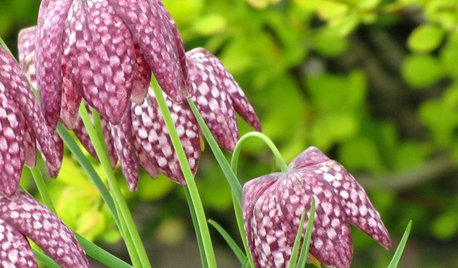
What do Fritillaries want?

9 years ago
last modified: 9 years ago

I was just browsing about online looking at plants (no danger, right?), and started wondering about Fritillaria meleagris. It isn't a plant I see grown hereabouts, but I read that it likes dappled shade which I certainly can provide, and is recommended for zones 3-8. I'm in 8b.

I'm wondering if anyone can report on success or failure growing Snake's Head Fritillary in hot and humid locations like mine? I'm also curious if F. meleagris likes pretty much the same conditions as F. persica, or if one might be more suitable than the other for my dappled shade and hot, humid summers?

Many thanks,

Virginia

Comments (12)

  • 9 years ago

    Thanks- I've read varying accounts of what they like, but I guess if I really want to know if they'll do well here, I'll just have to try them here.

    Many thanks,

    Virginia

  • 9 years ago

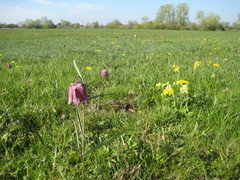
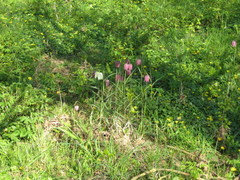
    Fritillaria meleagris is one of my favourite native plants but it is very rare in the wild. This picture shows it in one of its remaining UK sites.

    This is a riverside meadow which periodically floods. So, they like moist soil year round, cool summers and damp winters. They were also growing in marshy copses. As you can see the stems were longer in slight shade.

    All you can do is try a few and see how they do. If you can, start with potted, growing plants rather than dry bulbs.

    F persica comes from the Middle East and so will need different conditions from F meleagris with fast draining soil.

  • 9 years ago
    last modified: 9 years ago

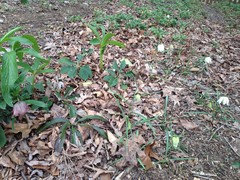
    I planted both last Fall in zone 7a. I got about 50% of the F. Meleagris alba to sprout and bloom.

    For the Meleagris, I just stuck a shovel in, threw in the bulb and stomped on the ground afterwards (i.e. my standard, time tested method).

    Charming, yet unassuming flowers and if they increase, will put on a great show in the shade. I hope I get GardenGal's luck! They are the white ones on the right.

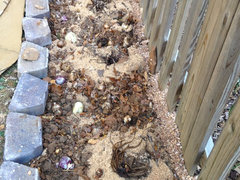
    I planted 5 bulbs of F Persica and all came up. Bloomed beautifully. I did place an inch or two of sand underneath per the instructions of some internet site.

    Here is the planting. The Persica bulbs are the 3 large white ones towards the front (left) of the bed. You can see on the bottom of the picture it is sitting on a little sand hill.

    I have what I call "good" clay as it has a definite few inches of a top soil layer before it gets really mucky. The real test is whether they come back, bloom or increase. I don't have an answer yet.

    User thanked posierosie_zone7a
  • 9 years ago

    I have sandy loam with good drainage here, and many oaks providing dappled shade.

    I just ordered some bulbs on sale (15 bulbs for $6), but they won't ship until October. I guess I'll try potting them first, putting some in "richer" dirt with more organic material and the others in dirt with a bit of sand for drainage. And maybe stick a few in the ground as well.

    floral_uk, I love your meadow photos of the frits in the wild. I can't provide a periodically flooding English meadow, but these lovelies seem to do well in a variety of conditions, so that bodes well, I hope...

    posierosie, I hope you get flowers again next spring. Those look good.

    Thanks for all the good info,

    Virginia

  • 9 years ago

    I can say that they dont' like my conditions...I've planted them several times and never had any results.

    Probably the problem is two fold (from reading above), dry fall soil, and dry summer soil.

    If someone in England recommends a moist condition, that probably means almost swamp here ;) I've never planted with that in mind...maybe I should try again.

  • 9 years ago

    VMR, very scientific of you - let us know which condition won!

    Dbarron, which type did you plant?

  • 9 years ago
    last modified: 9 years ago

    I've tried meleagris,imperialis, and persica. Only saw flowers out of imperialis once. While reading to get latin names for this post (from failing memory), I keep seeing good drainage...even hot and dry for persica. Odd. I guess we should hear from people that actually succeed :)

  • 9 years ago
    last modified: 9 years ago

    That's discouraging dbarron! I haven't tried the imperialis, but I have read that it only blooms every other year or so rather than yearly. That's not okay with me as I don't have oodles of space for it to take a year off or so.

    The entire group has a reputation of being advanced. So far, my only real stand out is daffodils which doesn't say much about my abilities, but I keep trying to branch out. More fertilizer? Less? Plant in sand? Give up and plant more daffies (the sensible, but boring option....)

  • 9 years ago

    Last year I planted 25 meleagris bulbs in part-shade and 3 persica bulbs in full sun. Mine is clay soil amended with compost twice a year. I mixed in 1/2 cup bonemeal in the area where I planted persica bulbs but did nothing extra for drainage. While none of meleagris flowered, all three persica plants grew very tall and bloomed for a long time, truly show-stoppers. I don't know why meleagris didn't come up. I see a short note in my journal "bulbs look tiny and dry" but, not having experience with fritillarias, this might have been normal. They are so lovely early bloomers that l'll have to try them again.

  • 9 years ago

    I agree they are show stoppers and go on for quite a while. I was going to wait and see if they come back next year (the ultimate test), but might just go ahead and plant 5 more this fall.

    Did the meleagris foliage come up for you or did it all just not come up?

  • 9 years ago

    The foliage came up but without a single flower. I don't know what went wrong.

Sponsored
Bella Casa LLC
Average rating: 5 out of 5 stars17 Reviews
The Leading Interior Design Studio in Franklin County