Software
Houzz Logo Print
hiremikeobrien

Spots After Repotting

9 years ago
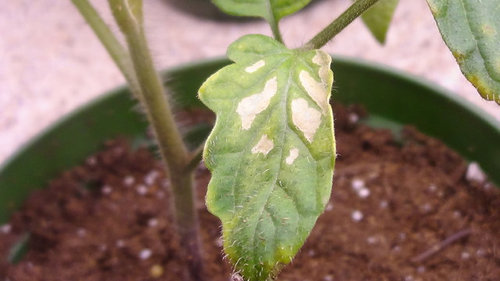
3 days ago I had repotted 3 seedlings about 6 weeks old that had gotten to big for their cup for the second time.

These 3 were healthy looking, nothing to be seen that would cause any alarm.

I repotted into miracle grow potting mix, buried the root deep. and fertilized half strength a soluble 24-8-16 fertilizer.

FYI : I poured the half strength fertilizer in the water tray the plant pot rest in to be soaked up instead of directly on the soil. This is also the only water the plants have had since transplant since I'm a notorious overwater-er.

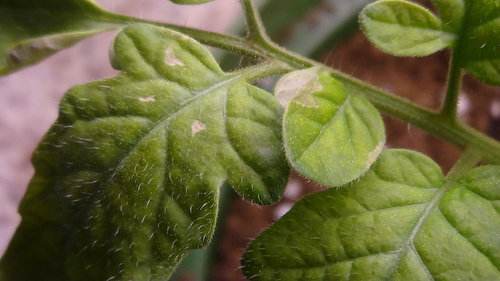
All 3 plants developed the same spots in the last couple days. None of the 6 other plants have them.

besides those spots the plants see, healthy.


I've searched the forums for fertilizer burn but all the pics are broken links. Also I don't think it's sun burn being they are under grow lamps, but I could be wrong.


This is the worst of the 3.


Comments (10)

  • 9 years ago

    Yup... what Dave said. Fertilizer burn. They should pull through.

    Chippah thanked ncrealestateguy
  • 9 years ago

    @digdirt2 so if i'm using a 24-8-16 and looking to get 3-1-2 a 1/8th dilution should be what i'm aiming for

  • 9 years ago

    Ideally IMO, yes. I much prefer other ferts that aren't so high in N to begin with but many use that one. But it also depends on the size of the container and how frequently you are going to use it. For example - while still seedlings some folks go with 1/4 strength of that particular fert but only use it in very small amounts and only once every 10-14 days. Others dilute to 1/8th and use it weekly. Once the plants are in their big containers they can handle more.

    Think of it as feeding a baby vs. feeding a teenage boy. ;-)

    Dave


  • 9 years ago
    last modified: 9 years ago

    OMG! Another example of the problems so many people have using soluble fertilizers in containers you are definitely not alone!

    I would not worry only about the dilution as much, but more importantly the total dose your plant is getting: maintaining constant correct moisture rather than letting it dry out at times. You described very well what you did but left out the crucial amount: how much of the half strength fertilizer did you pour in there per plant? An ounce? A pint?

    But it takes a balanced approach so I'm just stressing that. For example, MG, say taken at a half of a teaspoon per gallon, just separate from 2 to 4 ounces in a typical situation of the gallon and that is the ballpark of the total dosage (teaspoon/gal strength) throughout the entire seedling time, depending upon the average amount of growing medium little pot. In concentrated flats it might be as little as an ounce. Make up the difference with water. Use it from day 10 to 35 after emergence based on the actual size of the plant, not where you want it to go. Small plants hardly eat anything! At day 35 ... well that's when I transplant, but the fertilization rate doesn't increase that much for another week or two so another ounce or two gradually, as before, is about it.

    I would be conscious of how much evaporation is taking place. It is not only the fertilizer that causes problems under warmer and dryer conditions, it is sometime the source water especially when it is fairly hard water, though we typically blame nitrogen and with Miracle Gro the composition certainly is concentrated in nitrogen. If your water is very hard and evaporating a lot, use a little tap but switch most to rainwater.

    The evaporation and alkalinity of your water can cause the fertilizer and calcium to deposit in the media, so it is hard to give exact rates of use for tiny plants since more fertilizer is lost this way on the feeding chair than goes into baby's mouth ...Good luck!

    PC

    Chippah thanked PupillaCharites
  • 9 years ago

    @PupillaCharites when it comes to how much of the 1/2 strength i added to them, i'd say about 1/2cup. I researched how much of a solution a seedling should get but i couldn't get a consistent answer.

  • 9 years ago

    I tend to think it does not matter how much of the fertilizer one drenches the plants with, but at what concentration. I always water plants in pots until the media is soaked enough to drain out the bottom. In fact, if one constantly waters with fertilizer to the point of only wetting part of the media, the salts, over time will build up at that point in the container and could burn the roots.

  • 9 years ago

    " I researched how much of a solution a seedling should get but i couldn't get a consistent answer."

    No one can give you a specific dose answer because it depends on the fertilizer you choose to use, the size of the container, the age of the plant, and the method of administration. There is a big difference between MG at 12-8-16 and say fish emulsion at 3-1-1 or Dr. Earth at 2-5-2 etc.

    So in some ways it is experimentation and learning to read the plants mixed with following the directions on the bottle. I haven't read a MG package in years but I'd be surprised if there wasn't some sort of seedling feeding instructions on it.

    In containers, the big advantage to using the liquids is it puts the grower in charge of determining how, how much, and when the plant gets it. As opposed to granular ferts or slo-release ferts where you mix it in the soil in the container and then hope it is enough but not too much and that it gets released at the right time.

    But as NC said above when you feed, do it feed each plant from the top until it runs out the bottom then stop. Don't let the plants sit in a fertilizer mix filled tray.

    Dave

  • 9 years ago
    last modified: 9 years ago

    some of the newish growth on the top looks too be starting to develop similar spots. would this be a good time to flush the soil? If so, when flushing the soil am I just gently watering until it flows through the bottom? Or is there a technique.

  • 9 years ago

    some of the newish growth on the top looks too be starting to develop similar spots. would this be a good time to flush the soil? If so, when flushing the soil am I just gently watering until it flows through the bottom? Or is there a technique