Software
Houzz Logo Print
janice8bcharlestonsc

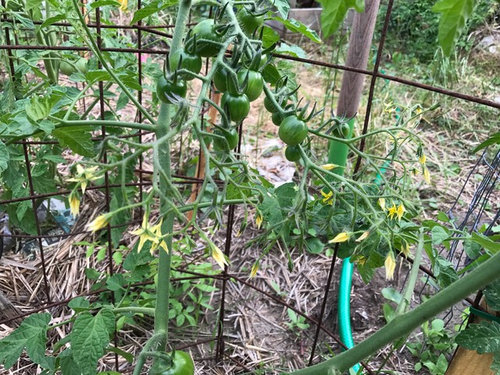
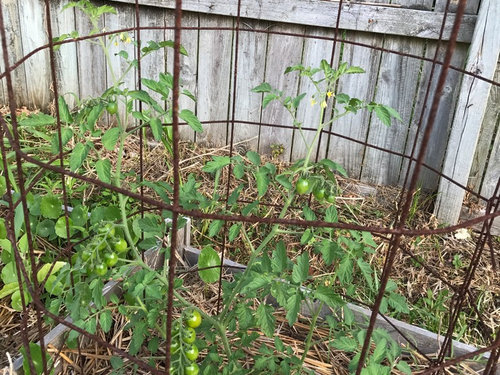
More early fruit and a ph observation

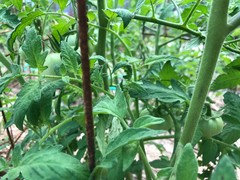
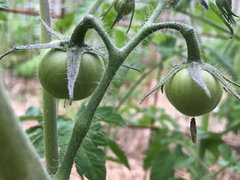
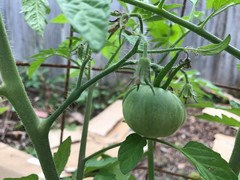
The plants looked hungry Tuesday night so I fed them some more organic liquid fertilizer. The last time I fertilized, it had rained before. This time I watered really good and then fertilized. And the results are not as pronounced. I am wondering if there is a high ph issue and the rain pushes it down. We will get some rain tonight, so I will watch what happens after.


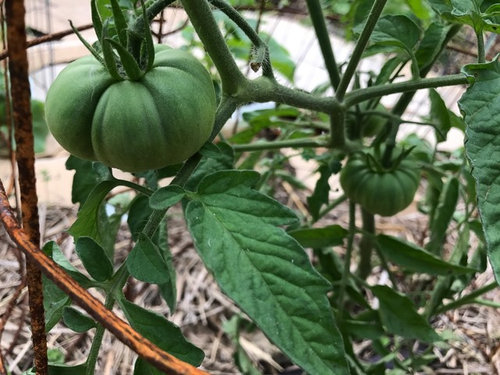
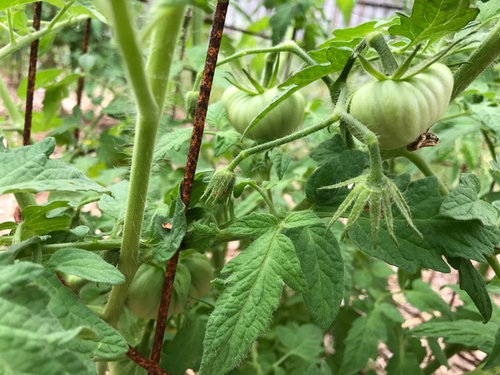
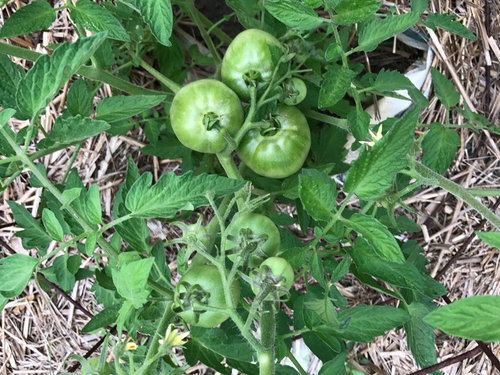
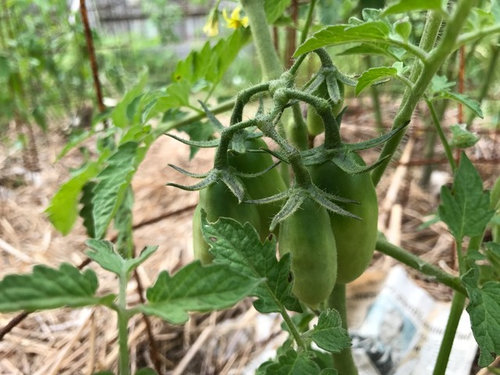
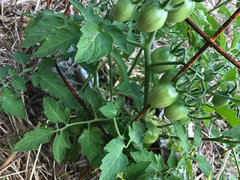
Some Black Krim:


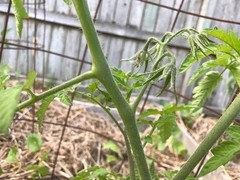
I believe these are the Dr Wyches Yellow


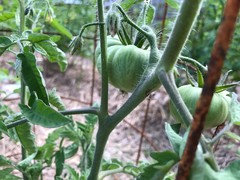
Rutgers


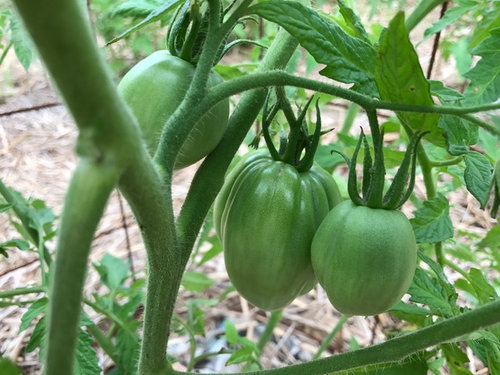
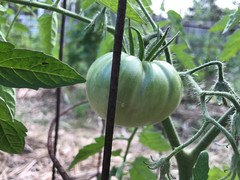
Sausage


Sweet Million


Chocolate Sprinkles


Kosovo Hearts


More Sungolds


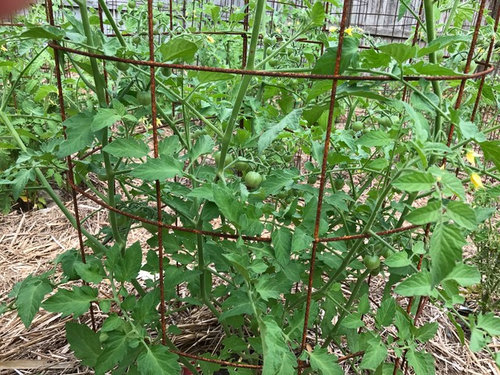
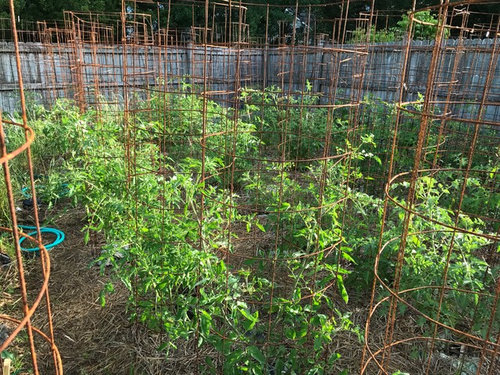
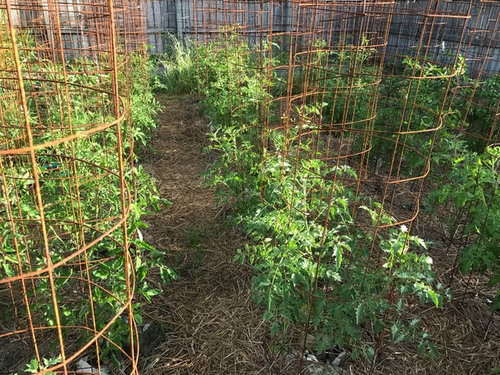
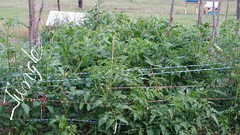
The jungle


Still have aisles


Comments (39)

  • 9 years ago

    Looked hungry? I know when my kids look hungry, but I honestly can't tell when my plants look hungry.

    janice8bcharlestonsc thanked daninthedirt (USDA 9a, HZ9, CentTX, Sunset z30, Cfa)
  • 9 years ago

    Dan: They look hungry when they do not seem to be doing much - not growing and not making new fruit, just looking the same day after day. It is like they are waiting for some fuel.

    Good to know Gorbelly. It is pouring right now.


  • 9 years ago
    last modified: 9 years ago

    Tap water also has chlorine. Ever notice how you can water/feed as much as you like during a dry spell, but after it rains everything perks up? Also for house plants it's recommend to let your water sit for at least 20 mins before so the chlorine can evaporate. You can find DIY hose filter designs online made of pvc, Scotch Brite pad & aquarium charcoal. Cheap and effective. :) Not sure if that will solve the mystery but it helps and worth a try. Great looking plants BTW!

    janice8bcharlestonsc thanked Sarah z8
  • 9 years ago
    last modified: 9 years ago

    Look good to me. Besides organic fertilisers won't have an immediate affect as they require micros to break them down which can take time.

    janice8bcharlestonsc thanked antipodean
  • 9 years ago

    Sarah: I water from a shallow well. The water table is seven feet down. The water is untreated, but I can occasionally smell minerals like sulfur.

    Anti: The liquid organics I use are rapidly available/fast acting. They can even be applied directly to foliage for uptake, but I aim for the root system. I am not an expert, but my understanding is the microbe action/gut processing is not needed. I don't believe this is true of my granular organic fertilizer. The liquid organics are not cheap. I weigh the benefits (fresh homegrown tomatoes) against the challenges (short growing season due to absurdly short pollination window with rapidly approaching humidity/high temp conditions) and it is acceptable to me to choose the most effective fertilizer even with a premium price.

  • 9 years ago

    Question about nitrates: I have a freshwater fish tank in the house. Assuming it is fully established (no reason it shouldn't be, lots of algae and green live Plants). Would that be a good source of reasonably safe nitrates? I have to remove water anyway, can I dump it in the garden?

  • 9 years ago

    Not sure about nitrate levels, but YES reuse that tank water! It's got all sorts of goodies in it. You may want to dilute it, I am not sure. Maybe someone one the composting boards knows.

    janice8bcharlestonsc thanked Laurie Mansell Dyer
  • 9 years ago

    When plants are not growing and not making new fruit, just looking the same day after day, it means they are stressed in some way. Lack of food is just one variety of stress. There are many others. It would be simplistic to throw food at plants that have some other problem. Your pictures don't show any problem in making fruit.

    janice8bcharlestonsc thanked daninthedirt (USDA 9a, HZ9, CentTX, Sunset z30, Cfa)
  • 9 years ago

    Dan:

    Some plants seem much better than others at fruit setting. I know this is not unusual. And, yes, some of the plants are stressed. But some grew (not set) fruit, it seems, in response to the rain. Many in fact. I have been searching/monitoring for fruit on specific plants like nice big healthy Mortgage Lifters, Green Zebras, and others. They bloomed some time ago, the petals withered, and then they just sit. Does not look like anything is happening for days. The rain last night "pushed' a lot of fruit last night to grow and be visible. This morning I have ML, GZs, and others that just could not be seen last night. The rain had a big effect. Not sure what it means. Still learning. I would like to get those pushes for stubborn fruit showers without waiting on rain.

  • 9 years ago
    last modified: 9 years ago

    The amount of chlorine in tap water isn't damaging to plants or soil. It's just that tap water usually won't have the same levels of sulfur and nitrogen and other elements beneficial to plants in it. Sometimes, rain water can have too much of that stuff, which creates rainwater that is acidic enough to do damage to waterways, some plant life, etc., i.e., "acid rain".

    Re: freshwater aquarium water--sure. Use it. Don't waste it by pouring it down the drain.

    Re: nitrates--sometimes, too much nitrogen will halt fruiting, as it kicks the plants into primarily vegetative growth. The "enough, not too much" principle applies here just as it does everywhere else. Just because N makes plants green up and go into a growth spurt doesn't mean that's what will make your tomato plants fruit more.

    Sometimes, plants fruit in waves because there are limits to how much fruit they can support at a given time. Lulls in fruit set are normal. Don't assume fertilizer will force them to fruit more than they are capable of doing. And for fruiting, you need more P and K than N.

  • 9 years ago
    last modified: 9 years ago

    Hi Janice,

    I still think you are mixing up the correlation with fertilizer confounded by rain. A simpler explanation is that the climate has gotten warmer or dryer as the season moves on and rain is the main driver.

    You commented in the other thread of the same subject, that you had sandy soil that quickly drains and we agreed leaches soluble fertilizers faster than other soils, a situation I also have here since Florida is just a sandbar. Your plants may just not be getting sufficient water and need more for transpiration. Alternately you may be over-fertilizing them and then washing it away and resetting. Many possibilities here than to draw quick conclusions.

    Gorbelly has some interesting comments, but I don't think he is suggesting that the source of nitrates in rainwater is high to influence plants becoming vegetative. It is a very tiny amount compared to fertilizers and due to the leaching will overall lower the nitrate availability to your plants.

    Rainwater is essentially distilled water and is easiest absorbed and evaporated. If you are using soluble fertilizers, rainwater can act as a reset if there is buildup in the sand. Rain is clean and natural hydration for plants anytime in Chas.

    I agree with Dan's comments above, and Gorbelly's last paragraph especially on waves and fertilizer. While chlorinated water may not hurt anything, I avoid chlorinated water and rely on rainwater as much as I can get. We get lots of rain for better or worse, and our public utility charges around $0.001 per gallon for the water, but then get us with $0.007 after basing sewer use on water consumption to charge for sewer, water becomes almost a penny a gallon. It is annoying to pay that for water that never goes into the sewer! They told me if I don't like it, put in a $3000 separate sprinkler water connection and pay the monthly fees associated with it Hmmmp!

    Cheers

    PC

  • 9 years ago

    Rainwater is absolutely NOT distilled water. Distilled water is free from impurities. Rainwater, on the other hand, is full of substances that are not water, including dissolved atmospheric gasses, various particles around which the water droplets form/nucleate, and lots of spores and other biological particulates.

    And it's correct that I didn't mean to say that rainwater was going to deliver excess nitrogen to the plants. I just meant that increased vegetative growth is not necessarily going to mean the conditions are met for maximum fruiting and blooming. So, a green, happy-looking, rapidly growing plant isn't necessarily a plant that is getting signals to fruit. Sometimes, it's the opposite. I was just giving a general heads-up about fertilizing with too much N.

  • 9 years ago

    The weather is getting warmer. I do my part and try to ensure adequate hydration. The well water is free. The difficult parts are: avoiding over/under watering; perceiving when the plants are in a natural fruiting lull and overriding my instinct to intervene. My intentions are good, and I understand sometimes doing nothing is best.

    I don't think I have over fertilized yet.

    I spent some time just observing the Kosovo Heart. Every day looks like it's last. It droops, flops, and hangs on the cage. But then I saw why it was so stressed. A juvenile horn worn was either burrowing in or exiting one of its stems. I doubt if the adult moth just laid one egg.

    This particular plant has only set three fruit.

  • 9 years ago

    Janice: I spent some time just observing the Kosovo Heart. Every day looks like it's last. It droops, flops, and hangs on the cage.

    Janice, heart and some heirloom/OP paste varieties often have genes for what's called "wispy" foliage, i.e., they have wispy, sparse foliage that "weeps" and often looks like it's sickly or wilting. Because the foliage is more delicate, it's also more prone to environmental damage and can look fairly ragged at times. That's normal for them.

    Many people new to these varieties have overfed and overwatered them to death or even pulled them thinking that they were sickly or diseased when they were actually perfectly normal.

    They're not the most attractive plants, but, as a group, they produce delicious tomatoes and are fairly early producers. They do, however, need especially conscientious support, as they are usually pretty good producers of average to large sized fruit, and their wispy build can have problems supporting the fruit.

    Just go by what neighboring plants that are not wispy are doing. If those look adequately watered and fed, then assume the hearts are as well.

    janice8bcharlestonsc thanked gorbelly
  • 9 years ago

    More early fruit,

    Close up of the Chocolate Sprinkles, it started blushing today:


    First Mortgage Lifters


    Principe Borghese with 50+, hope they taste good.


    First Giant Pink Belgium


    Two week old or so Azoychka


    Paul Roberson, very low production


    Secretive Big Beefs, up to 11 on this plant. I have 3 or 4 more plants with staggered dates at plant out. This is the oldest.

    New Green Zebras. They start a little late but fruit fast, they waste no time after flowering.


    Cherokee Green

  • 9 years ago
    last modified: 9 years ago

    "Rainwater is absolutely NOT distilled water. Distilled water is free
    from impurities."

    LOL!!!!!!!

    By this strict logic, distilled water does not exist except in the realm of unicorns as any treated water contains impurities at some level.

    Pathogen transmission and rain is a different thread. In the context of fertilizer, clean rain that falls on your plants is free essentially distilled water.

    When I see the words absolutely not in this forum somewhere, someone is opening a can of sardines on an airplane :-)

    PC

  • 9 years ago
    last modified: 9 years ago

    Distilled water is boiled, and the steam is condensed on a clean surface. It's not always 100% sterile, but it's pretty much the polar opposite of something like rain water, which has many chemicals and atmospheric and other biological particulates in it. Distilled water is also pH neutral, which is a big reason for its use in industrial or scientific applications, whereas even clean rainwater tends to have a pH of 5.0 - 5.5. On most of the East Coast, rainwater gets as low as the low 4s in pH.

    As a result, calling rain "essentially distilled water" is quite simply factually incorrect.

    This has nothing to do with recommending its use in the garden. Its non-sterility, non-purity, and mild acidity is actually a plus sometimes, except, as I said, when excessive pollutants push it too far and it contains too much in the way of sulfates, which renders it a pH that can be problematic for the environment.

    Some facts are just facts. And with simple facts, "absolutely" can be appropriate.

    It's not the same as claiming that anyone can grow any tomato in a 5 gallon container or that you can never overwater tomatoes in containers, something that depends on so many factors that it's not a simple fact. But clearly, someone's feelings were hurt by having people disagree with him and pointing out flaws in absolute advice.

  • 9 years ago

    Janice, if you smell Sulphur in your well water you might want to have it tested. We have Sulphur springs around here and sometimes they can get too concentrated during dry weather. It can also have excess salts and whatnot. Heart varieties can really look terrible at times but they really pump out great tomatoes at the same time. Your plants look great by the way!

    janice8bcharlestonsc thanked hoosier40 6a Southern IN
  • 9 years ago
    last modified: 9 years ago

    Let's not nit-pick. Rain IS essentially distilled water, though once distilled, it is seeded with a variety of pollutants. That seeding is usually minor, so rain water is likely to be the purest water you'll lay your hands on, except for truly distilled water. Now, distilled water really is pretty much free of impurities (except for atmospheric gases), if the production is done in such a way as to prevent impurities from entering.

    Now, there is a caveat to that. There can be organic contaminants in water, the vapor pressure of which are lower than water. So they will boil off with the water and condense with it in the distilled solution. You get distilled water mixed with distilled contaminants. But the concentration of those contaminants in almost any distilled water you make or get will be vanishingly small. It is vastly purer than rain water.

  • 9 years ago

    Thanks for the heads up on the heart. I will try not to cringe or feel guilty when looking at it. I did find some more little fruits.

    Hoosier: I will keep an eye on the water source. Many neighbors use similar wells to water their lawns.

  • 9 years ago

    the rain has nothing to do with it, it was just a coincident. Each variety grows at different rates and then they grow in phases, when they've fruited they will grow slower as they are putting energy into the fruits. Last week I striped every pepper of a plant and this week it is covered in flowers! Plants are pretty good at regulating growth, for example they will self abort fruits if too many flowers are pollinated.

  • 9 years ago

    Also, flowering is hormone driven - not nutrient driven so nitrates/high P fertilisers etc have nothing to do with it. What you need is a healthy plant!

    janice8bcharlestonsc thanked antipodean
  • 9 years ago

    Makes sense anti.

  • 9 years ago

    Nutrients do affect flowering / foliage ratios.

    janice8bcharlestonsc thanked ncrealestateguy
  • 9 years ago

    Fwiw, your plants look extremely well fed.

    janice8bcharlestonsc thanked edweather USDA 9a, HZ 9, Sunset 28
  • 9 years ago

    Thank you Ed.

    I was just thinking. What the plant needs may change over time. I suspect there are many coincidences in my garden. I am seeing lots of new fruits, so I am very happy. We had a couple cool mornings, maybe that helped.

  • 9 years ago

    Janice , I agree with Ed . Your plants look well fed and healthy, to me.

    Among my close to 60 plants of 35 varieties, not all of them are at the same level of growth, flowering, fruiting. While some have golf ball/base ball size fruits , others have none and now starting to set. That is what makes varietie different in earliness and productivity.

    BTW: To other members here: I also have sandy soil. Call it Sandy Loam. This is the first year of my garden converted from pasture/grass. Though I have amended some but it has a long way to become establshed. But despite of that I am very happy with the results that I am getting.

    janice8bcharlestonsc thanked Seysonn_ 8a-NC/HZ-7
  • 9 years ago

    Daniel, You questioned how one can tell if plants are hungry or not. There the obvious clues, such as color, vigor, flower production, growth rate, fruit size and so on. But the best indicator is just experience. It is the "art" segment of gardening, as opposed to the science of it all.

    Sey, your plants look great and are so big. Your chancing Mother Nature early in the season is now paying off.

  • 9 years ago
    last modified: 9 years ago

    daninthedirt: That seeding is usually minor, so rain water is likely to be the purest water you'll lay your hands on, except for truly distilled water.

    It may be purer than many other available sources, but that doesn't necessarily mean, in the case of something like human safety, that it's always going to be safer to drink.

    Once again, something that has a pH of 4 isn't anywhere near distilled water, nor does it have negligible amounts of contaminants (not in the sense of "oooh, contaminants scary!" but in the sense of substances in it other than just H2O). Most of the rain on the US east coast is close to 4 in pH. Even in very unpolluted areas, the "purest" rainwater has a pH of somewhere between 5 and 5.5.

    So how "pure" you can consider it is HIGHLY dependent on your location, regional environmental conditions, etc.

    That doesn't mean it's not the better choice for watering the garden vs. tap water. As I stated previously, rainwater in certain parts of the country is fairly "hot" with nitrates, which plants love.

    So I'm not nitpicking about rain not being at all interchangeable with distilled water. It would never, ever be an OK substitute if you needed a true pure and pH neutral source of H2O like distilled water.

    However, I have never disagreed that rainwater is a superior choice for watering plants. I just don't think rainwater's obvious benefits means tap water is necessarily harmful to plants--tap just doesn't have that mild, instantly available fertilizer burst that rain has that makes plants so happy and which any farmer or gardener has noticed will give plants a small but very noticeable flush of vigor and growth overnight that tap water does not seem to provide.

  • 9 years ago
    last modified: 9 years ago

    May I add that the pH of your water in the bottle or hose or the rain may have very little affect on the pH of the water in your soil? Cations and Cation Exchange Capacity | Fact Sheets | soilquality.org.au - [With my bolding.] ''Cation exchange capacity (CEC) is a measure of the soil’s ability to hold positively charged ions. It is a very important soil property influencing soil structure stability, nutrient availability, soil pH and the soil’s reaction to fertilisers and other ameliorants... ''

    janice8bcharlestonsc thanked albert_135   39.17°N 119.76°W 4695ft.
  • 9 years ago
    last modified: 9 years ago

    "May I add that the pH of your water in the bottle or hose or the rain may have very little affect on the pH of the water in your soil?"

    Great point. In the case of rainwater, too, the rainwater pH is usually considered not especially important because rainwater has almost nil buffering capacity. That translates to it usually adapting to the soil's pH. There are exceptions to every generalization, so I'll only say that. I personally would worry more about damage to foliage if I lived in an area known to have problems with acid rain, since the soil is not there to immediately moderate the pH of the droplets on the leaves. We don't have acid rain problems in my knowledge here or anywhere nearby on the deep South's coast.

    Cheers

    PC

  • 9 years ago

    I had an entire semester on pH as an undergraduate. Back there, back then we called it ''buffer capacity''. Decades later I got a renewed interest and found in soil science now it is usually called ''cation exchange capacity (CEC)''. Do you think gardening hobbyists would understand one terminology better than the other?

  • 9 years ago

    In the swimming pool arena, it is called Alkalinity... The ability to buffer pH swings.

  • 9 years ago

    "Do you think gardening hobbyists would understand one terminology better than the other?"

    Both concepts probably have their strict usage. I don't think they are the same thing, but they certainly are related. I think a pH buffer applies specifically to acidity and the CEC is a generalized concept to describe capacity in the sense of replacement of fertilizer washed away or exchanged. I wouldn't say rainwater in the sky has a CEC though it might, but I would look at the pH of a soil and say it is buffered around pH 6.5 when referring to acidity.

    So I'd say they are complementary to each other depending on whether you focus on fertility or acidity. I'm coming at this from a chemical point of view so a soil scientist would give a better answer if this is a real dichotomy. As for what is more understandable to a non-technically inclined gardener, hmmm, I'd have to say buffering, only because ion-exchange is common in water softener lingo which not everyone deals with, but acid buffers are common a little closer to home in tummy aches like the OTC hundred odd year old Bufferin.

    Probably the best is to use both terms but this is just a free online forum with cloud review :-)

    Cheers

    PC

  • 9 years ago

    My pH observation (moving up or down) comes from freshwater hobby aquarium manangementl. The acquarium is more for the plants than the fish.

    I have mainly a physics background. So any ion/charge movement in old studies for me mainly involved structures (think semi-conductors) more solid than water.

    The tap water here is very high in pH normally.

    A fish tank typically drifts downward in pH over time. Many fish ponds do the same. Seen many good fish die this way and pond owners are perplexed on why an established pond went toxic.

    In the garden, I am trying to increase Observation over Schedule. We all know how bad a schedule can be. It reflects good intentions, but results can be bad news. So while observing, the effect of rain is typically quite pronounced.

  • 9 years ago

    One could always experiment to determine whether it's nitrates in rain producing the effect on plants or the effects of pH by bringing the pH of tap water down to the pH of the rainwater using something that does not contain nitrates and watering with that and seeing whether it mimics the effect of rainwater.

    A far from perfect experiment, granted, but a start.

  • 9 years ago

    Agree gorbelly. I have a product that will push the pH. I may try some tests on the lawn.

  • 9 years ago

    I am sure that has been performed many times.

Sponsored
Miller Woodworks
Average rating: 5 out of 5 stars23 Reviews
Franklin County's Trusted Custom Cabinetry Solutions