Software
Houzz Logo Print
papadigorgio

Beyond Confused Rookie Here..

9 years ago
last modified: 9 years ago

Afternoon everybody,

I am having some trouble wrapping my head around some things that I am learning that doesn't make sense to me. I have the Bermuda Bible that TW wrote laminated in my shop, which greatly helps, but I am having trouble on what I should buy to feed my lawn. **bare with me here as I am still finding my green thumb)

I have read that you want to add a soluble nitrogen fertilizer monthly. I live in Central Texas and the weather gets 100+ degrees so that makes me questions if what I read is even right. When we bought the house, I decided to take an organic approach and do slow releasing fertilizers to have an overall healthy lawn.

I am a fan of Milorganite as I have family who use Milo and have had awesome success with it. Now, are they not telling me all of there secrets, I'm not sure. However, since I travel frequently for work I feel it's best to use a slow release and have a bit more peace of mind. Here are my questions:

1. What type of Organic slow release is ideal? I hear 44-0-0 lesco is great, but I also heard Milo was fantastic too. I've never used Lesco, but I am willing to give it a shot.

2. How often should I apply that particular fertilizer? Monthly for a slow release seems like your shooting yourself in the foot, so I'm assuming 6-8 weeks?

3. Is this product safe to use in the middle of summer (if fertilizing is needed) I read that you should never mow your yard if it is 90 degrees +... So are we to just let our grass grow out of control?

4. What is the best way to take care of Crabgrass. I've read that chemical is the best way by using either Celsius WG or Driven xlr8. i hear both are great and Celsius can be applied over 85 degrees, but is more expensive. Driven says it can be used between 60 degrees and 85 degrees which eliminates the use of that product for 4-5 months. Any suggestions on getting rid of Crabgrass without killing my bermuda?

I know that these may be ignorant questions and can probably be found here, but I don't have the time to go through 10 different approaches and determine which one is best for me due to 3 kids, a travelling career and going to school for my PhD (i refuse to pay someone to grow my yard for me.. too much pride). The end game is what everybody wants: to have a yard that is low maintenance but definitely one of the best.

P.S: i will be completing a soil test today and mailing it off to A&M to have it examined. T/A is 10 days.


Comments (8)

  • 9 years ago
    last modified: 9 years ago

    The best way to control crabgrass - is by using pre-emergent ( weed preventer ) . You need to get that done quickly, as crabgrass is about to start germinating. Mowing and using chemical's is possible in summer when the sun gets low in the evening. Use as little nitrogen as possible in hot weather, even if the product says "slow release" Most of them are not slow release enough in hot conditions. Milorganite is excellent in hot conditions- as it greens without causing excessive top growth. Its also gentle enough to not cause the plant to need extra water - like happens when most chemical fertilizers are applied in the summer.

  • 9 years ago
    last modified: 9 years ago

    Is it too late to stop you from sending soil to TAMU? Unless you're a dyed in the wool Aggie, please send it to Logan Labs and get the $25 test (basic). TAMU has a history of problems with their soil test lab...which they admitted to several years ago.

    Bermuda is not a low maintenance lawn if you want to have one of the best. If you want to have one of the best looking lawns in the hood, then bermuda will be a high intensity workout with 2x per week mowing at the mower's lowest setting and monthly (yes, every 30 days) fertilizer. Texas Weed's instructions were what you need to do to have a very nice lawn.

    1. The fertilizer that TW was talking about is the Lesco 44-0-0. It is a urea product. While the chemistry of urea is organic, the product is synthetic and has none of the organic benefits of using something like Milo, alfalfa, or soybean meal. Bermuda loves the heat and it loves fast release fertilizer in the heat. The only thing about the fast release is you have to water it down before dark on the day you apply it. If you get dew on it the next morning it can even burn bermuda.

    2. If you decide to use Milo or another organic product, go ahead and use it monthly. While it is slow release, you'll see the benefit in 3 weeks. It will not go away in 3 weeks - that's just when you see the impact. Keeping it going continuously every month is what bermuda needs.

    3. When you read stuff on the Interwebs about lawn management, make sure you are reading about bermuda grown in a hot environment. For example you might have been reading about mowing fescue on a website out of New York. Typically websites will tell you about their local situation and not your specific situation.

    4. I don't get crabgrass, so I don't have the herbicide experience to really help you. The best crabgrass prevention is dense turf and infrequent watering. Follow the bible. People have written in here to thank the site for helping them get a dense turf that rejects their neighbor's crabgrass lawn from spreading. Do you have crabgrass already as of today? Or are you just anticipating getting it?

    Brady thanked dchall_san_antonio
  • 9 years ago

    Thanks for the reply dchall.

    For my job i am sometimes gone for a maximum of 4 days. Sometimes with a day off and I'm gone again for 2-4 days. My wife is ver familar with how we should water and is up for the task on that front. I do have the ability to care of the yard and mox 2 times a week. As a matter of fact I had already planned on doing that moving forward when I am home. I want this yard to be one i can walk on barefoot.

    I have not sent anything to A&M and I did look at Logans from your previous recommendation on a different post. I was just unsure of which test to get. Now that I know, I'll print out the form and go with them.

    Now to your answers. I'll respond in the same format.

    1&2: As you well know our weather is sporatic and hot. I do not want to use something that can burn my lawn for the fact that it requires more time that I may not have, so I'd love to keep with the Milorganite as I love it benefits the soil first. Apply it every month eh? I'm okay with that as it's cheap and I know a person who gets it cheap, but should I apply it in the winter months (if we end up having any cold weather in December/jan) as it benefits the soil and not the dormant grass? Also, should I apply the 1lb per 1000 sq/ft?

    3. Good point, I'll redirect my searches to be more specific.

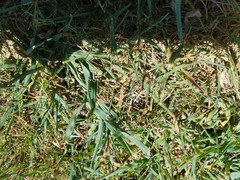
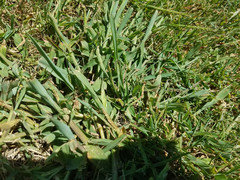
    4. I'm not sure if this is crabgrass or dallisgrass or torpedo grass. With my limited knowledge and judging by looks I could see it being all three. They are located on the low end of a drainage easement we have had aerated in March and they just blew up. i usually bag my clipping for the backyard as I don't want them to spread. I created another post on this in the previous days. Here are some new pictures to maybe get some clarification. As much as i want to go organic on everything, I feel that I may need to use a chemical to get rid of this which is why I inquired about Drive or Celsius.


  • 9 years ago

    Thank you for that Beckyinrichmond. I will most certainly take that in to consideration.

  • 9 years ago

    I use Bonide sedge ender for crabgrass, its sulfentrazone & prodiamine in convenient spray.

    Mow as short as possible, but 1 inch is plenty short if you don't want a reel.

    You will only burn it with fertilizer if you spill. Apply liberally, organic or synthetic.

    Don't over think the temperature, again you can't burn Bermuda. I dare you to let those roots get burned, I hear that one all the time & it's hogwash


    Brady thanked reeljake
  • 9 years ago

    Reeljake, as always thank you.

    While I have your attention, I have 2 short questions if you dont mind.

    1.should I bag my clippings or mulch if I still have weeds?

    2. Does the edge ended kill the bermuda if that's what you think I habe in the pics?


  • 9 years ago

    I personally bag every time these days, it's just cleaner for me. I don't dispute mulching retains more nutrients

    Sedge ender stresses it a little, but nothing noticeable. I use it at half label strength but i do it pretty often too

    Brady thanked reeljake