Software
Houzz Logo Print
l_d_g

How strict are USDA zone codes?

9 years ago

I live in Omaha, which is 5b. Some the flowers I wanted to utilize to attract bees, butterflies, and hummingbirds seem to prefer zones 6+. 6 is where Red Salvia and (Winter) Jasmine each hit. They are flowers I had chosen to bring in bees and hummingbirds.

Is it worth a try to get flowers that prefer zones 6 and over or should I search for other flowers to attract bees and hummingbirds? (we have what we think are ground ivy/creeping charlie that do fine for bees, but they're so close to the ground, our tiny dog picks fights with them. One of these years, our lilacs should bloom as well and hopefully bring in bees too.)

Comments (17)

  • 9 years ago

    I'm in zone 6, though with the last couple of insane winters, who the heck knows what zone is what. I don't have the time or inclination to baby plants, or bring them inside in the fall, so I like to get native plants, when possible, that are hardy to zone 4 or 5, and thus likely to withstand our winters.

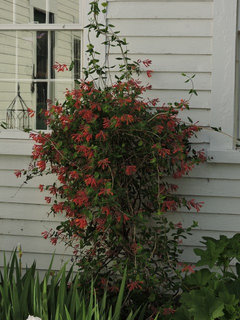
    If you want bees and butterflies, try agastache and lonicera sempervirens, both of which a hardy to zone 4. You can also try getting them from a nursery that is in cold country, as what they grow is likely to be a bit more cold-tolerant.

    I would also say to mulch everything well, and make sure that they're not going into the winter dry; that makes a big difference with my roses.

  • 9 years ago

    NHBabs, right on.

  • 9 years ago

    For bees you should have no problem finding flowers that do fine in Z5b. The Xerces Society has plant lists for various regions here:

    http://xerces.org/pollinator-conservation/plant-lists

    Ideally you would have enough different species so you have flowers blooming throughout spring and summer. I see tons of bees on my Tradescantia plants during May. Sweat bees like coneflowers and other composites. Later in the year there are always bumblebees on the Salvia azurea (which has a cultivar called 'Nekans' that was originally found in Nebraska).

    The only plant I have seen hummingbirds on in my yard is Lobelia cardinalis, cardinal flower, which is fine in Z5 if you have the right conditions for it. I've planted some other things like coral honeysuckle (Lonicera sempervirens), but they are still getting established and haven't flowered much yet. I also have a red buckeye (Aesculus pavia), but it flowers so early that I don't think the hummingbirds will have arrived in most years to take advantage of it.

  • 9 years ago

    'zone pushing' is a game all its own ... and as long as you dont mind wasting money and effort.... and failing ... go for it ...


    things that do not grow in your area .. always seem to be more cherished.. just because of their rarity ....


    have you ever seen a jasmine in NE??? ... ive never seen one in MI ... which would give me a lot of info ...


    good luck


    ken


    you will do much better when searching for info.. when you use the latin name ... does your ground freeze? ... z5 is wildly divergent ... one of the links on the page below states:

    Frost hardy in USDA zone 6.


    ground freeze is way beyond frost hardy ... whatever.. give it a go ...


    https://duckduckgo.com/?q=Jasminum+nudiflorum+zone&t=ffcm&ia=web

  • 9 years ago

    Out of curiosity, what attracts you about those two particular plants -- winter jasmine and red salvia?

  • 9 years ago

    Zone pushing is fun! Just as you get the joy of getting something to make it through... you get joy smashed when things don't. Challenging your abilities is fun as long as you aren't breaking the bank or wasting a ton of time babying anything.

    I have some plants that made it through the really bad record breaking winters two and three years back... but then didn't make it through this past winter that was quite mild. So many variables come into play, there aren't any guarantees.

    So of the hummingbird plants can be grown as annuals too.


  • 9 years ago

    Woodstea- a few years ago I was on here looking for ways to attract this same wildlife and those were some of the specified flowers that were recommended to me that I actually liked. Jasmine for the scent and red salvia because hummingbirds apparently love red.

    I'm open to any other ideas just as long as they get the job done.


    ken_adrian- I can't say that I have knowingly seen Jasmine in Nebraska.


    So it seems that as long as I'm not planting too far out of a min/max, I have a chance! I'm only looking on Amazon for seeds right now. We have a few nurseries around here, but I might not get to one until June.

  • 9 years ago

    Winter jasmine - about the only jasmine that can be grown in 5b - has no scent. And hummingbirds are drawn to all colors of flowers.......just as long as they are nectar producers. The salvia does not necessarily have to be red - pink, blue and purple flowered salvia works equally as well.

    If you want to attract hummingbirds you should check out the Hummingbird Garden forum. There are lots of suggestions for both annuals and perennials, as well as shrubs and vines that will attract these delightful creatures.

  • 9 years ago
    last modified: 9 years ago

    Fair enough. Any recommendation for a blue flowering hedge? I have a retaining wall that I'd like to top with a blue flower bush that can reach 3-4 ft. Make a bit of a natural, private area in my backyard.

    For context into what I have been recommended before, here is the post I've been going off of:

    >>Well of course the annuals just keep reblooming. Be nice if some perennials could!

    Actually, most annuals are short-lived (or not so short) perennials. My red salvia, an annual up here, has a theoretical lifespan of a decade. We chose them for their reblooming capabilities and, in many cases, bred them until they bloomed better.

    Coreopsis is an excellent choice for the garden and reblooms copiously and constantly if cared for. Deadheading is not required and I never do it. Bloom is from June through September (at least). The plant regenerates and spreads and is effectively immortal. I have the Sunbeam, Mom liked the Sunfire better. I find the Sunbeam to be more reliable.

    Blanket flower (Gaillardia) rebloom all summer on short stems. They're attractive perennials in the garden, but only have a three to four year life span.

    Nepeta (catmint) is a regular rebloomer and long-lived plant, but I find it shaggy and too chaotic even for me. Which is saying something.

    Veronica (Speedwell) reblooms the entire season if deadheaded.

    Ice plant isn't the easiest thing to grow particularly if winters are harsh, but the plant looks very exotic and the blooms are very pretty and rebloom quite well all summer long. The plant itself isn't picky about water or feeding.

    St. John's Wort blooms a pretty yellow all season long, but can get a little out of control. Maintenance is required.

    Endless Summer hydrangea rebloom through September.

    Dahlia reblooms continuously, but the tubers must be lifted for winter and stored (that's quite easy to do, just dig up after first frost kills the tops). Dahlia tubers can live decades. Dahlias feature large, flashy flowers perfect for cutting--and cutting just makes the plant bloom harder.

    Cannas, ditto with dahlia, except they start later in the season (and don't tolerate cutting well so leave them on the plant). The leaves are exotic and tropical enough to pull off garden accenting all by themselves.

    Elephant Ears don't flower (visibly), but the draw there IS the leaves. The plant is up to nine feet tall and five feet wide. The bulb must be lifted at frost and stored. It pairs amusingly with...

    Mouse Ear Hosta, a very small blue-green hosta with small leaves. It blooms weakly in August. This is a perennial.

    >>Any thoughts on attracting bees, bats, and butterflies? I'm thinking about adding sunflowers.

    Bats, add a bat house, never use insecticide, and they will come. In my area, I host many Large Brown Bats and Small Brown Bats--the only two native species.

    Bees tend to be attracted to any brightly colored flower with or without scent (dun-colored flowers must have scent to attract pollinators). It depends on what species are native (I have eight native species here), and what is and is not appropriate for your microclime (of the eight, I commonly see three with two others occasionally). Avoid the use of all insecticides, but as we're finding, particularly avoid the neonicotinoids.

    Putting in one very heavily scented flower (jasmine or the like) will attract bees to the garden via scent. They'll stay when they see the other flowers.

    Bees will be attracted to your sunflowers. Keep in mind, sunflowers bloom once (except the Teddy Bear and the related cultivars, mostly dwarf sunflowers of 1' to 3'). Post-bloom, they look terrible and tend to attract sap-eating insects.

    Butterflies prefer blue or purple flowers, but aren't adverse to visiting others. Butterfly bushes (another reblooming perennial) attract butterflies like mad and feature cultivars with heights from five to thirty feet. I have the Black Knight, a 30' variety, but train it to about fifteen feet tall.

    Blue Victoria salvia or its close relative the Rhea salvia, also attract butterflies. I grow the Rhea. It's an annual, and there are several cultivars available within the species of blue salvia, Salvia farinacea.

    Hummingbirds are all about the red, although they'll be seen visiting flowers of other colors as well. Red salvia (Salvia splendens) is an easily located annual plant that attracts hummingbirds like crazy.

    Agree, disagree, all I want is vibrant, pretty flowers so I not only enjoy looking at them but they also bring out bees and hummingbirds. Someone earlier mentioned utilizing flowers with different blossoming times so there is always something. All for it. More than open to any idea presented. Thanks!

  • 9 years ago
    last modified: 9 years ago

    l_d_g, check out the native trumpet honeysuckle, Lonicera sempervirens 'Major Wheeler' for hummingbirds and hummingbird moths. Mine blooms from some time in May with a really full flush, and then continues to bloom on new growth until frost. Mine is planted by a window near where I often sit, so I can watch them without disturbing them, and they do visit it all summer.

    I have a dark red hollyhock (Alcea) that they like, much to my surprise since it is an open flat flower, and is also is a long bloomer, but is biennial, so I need to let some go to seed each year. Earlier in the season they like the native columbine, Aquilegia canadensis. Even though it isn't hardy here, I plant Salvia guaranitica 'Black and Blue' each year in a pot that I can often overwinter on a porch because it is another plant that has a long flowering period and is a favorite for the hummingbirds. For the other pollinators, there are flowers in my garden most of the summer that they visit, but I try to have something early and late for them. My earliest flowers that they visit are quince (just finishing now), apple and crabapple trees (blooming now), and rhododendrons, though you may not be able to grow rhodies since I don't think your soil is acid enough. In late summer and through the fall, I have monkshood (quite toxic to us but doesn't seem to bother the hummers or bees), asters and I leave the wild goldenrod where its thuggish behavior is OK. In my garden anything with a flower shaped like Queen Anne's lace and elderberry (umbel) attracts pollinators as does anything daisy-shaped (asters, Helenium, sunflowers, etc.) Hydrangea paniculata seems quite popular with pollinators and some types will bloom for up to 4 months.

    As GG said, there is a wide range of flowers that will attract pollinators and hummers, and to my mind it is more important to have something available over the longest season possible and so I look for fully hardy, reliable plants that I can count on when I am considering pollinators rather than zone pushers.

  • 9 years ago

    I'm not a huge fan of how the Trumpet looks (just appears extra delicate), but I can see them going in front next to our freshly planted delphinium and peonies. I must like the general look of how delphinium grow because red salvia appear to grow very similarly. Plus the vibrancy of solid blue and red (and white from the previously talked about jasmine) also seem to draw me.

  • 9 years ago

    The previously mentioned winter jasmine (Jasminum nudiflorum) is also yellow in bloom in addition to being scentless. Not white, no scent :-( Sorry

    If you want a hardy red perennial hummers are attracted to, look at Monarda 'Jacob Cline'. Or Penstemon 'Red Riding Hood' or 'Firecracker'.

  • 9 years ago

    So I didn't realize Monkshood was also poisonous to dogs! I love everything about that flower and would still like to add it to my front yard. However, I have to ask-does it have a non poisonous clone? Thanks!

  • 9 years ago

    Delphiniums or annual larkspur would probably come the closest AFA flower color and shape is concerned. But penstemon (aka beard tongue) would be a decent substitute in a different color range. You can find blues but purple, pink or red are much more common colors.

  • 9 years ago

    We picked up a purple/blue Tradescantia, purple/pink Monarda, and a red/yellow Aquilegia. Decent color ranges and now I just need them to spread. I still want to get more, but finding the space is getting difficult. Also, it might be a little late in the season to do much more adding. I have learned that I need to stay away from the Digitalis family-poisonous to dogs.

  • 9 years ago
    last modified: 9 years ago

    l_d_g.

    Love monkshood and have grown a number of species and cultivars. I think a lot of the poison information on-line is based on the common monkshood (Aconitum napellus).

    The toxin, aconitine, is also present in delphiniums, but not at the concentrations that make monkshood so dangerous for humans and pets to ingest. The few published human fatalities I know of, were the result of mistaken identification (it was taken for horseradish or for fiddleheads). It can also get into the blood stream through cuts.

    Personally, I've never read anything where anyone has claimed any monkshood as non-poisonous. Whenever, aconitine has been used for medically related purposes, it's been at tiny concentrations.

    I plant monkshood, but at the back of flowerbeds where children and pets don't have easy access to it. I also warn other people when planting it.

    Here, the most useful monkshood is Arend's monkshood (fall monkshood) for it's bloom time. For me, the most beautiful flower colour I've seen in a monkshood is the deep violet blue of Aconitum 'Spark's Variety' (which needs staking here).

Sponsored
Peabody Landscape Group
Average rating: 3.5 out of 5 stars8 Reviews
Franklin County's Reliable Landscape Design & Contracting