Software
Houzz Logo Print
wunderlong88

Bug ids and book

Can anyone recommend a good garden bug id book or chart? I'm in DFW area in Texas. I am considering: Garden Insects of North America -

https://www.amazon.com/Garden-Insects-North-America-Princeton/dp/0691095612/ref=sr_1_2?ie=UTF8&qid=1496586336&sr=8-2&keywords=garden+bugs

but on the other hand I think a laminated chart of basic bugs/larvae/eggs would be handy in the garden. I haven't found one of these that was for my area or looked to have much.

I've learned some bugs but I see so many and don't know what's good and what's bad. I know since I learned what squash bug eggs look like I feel like removing those is easier than dealing with the adults.

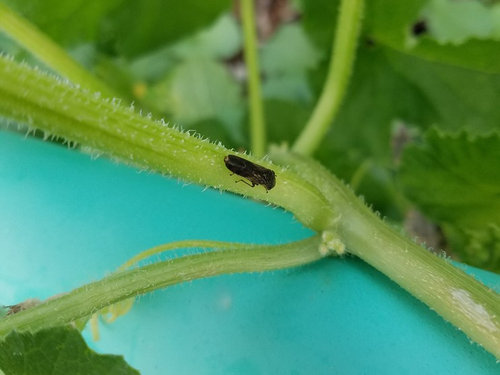
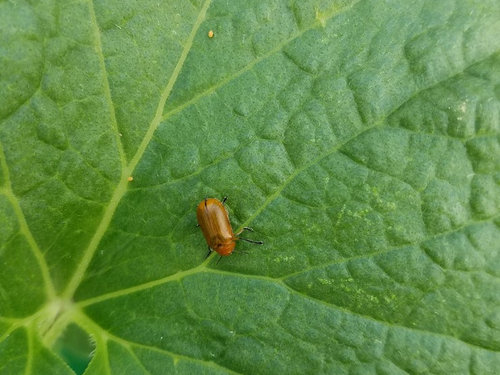
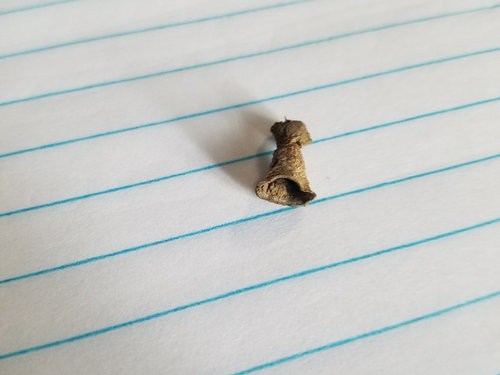
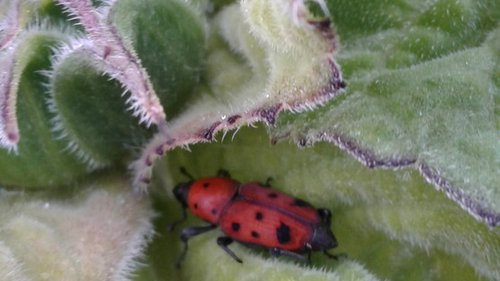
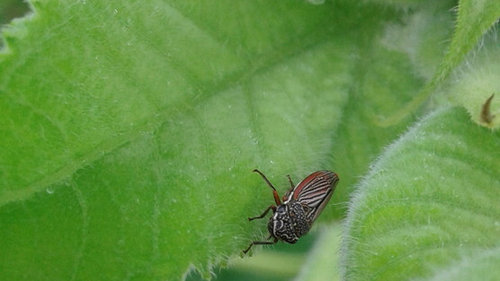
Also, can anyone id these and tell me if they are bad enough that I need to do something about them? I see quite a few of #1 & #5 on all kinds of plants in the garden. I see a lot of #3 in the mulch. #2 & #4 are scarce.


TY

1. What are these? They fly and they scoot around the stems in circles.

2. And these?

3. I find these in the mulch. They are in clusters sometimes and look like they have black eggs in them.

4. These?

5. I think this and #1 are the same but I see them with different markings/colors.

Comments (12)

  • 9 years ago

    I appreciate the ids and info. I really want a book. I get frustrated trying to locate info. all over the internet sometimes. It just takes up so much time. And I really need fewer reasons to be at the computer. LOL

  • 9 years ago

    I had the book: Texas Bug Book, the Good, the Bad, and the Ugly. At the time I liked the book but that was years ago and I think one of my sons took it somewhere and lost it. It would be worth looking into. I will try and remember to see if they have a copy at the bookstore and get back with you on what it is like.


  • 9 years ago
    last modified: 9 years ago

    The book you linked to, Garden Insects of North America, is a good one to have. Great photos, good information, the book has the insects categorized depending on what they feed on.

    However, it doesn't have photos of every insect at every stage of life, for obvious reasons (one being that the book would be way bigger if it did). And at times it can seem like it has too much information about insects you don't really need to know about. That said, it is definitely worth getting and $21 is a good price.

    Edit: I guess I should say that I own the book. I bought it at Borders many years ago.

    Rodney

  • 9 years ago

    rgreen, the images in that website you recommended are pretty poor! I would hate to see a novice rely on some of those pictures for an ID.

    Linda, I like what I see of your book, but I think that you need a good field guide, too. The National Audubon Society Field Guide to Insects and Spiders is a great one.

    As much as I like the field guide, it doesn't offer good images of actual pest damage, like the book you're interested in does. The two would make good companions.

    I know of no chart, and frankly, such an abbreviated resource would be nearly useless.

  • 9 years ago

    I think they have great images for a novice. It has almost every insect I've needed information about for my garden. And if the image isn't perfect, I now have a starting name to do an image search to find a plethora of photos from myriads of angles - try that with a book. It's free, unwieldy, easy to search by insect type and state, and did I mention free? Why pay for a book when the internet is being paid for anyway? Purchasing a book makes absolutely no sense to me at all. I guess people with disposable income need to dispose of it lol.


    Now, if I was going on a field trip, and since I don't own a smart phone, a book would be ideal.


    BTW... anyone can just type in a description of an insect into any search engine and find any bug they want. I did it with a bird just this morning!


    Oh well, to each their own.

  • 9 years ago

    Who would want to use the internet when you can hold, touch, feel, a book? Why use this ungainly thing that is subject to destruction in the outdoors when you can hold something designed to be moved around, anywhere? Oh well, to each their own...

    The Anatomy of Insects and Spiders, by Claire Beverley and David Ponsonby.

    Ortho Problem Solver. Yeah, I know, mentioning this in an organic forum. It's still the best volume I've found for describing pests and plant problems, with a lot of pictures. and you can pick up (albeit an older edition) on ebay for little enough.

    there's any number of different field guides. Some are better, some are better for me, some are better for you, some...make up your own mind.

    Personally, I can't deal using internet sources. It has more to do with using a screen than anything else, anymore. still looking for what meets my criteria of a "good" insect id quide. tough order.

  • 9 years ago
    last modified: 9 years ago

    "Why pay for a book when the internet is being paid for anyway? Purchasing a book makes absolutely no sense to me at all. I guess people with disposable income need to dispose of it lol."

    You don't need a lot of money to build up a good sized collection of gardening books. The majority of my gardening and other reference-type books I have were bought used and I paid anywhere from 10 cents to a few bucks. You just need to know where to look. Used book stores, used book sales (my local library has one every month), yard/garage sales, church sales, thrift stores, and even on the internet.

    Rodney

  • 9 years ago
    last modified: 9 years ago

    Lol... well thank you, but no... like I mentioned... books are unwieldy, require storage space, cost money (even if they are cheap, it's still money that I don't have, and see no reason to give to someone else,) are limited in functionality and/or comprehensiveness, and frankly, in the age of the internet, are just redundant.

    The last book that I acquired on gardening may have been "The Basic Book of Organic Gardening" - edited by Robert Rodale, or perhaps... "Organic Plant Protection" - a large comprehensive reference manual complete with lovely glossy pictures, put out by Rodale Press.

    Sure, I read them both back before the internet, but it takes more time for me to walk to my library to find them (among the many other books I've garnered over the years) than it does to find what I'm looking for with a few taps on a keyboard. They sit on a shelf as something requiring dusting.

    We live in a time with one of the greatest tools to advance and share information ever available to the family of man... the internet. To not use it for reference and learning seems a bit short-sighted to me... but as I said... to each their own.

  • 9 years ago

    Still haven't figured out what #2 is on the internet or in a book. The closest thing I've found is a Cigarette Beetle.

  • 9 years ago

    Yeah, I've seen them, and I don't know what they are either. I didn't worry about going too far in finding an id because they are never in any numbers that might cause problems.

  • 9 years ago

    #2 may be part of the Brachypsectra clan. THIS perhaps, appropriately named the Texas Beetle.

    Have you tried the Insect Forum?

    tj