Software
Houzz Logo Print
ne1one

pill bug

9 years ago
last modified: 9 years ago

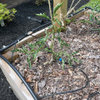
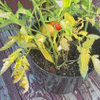
hey folks. anyone know more about these insects?
is there any chance these odd terrestrial ocean-related bugs can cause problems?
ever since i started using alfalfa when i water their numbers have increased. they are all around the soil base of the plants. from what i recall, they eat mostly organic matter, do they contribute, or are just "leech" from the soil?

Comments (18)

  • 9 years ago

    LOL, I call these critters sow bugs and I had to look up pill bug to be sure. I definitely would keep them as part of the food web, as they are if nothing else, lures for other insectivores. Any eggs or larvae that pupate (grrrr serpentine leaf miners) in the soil or wherever they might climb, they probably eat. Just scavengers that poop fertilizer. I'd not want them around emerging seedlings though.

    Cheers

    PC

  • 9 years ago

    rolly polies...

  • 9 years ago
    last modified: 9 years ago

    I too did the are pill bugs just sow bugs double-take and accidentally stumbled upon a whole page of links on how to grow pill bugs. Perhaps for fun and profit? I tossed some old wilted lettuces and the next morning the bugs were all over it.

  • 9 years ago
    last modified: 9 years ago

    i don't think a pill bug is the same as a sow bug. they appear to look a like. the one i have is exactly like an armadillo. it curls up into a tiny 100% spherical ball if it sense any vibration or movement. it looks almost like a rock/pebble when it does it. at least going by this
    http://www.aos.org/orchids/orchid-pests-diseases/sow-bugs-and-pill-bugs.aspx

    its been raining about once a week and the soil has stayed fairly moist on the top surface which i think is even more ideal conditions for them.

  • 9 years ago
    last modified: 9 years ago

    Stevie, checking several .edu sites I find you are most certainly correct. They are two different critters (Not insects.). But beyond that the several universities I checked treat them as pretty much the same. Here is one quote with my emphesis: Sowbugs and Pillbugs | Entomology - ''Sowbugs and pillbugs are similar-looking pests which are more closely akin to shrimp and crayfish than to insects. .... Sowbugs and pillbugs are scavengers and feed mainly on decaying organic matter. They occasionally feed on young plants but the damage inflicted is seldom significant. ''

  • 9 years ago

    Yep. Ncrealestateguy - that's how I know them too. They are Rollie pollies.

  • 9 years ago
    last modified: 9 years ago

    I used to think sow bugs had something to do with seeding since I always found them around compost in the soil. Apparently not. It is for sow ... female pig.

    Looks like these creatures were all named sow bugs in the early 1700's in England, because they looked like sows. Not boars or hogs, but female pigs, due to the teats looking like the bugs' legs and the arched back with head down when feeding like the bug's whole profile picture (link).

    And 100 years later somewhere in America independently, it occurred to someone to call the ones that rolled up into little balls pill bugs since pill meant "little ball" and a pill press was just invented and a rage at the time. The balling up ones are just one of several families. All of the other taxonomic families of equal rank in the sub order are apparently still sow bugs.

    If people can call a pill bug a rolly polly I can still call them all sow bugs, right? It is just a common name that was never formally established. Otherwise I'm going with rolly polly! Pill is so... ugh! Just kidding mostly, I just find the history more interesting since these curious little creatures have always been odd things I knew nothing about except that they were land crustaceans.

    Cheers

    PC

  • 9 years ago
    last modified: 9 years ago

    Yep, rollie pollies. That I grew up calling them also.

  • 9 years ago

    I think, as noted, pill bugs can roll themselves up into a ball. Sow bugs cannot. Both are often referred to as woodlice. Interestingly, pill bugs (and sow bugs as well) are not really bugs or insects but crustaceans (like crabs and shrimp). They are the only crustaceans that don't need to live in water. They do a great job composting, like worms, and don't generally cause plant problems, except maybe for seedlings. Main habitat is under mulch. Pill bug poop has been found to decompose more slowly than leaf litter, so it stabilizes microbial populations.

  • 9 years ago
    last modified: 9 years ago

    https://entomology.ca.uky.edu/ef439

    "Sowbugs also have two tail-like appendages which project out from the
    rear end of the body. Pillbugs have no posterior appendages and can roll
    up into a tight ball when disturbed, for which they are sometimes
    called "roly-polies". "

    Pill bugs roll up in a ball. Sow bugs don't. And we all say "tomato".

    I'll listen to entomologists before I listen to linguists. I guess if the issue is how often the correct definition is ignored, you have a fair point.

  • 9 years ago

    To further illustrate just how confusing this one gets note that they are not insects but even the university websites discuss them under entomology.

  • 9 years ago

    That's sort of like how tomatoes are studied under olericulture, which is often called the study of vegetables, but they are technically a fruit. Well, in practice, olericulture is the study of the culture of plants for food.


  • 9 years ago

    "they are technically a fruit"

    "Fruit" has two senses in English, a botanical one (the reproductive body with seeds) and a culinary one (sweet botanical fruit eaten for dessert). The latter can be contrasted with "vegetable" (any part of a plant eaten as part of a meal, but not for dessert). There is no botanical definition "vegetable". Instead you have stems, leaves, bulbs, roots, tubers, etc. So the fruit vs vegetable debate is premised on the misunderstanding of how the respective words are used.

  • 9 years ago
    last modified: 9 years ago

    And words change meaning, too, as well as have many different lay meanings in addition to more precise scientific meanings. "Entomology" isn't just the study of insects but also land-dwelling arthropods, worms, and gastropods.

  • 9 years ago
    last modified: 9 years ago

    Heh, and then there's that word "insects".

    http://www.entsoc.org/ -- Entomological Society of America; Sharing Insect Science Globally

    At least Wikipedia has it right.
    "Entomology is the scientific study of insects, a branch of zoology. In the past the term "insect" was more vague, and historically the definition of entomology included the study of terrestrial animals in other arthropod groups or other phyla, such as archnids, myriapods, earthworms, land snails, and slugs. This wider meaning may still be encountered in informal use."

  • 9 years ago

    Whatever their name, they are abundant in my compost. I get rid of them by drowning before I spread the compost. I don't know if they actually drown, or just crawl out of the bucket, but they're not there the next day. They are supposed to eat decaying matter, but I've also seen them on ripe strawberries.

  • 9 years ago
    last modified: 9 years ago

    lgteacher, Sow bugs have also nibbled on my strawberries, but that only happens here when the strawberry starts softening due to injury from something else, or mold (which is really bad here), and in similar conditions I've never, ever, had any problem with my tomatoes. There are many species of sow bugs, including the roly polies, so it is possible a very very hungry one could nick an over-ripe tomato. Nobody I've seen has conclusive evidence of that though, and it is moot here. The moment they are over-ripe they split or somehow fruit flies and fungus take the tomato out in just a few hours to be a malodorous blob.


    ref: Strand, Larry L., Integrated Pest Management for Strawberries, University of California Statewide IPM Program (2008), fair use excerpt for academic discussion

    Cheers

    PC