Software
Houzz Logo Print
itltrot

Mini split size for game room?

9 years ago

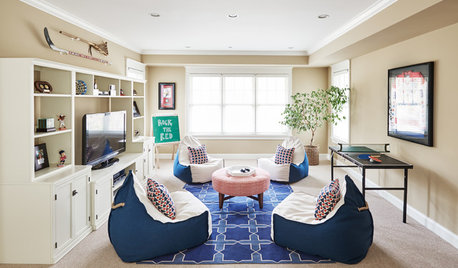
We have a 16x24 game room that we've been using window a/c unit and electric heater for temperature control and neither work well enough to be comfortable all year long. We live in Oklahoma. The room has insulation in the walls and ceiling. There are no windows or doors to the exterior. One wall is south facing one is north facing the other two are interior walls.
What size mini split would be recommended for this space?

Comments (12)

  • 9 years ago
    last modified: 9 years ago

    If you want to know exactly you should probably have someone do a heat gain/loss calculation rather than ballpark it. But if you want a guesstimate, you said you had a window unit in there, but it wasn't doing the job, so that's somewhere to start. What size is the window unit and how warm is it getting in there on the hottest days? For cooling I'd be surprised if you need more than one ton (12000 BTU) to keep it cool, and you might need less.

    For heating one easy way you can come up with a rough estimate is to use 1 watt per cubic foot, so if you have an 8 foot ceiling you're at about 3,000 cubic feet, so that's 3000 watts (about 10000 BTU). So, if you've been using a standard portable 120-volt electric heater, the most heating power you could have right now is 1500 watts - half what the room may need - so that tells you why it's not doing the job.

    One thing to possibly consider if you're not totally committed to a mini-split is a sleeve unit like a GE Zoneline. They're known to most people as the units that are common in hotel rooms. This would probably be less costly than a mini-split, if that's an issue to you at all.

  • PRO
    9 years ago
    last modified: 9 years ago

    There are no windows or doors to the exterior.

    How are you using a window unit then? Wall cut out?

    What kind of games are you playing in this room?

    How many people?

    How many heat producing appliances?

    What is the R-value of the insulation in walls and ceilings?

    How tall is the ceiling from the floor?

    Is the ceiling vaulted?

    I assume the floor is on a concrete slab? Is that right?

    The east and west walls are butt up against rooms that are conditioned? (IE if the room is butt up against an unconditioned garage this load would have to be accounted for.)

  • 9 years ago

    There is a wall cutout that will be patched. We call it a game room because there used to be a pool table. It's now part my craft room part his man cave. There are two of us. With the occasional couple dozen friends. It has a full kitchen in the space with stove and fridge. Standard Insulation as far as I know. It's an 8' ceiling. Yes it's concrete slab floors. One interior wall backs up to climate controlled wall (south) and the east is not climate controlled. my mistake the exterior walls are west and north.

  • PRO
    9 years ago

    Standard Insulation?

    In order to be comfortable the R-values of ceiling insulation and wall insulation must be known, otherwise you will be met with the same problem you have now.

    It could be R11 in walls, it could be R19, it could be R11 in ceiling, it could be R19, It could be R-30.

    There is no such thing as standard insulation. Codes change over time and R values go up. I don't think you came here for a guess did you?

    Ok exterior wall being west will change things dramatically... this is another reason you need insulation values.

    OR put in a inverter mini split and double the capacity of the window unit you have now. The inverter will ramp up and down as the load warrants. If the system still does not keep up then add another inverter mini split. Maybe someday you will get lucky and hit AC nirvana in this room.

    Because an inverter ramps up and down via given loads of the structure it would be impossible to oversize it with detrimental effects. You just over pay for capacity that is never used. If the temperature in the room is 75 and you have it set at 75 the inverter will match attempt to match the load of the room or shut off.

    It runs via temperature or if in dry mode runs via humidity set points. Oklahoma is mostly dry arid region so dry mode probably will not run very often or for very long.

  • 9 years ago

    I would think about 10,000 BTU would be adequate for cooling. Oklahoma outdoor summer design temperature is 96+ degree throughout the state. I can understand why a window unit at one end of the room would not be adequate.

    If you have 2X4 construction then most likely you the insulation value is R11-R13. If there is an attic above you in there and measure the insulation. You have no windows or exterior doors which are big loss contributors and one wall is attached to conditioned space. It is difficult to do a back of the envelope calculation.

    You could buy software for $49 and do your own calculation. Once you have entered all the data, you can change the wall and ceiling insulation values to see the effect on the load. It is a lot better than using rules and thumb and guessing.

  • 9 years ago
    last modified: 9 years ago

    True, but you're not exactly guessing if you do consider the heating and cooling capacity currently being used in this room and go from there to an explanation of how it's perceived to be deficient, and from there to a projection of how much more you might need. You can argue that you're guessing just as much to plug approximate insulation values into a formula. Real world experience is useful because it factors in what this particular person wants. I know people who are mad if they're unable to get a room down to 70 - or even less. This has a huge impact on the capacity needed, and on how happy someone ultimately is with whatever they install.

  • 9 years ago

    R11 in the walls and R30 in the ceiling. It is 2x4 construction on the walls. There is attic space above. Window unit is on the north wall. Set at 73* today on a mild 84* day. It's about 76* in there.

  • 9 years ago

    The a/c is important but we rarely try for less than current settings. The heat is more concerning. With an electric radiator looking heater it maintains about 60-65* which is a little cool to craft in durning the middle of winter.

  • 9 years ago
    last modified: 9 years ago

    Indeed, 60-65 is a little cool for most people. The electric radiators are 1500 watts (5000 BTU). So I think if you had 3000 watts (10000 BTU) you'd be in good shape, and that's what the pure watts to cubic feet estimate gets you. Do you happen to know the size of the current a/c?

  • 9 years ago

    We think it's probably 6000? Just the small one from lowes

  • 9 years ago
    last modified: 9 years ago

    Given that, you would be fine with anything in the 10000 to 12000 BTU range. At some point you can't spec it down to the last BTU anyhow because you're limited by what's actually available in terms of equipment sizes that are manufactured. If you went with a one ton (12000 BTU) mini-split heat pump you'd probably have roughly the same heating capacity as cooling so you'd be good to go both ways. The heating capacity might actually be a little higher than cooling on some units but that wouldn't be a problem because it would just help it work better in lower outside temperatures. By the way the heat pump will save you quite a bit of power compared to the electric radiator, and it'll have more than double the heating power you now have.

  • PRO
    9 years ago
    last modified: 9 years ago

    I calculated a rough heat load based on information in this thread for design of 95 outdoor / 75 degree indoor AC load only. Accounting for 12 people and the appliances mentioned... puts the load roughly at 10,657.92

    An Inverter mini split rated at 12,000 BTU should work well for this application.

    If you use this room more often with more people then you would want to go a tad larger... like 15,000 BTU.

Sponsored
AIS Renovations
Average rating: 4.5 out of 5 stars15 Reviews
Custom Craftsmanship & Construction Solutions in Franklin County, Ohio