Software
Houzz Logo Print
sharon_heiser52

Please help me with Tomato problem

9 years ago
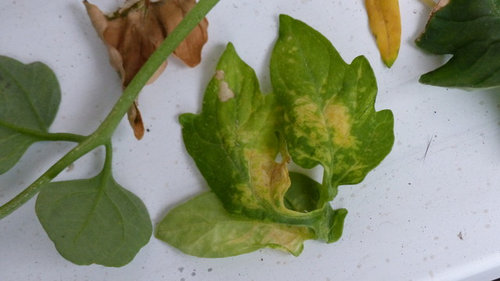
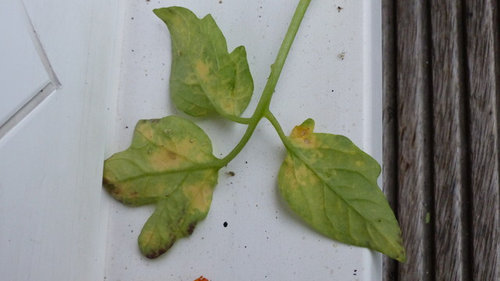
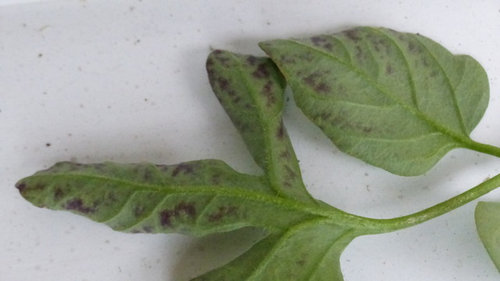
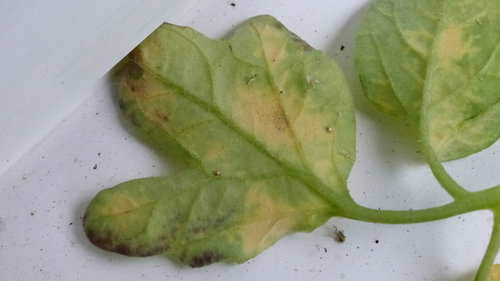
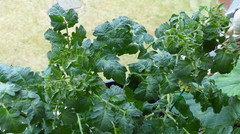
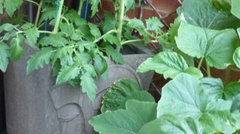
Hi all, this is my first time growing tomato plants and I am a bit concerned about a few leaves that I have found at the base of the plant. Any advice? If this some type of wilting fungus? The dark edge on a couple of the leaves almost looks a little purple edging. Could this be a fertilizer deficiency? New to this, so guessing a lot and worried :(


Comments (13)

  • 9 years ago
    last modified: 9 years ago

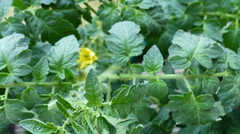
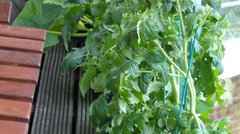
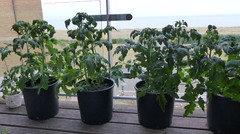
    This is how the plants look in general. I have marrows in the corners. I am limited for space, so planted 2 in a pot. I am growing them on my sheltered balcony. Gets good sun up until 1pm though. I did water them from above and then was told not to do this. I live by the beach in Eastbourne, UK.


  • 9 years ago

    There are 2 varieties, I think they are Indeterminates. Pomodoro Marmande, (grows to 4ft?) and Pomodoro S.Marzano, (grows to 4ft?). I am a bit concerned about using fungicides. I wanted to try to keep them as natural as possible. What is leaf mold? Is it fungus related? Can I get away with just removing any dead leaves. There are no other leaves that look bad. I will take one plant out per pot.

  • 9 years ago

    Is the purple edging on the leaves a deficiency?

  • 9 years ago
    last modified: 9 years ago

    The purple edges could have originated with a deficiency, but since it's on the oldest leaves, which might be senescing anyway, it's hard to say. It's common for young seedlings to have phosphorus deficiency, even when grown under ideal conditions, and they outgrow it as they mature. Those leaves probably have been phosphorus deficient at one time. Not a big deal unless you're seeing symptoms on newer growth.

    Leaf mold is a fungus.

    As for keeping things "natural", that's a word that's a moving target, so I don't really know how you define that.

    If you mean without intervention, your plants will succumb to nutrient problems if you don't fertilize them regularly. So you definitely need to intervene there.

    You can try to not intervene with regard to diseases by being hypervigilant and pruning off any affected leaves immediately upon noticing the slightest symptoms. Since you live in an area that doesn't have blazing sun, perhaps you can get away with the defoliation, although loss of photosynthesis capacity can also affect production and flavor of fruit.

    I personally would not try to grow tomatoes in a cool, humid environment like yours without fungicide. Note that the safer, organic fungicides available to home gardeners are almost all primarily preventative in nature. They are not curative. Once your plants have disease, the best they can do is slow down infection of unaffected foliage.

    And because you're growing in too-small containers, the strategy of giving plants the best conditions and preventing stress to them in order to boost their ability to resist disease is not available to you. The varieties you're growing will be very stressed in those small containers once they get larger.

    If you want to grow tomatoes without spraying, in future figure out what diseases are common to your garden and select hybrid varieties bred for resistance to those diseases. Even that's not perfect, as resistance does not equal immunity--it just means the plants resist the disease longer and go down from them more slowly--but it could give you enough of a boost to get decent production. And research best growing practices, such as adequate container size.

    Sharon Heiser thanked gorbelly
  • 9 years ago
    last modified: 9 years ago

    Correction--the San Marzano may be OK in those pots if you're vigilant about water and feeding. Marmande, although it's not a huge plant (usually gets to about 5 feet), will be a bit tight and unhappy.

    Sharon Heiser thanked gorbelly
  • 9 years ago

    Ok, thanks a lot for the advice. I am going to take one one of the plants out from each pot & give them to my neighbour. I will look out for any bad leaves. One of the varieties is a bit resilient. I have learnt so much as this is my first time growing anything. Hopefully it will work out.

  • 9 years ago

    I read that the San Marzano can grow up to around 6ft & the Marmande 4ft. As they are indeterminates, I will have to pull off the suckers, right?

  • 9 years ago

    I think you'll get decent production if you remove the extra plants. Good luck!

    Sharon Heiser thanked gorbelly
  • 9 years ago
    last modified: 9 years ago

    I think you're correct--I was thinking of many Romas, which are often determinate and smaller plants. There are different strains of San Marzano, but the OP one that is just "San Marzano" is usually indeterminate and while not a giant can get to be a respectable size.

    Because you're growing in small pots, don't have a robust support system like a cage or trellis, and are growing in a cool, wet climate and don't want to use fungicide, yes, you'll want to prune them quite extensively to limit the number of stems and maximize airflow around the plants. So in your case, I would prune the suckers, yes.

    Sharon Heiser thanked gorbelly
  • 9 years ago

    I have never sprayed a tomato plant in my life and I live in climate quite similar to the OP's - cool and mild. Routine spraying with a fungicide is NOT a requirement and your plants do not appear to have any pathogenic issues so that would not be my first approach. Containerized tomatoes are also far less inclined to contract fungal issues - I have never encountered this in more than 25 years of growing them in my climate.

    They are overly crowded in too small a container so that will be affecting growth and performance. If unable to grow to full potential for whatever reason, the lower leaves are the first to be shed. I'd also wonder about the amount of sunlight - tomatoes need 6-8 hours of unobstructed sunlight and some heat to set fruit and to ripen. In my area, this is the overriding issue on what sort of tomatoes to plant and grow as the summer is seldom hot enough to encourage heirlooms and any beefsteak types to be very productive. The short or early harvest varieties do the best here - San Marzano or other paste types are not good choices for my climate and I doubt will be a good choice for yours :-(

    Sharon Heiser thanked gardengal48 (PNW Z8/9)
  • 9 years ago

    Thanks so much for all the advice. I will hope for the best this time around, then take on board your comments for next time.

  • 9 years ago
    last modified: 9 years ago

    The Pacific Northwest of the US is a very different disease environment than the UK, where both late and early blight are pretty much endemic.

    But every new, idealistic grower needs to try to grow without spraying, I guess. I myself tried it. I would not be happy today with the harvest I got then, but at the time, I was perfectly satisfied.

Sponsored
Bella Casa LLC
Average rating: 5 out of 5 stars17 Reviews
The Leading Interior Design Studio in Franklin County
More Discussions