Software
Houzz Logo Print
bernadette6501

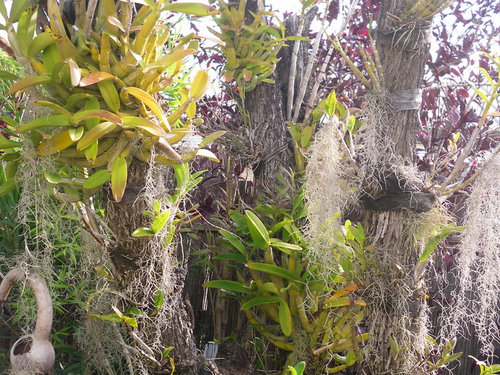
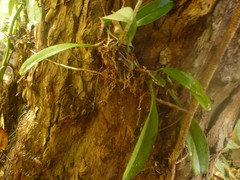
So I have this orchid tree!!

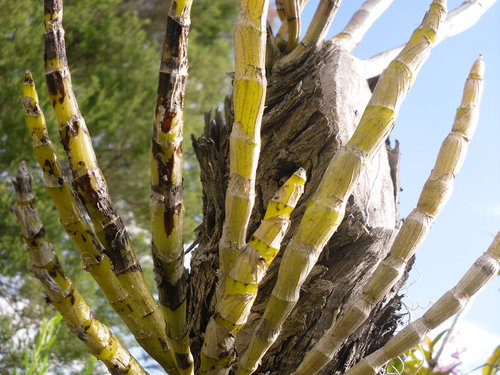
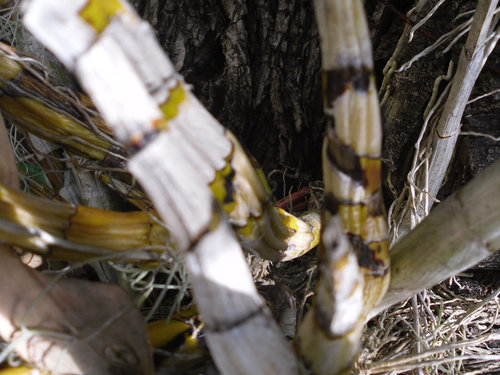
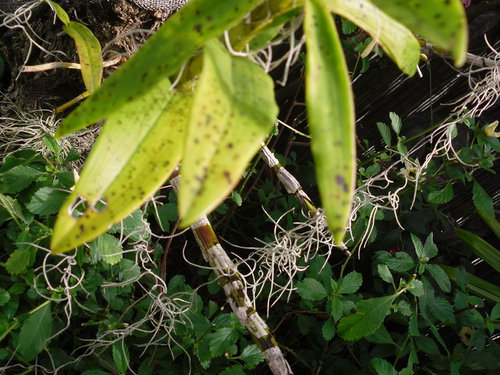
Hi Everyone. Any advice with this problem would be greatly appreciated. Some of these orchids have some sort of black spot on them, as you can see they are growing on a dead tree. Do you think its a disease? Do I just cut off the worst bits? In the past I have done just that as I really do not want to spray it with anything toxic. I have green frogs living in my yard and a small nest of native bees. I live in Far North Queensland, Australia. Thanks in advance! Everyone on this site is very knowledgeable and has always been a great help! Thank you!


Comments (20)

  • 9 years ago

    Thank you so much! I now have a solution, and an Australian answer. Yippee!! And yes I just googled Echo Oil and have found it at Bunnings. I will get some next week and spray next weekend, weather permitting. Eventually I will probably cut off the diseased bits because as you said it will never go away. I now have a solution though to treat my tree with and I am so happy with your answer. Thank you so much once again and as I said before everyone here is so knowledgeable and has always been a great help. I'm very glad I joined this website! You are all so clever!!

  • 9 years ago

    I've got spots like that on some Sarchochilus orchids. I might try Echo Oil on them. I thought it might have been just a response to the climate here.

    Villain Rose (Zone 11 Qld Australia.) thanked tropicbreezent
  • 9 years ago

    Down here in the freezing sub-tropics Autumn is the danger time with dew settling on the leaves. In a normal year I go around the collection twice a year, tidying up, repotting as necessary, staking and cleaning up leaves of various orchids with Echo oil.

    Not sure what the routine would be in the tropics!

    Villain Rose (Zone 11 Qld Australia.) thanked arthurm2015
  • 9 years ago

    Thanks for your answer! But I don't really have a routine. Depends when I have some time. We have a dry season and a wet season here. Tend to do alot of maintenance now, in the dry season. Weather is beautiful, about 25 degrees everyday. It's just lovely outside. I tend to play alot in the other garden, growing seeds and plants that I have not had before. It's a bit of an addiction. It's a little too handy having Bunnings in the same shopping centre where I work as well. I am always coming home with a new plant. Thanks again!

  • 9 years ago

    Arthur, I got my Sarchochilus from a friend's property in the Daintree. It's far more humid there than here in the dry season. They have them growing all over the trees. I didn't think that fungus would be a problem for them here, but realistically there's nothing else it could be. They haven't flowered so don't know which Sarchochilus they'd be. They're mounted on the trunk of a tree in a shady area, but not as shady as where they came from.

    Villian Rose, another victim of Bunnings garden section! I can empathise. It's bit of a long trip into Bunnings but I go there for hardware items and can't help doing a lap or two of the garden centre as well.

    Villain Rose (Zone 11 Qld Australia.) thanked tropicbreezent
  • 9 years ago

    Thanks tropicbreeze for your answer. I don't know where you are, but I presume you are in Australia somewhere. Is your fungus spreading? Mine does spread, not real quickly though. It seem to be more prolific on one side of the tree. I have chopped the worst bits off in the past and it's come back. Maybe as arthurm2015 said, it is scar tissue and it will never go away. Would love to see a photo of your orchid just to compare. As for Bunnings up the back of the garden centre they usually have a rack of discounted plants. Have scored quite a few good bargains off these racks. Next time you are there it might be worth a look!! Take care.

  • 9 years ago

    Nice looking host tree, be mindful that any oil and high temps can be a problem. I have seen best results by spraying after sun starts to dip and possibly not n the hottest time of year. Using oil on very hot day can literally cook the plants. As the trunk is wide open, also notes that not all (f any) of your orchids on the tree can normally withstand full tropical sun, I see much light green/ yellowish tones, so plants are stressed by more sun that they can handle and thusly more susceptible to other problem such as fungus. If you have to replace any dead plant or just want to add more, pls note that they should be able to take full tropical sun.

    Villain Rose (Zone 11 Qld Australia.) thanked Ben(8b/9a north FL)
  • 9 years ago

    Thanks for the compliment Ben. Host tree was a callistemon that died. I sort of figured oil and high temperatures would fry the orchids. So I will do that when its cool or when sun is just about to go down and not in the hot season. When this tree died, it was either grow something on it or chop it right out of the ground. So I just started adding bits and pieces of orchids and air plants that I already had. I really have been very slack with these orchids on this tree as I don't tend to fertilize and it fends for itself besides my watering. I might give it a birthday soon and do something extra for it. Most of the plants have been growing on this dead tree now for about six years. Thank you so much for your advice. Everyone on this website is really clever and I do really appreciate everyones help and opinions.

  • 9 years ago

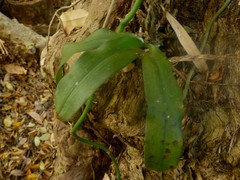
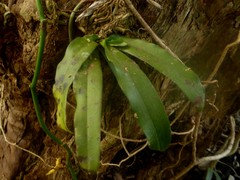
    Photos of two Sarchochilus with the spots. Newer leaves don't have them but develop them after a while.


    This is a Bulbophyllum that comes from the same place as the Sarchochilus, is planted on the same tree as the others and no signs of spotting.

    They've all been in place for a number of years now so should have settled in. They're growing on a Swamp Mahogany (Lophostemon lactifluus).

  • 9 years ago

    Thanks tropicbreezent for your answer and the photos too! That really does look like the same black spots that I have on my orchids also. I will also say the same about the newer leaves, that the spots develop over time.

  • 9 years ago
    last modified: 9 years ago


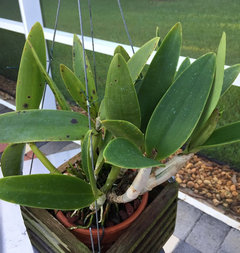
    The purpose of the back bulbs and leaves is to support the new growth and flowers. The minerals and nutrition of the back bulbs are sacrificed for the overall benefit. When that happens sometimes we see black spots as the leaves deteriorate. I become concerned if I see black spots on newer growths.

    This is a healthy plant. It had a nice cluster of blooms that lasted for a couple of weeks. On the far right of the picture is a new cluster forming. The back bulbs are yielding its nutritional benefits for the new production. I have many examples of this.

    The plants on the tree appear to have the entire day of sun. If that is true it may be partially due to too much sun.

    Villain Rose (Zone 11 Qld Australia.) thanked shavedmonkey (Harvey in South Fl.)Z10b
  • 9 years ago

    Thank you shavedmonkey for your answer! Unfortunately I can not do much about it in full sun. As the callistemon, my dead host tree, is still fairly solid in the ground. With everyones great advice that I have been given here. I think my plan of attack is:

    1 - Cut off the really bad bits. Take a few of the air plants off.

    2 - Fertilise it. Over a 2 week period give it a couple of doses.

    3. Spray with Echo oil.

    What do you all think? Any other advice or opinions on this would be greatly appreciated! Thanks everyone!!


  • 9 years ago

    I would put four tall sticks in the ground around the tree trunk and attach some screening (fiberglass) material to provide some shade and see what happens...

  • 9 years ago

    Thanks for your answer Ben, but I think that is a bit hard. I could try to screw a piece of shade cloth to the top though, as the three branches are fairly level.

  • 9 years ago

    If the leaves are not fungus, leave them in place as they will provide benefit to the plant until the green is gone. Do not use any oil preparations. It will intensify the sun and cook your plants. See if you can get the same in a non oil preparation.

    The orchids could be relocated by cutting a limb and leaving the orchids attached. It might be a four handed job. 2 hands on the limb to be cut and 2 on the saw. Then move the limb to a more conducive environment. You could do it all or just try one limb...


    Villain Rose (Zone 11 Qld Australia.) thanked shavedmonkey (Harvey in South Fl.)Z10b
  • 9 years ago

    Thanks for your advice shavedmonkey. I will have a look at the garden shop to see what else to treat this with. The lower areas of this host tree gets alot more shade than the top of it, The photos are of the top of it, and it is taller than me. Unfortunately it is not an option to cut it out of the ground, as I have no where else to put it. It is a feature in the garden, as it is the first thing you see as you walk into the backyard.

  • 9 years ago
    last modified: 9 years ago

    I think the reference to oil might be for white oil which I would never use even here in winter.

    Your "problem" is the wet and dry season and getting advice appropriate to your growing conditions.

    I have too many orchids and nearly all of them are under various degrees of Shade-cloth, you need advice re. sun tolerance so you can place orchids at various levels on your tree for best results.

    Here is 34S South not 17S, latitude of Cairns. The sun is still an enemy when the arid westerly wind is blowing.

    Tropic, as far as Sarcs go, they seem to be fussy, you have to move them around to find the spot where they thrive. Some of the species are considered difficult. Sarco. falcatus is one of those.

    Villain Rose (Zone 11 Qld Australia.) thanked arthurm2015
  • 9 years ago

    Dry season there's a lot more intense sun. Generally there's less cloud cover and even a lot of rainforest trees thin out their leaf canopy a bit. Humid air tends to moderate sun intensity so again, the dry season air doesn't help plants that are in more exposed situations. It's all a bit of a balancing act.

    Thanks Arthur, I'll move the Sarcs during the wet season. Now would be too traumatic. There is a spot I can try which is sheltered and gets a bit of a sprinkle from the irrigation. The tree is a Vavaea (Vavaea australiana) which has a slightly roughened/warty trunk, unlike the Swamp Mahogany which is very flaky almost to the extent of Melaleuca. Not having flowered I haven't worked out which species these are but going by geography I think they'd be falcatus.

    Villain Rose (Zone 11 Qld Australia.) thanked tropicbreezent
  • 9 years ago

    Villain, sorry for wandering off- topic on your thread.....

    Tropic, looked up Sarcochilus falcatus in Native Orchids of Australia and it does have an enormous range (NE Qld to Victoria) and David L Jones says it is easy to grow and bloom. Lol.

    I've never found it easy to grow, bits found on sub tropical rain-forest floor still attached to small broken tree branches do ok for a while and then decline.

    The habitat described in the book is one where there are mists, air movement and drizzly weather. The place I described above is a valley close to the sea and the orchids are growing on "she-oaks" which have needle like foliage which give filmy shade. The bark is rough.

    Villain Rose (Zone 11 Qld Australia.) thanked arthurm2015
Sponsored
Whisler Home Improvement
Average rating: 5 out of 5 stars9 Reviews
Franklin County's Committed Home Improvement Professionals