Software
Houzz Logo Print
pjl69

Lawn Bug/Insect ID

9 years ago
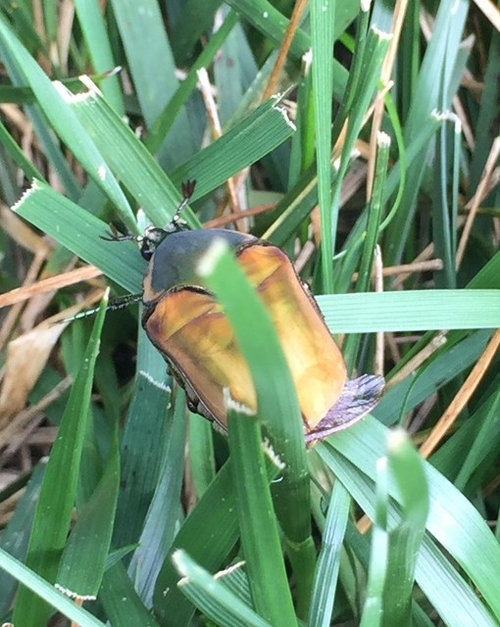
Trying to identify this bug which is over my backyard and whether it's harmful to the lawn or not? Located in the State of New Jersey if it's helpful. Thanks

Comments (6)

  • 9 years ago

    Looks like a Green June Bug. Those usually start climbing out from the grind mid summer and will start flying around looking for a nice place to lay eggs. The beetles themselves don't harm turf, but their grubs will. If you see tons of them flying around, you might want to take action.

    I had hundreds of them last year and they slaughtered the turf in my backyard.

    If you didn't put down a grub preventer down in April/May, you might have missed the boat. The next boat is using a grub killer --- Dylox --- sometime in mid August.

  • 9 years ago

    Thanks, I unfortunately did not apply a grub killer in the spring, so will do as you suggest in August. May I ask if it makes a difference on applying Dylox if I plan on over seeding the lawn in early September ? i.e. Should I apply something else if I plan over seeding.

  • 9 years ago

    Does you lawn look bad because of them? I ask because lots of people have grubs, but it is only a problem when you have an excess of them. I wouldn't do anything about it unless you have to. I think there is a test of digging up a square foot of sod and counting the grubs...if under a certain number, no need to treat.

  • 9 years ago

    Dig up 1 square foot of sod and count the grubs. If there are fewer than a dozen, no need to treat. If there are an uncountable swarmy mass of grubs, then treat. Do this every year in July rather than pretreating in May or June, because by far and away, the majority of insects in your turf and soil are beneficial. If you don't have something eating up your lawn, leave it alone. Don't fall for the advertising or the 4-step program. If you have a huge number of these beetles coming out of the yard now and you did not have a problem last year, then you did not need to treat then, either. The turf can withstand a certain number of "pests" living in it.

  • 9 years ago
    last modified: 9 years ago

    If you just now starting to notice these beetles, they probably are just starting to emerge from the soil to begin their mating season. It's pointless to check for grubs now because they probably haven't even laid the eggs, yet. If they have laid them, they haven't hatched, yet.

    If you see more then a handful of them flying around (maybe smacking into your homes siding, even) it's a good bet that your lawn will be infested. A single Green June Beetle female can lay up 65-75 eggs in a two week period. The eggs hatch in about 18-20 days.

    If you wait until about the first or second week in August to apply a Dylox treatment, you will get good control. Dylox only lasts about 48 hours before it loses effectiveness, so you definitely want to wait until after they have hatched,

    You should be fine applying Dylox when you seed in the fall. However, that's a general statement... and it will depend on the specific product that you are using. Last year, I applied Bayer Advanced 24 hour grub killer (w/ Dylox) around the time I seeded and there was no impact on the germination or development of the Turf Type Tall Fescue.

    I will caution you- Dylox is really the nuclear option. It's one of the more dangerous lawn chemicals, IMO. You don't want to let your children or pets near the stuff. For my dog, last year I didnt let her renter the backyard for about 1 week after the treatment because there were thousands of dead grubs on the surface. I was afraid she would eat the grubs and ingest the chemical.

    I am typically the type of lawn care nut who tries to go 100% organic/natural in my backyard due to my dog (and future baby... only a few months away!) However, sometimes you have to use what tools are available or make the choice between the lesser of two evils.

    For me, grub preventer (e.g. grubEx) in my backyard is more of a problem than grub cure (e.g. Dylox). GrubEx and other preventers purpose is to sit there in the soil for several months, active.... just waiting for my dog to dig a hole to bury a toy or bone that she will later dig back up and eat, ingesting the chemical. Dylox, on the other hand, will break down in a couple of days.

    Thankfully, I haven't seen a single GJB this year. Last year, I had a biblical plague of those buggers. My approach is to play it by ear. But if I only see a couple of them, I'm not going to sweat it and will likely skip Dylox.

  • 9 years ago

    Thanks again to everyone for the information and advice. It's very useful. I do have a on-going problem with grubs but not the the extent of the post reflected above. I will monitor it a bit more closely now that I am aware of the large number of beetles present and if necessary apply something in mid-August as recommend.