Software
Houzz Logo Print
oldmoses

Black spot on canes question?

9 years ago
last modified: 9 years ago

We know that black spot attacks canes as well as leaves. Under treatment, the old diseased leaves fall off, but new leaves thereafter are clean of disease if preventive spraying continues.

What about the black spot damaged canes? Spraying kills the black spot fungus on the canes, right? What about the damage done to the canes? Do the canes heal, or do they eventually weaken, get cankered, and are doomed a slow death?

Could cane dieback in spring, after pruning back to healthy pith, be cured black spotted canes from last year, but still damaged canes, finally showing black spot's wrath?

What do you think?

Moses

Comments (38)

  • 9 years ago

    BUMP

    This could be a peripheral question, sorry if it is.

    Moses

  • 9 years ago

    I had the canes die back on a Heritage this spring just after buds showed on laterals. When I realized there was a problem I decided to cut both of the canes all the way to the bud union. It just came back--there is a small bud on the new growth.

  • 9 years ago

    Oldrosarian,

    Thanks for your valuable input on my question.

    It seems evident to me that many cases of cane dieback were initiated by an earlier black spot outbreak.

    When a cane is treated and the black spot eradicated?, is that cane eventually doomed to a premature death?

    Moses

  • 9 years ago

    I like reading all this good stuff. My garden was hit really hard this past spring with Downey Mildew. It affected 80% of the new growth before I was able to get a handle on things. I had to cut back 2/3 of the new growth completely to the cane it came off. BINGO!!! I now have 2 new, healthy canes coming off each main cane where I had to cut back too. Weather the bush's main canes were damaged beyond repair will be found out this coming winter. In the mean time, I enjoy what I have and anticipate a good fall bloom.

  • 9 years ago

    If the marks on the canes are just a form of BS that usually is on the leaves, and you spray the cane, it will become a disease free cane. leaf types of BS cannot get it's roots into the thick covering of rose canes.

    You could continue to grow that cane even though there were marks on it BUT without spraying, the spores would then get to the leaves and they would die.If that canes does die, then it was a different fungus that caused the death. Probably an interior one.

  • 9 years ago

    Ken I think that cutting new growth which has downey mildew on it is preferable then spraying. My reasoning is that quite often by the time you see downey mildew, severe damage has been done. However if you knew that you would begetting warm days and cool nights, then you could spray as a precaution.

  • 9 years ago

    Hi Moses, interesting question. I have wondered the same thing. Leaves drop so the damage is over. The damage remains on stems that were infected with blackspot.

    We know that blackspot is a parasite fungus that survives by destroying the tissues and feeding on the nutrients of its host. It causes permanent damage to the area that it effects. It actually changes the structure of the plant's cells.

    So I guess the question is how much of the canes cell have been destroyed or modified and if the damaged cells can produce healthy cells or if they produce modified cells.

    From my own casual observation, I find that stems with blackspot damage seem permanently weakened and are more susceptible to dieback.

  • 9 years ago

    Oldrosarian,

    Fascinating! I know that there are different strains of black spot, but I did not know that stem black spot is a different strain than leaf black spot. You learn something new every day.

    Here is a hypothetical question for you, Oldrosarian.

    If a cane has been badly infected with blackspot for a while, and then treated to the point that it has been eradicated, will the damage done to the cane cause its inevitable death, even though it is no longer infected?

    Moses

  • 9 years ago

    Oldrosarian, I had done a lot of reading about blackspot and I have never seen a source that says that different strains of blackspot effect different parts of the plant. It is my understanding that the blackspot on the leaves can also grow on the stem of plants.

  • 9 years ago

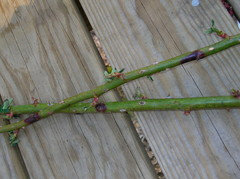
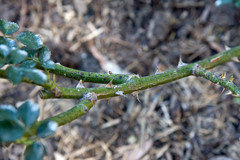
    You are right in that leaf BS can try and grow on a stem but it doesn't mature and spread the spores. I gave the wrong impression in that different BS effects different parts of the rose. What I mean is that when the BS lands on an area in which it can put down it's roots, then it is effective. If you look carefully at BS on the stem which couldn't grow, it is sometimes just markings. There are many funguses called Black Spot but as you know they will act differently on the rose. The famous one that everybody gets that grows roses is just many variations on a strain of BS. The BS I get on my roses is not the same as yours. In the PNW we have around 14 types or strains. Fungus only needs a place to grow, as it is really a plant, to do damage and kill.. Here is a photo of a type of fungus that kills your canes, because it is so easy to get into a budeye.

    BS is just like any plant It puts down roots , makes a flower and then dies and that is when one sees the black. Then these spores take off into the air. When it rains or is windy, down they come and if they land on a rose, start again.I know that rose books say never get water on a rose leaves but Peter Beales told me that spraying your roses with the hose in the morning, washes a lot of spores off so they don't have the chance to infect. I do it myself with no ill effects. Sorry for any confusion Valrose.


  • 9 years ago
    last modified: 9 years ago

    Oldrosarian, and anyone else with knowledge on the subject of black spot on rose stems and canes,

    Am I correct in this....black spot attacks the healthy bud eyes on stems, not the stem initially. Then it spreads its roots into adjacent stem, thus the blackening of the stem around the bud eye?

    Black spot infects stem wounds also, correct?

    A healthy stem can have black spot spores covering it, but just inactive spores, no black spot fungus (plants), can form and take root on the resistant/impervious healthy stem surface, right?

    I am determined to understand what is going on concerning rose stems/canes regarding black spot on them. Black spot on leaves, I believe I have a pretty good handle on.

    Moses

  • 9 years ago
    last modified: 9 years ago

    Oldrosarian,

    Thank you for including a photo. You are really enlightening me!

    Regarding the cane running at an angle in your photo....

    The black spotted area on the cane in the upper right hand part of your photo will most likely extend its blackened area, and prevent any good growth, perhaps even cause complete cane death above the diseased part, right?

    Does black spot on a cane grow and extend under the outer, waxy cane surface, and not break through the cane's surface?

    Thanks in advance for your knowledge imparted.

    Moses

  • 9 years ago
    last modified: 9 years ago

    Moses

    The blackspot that you see on the stems are lesions. You cannot see the spores because they single celled and are too small to be seen with the eye. For the spot to be visible, the spore must have sent it's feeding tube into the stem and have formed a lesion, which can produce millions of spore. These lesions are not different from the blackspot on the leaves. Nothing that I have read suggests that blackspot can only infect the bud eye.

    I've been doing a lot of study on blackspot and this is what I've learned.

    • Blackspot is caused by a fungus called Diplocarpon rosae that only attacks roses
    • Blackspot spores are spread by splashing water (many sources say that the spores also travel by wind, but this seems to not be true)
    • Blackspot infects both leaves and stems
    • Lesions are what we see and call blackspot, they are little spore producing machines.
    • A single blackspot lesion can produce over a million spores
    • Once the spore has left the lesion it can survive 2 to 4 weeks dry, it will need 7 hours of continuous wetting to infect rose tissue at temps 50 to 75 degrees F
    • Spores can only infect living tissue
    • Spores grow into new lesions when they have successfully infected rose tissue
    • Blackspot lesions live a long time and are very tough, they overwinter in fallen leaves and on stems

    I learned lots of other things too, but this is the info that seems most relevant. If any of this info is incorrect, please let me know.


  • 9 years ago

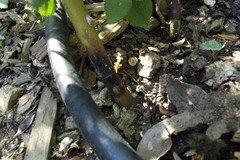
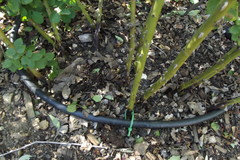
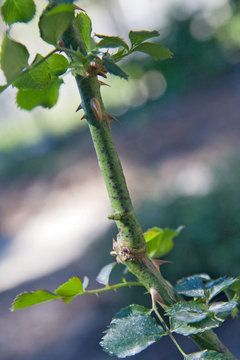
    Oldrosarian, I would like to ask your opinion: That fungus of which speaks that is deadly for the stems and that I understand (correct me if I am mistaken) that is a different strain of black stain of which it affects the leaves ... thinks that is the one that Is seen at the bottom of the stems of this rose?

    I must say I noticed the stains when I removed the quilting a bit. All the stains were at the same height. Just in the centimeters that has high padding.

    At first I thought the stems were sick. But then it occurred to me that perhaps these stains could be the effect of manure (very fermented and ripe) under the padding each season.

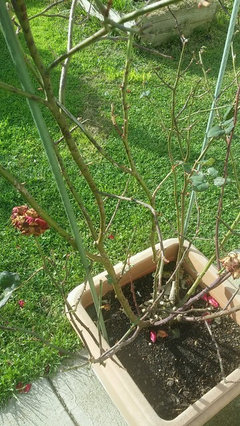
    This rose tree that appears in the images since the beginning of spring was like sick. Weak, yellowish, small leaves. It's as if the rose bush has no strength to grow. It did not flower. I finally decided to cut all the stems at ground level. Below the spots. Now it's sprouting again.

    Only one more thing to help you forjars a more successful idea. My climate is very dry and hot. I do not usually have problems with fungi. In particular, black stain, I have never had in my rosebushes.

    Is it possible to have this type of black spot that affects the stems and yet that no rose has a black spot on the leaves?

    What is your opinion?

    Thank you very much. Maria.

  • 9 years ago
    last modified: 9 years ago

    This is the first article that I have come across that specifically talks about blackspot effecting only first year canes.

    "Canes may become infected during the first year of development. Lesions are purplish red, then black, and slightly raised. Black spot causes plant disfigurement and weak growth, predisposing the plant to other infectious and noninfectious problems. " excerpt from university of Illinois extension article

  • 9 years ago

    Maria, That does look like canker that could have been from the padding mulch over Winter. I've heard we are supposed to keep this manure away from the canes. Now you may have to prune below the black/brown areas.

  • 9 years ago
    last modified: 9 years ago

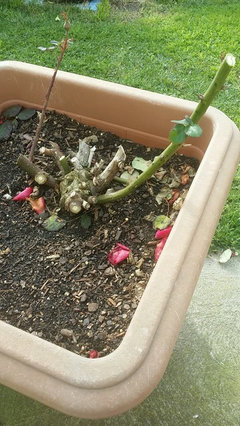
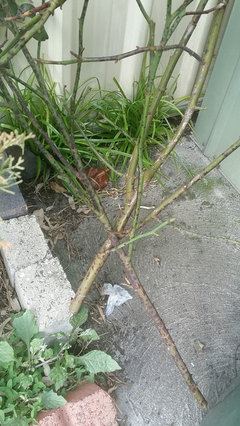
    I'm also having this problem of b/s on canes too on my Firefighter rose. All the canes are affected and I dont know what to do. If I prune all these canes out it will take years for thus rose to reach to this height again.It's winter in Aus.

  • 9 years ago

    Could we have a close up of the base, Tangles?

  • 9 years ago

    Not to worry. I just went out the garden and prune out all the canes off leaving only the understock. It looks ugly. If I dont see growth in spring I will replace this rose. Such a sad thing to come across.

  • 9 years ago

    This is what it looks like now after pruning.

  • 9 years ago

    And these are the canes that I pruned. I hope I did the right thing.

  • 9 years ago

    I had some canes that looked like that on my Lamarque Fall of 2015 when it got rainy here. I wondered if it was downy mildew. The plant lived, after I put horse manure around it and pruned the worst parts. It took it's toll and still isn't back to what it was. I think the pruning that you did might be correct Tangles.

  • 9 years ago

    Tangles Long...That is downy mildew. A rose cane live with those marks if they haven't burned into the cane's tissue. A fungicide spray used in the fall and the spring will kill. It won't take away the marks but they will be dead. Before you prune what appears to be a diseased cane, just cut a little off the top and see if it is diseased. Then keep cutting down until you get to clean growth. Fall and spring spraying have proven to be the best to kill any spores that have overwintered.

  • 9 years ago

    Please keep in mind that the BS I speak of is not the same as someone's in another part of the world talks about. BS mutates at an impressive speed, so the one I got last year will not be the same as this year. One often sees it on a particular rose and then next year it is clean. How these mutations effect a rose...one can argue forever about. What has caused Maria in Spain's problem, could just be spores that have oberwintered because conditions were perfect for it. In my PNW it would probably be the excessive amount of winter rain. The list goes on. If you are concerned about BS, then you have to study how it acts and kills in your area. IMO there is too much generalization about BS even in educated writings.

  • 9 years ago

    The canes you cut off appear to have downy mildew marks on them. You need to cut off a little from the top and see if the cane is infected. If the cane is a mature one, it can live with downy mildew if you just give it a spray and kill the spores. The marks will not go away but they will be dead.

    Lets get one thing clear. BS does not readily kill a rose. Roses can drop their leaves three times before it effects their vigour. Roses can live with BS if they get lots of rich soil , water and fertilizer. You won't like the look but they will live and produce blooms. It is those nasty funguses that jump in when they see an opening in the canes or a budeye that infect the core of the stem and kill it. Spraying won't help. you need to cut the cane right down to a cane that looks healthy. A general fungicide spray in the fall and one in the spring, should keep fungus under control.

  • 9 years ago

    Do you rec a particular treatment spray, oldrosarian, for downy mildew?

  • 9 years ago

    The home remedy of 2 teaspoons of baking soda to 2 quarts of water is a good one I leave the soap out because it too could burn the foliage. BUT it is the most effective when applied before the mildew really gets going. In a perfect world, if a gardener watched the weather and saw there was going to be cool nights and hot days, that would be the time to use it . If new growth is really covered with the white powder, crinkled and distorted, then pruning it down is really the best. When new growth, plus buds, gets badly burned, it may not produce blooms or just deformed ones. Chemical sprays , such as Bayer, all basically have the same chemicals in them. They, like backing soda, burn the mildew to kill it so always spray in the morning so it dries off quickly. You will find that some roses are prone to it, those are the ones to spray first. Just spray until the leaves look a healthy green again.

  • 9 years ago

    Thank you for that. Is that effective for Downy Mildew oldrosarian?

  • 9 years ago

    It works for downey mildew if the leaves are not badly burnt. If your weather is ideal for mildew, getting rid of it is difficult. You may just have to cut off the very burnt areas.

  • 8 years ago

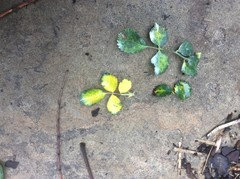
    This is a really old thread, but very interesting as I’ve had the same problem and posted about it recently but didn’t get much advice.

    After transplsnting a rose into the garden it got black spots all over its stems and the leaves became very small and they go yellow and drop off easily. Someone suggested the soil could be the problem. It is much denser than it was in the pot, and has undecomposed material in it, straw mulch that is still breaking down. But all the other roses are fine so I’m not sure.

    ive been spraying with fungicide. Not sure if I should dig it up and change the soil underneath, it has buds.

    any ideas?

    the white on the leaves is from the spray. It doesn’t have powdery stuff on the leaves


  • 8 years ago

    Yeessss.?.?!

  • 8 years ago

    I'll just add that doesn't look like downy mildew to me, lena. I had it on one plant which ultimately died. The DM had larger splotchy dark markings on the canes and leaves.

  • 8 years ago

    so it’s either black spot (if so hopefully I’ve killed the spores with the fungicide) or a problem with the soil and the roots. It will be interesting to see how the buds develop. I’m a bit more hopeful now, there are only a few leaves like this


    that are going yellow.

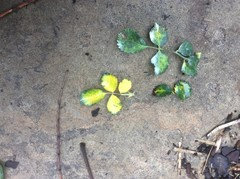
    Does this look like black spot?

    Most of the le@ves are still smaller than normal but the new shoots look ok

    ill keep spraying the fungicide

    more photos


    It’s improving but nothing like it was before


  • 8 years ago

    something really strange is happening with houzz. I keep getting error messages, the “web page was reloaded because a problem occurred “ then it totally flips out. I posted a msg and photos and it all disappeared.

    anyway, what I said was I’m glad it sounds unlike downy mildew. It must be either black spot or a soil and root problem. But I’m hopeful because the problem leaves are much fewer in number. These are all I found today


    Do they look like blackspot?

    the canes still have spots but there are new shoots and buds. The leaves still look smaller than normal. I’ll keep spraying with fungicide and see what happens when the buds open.

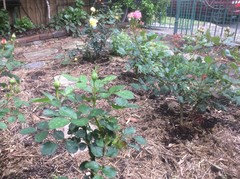
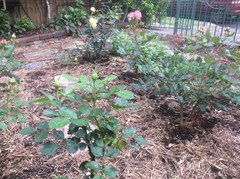
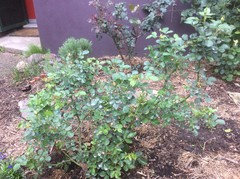
    this is how the Rose looks now


    It’s improving but still nothing like it used to be


  • 8 years ago

    I've had an occasional houzz glitch too. We're all sending thoughts and prayers, which sadly are doing nothing, but we soldier on. Lena, I had a new rose plant that had smaller leaves than normal and it gradually improved to great as it got established. Maybe it is a form of transplant stress that hit your one plant only. I think it is a good sign it is improving. It could be great next Spring, I hope.

  • 8 years ago

    Thanks, that's encouraging. I see my post did actually work and now there are 2! Oh well.

Sponsored
Mary Shipley Interiors
Average rating: 4.8 out of 5 stars34 Reviews
Columbus OH Premier Interior Designer 10x Best of Houzz