Software
Houzz Logo Print
amanda_eggers76

Figuring out a plan

9 years ago

Hey guys,

We built a house 2 years ago and my lawn is horrible. I live in Maryland.

The soil is hard as a rock and i have a layer of dead grass/straw, and the yard is full of weeds, some grass but not much.

I just gave a soil sample to the local university so I'm waiting to get those results.

I'm sure they will have some recommendations but I was wondering if I should do anything before i put stuff down on the lawn.

I was thinking about dethatching because i dont see how stuff will get down to the soil if I dont, and i was also thinking about killing the weeds. Then doing whatever the soil test indicates that i need. Then in fall aerating, composte, seeding, fertilizing.

Any thoughts?

Comments (22)

  • 9 years ago

    Sounds like a total redo.

    If so, you'd want to nuke the "lawn" and weeds with grass and weed killer first.

    There are posts here that explain exactly how to do that.

    Then you have to dig it all up and remove it.

    Some good topsoil, quality grass seed (pick the right kind for your conditions), starter fertilizer, water........

    By mid September you'll have a lovely new lawn.

  • 9 years ago

    You do not need to dig up and remove soil or bring in topsoil. Here is info from U of Maryland on establishment, renovation, and overseeding: Maryland turfgrass

  • 9 years ago

    Becky-

    I meant remove the dead grass/weeds, not the soil.

    Or am I wrong?


  • 9 years ago

    Are you watering it now? If so what is your watering schedule? How often and for how long do you water?

  • 9 years ago

    dchall, I have not been watering because last year I kind of gave up on the lawn, but I plan to put some effort into it now and do all the right things. So I bought some sprinklers a couple weeks ago with the intent of watering 1" a week. Since my soil is so hard I was going to water a couple times a week. But I haven't had to use the sprinklers yet because we have been getting plenty of rain.

  • 9 years ago

    becky, do you have an updated link, that one doesn't work

  • 9 years ago

    Joe, how would i remove the dead grass/weeds? Using a dethatcher and rake?

  • 9 years ago
    last modified: 9 years ago

    Without any photos to indicate otherwise, I'd agree this sounds like a full renovation project.

    My approach would be to focus on cleaning out and improving the soil conditions now in preparation for the early fall seeding. Start first by removing all the weeds by whatever means makes the most sense to you. This may take more than just a single application of herbicide if you go that route so plan accordingly. Once the weeds have been killed/removed, you can go to work on the soil. A deep, friable and fertile soil bed is the recommended base for any type of lawn; seeded, hydroseeded or sodded. You want 6-8" of loose (non-compacted), organically amended soil that is well draining and graded correctly to direct runoff and water flow away from any structure. In your case, this may require tilling to break up the compacted current soil base and to incorporate some organic matter like compost or to add an enriched topsoil. Would make sense to wait for the results of your soil test to determine exactly what and how much to add. If liming is necessary, that would be the time do so, while you are improving the soil conditions.

    Once you have done what you need to do to the existing soil to make it a more hospitable growing environment for a lawn, do your final grading/raking and rolling. You are then ready to seed.

    Many new to lawn care or gardening in general do not realize the importance of starting out with a good soil base. That is the key to any future success so do not stint in the prep of this area or take any shortcuts!!

    btw, here is the full link to the UofM extension service publications for lawn establishment: MD Lawns. Haven't read it all myself so not sure if I would make other suggestions but it should be a decent resource for you to work from.

  • 9 years ago

    Thank you gardengal for the help. Your link to the UofM publication didn't work either, lol!

  • 9 years ago
    last modified: 9 years ago

    Okay good. Any vertical slicing tool will disconnect all the dead stuff from the soil. Then use a rake or blower to get it off the surface. Here is a plan for you.

    Beginning in early September, start to water the lawn area lightly, 5-10 minutes, three times a day for a full week. The soil should never become soggy or mushy. At the end of the week you should see lots of new weeds. Spray everything with Round Up to kill it all. Continue watering for another week to sprout any late sprouting weeds. Spray again with RoundUp. Stop watering for a few days and run the dethatcher to get everything off the soil.

    Look hard at the soil surface for low and high spots. Try scraping the surface of the high spots and move that soil to the low spots. You may need more soil or you may end up hauling soil away to get better drainage away from the house. Note that there is no step for aerating and definitely not rototilling.

    When you have the soil surface the way you want it, then seed. Roll the seed down to ensure good contact between the soil and seed. Restart the same watering you did before to sprout the grass seed. Rye sprouts in 1 week, fescue sprouts in 2 weeks, and Kentucky bluegrass sprouts in 3 weeks. If you want KBG and stop watering too early, you will not have any KBG. Once you have 80% germination on the seed you can back off on the frequency of watering.

    When the grass is 5 inches tall mow it down to 4 inches (your mower's highest setting).

    Seeds already have enough nutrients to push them through the first month of life, so there is no hurry to fertilize. Some people fertilize with chemicals first even though there is no grass to take up the nutrients. If you want to do that with organic fertilizer, that's a different deal, but chemical ferts are wasted if you use them too early.

  • 9 years ago

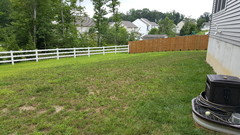
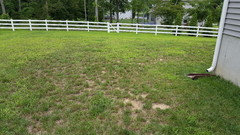
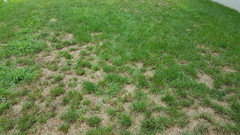
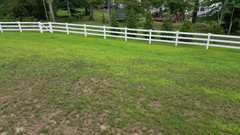
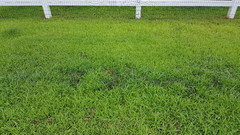
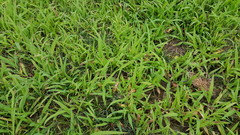
    Here are some photos

  • 9 years ago
    last modified: 9 years ago

    dchall, Thank you for that advice. What about my hard soil? It's so hard that a screw driver won't even go down an inch. It's kind of weird though. Some parts of the lawn I do have thick good looking grass (very few parts), and the screw driver goes right in, but then those bare spots I can't get the screw driver in at all.

  • 9 years ago

    Becky, Thanks I found the site and look forward to reading it. I'd like to avoid a total renovation.. I think my biggest issue is the hard soil. I do have "some" nice grass and in those spots the soil is not hard at all.

  • 9 years ago

    Yeah, it comes up readily if you search online.....just won't link for some reason.

    You are going to get differing opinions on the need for aeration and/or soil improvement. dchall and I disagree routinely on these points but IME, these are some of the key aspects of lawn renovation or prepping for a new lawn and should not be dismissed out of hand. The extension service publication also advocates these practices. The better and more thorough the preparation before you seed or lay sod, the faster the establishment, the healthier the lawn and a reduced need excessive watering, fertilization or pesticides.

    You might want to review the thread on "what do you use to aerate" for additional discussion on the topic.

  • 9 years ago

    After seeing the pictures I would agree it doesn't require a complete redo; there's some good grass there.

    I would just focus my efforts on the bad spots, but also consider aerating (whatever form you choose) all of it.

  • 9 years ago

    Joe, I applied Baby Shampoo based off some stuff I read.. I see you did too. Let me know if you get any good results

  • 9 years ago

    Is it possible you have rocks or construction debris in the areas where it's hard to dig? Are you trying to dig when the soil is wet or dry? The baby shampoo won't hurt anything. Give it a try and then see if it's still hard to push in the screwdriver.

  • 9 years ago

    Amanda-

    Could you post a pic of the grass closer to the white fence? I'd like to see that grass.

  • 9 years ago

    I think that "grass" next to the fence is actually a weed, but I'm a novice so I don't know lol

  • 9 years ago

    Might be crabgrass. Google crabgrass ID and see if what you have meets the description. It seems to be some sort of grassy weed.

  • 9 years ago

    Hmm....I've definitely seen that stuff around and I'm pretty sure it's weeds. It kind of looks like crabgrass but not exactly.

    At any rate see if you can get it identified; you might have to get rid of that also.