Software
Houzz Logo Print
clementime

Shaded and Sloped Side yard

9 years ago
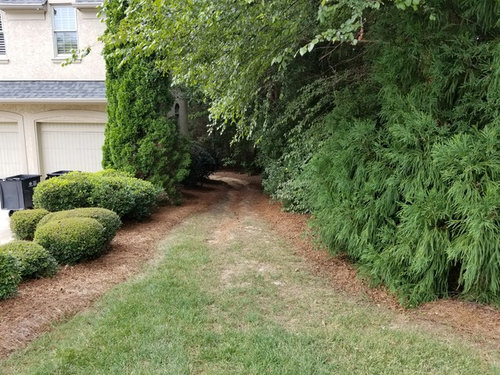
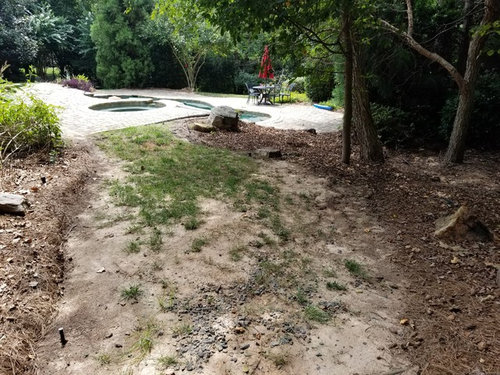
I have been putting off dealing with my side yard for sometime. We have tried to plant grass but it just is not happening with all this shade. I am attaching pictures which guide you from my front yard to the backyard. I think I want to use some flagstone but there are so many issues with the slope, drainage and soil seems somewhat compacted in places I do not know where to start. Any suggestions would be great on something that spreads fast between flagstone/pavers in shaded area that would not cost a fortune. I would like to have more of a shade garden with maybe a bench in the part that is more open in front of gate. I also do not know how I would end the "pathway" in the backyard where the grass starts to fill out again by the pool. I'm in zone 7b/8a. All advice is welcome.

My questions-

Where should I start?

Any plant suggestions for large open area?

Do you think flagstone is a good option?

**I would really love dwarf mondo but the area might be too large of an area for the price to be right.


Landscape Ideas · More Info
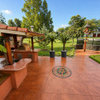
(Grass starts to thin out in front yard.)
Landscape Ideas · More Info
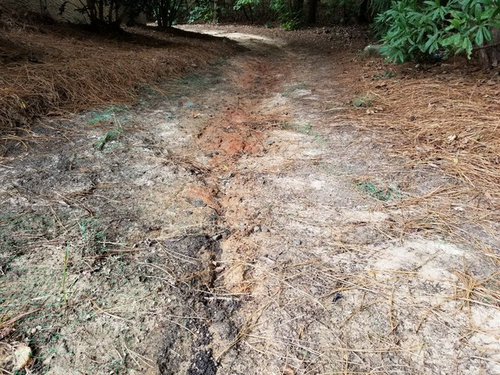
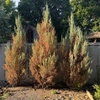
(Close up of dirt path as it begins.)
Landscape Ideas · More Info
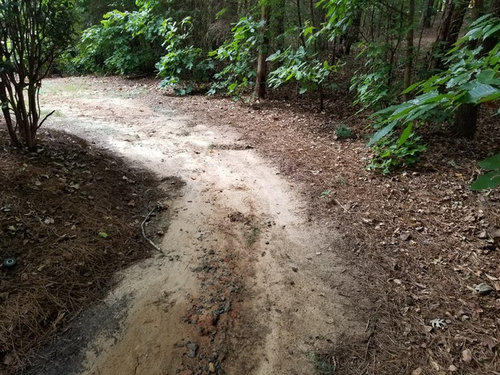
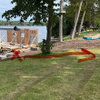
(Turns around to the back-side yard.)
Landscape Ideas · More Info
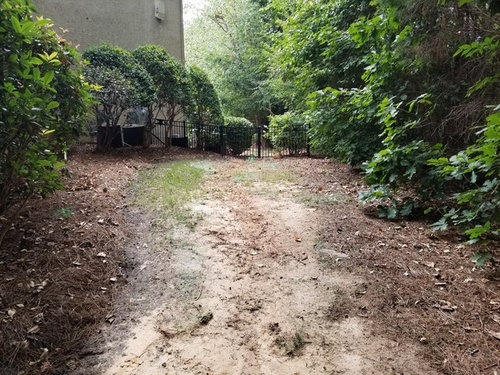
(More open area... potential for shade garden?)
Landscape Ideas · More Info
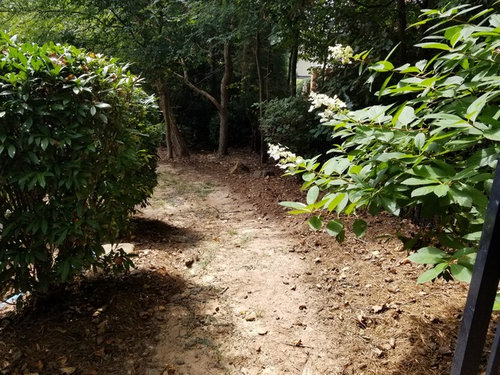
(Just through the back gate.)
Landscape Ideas · More Info
(Around the turn in back.)
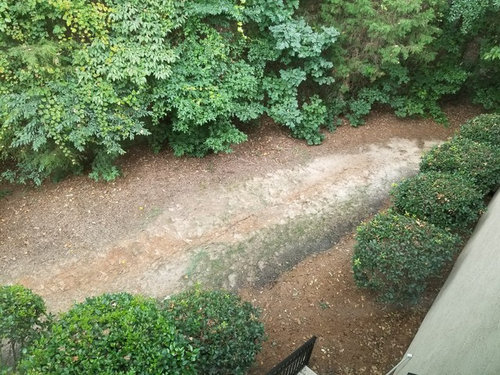
(View of back-side yard from second story window.)

Comments (16)

  • 9 years ago
    Thank you for replying. I do think it would take hold but think it would take over everything else as well, maybe even the house. :-/ I think (am hopeful) there is more potential in this space. Right?!
  • 9 years ago

    Don't use ivy, yes indeed it may take hold and then will be a constant nightmare to control. Take a look a Big Root Geranium--Geranium macrorrhizum, THE plant for dry shade. Handsome, evergreen, blooms in spring, never gets out of control, never needs attention. Great, great plant.

    Epimediums would work also in some of the places shown, but will be much slower to fill in, and many are clumpers rather than spreaders. They are, however, lovely plants.

    clementime thanked laceyvail 6A, WV
  • PRO
    9 years ago

    Having lived with english ivy for many years I can say it is not a constant nightmare. In fact, it is a godsend ... growing, looking gorgeous and behaving in places that no other plant can tackle.

    clementime thanked Yardvaark
  • 9 years ago

    Yardvaark, I agree with you in most ways but I have seen ivy take over a house and yard-climbing the house and trees- when owners failed to keep up with it. There are alternatives.

    clementime thanked laceyvail 6A, WV
  • PRO
    9 years ago
    last modified: 9 years ago

    Laceyvail, those are owners who are terrified of plants and the outside and are determined NOT to learn how to take care of a landscape ... and then cry because it is "taking over"! It takes about a minute or two for each tree, per year, to keep ivy from climbing a tree. It is similarly not very difficult to keep it off a wall. And then it will go to work in large areas where nothing else will.

    clementime thanked Yardvaark
  • 9 years ago

    Clementine, do I understand your question correctly? You are asking if flagstone/pavers are installed as a path you want to know what can be planted between them that grows quickly. English ivy is the last plant I would install to trip over. Your best choice would be moss which does not impede walking. There is an easy, little known technique to planting it which I can supply later if you are interested.

    Is this path a DYI project? The first part of your plan is designing the path. Plantings come later and are easily designed after the path route is installed and surrounding raw soil pine strawed to path edges. Have you considered building a low walking bridge as a part of your pathway in that area of slope and drainage problems with a dry stream bed of rocks beneath?

  • PRO
    9 years ago

    I am not proposing English Ivy as something for planting between flagstone, but for open areas of shade.

  • 9 years ago

    I have thought of a dry creek bed on the side closest to trees. I would like to at least investigate if I can lay the flagstone pathway DIY but I do not know if It is possible for me too being as I do not know what to do first. Do I grade the soil so to divert water to dry creek bed and then lay flagstone? Even If I did it the other way I would have to grade soil because it's so uneven? What would I use to fill uneven ground? I have not thought of the bridge and do not really know where I would put one. BTW- the deep groove in middle of path is thanks to AT&T burying a line there. Water always flowed in the middle but erosion has accelerated. Moss always looks pretty in the pictures but I have heard it is slippery on flagstone. Do you treat the rock with something? Right now this path is traveled 3-5 times a week but if it was functional I could see it being used much more.

  • PRO
    9 years ago

    If I said the word "car" without any other descriptive qualifiers, no one would know whether I was talking about a Rolls Royce or a Yugo. "Flagstone path" is like that. There are innumerable variables and without qualifying exactly what one means, audience thinking could be all over the map on it. Many single-file flagstone paths are charming to look at like an old time children's' storybook illustration, but they can be impractical to walk on depending on their spacing, the rock surface and what's growing between them. Since we are looking at some random, disconnected pictures instead of a plan, we don't know if we're talking about 200' of flagstone path or a quarter mile of it. All these things make a difference. Budget has not been mentioned but if we found out that resources, including the OP's own strength, was insufficient to install this path, then all the talk of what to do would be moot. It would be good to start qualifying the mysteries and it would best begin by creating a PLAN of the property for the portion under discussion. This is just getting out some graph paper (which can be printed on one's own printer via online sources) and plotting out the major elements in the SIMPLEST form possible: showing house footprint, edges of existing paving, outlines of existing plant masses at the ground level. Most people seem to want to confuse the picture with shading, showing too many plant symbols and other things that are not necessary -- or showing 3-dimensional views that are complicated to draw. It is just a super simple line drawing map. (If it was a human, it would be a stick figure version, not a Da Vinci portrait.) After creating a base plan, describe what kind of flagstone walk we are talking about (path width, stone size and spacing, gap spacing, and show the centerline of the path on the plan, including the beginning and ending point. Then we could all be on the same page.

    As pointed out by Nandina, it is completely impractical to use a plant like English Ivy as something to grow between flagstones, but I see rather large areas that I can't imagine you are going to cover with flagstones. What's the intention with those "bald" areas that fall outside the path? ... mulch only?

  • 9 years ago

    Thank you Yardvaark. As I said, I really do not have a clue where to start. I realize flagstone is very vague but again, I don't know what kind I need. I would imagine 1 1/2 - 2ft X 10-12 inches long. I do not know the proper thickness of the flagstone that is needed for walking on. I want a flagstone that is not slick.

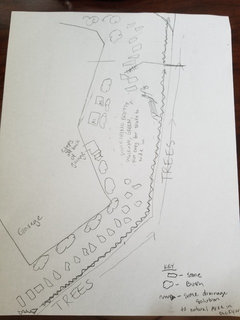
    Here is a basic version of what I think currently I want but I am more than open to ideas and I appreciate your time. BTW- The pictures I originally posted are in order as if you were walking on this "path" starting at the garage. Right now the "plan" is very loose as to the layout of Flagstone path. I have walked it myself and counted my normal step and come up with around 80 flagstones if I did the single layout without the break for open area in the path. As far as strength goes, I know I am physically capable of moving the stone. However, I do not know the best way to go about laying it. I also am not sure of the best way to solve drainage issues and am open to suggestions. I did notice there is a french drain that in completely covered in dirt in the middle of proposed path close to back corner of garage but dont know if there is a way to unclog it at this point.

    On the edges of path, under existing trees bushes, there will be pine needles.

    In the open space I would like something that is low growing that snakes can't hide in easily. Something that would be bunny friendly is fine as there is a plethora of them eating other things in my yard. Maybe a bird feeder by a bench? Open to suggestions.

    As far as the budget goes, I do not have a firm budget. I have no clue how much this would cost professionally but I know I would like to do what I can to keep it as low as possible. I figure the flagstone alone will cost around $500 but, again, I really have no clue...? Do you have a ballpark of what you think this would cost?

    Thank you again.

    Landscape Ideas · More Info

  • 9 years ago

    This would be a perfect spot for a waterfall! That's what we did to our slope.

  • PRO
    9 years ago

    Single file flagstone is not hard to lay. Some stones have surface variation on the bottom side that does not well match the hard surface that one lays it on. The quickest way to get a decent bedding is to carve out a cavity to receive the stone and place a layer of sand that will mold itself to the bottom surface variation of the stone. Set the stone a bit above the soil surface as it will settle and you'll likely have low plants surrounding it. You don't want the stones to be set so low that plants grow over them right away.

  • 9 years ago
    Do you think I need to fix the erosion groove before I lay stone on top? How do you suggest I do that?
  • 9 years ago

    80 large flagstones is a good bit of work.

    I've never done it or even researched this so don't run out and dig trenches!

    What about digging a French drain. A trench with a PVC pipe with holes facing down and trench filled with gravel. Then fit the flagstones on top of that. Set your pretty shade tolerant ground covers to the sides to fill sides and maybe creep between the stones.

  • PRO
    9 years ago

    The erosion groove does not look that bad from the photos. While step stones will stop it there, the water will move to each side of the path and work over there. It is plants in place that will control erosion. Sometimes it takes a bit of work to keep fixing after storms, but persistence pays off. Occasional storms cannot easily dislodge established root systems protected by top growth. For use around the stones, you might consider dwarf mondo. (I think it has already been mentioned.) In the Atlanta area it could spread quite nicely. If you're in a comparable area, it could work out for you.

Sponsored
Daniel Home
Average rating: 4.8 out of 5 stars20 Reviews
Premier Interior Design Team Transforming Spaces in Franklin Co, Ohio