Software
Houzz Logo Print
gigi_leemckenzie

What is wrong & what can I do?

8 years ago
last modified: 8 years ago
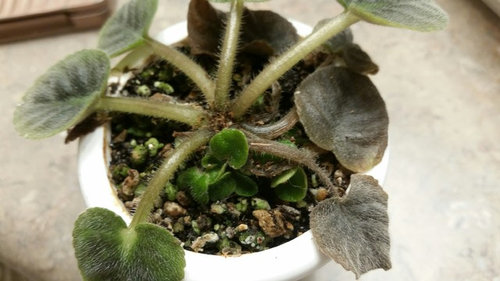
Since this new growth is not in the center I assume I should remove it but it is the only part of the plant that looks healthy, have not had any growth from the center in months. What can I do?

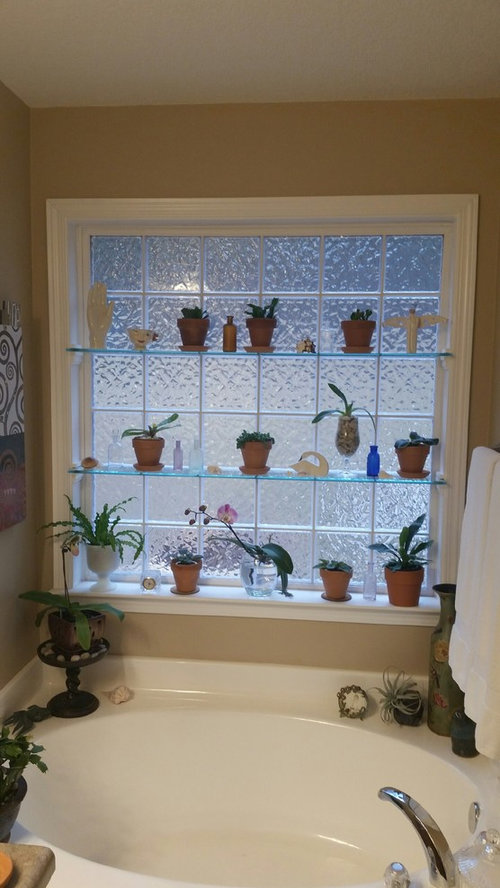
In an Oyama pot on a shelf in a north facing window, see photo.

Comments (22)

  • 8 years ago

    Looks like the adult plant is dying for whatever reason I am not sure. Some others here may be able to tell you. The underneath are babies you can separate and have new plants from. So, you will still have a plant and looks like many! And do you have drainage in that pot? My first thought is over watering.

  • 8 years ago
    last modified: 8 years ago
    Hey there--your main crown looks like it has died from root rot or something similar. I think it threw up the sucker (the healthy growth) before whatever problem got worse.

    The good news: You can definitely remove and root the healthy growth, aka a sucker. Suckers appear when the mother plant is in distress; it is its own crown, and it'll also be a clone. It looks like it's been on there a while, which means it might have roots. In this case, for safety, you probably want to avoid taking those with the sucker when you remove it.

    You can trim off the sucker in one clean cut with a sterilized blade (isopropyl alcohol will do). Avoid taking flesh of the mother plant. When it's off, you can put it in damp fresh soil or damp pure vermiculite in a new container. It should root in a few weeks. Bagging it in a ziplock will help raise humidity.

    As for the original plant: Toss everything. You can keep the container but it'll need to be treated with bleach or soap/hot water. Here's what might have killed it:
    1. No drainage holes in the original pot
    2. Over-watering
    3. Soggy soil (good basic mix is 50% soil, 50% perlite)
    4. A combination of too much humidity and too little light/too little air flow
    5. A combination of the above

    Avoid those for the sucker, and you'll be fine. If it doesn't work out, you can always try a new plant. :o)

    Good luck!!

  • 8 years ago

    Ok, I think I can handle that. Once I cut off the sucker, do I just lay it on the damp soil or try to bury something? All of my AV are in Oyama posts so they have drainage and only get watered from below so I don't think it could be over watered but I will follow your instructions and keep my fingers crossed. Thanks so much!

  • 8 years ago

    You betcha! Usually what I do is pat down the soil lightly so it's firm, and then I push the plant down until the very bottom of the plant can't be seen, or until it can stand by itself. Basically--same planting height of an adult plant, but without roots.

  • 8 years ago

    Looks just like two of mine. Both of them were caused by the initial fertilizer burn. I eventually lost one plant. Unfortunately, I kept removing the suckers to force the crown to sprout, but it never did. So in the end, I lost the plant and left with no suckers. I am going to leave the other one alone for a while to get some suckers going.

  • 8 years ago

    I totally forgot about fertilizer burn. But yes, that could be it. Violets need 1/4 or 1/2 of the package directed dose.

  • 8 years ago

    Some correct advice and some not.

    1. The old plant is not dying - it lost a center growth point. Happens for a reason or without any evident reason. As a reaction - it starts sending suckers from sleeping buds - the first sucker comes from an underground bud.

    It is definitely not a root rot, probably not even an infection - so you do not need to throw a valuable Oyama pot, or sterilize everything excessively. Though bleaching a pot with Clorox helps to remove salts and keep everything sanitary.

    Marina is correct saying that overwatering and too heavy soil can cause this issue - so make sure that you use plenty of perlite, and pure perlite on the bottom of Oyama. Your soil looks OK to me. Regarding overwatering - it is not a bad idea to let Oyama pots dry a bit and not refill them before the previous supply is used and the surface of the soil starts to dry.

    North facing window with heavy glass blocks is not providing enough light - it will reduce the growth rate and frequency of bloom. It is probably the reason why this plant doesn't thrive.

    What can you do with the plant now. You can unpot it, carefully brush soil away from the stem and uncover your sucker - or 2. It probably already has the roots coming from its own stem. So if you cut it off the old plant stem - you will have a young plant with its own root system. You can pot it up and it will give you a new plant. Regarding the old plant - you can chuck it - or refresh the soil and put it back. Remove the dead leaves of course. It will probably give you more suckers but it will not be a good looking plant ever. I do it if I think it is a valuable variety and I want more suckers.


  • 8 years ago

    My bad! I genuinely thought it looked like rot. Thanks for the correction Irina. :o)

  • 8 years ago

    Distress will cause plants to go into reproductive mode, ... that may be flowering, suckering, seeding, etc.

    My Maple trees seed more after a tough season (i.e. dought, etc.). Conventional wisdom to induce blooming in Lilacs is to spade some into the rootzone (thus breaking some of the roots). The plants perceives the threat to its existence, ... and directs its resources toward reproduction (i.e. blooming).

    I've seen spring-blooming Forsythia ... bloom in the Fall, because of drought during the summer. All living things have an innate instinct to perserve the species, and will do what they can to do so before they sucuumb to a perceived impending death.

    That said, AV's exist on the same continuum as all life does. Some AV's may never sucker, ... while some seem to sucker constantly. I just separated 4-5 suckers from a main plant, which, itself, had grown from a sucker, This variety obviously suckers excessively, and if it continues to do so, I will give up trying to grow it.

  • 8 years ago

    Doesn't the plant's lineage have a little to do with it? Varieties with trailers in their ancestry are more predisposed to suckers not necessarily out of stress, but just due to genetics, I thought.

    I guess it depends on whether the distress theory holds true for multi-crowned trailers too.

  • 8 years ago

    Actually, there's a difference between multi-crowned plants, and single-crowned plants with suckers. If you look across the plant kingdom, you will find multiple examples of multi-crowned plants and single-crowned plants, ... and plants that tend to fall somewhere in-between.

    For instance, many coniferous trees, like pines, spruces, firs, and hemlocks, are, for the most part, single-crowned, which most deciduous trees ... oaks, elms, maples, etc. ... appear to be more multicrowned (i.e. having multiple growth points).

    Acrually, I've often wondered whether or not African Violets are really naturally single-crowned, ... or whether we have bred/pruned them to be single-crowned. I look at some of the kin of African Violets (Petrocosmea, I think), where the single rosette feature is highly apparent, ... and I do think that most (non-trailing) African Violets tend towards that trait.

    As much as we prefer the single rosette appearance, African VIolets naturally do what they do, ... because its best for their survival/reproduction. How they look .... is not a particularly viable part of the equation.

    As with all things in nature, one finds variety, ... and so it is with African Violets, as well.

  • 8 years ago

    Petrocosmeas - they are famous of going in to multisuckering mode after blooming. Look like ^%*&&...

    I would think that Saintpaulias are very flexible plants....even so called rosette types depending on the growth conditions - they grow multicrowned or single crowned... You would think that for wide leaf varieties the single crown is preferable for catching maximum light for each leaf ... and so collecting enough energy for setting flowers and seeds - the sexual propagation is so much more to advantage of the species - gives them the chance to increase the habitat by sending seeds out with rain and wind... but as we know well - broken off leaves will root and start a new colony if the rainwater will carry them to a nice enough spot.

  • 8 years ago

    Marina - hope I didn't step on your toes. Root rot starts from the bottom... so no way you will have a healthy sucker coming from the roots, The fungal infection would eat it up first. And undamaged leaves of a main plant are quite juicy and healthy - root rot makes the bottom leaves go limp.

  • 8 years ago

    You're all good! I was thinking the sucker was there before rot struck. I had a small feeling I was off too, but alas. There's always something to learn. :o)


  • 8 years ago

    Root rot - it is a celebration NOT to have it. Some types of it are quite contagious... it can kill good part of your collection in days...

  • 8 years ago

    One of my crown rotted plant had worm in the rotted crown. What is that?

  • 8 years ago

    If it is an earth worm - best guess - some kind of soil contamination... the bag was torn and sitting on the ground at some point. Earth worms do not eat live plants, they live on rotting vegetation - providing valuable worm castings.

    Otherwise - there is a lot of things we call worms - but it could be a caterpillar, beetle larva, maggot - who knows... in some areas a weevil larva is devastating - but they come from the store or from outside.

  • 8 years ago

    I don't think it's earth worm. Anyway, I tossed. Got 2 leaves down.

  • 8 years ago

    I'm trying to scroll back to find it...I think the symptom for root rot might have been mentioned. I have what I think is a very healthy looking blooming plant that I pulled 3 limp bottom leaves off today, their stems closest to the plants were mushy brown. Does that sound like root rot problem to you? Should really research this some more on my own but would like to hear some quick thoughts you might have.

  • 8 years ago

    hmm i'd love for my violets to look like the above pic...lol

  • 8 years ago

    Watch your plant. It can be root rot or it can be that an AV just shedding older leaves.