Software
Houzz Logo Print
nancyjane_gardener

New VS old garden

So, I've been around and had several raised beds in adobe soil that I added compost every couple of years (and a bit of my own when I could)

I moved into town and a nice young woman offered to share her yard to garden with me. We did start late, but have a long growing season.

She recently completed her Master Gardeners course, so didn't want to till, had dumped a good amount of the same compost I used the year before. This is also supposed to be the best soil in the area (Luther Burbank area)

We did start late (June 1st rather than April 1st), but at my old place I would have been up to my elbows in tomato sauce, pesto, giving squash away etc..

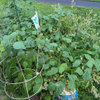
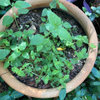
I stop by about once a week to pick an eggplant, a couple of whimpy tomatoes and a pepper or 2!

What gives????? Nancy

Comments (15)

  • 9 years ago

    was a soil test done? I don't think compost equals fertilizer. I don't till either but use a spading fork by hand. Perhaps it simply wasn't watered enough. I planted tomatoes mid-June here in NH because our spring was so cold and wet. I've only dehydrated on batch of paste tomatoes. I would think you would have plenty of tomatoes by now.

  • 9 years ago
    last modified: 9 years ago

    No soil turning of any kind? Just load of compost dumped on top of the ground to plant in? Not surprised with your results then. Even no-till farmers turn the soil to begin with. If they didn't then maybe 8-10 years down the road the soil residents might have most of it worked in.

    And defrost is correct - compost is a soil amendments (meaning needs to be mixed in with the soil). It is not a fertilizer. Not to mention the other problems of trying to grow in straight compost.

    Perhaps she misunderstood that part of class because if they are using the same Master Gardener texts we do it is covered in great detail.

    Dave

  • 9 years ago

    straight compost is usually nutrient poor. sound like low nitrogen problem.

    you need several types of compost to get a balanced raised best. local soil is rarely good for vegetable garden.

    for raised best you need you need 1/3 peat moss, 1/3 compost (from at least 5 different sources one being composted manure) and 1/3 vermiculite as is recomended by square foot system(the book square foot gardening list all you need for raised bed garden.

    master gardener texts are poor source of info on soil.

  • 9 years ago

    "master gardener texts are poor source of info on soil."

    Not a valid statement. First because numerous different texts are used in the courses so a blanket condemnation of them is unjustified. And second because there no one single way to develop good garden soil. The Mel's mix of 1/3-1/3-1/3 you refer to may be ideal in some situations/climates but can work poorly in others. Sq Foot Gardening is merely one approach of many to building raised bed gardens.

    Dave

  • 9 years ago

    No. We did turn it in. Not planted in straight compost.

    War, I said I USED to have raised bed gardens. These are in ground. This is some of the best growing areas in the country. (BTW I didn't use the 1/3 1/3 1/3 mix and had fabulous results in my old raised beds!)

    Yes, she took the Master gardeners course.

    We did have an incredibly hot summer, but she watered regularly. I would normally only water 1-2x per week, but considering the heat, every day was in order.

    What I had below my raised beds (previously) was adobe. I'm wondering if the nutrient rich adobe helped out my former beds?

    My tomato plants before were 5-6 ft tall most years, this garden 2-3'. Squash in the former garden...2 per 4x8' bed, leaving squash out on the street after giving it away, drying, making soup stock etc., this garden.....maybe 2-3' across with just an occasional squash (at least what I've come across) Nancy

  • 9 years ago

    Nutrient rich adobe? Adobe is "mudbrick", made with earth, and some organic matter. The organic matter (often straw or manure), if buried, will compost away pretty quickly, leaving, well, just earth. Maybe hard earth. As noted, organic compost has rather little nutrient value. Virtually none of that nutrient value is instantaneous, and what little you get is released in the course of many months.

    You pretty clearly need a soil analysis to know what's up.

    I like to say that I do no-till as well. Everything below one spade depth is NEVER tilled in my garden, and all the wonderfulness that comes from not tilling that deep layer is easily accessible to the roots, if they want to go there.

  • 9 years ago

    What about the varieties you grew before and what you and she are growing now? I have some varieties of bell peppers that are extremely productive and others that just put out a couple of peppers all growing in the same row.

  • 9 years ago

    defrost, varieties are same and similar.

    Naturegirl, tons of rain, but several heat waves of several days above 100* (NOT normal) The previous garden got foggy and chilly in the afternoon/evening where we are now stays fairly warm in comparison.

    Dan, I've read several times that adobe is very rich in nutrients....what-ev.

    Dan, also, it isn't my yard, so a soil analysis is pretty much up to her.

    I'm going to switch to a raised bed and some containers in my own yard for next year, so this isn't really important. I was just curious. Nancy

  • 9 years ago

    I'd be interested in any reference about adobe being rich in nutrients. You know, adobe does contain organics, so yes, I guess you could say there there is stuff in it that could compost. But I have to assume that when it's been buried for a while, those organics are gone. Adobe sure isn't water-proof. I suppose that if you made adobe out of the right kind of earth, there might be some mineral nutrients.

    I've always understood adobe to be a manufactured construction product. It isn't a natural product. You had this stuff under your garden bed?

  • 9 years ago
    last modified: 9 years ago

    Hey dan, I just recently found out that adobe soils are what we call clay soils in the midwest. Adobe soil is more of a western US terminology. Clay holds on to nutrients well and also is often composed of minerals that important to plant growth. I don't know what those around the Bay area are made of but much of California has excellent soil for growing....just not always enough water.

    Adobe soils: https://soilseries.sc.egov.usda.gov/OSD_Docs/A/ADOBE.html

    Adobe soil: http://davesgarden.com/guides/terms/go/1889/

  • 9 years ago

    Thank you, naturegirl. I had never heard that. I figured it was where someone buried a building! Sounds like what you get when a mildly acidic fluid leaches through limestone. I gather it shrinks when it dries out and expands when it is wet. Not a good foundation material.

  • 9 years ago

    Thank you Nature! LOL

    Dan, it must be where all of those adobe missions disappeared to!

    And YES it does shrink and expand! Everyone who has a cement driveway or patio in this area has cracks! I spend 16 years amending it!

  • 9 years ago

    How many hours of direct sunlight does this new garden get? I know when I plant squash where there is less sunlight they aren't as happy.

    afaik - compost has all the nutrients the plants need and peat moss has no nutrients so really only offers moisture retention.

    Vermiculite only has some magnesium, potassium and calcium, so most of the nutrients are contained in the compost. So I would say if you are going to do an
    analysis by all means have the compost checked, maybe it's not what is expected.

  • 9 years ago

    gumby, I'm not really sure of the sunlight. The site is about a mile from me and besides the initial prep and planting I only go for a few minutes a few times a week.

    It does look like it gets some shade, though. Nancy

Sponsored
Peabody Landscape Group
Average rating: 3.5 out of 5 stars8 Reviews
Franklin County's Reliable Landscape Design & Contracting