

I have a 'light' question for a pro...?
I don't care if they grow and in fact would prefer they rested and stay cold, but I do not want WINTER LEAF DROP and I am afraid if I give lot's of light, both sunlight and artificial light, it will cause an issue...
I will never keep the lights on for more than 12 hours at a time..
As it is now, I have them set on timers going on at 6 to 9 then 3 pm to 6 pm and in between natural sunlight although it's not very bright in there this time of the year even with 3 windows,,
So, 12 hours of artificial light and sunlight....
If I add longer hours of light and or if I keep them on all day, will the temps be too cool in there for this?.
What would an expert do to prevent leaf drop and keep them very cool?
I'm afraid if provide too much light for such cool temps I will have a massive drop of leaves..
Right now, I have no winter leaf drop....
I use to keep them on a very cool porch in which temps never got above 55 to 60 and would on many occasions drop to below 45 and only natural light was available with no leaf drop issues. These temps would be true in the spar room too but that room gets a lot less natural light than the porch did..
Hope this makes sense..
Comments (61)
 8 years ago
I do not have a good answer to what light level/temperature will solve Mikes issue but I will pipe in regarding some other points brought up.
Kvetch: Your lux/ppfd table has typo from whichever source you got it (apogee instruments likely since the same data is on their website) The relationship is linear - multiplier is 54 for sunlight and so at 200 PPFD the lux is 10,800 and not 40,800 - an obvious typo.
1000W of any light will produce 1000W of thermal energy - give or take a few. Most light not used for photosynthesis will convert to thermal energy. Most plants only consume less than 1% of incident energy. The most efficient converter of light energy is algae - about 6% I believe.
A 1000W of Led will produce more light than 1000W of CFL. So if you want more heat than light go for CFLs.
Cost wise: Costco has 10-pack 1500 lumens 15 watt leds for $20. That is $2 a bulb. Cheapest CFL I have seen is $1/bulb but usually more. They are 23W for 1600 lumens. That is leds are 43% more efficient than cfl. From cost and energy perspective I will pick led any day.
 8 years ago
Thanks tropic! I did get the table from apogee, good thing you caught the typo or I would've gone on believing it was 40,800
Related Professionals
Evansville Landscape Architects & Landscape Designers · Columbia Landscape Architects & Landscape Designers · Killeen Landscape Architects & Landscape Designers · Altoona Landscape Architects & Landscape Designers · Wilmington Landscape Contractors · Cherry Hill Landscape Contractors · Chattanooga Landscape Contractors · Madison Landscape Contractors · Redding Landscape Contractors · Ontario Landscape Contractors · Murfreesboro Home Builders · Waco Home Builders · Wausau Home Builders · Gallup Home Builders · Amherstburg Home Builders 8 years ago
Thanks Tropic The best priced LED I have seen is 700 lumens for 2.50 a bulb. At 1500 lumens for 15 watts at $2.00 per bulb your choice is a no brainer. I have 40 CFL's I need to burn out first. Perhaps in 3 years That price will be everywhere. Are those Cosco LED bulbs daylight or warm white?
Mike You will need 67 of those LED to match a 1000 watt space heater.
Steve
 8 years ago
I just took my greenhouse shade cloth down for the winter. I hope to let more light in there for my citrus trees. I hope the cattleyas up near the peak do not get sunburned but I have no room to move them lower. Now I have to winterize all the vents.
- 8 years ago
The one I use is daylight at 5000K. They have a warm white too at 3000K I believe. I still use some CFLs and incrementally changing over to led.
I made some crude light intensity (lux) measurements using 5000K CFL and Leds. I used a clamp light reflector about 12 inches from the sensor for each:
CFL 5000K, 23 W, 1600 lumens: approx 5200 lux
LED 5000K, 15W, 1500 lumens: approx 6300 lux
Same led as above without the plastic cover: 9500 lux !!!
I remove the led bulb cover but if you are not sure do not do this. It will void warranty and the electronics are sort of exposed to the elements. Plus the 84DC voltage wires are exposed too. The bulb cover is there to make it look/feel like a regular bulb and diffuses the light all around. They need to do this because leds are inherently very directional as opposed to other light sources.
- 8 years ago
Ohhh I wish I had a Costco to shop near me! Are the LED bulbs a Costco brand? Maybe they can be found elsewhere if not, let us know! I'd like to get my hands on one too :)
 8 years agolast modified: 8 years ago
Sorry to sound ignorant, but can someone please explain to me what the difference is between LEDs and CFLs?
- 8 years ago
Here's site that gives a REALLY short explanation. LEDs pass electrons through semiconductor materials to light up tiny particles. CFLs use Argon and small amounts of Mercury in their bulb technology. There's a nice comparison chart too
http://keydifferences.com/difference-between-led-and-cfl-bulbs.html
- 8 years ago
CFLs are those newer light bulbs that output more light for less power... Usually they are a tube the swirls around like a tornado... some are just 2 tubes.... LED is like little small boxes inside a bulb that outputs stronger light for even less power consumption.
- 8 years ago
Anyways, what do you guys think is better, the purple LED grow light or the standard regular white light from normal bulbs? I'm using the purple LED grow light but I have mixed results on my plants.
- 8 years agolast modified: 8 years ago
The brand is Feit and this is the same as on amazon for double the price: https://www.amazon.com/Replacement-Bulbs-using-Daylight-Lumens/dp/B01NBB7VUC/
I will try not to be too technical. There are quite a few articles on web that go deeper.
CFLs stand for Compact Flourescent Light and use the same technology as a regular linear T-8 and T-12 tubes. T5-HO is just a higher output version. Efficiencies of all them are nearly the same. Essentially they vaporize (hence the heat) a small amount of mercury in the chamber and that makes the gas inside conductive and emits UV light. The phosphor coating on the lamp converts this UV to desirable white light. CFLs. They like to run hot since they are efficient that way. Best efficiencies of flourescent technology is stuck near 90-100 lumen/watt. Common 100W CFL is 70 lumens/watt.
LED (Light Emitting Diode) uses the same technology as the chips in your computer/phones using semiconducting material. These also like to produce light of specific frequencies and again a specialized phosphor coating changes that to white light. Theoretically Leds can be made to be super efficient but they cost an arm and a leg now. Unlike CFLs, they become less efficient hotter they get and hence the need to cool them using all sorts of contraptions. The one I linked above does 100 lumens/watt. But 220 lumens/watt leds are already available at a steep price. Good news is that these high efficient ones drive down the cost of the lower ones. So next year we can expect to see even better ones at reasonable cost. All the manufacturers will desperately dump the older technology this TG and Christmas at good discounts - just wait.
- 8 years ago
Thank you guys for the explanations. So tropic, I use 23 watt cfls, 6500 k, 1600 lumens. Are the ones you linked above comparable even though they say 5000k? Are they even more efficient than the ones I use? The ones I have run $10 for a pack of 4 from Amazon. Philips 433557 100-watt Equivalent, Bright White (6500K) 23 Watt Spiral CFL Light Bulb, 4-Pack https://www.amazon.com/dp/B00M6SR1JM?ref=yo_pop_ma_swf
- 8 years ago
I was just looking at this bulb a few days ago and wondering if it was worth the $$. My trees seem happy enough with the bulbs I use, but I’m always looking to pamper them even more in their winter quarters...;-) GLIME Grow Light Led Light Bulbs 80W Grow Lights Full Spectrum Plant Light for Greenhouse and Hydroponic Flower Lights E27 Grow Light Bulb for Indoor Plants https://www.amazon.com/dp/B06XCBNFN4/ref=cm_sw_r_cp_api_0.EdAb4XEZQ81
- 8 years ago
6500K has bit more of blue in it and that is considered good for vegetative growth and keeping internodes shorter. However the difference is not that much.
If you feel like you can mix the bulbs in your setup. Leaves use the red side of the spectrum too. Warm whites has more of it and that helps in flowering and fruiting. But you need a lot of red for that because photon energy of red is about half of blue.
So the theory goes all you need is the red and the blue mostly and that is why the blurple lights are so popular. I have a couple of half decent ones (mars light) and it is OK and nothing spectacular. Most cheap blurple lights like the one you linked are just that - cheap and a marketing gimmick. Read the bad reviews - one person measured that to be a 13W bulb. Why pay $25 for a 13W bulb. Remember any led light that fits in a standard light socket cannot be cooled properly. They claim 80W and then they say it consumes 45W and the reviewer measured 13W. If it really was even 45W it would burn the bulb in less than 5 minutes. In fact most of those kind of bulbs are pure trash and should be avoided unless you really have researched them well.
- 8 years ago
Thank you Tropic! I did not order because I was afraid of exactly what you said, plus, I can buy 10 of the bulbs I use for one of those! If I order a pack of the ones you linked (5000k), would those be ok to add to my mix of bulbs?
myermike_1micha
Original Author8 years agolast modified: 8 years agoLaura, what ones are you ordering? Besides what we are using, you are going to add even more? I thought your trees did great last year on what you already have?
I am thinking with all this info, that 12 hours of lights on when it's cloudy and when it's sunny, 6 hours, 3 in the morning and 3 at night to extend day light is all I am going to need? They are flowering and are doing fine thus far.
I am thinking that this is all trial and error for all of us, based on our set up, temps, and the amount of natural light they get. Every ones home are different. The proximity of the bulbs to the trees is different. The amount of natural sunlight is different. The temps are different.
If this is trial and error and I run into any issues, I will let you all know my experience..I did describe the environment they will be set in and the amount of artificial and natural light they will get. Like I said, I am not looking for active growth, flowers or fruit, or to ripen fruit, just for them to stay healthy looking and sort of rest without WLD....That is my major concern. If too much light and cold temps would have an adverse affect on them, but like Steve said, they should be ok. I was looking for comfort sort of kind of to let me know they should be ok..
All the info above is GREAT and crucial for anyone looking for extreme growth, to save money or actively grow their trees during winter....
So in the end, which is better???? LED or CFL?
I could always replace the bulbs but like Steve said, my 30 100 watt CFL bulbs are providing heat at the same time and are very very bright..)))
.Mike
- 8 years ago
Mike, I have a bunch of the CFLs I posted above so I will likely keep those. Yes, I am planning on adding a few more clamp lights only because, since my trees are bigger this year, there are still some areas with lower light levels. I really like the tripod light stands that Jenny referenced in another thread and have a few ready to go. Now I’m just waiting on the clamps. I may run over to HD and buy a few before the ones from Walmart arrive.
- 8 years agolast modified: 8 years ago
Oh, and yes, Mike, I think you are right in that everyone has to figure it out based on their particular lighting/temperature conditions. Mine did very well last year and I’ve not changed anything other than adding a few more bulbs. This year I am also preventively spraying with a mister I have that I load with a little neem, pro-tekt, and that rosemary spray Susanne mentioned. So far, so good. I have had a few of the upstairs trees lose a few leaves, but nothing major so far.
- 8 years agolast modified: 8 years ago
Mike I was reading the link on WLD and it mentioned in all the 5 scenarios, the tree in a room with a south facing window at 15C had the second best result of little leaf drop. But the tree also in a south facing window at 10C had the most leaf drop of all scenarios! You mentioned the temperatures will be between low 60s and lower so I would recommend giving your trees the amount of light you'd receive in a east/west facing window. When it starts dipping down to 10C (50F), it's probably best to lower the light levels to "northern window" levels. I can't tell you how much that would be though since I don't know myself lol
Laura, one thing people don't always know about LEDs is that the power supply used inside the LED bulbs are 85% efficient so 15% is lost to the power supply. LEDS are sensitive to high temperatures as well, the higher the temperature the more energy is lost and not converted into light. If the bulb is not very good at keeping the bulb and its parts cooled then it will not produce as much light as it could making it about 75% efficient. I've looked at a lot of bulbs like the GLIME you linked and many times the marketing will list the potential rated wattage based on the sum of all the parts in the bulb. This just tells you what kind of LED chips are used in the bulb. Some LED bulbs are comprised of chips that can use up to 3 watts per chip. If there's 20 chips used to create that LED light then it is "rated" at 60 total watts but in actuality, it never actually draws 60 watts. Every bulb you find will never be 100% efficient at converting energy into light. The more power the chips draw, the higher the temperature will become (causing less light efficiency) inside the bulb casing which requires more cooling designs for the bulb. Most companies will make each chip draw much less power to keep temperatures down. As an example, an LED chip using 3 watts will put out less light than the same LED chip using 1 watt. The less power drawn per chip, the longer the LED will last and the more efficient it is at putting out light.
Most LED grow light bulbs on Amazon don't even list the actual wattage/power draw of the bulb. The GLIME bulb listed theirs but unfortunately lied about what it was and got caught. There's a useful search function above the product reviews that I like to use to check for product honesty. If you search "watt," it brings up a list of reviewers that used the word "watt." Most reviewers personally test the wattage of most LED grow light bulbs themselves and report their findings in a review. That's your best bet at finding a good LED grow light.
Sorry I don't know if I explained it in a way that made sense or not. Here's a link that does a better job at explaining why focusing on watts isn't always the most reliable way to choose a bulb https://fluence.science/science/how-to-compare-grow-lights/
another link explaining a lot about LEDs https://chilledgrowlights.com/education/led_buyers_guide
 8 years ago
Wow, a lot of good information here. This is the first year for me to use all the 26W cfl bulbs and I have yet to figure out how to get the heat out in the deepest of winter. And my humidity is still 70% when the window is closed. So, no mister here.
I went to a shop near me that sells mostly to greenhouse growers (weed) and we had a little chat about lights. In his opinion those cfl lamps using too much energy and give too much radiation, like those that are used with x-rays. Also problematic for people with skin diseases, meniere ( i have and wondering if I should stay in that room for the length I do) and mental problems like asberger. As you all can imagine, this totally throw me off. Of course I wants to sell me one of those super duper lights for $400 a piece. He had one on the ceiling and it was really bright. For the size of the room I have, would "only" need three. Anybody else heard about the health hazzard of the cfls?
- 8 years ago
I don't think you should be worried... Those health effects are probably on the extreme end of things... as being in a room 20hours a day with those bright lights in your face. I'm sure exposure of an hour a day will not harm you... It would be too much liability on manufacturers and governments if it were true... and if it is true, again, I believe it's in extreme cases of 20 hours a day direct exposure... but yes, I have heard whispers here and there of certain lights effects on humans.
- 8 years ago
I'm glad to share what I've found Cory. I read up on indoor grow lights a lot this summer so it's nice to make it easier for people to find the same information.
Laura the guy was probably trying to make a case for buying a specifically designed grow light which is definitely pricier than buying a regular bulb. What he was saying is correct in a sense but I don't know if the effects are as intense as he makes it out to be. CFLs do emit UV rays while LEDs don't unless specified. I don't think the other types like metal halide emit as much UV either.
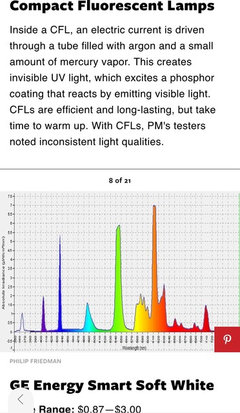
The site provides measured wavelength graphs of different light bulbs and the CFLs all tend to have a huge spike in the UV wavelength
- 8 years ago
Susanne, I’ve had no ill effects ;-). I used them all last winter and spend at least an hour a night in there reading.
 8 years ago
Just to add a bit to the the thread - here is a nice little chart regarding the various color temperatures (in the unit "Kelvins") of the lights -
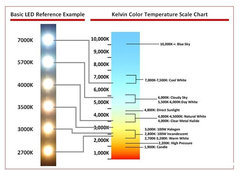
Laura - When searching around for various consumer lighting, you will often see them offer "daylight" (with a range that includes the ~6500K down to ~5000K) and "warm white", which usually run from ~2600K - ~3000K, and are similar to the old incandescent bulbs. For my citrus lighting, I have a mix of both the warm white and daylight, and also a mix of LEDs (that I had extra from last year - 14.5W) and CFLs.
I know for many years, my mom grew beautiful plants under her 200W incandescent bulbs. I had grown many under my own 200Ws but last year, converted to all LEDs (that are still warm white/2700K like the old bulbs). The reading lights I now have are 3-way (6W/15W/22W to try to mimic the old 50/100/150 incandescents). In general, the higher actual-watt LEDs require some sort of cooling ballast and my 3-ways have fins on the bulb to help. They are also pricey but I noticed they are now 1/2 the price I paid for them last year. Ha! Still... I have a bunch of little houseplants all around those. lol
- 8 years ago
I found a cool video if you guys want to see the wavelength spectrum of CFLs and LEDs in comparison to sunlight https://m.youtube.com/watch?v=lwp9wAKzRtc
gosh Jenny 200w! How long did each bulb last? It probably got steaming hot under those bulbs
- 8 years ago
My thoughts in random order on the issues/points raised in the posts above.
Xrays are hard to produce. Any electronics will produce some electromagnetic radiation. So a CFL bulb producing radiation that may be harmful cannot be ruled out but it will be very low. At very close distances (just inches) and for extended exposures the dose could be harmful. I have not read anything yet to support that. Seems to me someone is pushing a sale.
Regular household CFLs and LEDs are definitely not what professionals will consider a grow light. Commercially, where profit is the motive, it makes sense to invest in the best to maximize output. There is a whole bunch of science behind proper lighting, temperature, CO2 levels, etc etc, that work together to achieve that goal. For the rest of us using household lighting to get through the winter, cost is the driving issue. That includes the light sources, the fixtures, and running cost.
I agree that lumens, lux, wattage etc are not good metrics for comparison. But for household light sources it does not make much of a difference. The difference becomes more apparent when comparing with and between decent grow lights.
As kvetch said lumens are misleading numbers. Lumens are designed for human eye response. Humans see green much better (more than 10 times better than either blue or red). Manufacturers use this flaw to boost the green content in their lights so that when it is tested in "independent" labs the lumen numbers look good. But the same is true for both CFLs and LEDs just in different ways. So to simplify things, for the same color temperature, I use lumens and wattage as fairly good measures for comparison of these lights. Even color temperature can be misleading in some ways because it really does not tell you a lot about the light spectrum.
All in all, I think the current breed of led bulbs (100W equivalent) are a good deal. Mixing CFLs and LEDs may also be a good idea. I am experimenting with them this winter.
- 8 years ago
Looks like you folks already talked about the stuff I posted. I was lazily writing the above post taking my sweet time.
- 8 years ago
kvetch - the table lamps with the 200W bulbs that we had used either those tall drum-style lampshades or the bell-style lampshades, and the lamps (various - tall ginger jar or tall brass/other metal) had bulb sockets at least a 18" - 24" above the table, so not that much warmth under them because much of the heat diffused out the top and sides! Oddly enough, I have a miniature Ficus benjamina "Mini Lucie" (old Home Depot plant) that is at least 15 years old that grew under one such lamp for over 10 years, growing right up inside the shade right next to the bulb. I made sure it didn't touch the bulb but it just wanted to go there, and basically "bonsai-ed" itself. lol A couple years ago, I put it next to (but not under) my then-new T5 HO 3ft bulb light shelf and when I moved last year, I again put it near that shelf light unit sitting on a little table just to the side which is where it is right now.
My mom grew many spider plants, pothos, Swedish ivy, and Tradescantia fluminensis (all types), and forced many amaryllises under those lights. :-D
The 200W incandescent bulbs lasted about 3-6 months on average depending on the usage. I definitely grew up in a "bright" house! No 60W bulbs except in the closets and 100Ws were limited to the kitchen and bathrooms.
myermike_1micha thanked jenny_in_se_pa - 8 years ago
Off topic warning.
kvetch: nice video on spectrum of different bulbs. I think I have the same transmission diffraction grating as shown in the video. Just for fun you can use a blank CD/DVD and reflect the light of it and you can see the spectrum. The tiny tracks in them make them act like a reflectance diffraction grating and splits the light spectrum.
- 8 years ago
Will try. I am still working with computer technology from the last century.
myermike_1micha thanked poncirusguy6b452xx - 8 years ago
Jenny I've heard incandescents work very poorly as a grow light but your mom has proved them all wrong! Very nice idea of growing your house plants that way instead of trying to shove them into every little sunny spot on the windowsill. I'll let my rubber plant and croton feed off the leftover lighting from my Meyer lol!
tropic that sounds so cool! I didn't know a CD can reflect the spectrum for us to see it. I always thought the spectrum I saw was a part of the CD itself. I'm using a burple LED paired with a fluorescent right now. If I can scrounge up any old CDs, I'll try comparing their spectrums!
- 8 years ago
Incandescents will work - you just need more of it. And certain plants are not as picky.
Spectrum splitting is all around you - just have to look. The actual phenomenon causing it are slightly different and you have look at it at certain angles. Examples: Sea shells like mother of pearl, pearls, water droplets, certain bird feathers. Check out: https://en.wikipedia.org/wiki/Iridescence
myermike_1micha
Original Author8 years agolast modified: 8 years agoWow. What a wealth of information. Going to book mark this thread! Thanks for all of it this far.
For me. I saw how good Laura's plants looked at the end of winter and I was amazed at that. For such a low cost and such a good job that's why I went with the CFL.100 watt daylight only 9 dollars for 4 bulbs
Am I to take from this easily put that, "LED" is even more cost effective and still does just as a good of job if not better ? If so I'll buy some of those and mix
Steve. Thank you for making it easy for me and in helping me to realize not to worry about the amount of light I'm providing given the colder temps at 12 hours or less. Appreciate that.
Keep the info coming please. There are so many options out there. When I'm ready to grow My trees hard in winter and provide much warmer temps I will be armed with this info. Maybe by the the cost of electricity will be lower by then. . Ha
Steve. Just coming out of the prehistoric days are we? Ha
- 8 years ago
Mike: If you need the added heat go for CFL. LED saves on running cost and gives out a bit more light. If you go all LED then you may need a heater and that will negate the energy saving aspect of LED. On the other hand if you need a heater anyway you may like to consider LED to save on electricity for the lights. I cannot really judge how cold your porch gets and how much heat is needed. It is something that you will have to observe and correct. My porch remains pretty much over 50F since it is covered and attached to the house. I do have a heater with a separate line voltage thermostat that kicks in when it falls below 45F. Built in thermostat of household heaters are notoriously inaccurate.
- 8 years ago
Below is what I call the "Steve Principle" (point light at a spot on a tree and watch growth happen in the vicinity of where the light is pointed!! :-D ) -
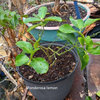
Variegated Pink Lemon
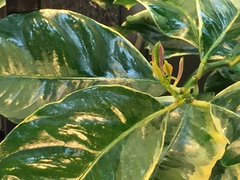
Thornless Key Lime
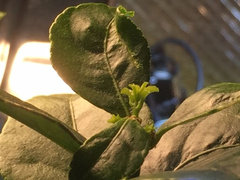
Eureka lemon
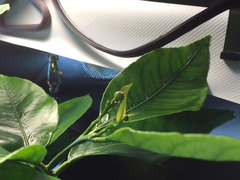
These have been under my basement light setup a little over a week. I remember seeing a pic awhile back that Steve had of a CFL pointed at the trunk of a seedling or newly grafted rootstock (I think one kept in a light bucket), and growth sprouted along the side where the light was pointed!! Of course the true test will be how all these will all look in February. haha
- 8 years ago
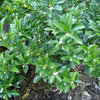
This is what it looks like now 11-17-2017
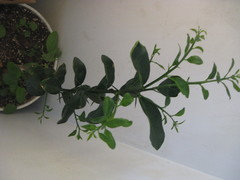
This is what it looked like then with the light 2 inches away July 28 2017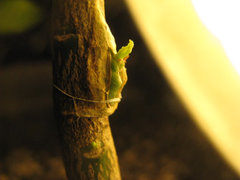
February will come!
Steve
- 8 years ago
kvetch - the neighborhood I grew up in was full of many 80 - 100 year old sycamores and maples so sun was hard to come by in a window. We had a couple dining room windows that faced SE and E that would provide some morning sun (and my mom had hanging plants suspended from the ceiling in front of those) but that was about it... Even with us having a sunporch in the front that had windows facing SW, W, & NW, the huge canopy of the old street trees meant we only got filtered sun in the afternoon too (which was why we could grow kurume azaleas out front without them burning up). So those incandescents worked great! lol
- 8 years ago
That's it Steve!!!!!! I have been shifting my lights around to point near bare stems. heh heh
- 8 years ago
Jenny I have the same trouble with tall old trees in my neighborhood too. I'm so glad CFLs and LEDs are affordable enough to use for indoor growing now :) Good idea with the Steve method too! I have my fluorescent pointing down from above my tree. I should have it more level with the lower canopy and point it right at the bare stems! Thanks for the reminder!
myermike_1micha
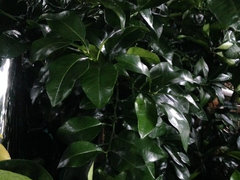
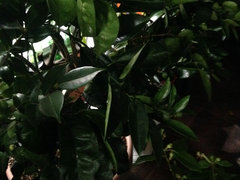
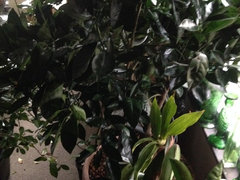
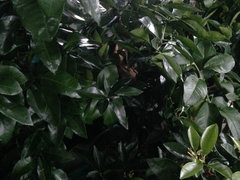
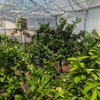
Original Author8 years agolast modified: 8 years agoHey everyone. Here is what the room looks like light wise in the middle of the afternoon without the lights on. 3 good size window facing south, east and west and yet still dark in there..Crazy Thank god for artificial lights ! Look how dark and how many dark shadows!! My god have the winter sun and can't wait into days get longer Thanks again for all your hell and this awesome info !
- 8 years ago
Mike hows your in-ground Meyer doing in your GH. Do you need a bigger GH
- 8 years ago
Your tree looks super healthy Mike! Incredibly green leaves! I would not hesitate to add a few more to fill in the darker areas. I am still working on that myself.
myermike_1micha
Original Author8 years agoLaura, thank you very much! They are a rich green and I can tell you that they are the greenest I ever had them, and I think I can give credit to the coffee grinds and crushed eggshell I use this past summer..I tried it on just a couple of trees and I noticed they got real green and decided to grow even better. So I did all of them and this is what I ended up with...Now to fill in the dark places with lights....I can tell you that the dial on my electric meter turns round and round quite quickly until they go off. I pray it will still be cheaper than using a space heater on that porch with no lights..I can't wait to give you my first assessment once my electric bill comes in in December!
Steve I whacked that tree way back and will gladly take a pic real soon. It started to crowd out the sun at the pitch of the greenhouse...Taking up way too much room.. Next year I will be adding the eggshell and coffee grinds to the in ground ones too. They are way deficient in iron and other essentials..I did not use vinegar on them either!
Laura, I am thinking about replacing all my bulbs with LED if that slows down my meter..I'm going to see if there is a big difference...Can you tell me what LED lights were recommended that put out good light?
Mike
- 8 years agolast modified: 8 years ago
Mike - I am not sure if Laura has been using LEDs but I bought these daylight (~5000K) LEDs last year - https://www.amazon.com/gp/product/B00YEMKJE2/ref=oh_aui_search_detailpage?ie=UTF8&psc=1
Plus I had some of the soft white 2700K as extras from when I bought a couple packs for some floor lamps and small table lamps. The price this year is about $10 cheaper for the bulbs than what I paid last year. Mine are all non-dimmable which is cheaper, but the key is to go for the "100W equivalent" (~14W actual). The actual watts are a bit less than 1/2 the CFLs (14W for LED vs 23W for CFL).
I can only speak for the Philips brand but I noticed that Amazon has their "Basics" brand with 6-packs of either daylight or soft white for around $20 for a 6 pack, which is not bad (am not sure of the quality though) - https://www.amazon.com/AmazonBasics-Equivalent-Daylight-Non-Dimmable-6-Pack/dp/B01MSMKBG3/ref=pd_sim_60_14?_encoding=UTF8&refRID=5J7B762QBAH2KS9PVGV9&th=1
I have the LEDs mixed in with the CFLs in my basement setup (and in the middle are 2, 4ft daylight T5 HOs). What I just realized is that the "daylight" LEDs are 5000K and the "daylight" CFLs are 6500K, so by putting those along with my 2600K/2700K LEDs & CFLs, I apparently created a nice range there!
myermike_1micha thanked jenny_in_se_pa - 8 years ago
Mike, I’ve not used LEDs...all of mine are CFLs. I can assure you, you will be pleasantly surprised with your bill :-)
myermike_1micha thanked Laura LaRosa (7b) - 8 years agolast modified: 8 years ago
Laura lets hope. My room is lit up as bright as the daylight. And btw. thank you so much for the tips with the lamps from Ikea. I think I have about ten of them and countless clip on lamps. It is great satisfaction for me to see my trees growing.
myermike_1micha
Original Author8 years agoSo far so good!!! My electric bill just came in and comparing to last November, it was 60 dollars less..
- 8 years ago
I’m glad it worked the way I suspected Mike. The space heater is much more expensive to run than all those light. Glad to hear all is well thus far.


poncirusguy6b452xx