Software
Houzz Logo Print
skuba

Repairing cupped hardwood floor

8 years ago
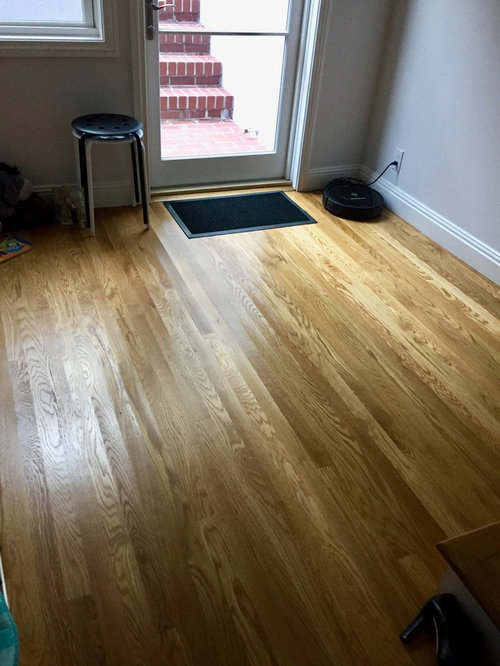
Hi all,


We converted half the garage into living space a little over a year ago (everything by code, architect, structural engineer, licensed contractor etc..). After last winter I started seeing the wood floor boards cup in the hallway, which as we know points to high moisture content.


Because the GC and I had some areas of contention during the original project, I first hired a construction inspector company to assess the problem and root cause. It was identified the water was coming in through a gap between the back patio door frame and the wall. And there were potentially other failure points. The GC came in after and fixed the gap and added extra material on the outside to make it water tight.


Now it's time to repair the hardwood and GC and original installer are coming tomorrow to discuss. GC once mentioned they would just sand down and refinish the floor.


Is it unreasonable for me to think they should replace all the affect boards? If they were to sand it, wouldn't it be quite a bit of sanding considering the curve of the cup (seems to be about 1/8th to 3/16ths), which would then reduce the lifetime of the hardwood? FYI, the hardwood has already been refinished right after being installed, because the GC/Floor installer didn't use the correct finish to match the rest of the house. So they have already been refinished once.


Considering that most of the wood boards in the hallways area are affected, should I actually ask them to replace all of them, so they are uniform and will all have the same lifetime? And wouldn't it be smart to pull out all the affected boards anyway to see if there is damage to subfloor and take moisture readings?


What else should I know to make sure they fix this the right way, and once for all?


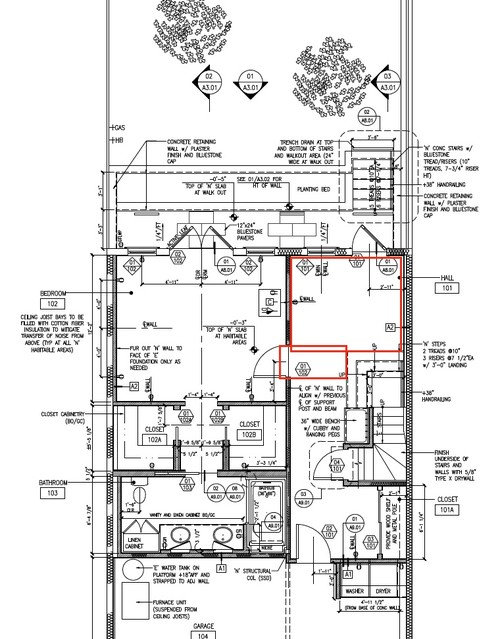
Please see attached pictures of the space. Let me know if you have questions.


Thank you so much


Affected area in red


Comments (18)

  • 8 years ago

    Just leave it alone. Should dry out and be fine this winter.

  • 8 years ago

    I had very severe cupping in my 5 inch boards after a slow wax seal failure in the bathroom adjacent to my hallway and the cupping resolved as they dried.

    I also agree that waiting is fine as long as you have solved the moisture problem. I would get in writing that you have a certain amount of time (another year?) to decide if they need to address the issue. It will really dry out over the coming winter so maybe at least give it till spring?

    Did they actually place an underlayment over the concrete garage floor before laying the hardwood? That is a major source of moisture in garage conversions.

  • PRO
    8 years ago

    The only way to stop floor boards on concrete from cupping is to provide a thermal break with insulation. The concrete is condensing moisture from the living space and holding it against the back of the floorboards and causing them to expand on one side only. There is no way around this. Putting down plastic does nothing as moisture will just condense on top of the plastic. I would go with tile.

  • 8 years ago

    If they are sanded flat before they are completely dry, you will have the opposite problem. Could take several months to completely dry.

  • 8 years ago

    Ask the experts in the flooring forum

  • PRO
    8 years ago

    Ryan:


    I had the unfortunate job of replacing some topically damaged wood floorboards that were properly adhered to a concrete slab. Let me assure you, no moisture could ever possibly migrate through that adhesive. It took me about 5 hours to remove 8SF.

  • 8 years ago
    Should have been tile, I would never put wood over concrete, proper barrier or glue, not a good idea.
  • 8 years ago
    We had hw floors installed in our living room some years ago. They cupped within a year. The “old” hw floors were refinished at the same time and never cupped. We had some more work done this summer and found that the old floors had plastic under (no cupping) but the cupped floors did not. We learned the hard way.
  • PRO
    8 years ago

    I am very skeptical that this damage if from water intrusion at a door/wall, especially if the cupping is throughout the room and is consistent. Pull a floorboard or two. I'll bet they used the wrong or inadequate amounts of adhesive.

  • 8 years ago

    @Sophie - It's been almost 1 year and hadn't dried out, it won't dry ou

    @Ryan olivieri - that might be true, but we didn't have problems in the adjacent bedroom which was farther from the point of failure where water leaked.

    There is a vapor barrier in the concrete slab itself. And this is is the structure of the subfloor:


  • 8 years ago

    @Joseph - I definitely want this fix to be permanent, and will bring up all these questions. But about the water leak, it was quite significant, and I live in SF, which saw last winter 200% of the normal rains.

  • 8 years ago

    Yeah, that floor construction is the major issue. Shoulda been engineered wood.

  • 8 years ago
    last modified: 8 years ago

    Sanding down the cupping may exacerbate the problem, as the new exposed side may dry at a different rate than the bottom half, cause more cupping! (esp if using a water based sealer)

  • PRO
    8 years ago
    last modified: 8 years ago

    Most of the time when a floor cups over concrete I t's moisture being drawn out of the living space collecting on the cold concrete below the flooring. Adhesive would isolate it a little but the best way to stop cupping wood floors over concrete is a layer of sheet foam to make a temperature break. Water is actually traveling down from the conditioned space, not coming up from the ground. A vapor barrier like polyethylene won't stop condensation. Any concrete in direct contact with the ground has to be isolated with insulation or it will condense water on itself.

  • 8 years ago

    Ryan, isn't polystyrene foam? There is a 1 1/2" rigid foam sheet unfaced insulation

  • PRO
    8 years ago

    I'm sorry, I didn't see that, yeah polystyrene is the foam i was talking about. It looks like you already have insulation. Capillary action is dragging water right under that whole floor. That looks like a damp corner outside where you have brick. So dumb I missed the water creeping right under your door threshold.

    Either you have a bad door pan or the door pan has no place to drain to. Either water is coming down the outside wall and going under the door, or water is pooling up in the brick patio and working it's way in. The solution to fix the patio surface is similar to a shower basin. If the flashing is all good around the door, you might need a little catch basin in the patio outside the door to shed water away from the door.

  • 8 years ago
    last modified: 8 years ago

    Yep, GC didn't do a thorough job. Not only that gap was left on the door, but the concrete was exposed in the whole external foundation. It's been repaired since. Images below.

    fixing gap

    exposed concrete

    before

    after

  • PRO
    8 years ago
    last modified: 8 years ago

    Your head trim over the door could also be letting water in. If they just caulked the sill to the concrete it's not really correct. Your door unit is installed a little too low.

    Don't spend too much time on this site because it makes homeowners go hysterical, but here's a good page on door pans

    https://buildingscience.com/documents/information-sheets/pan-flashing-for-exterior-wall-openings