Software
Houzz Logo Print
hzdeleted_1333051

Turf removal rebate landscape plan

8 years ago
last modified: 8 years ago
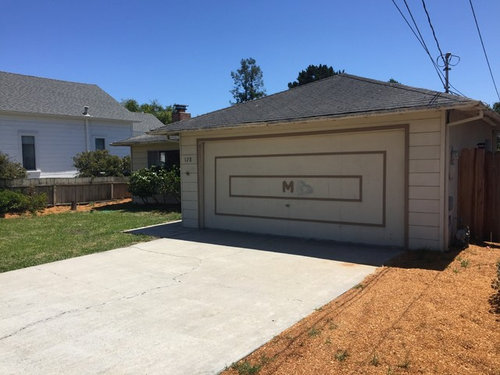
We have been pre-approved for our turf removal rebate and will be sheet mulching the whole front yard plus at least 300 sq ft of the back yard and adding native plants. We also plan to get certified as Monetrey Bay friendly property (which means capturing runoff into the soil, using natives etc). The turf removal rebate requires replacement with low water use and natives (fruit trees are allowed), spacing between plants, and permeable surfaces.

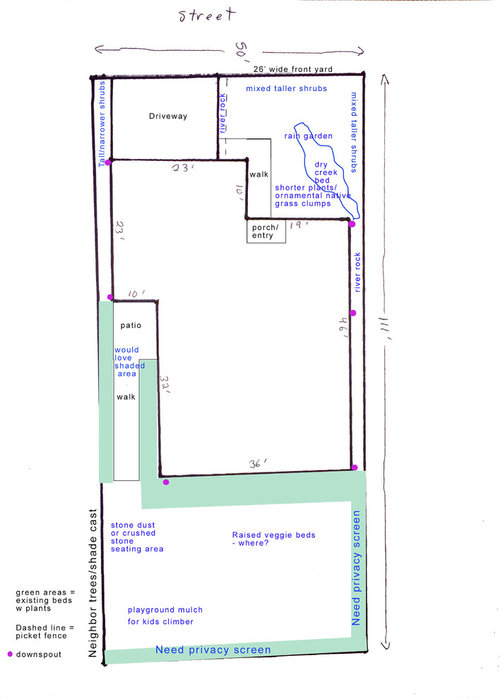
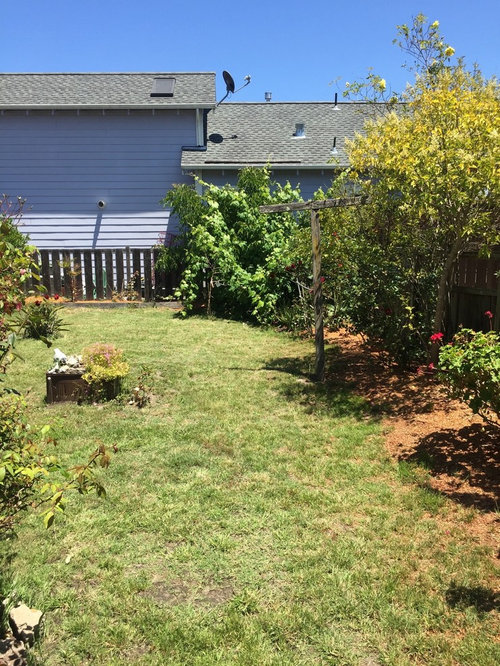
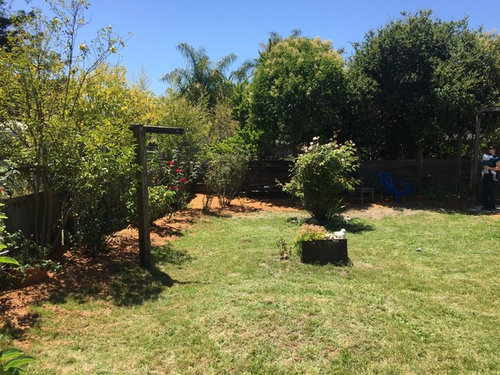
Here are some photos pf the existing areas and my sketch of what we plan. I could use some help selecting plants and spacing, and how to stagger and lay out for a natural appearance as well as some inspiration and tips in general.

Must-haves:

- a hedge or screen in indicated areas to cover up ugly old fence and view of close neighbor houses.

- playground mulch area for our daughter's climber equipment

- qualify for turf removal rebate

- privacy screen from street (tiered mature heights)

- going for a more natural look (ie not a row of same plant)

- raised beds for veggie garden

- very low maintenance - toddler takes up all my time!

Nice to Have:

- a pathway/trike track in backyard

Photos from before/first moved in

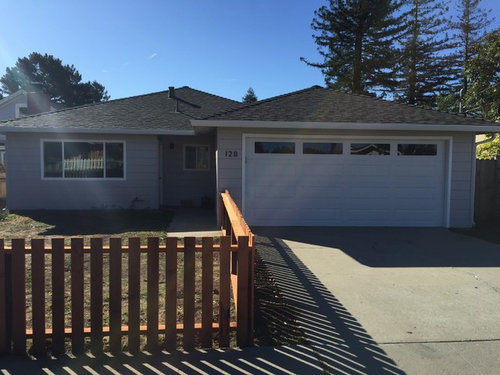
Front showing both sides of our driveway - just to the right is neighbor's driveway.

Backyard - view of neighbor's house we'd like to screen (grapevine in corner has lost leaves now too)

Backyard - looking the other way toward other neighbor's trees and shaded part. The metal box, clothesline pole and large rose bush will be moved

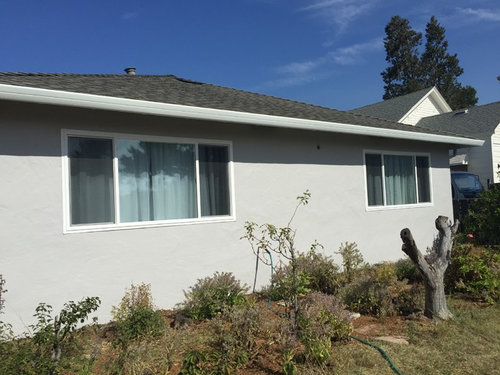
Back of house with existing beds - some old roses and random plants. It gets very hot and tons of sun there. Beds have been weeded since but not sure if it's a good idea to have beds up against the house.

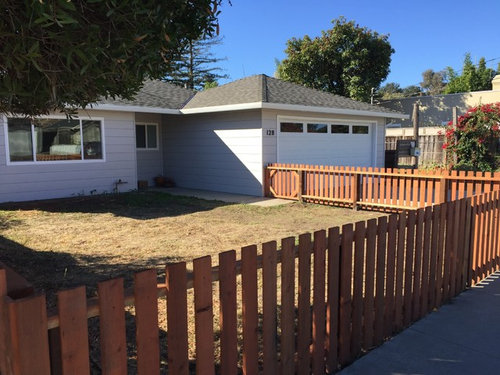
Front now

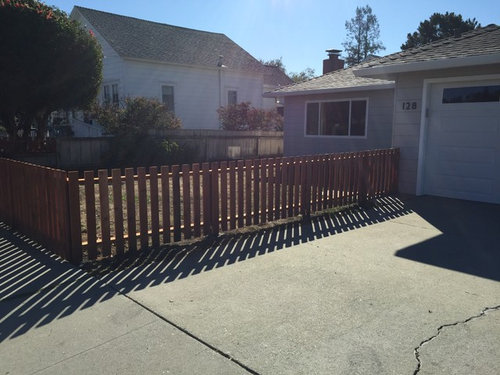
The old fence on property line won't be replaced but we'd like to screen with taller shrubs. 18" between driveway and underneath fence we will fill with river rock.

And here's our sketched ideas so far - blue is proposed changes/additions.

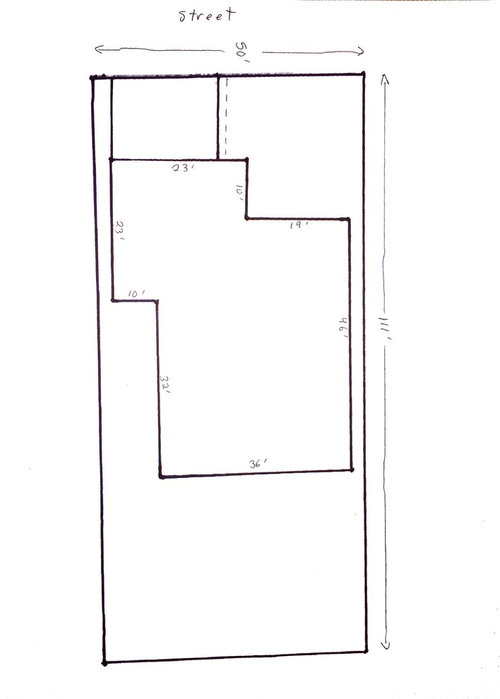
here's a black one (traced from satellite thus off square) if anyone wants to mark it up :)

Comments (10)

  • 8 years ago

    Don't sheet mulch. Termites love cardboard and it screws up the water/air exchange with the soil. If you want to take out a lawn you should perform a few grow/kill cycles, mulch heavily, and keep on top of weeding before it goes to seed.


  • 8 years ago

    Hmm, well we only have until feb 1 to complete our project for the rebate, and we are not going to use herbicides - sosheet mulching is the recommended course by local landscapers.

  • 8 years ago

    Easy to do by Feb 1, even earlier if desired.

    Rent a sod stripper; remove the sod, stack it upside down, cover with a thick dark tarp, and wait a year to develop high quality compost to add back to your soil.

    What's the required planting date?

    As a minimum, will need to mulch the soil against the elements.

  • 8 years ago

    The entire project has to be completed by feb 1 including planting and mulching. As I said, no time for seasons of waiting. I’m actually looking for suggestions and inspiration for layout, not turf removal method.


    Our plan is to have some takker shrubs shrubs such as Christmas berry and California lilac along the fences (staggered) and then some mid height plants like salvias, and then toward the house some shorter plants like clumping grasses and a rain garden.


    the backyard I’m less sure of where to place things.

  • 8 years ago

    No need to wait to strip sod. Either rent the equipment or do it by hand.

    The only waiting period is for the stored sod. I would think that could be justified as a "compost pile."

    In the meantime, you could seed/plant/transplant/mulch to your heart's content.

  • 8 years ago

    Thank you, blue sky!! That’s incredibly helpful feedback. I think our soil seems like a fine silt - not clay but not the sandy loam I grew up with in Canada. Drainage seems good so far with the heavy rain we had in November we didn’t get any surface puddles, and when I dug out some badly placed plants in the back to transplant the soil seemed well drained, so I don’t think it’s clay. We are a couple miles from

    the coast in case that matters. How can I tell my soil type, exactly?


    Good point about considering the landscape as something to evolve over time, but it’s quite an investment in time and money to set up so I want to get it as close to what we want as possible.


    For turf removal we plan to rototill, remove any chunks of grass clumps, and then sheet mulch. Although the photos make it look like there is a real lawn there it’s really sparse crabgrass, plantain and clover. The crabgrass/Bermuda grass will be coming back whatever we do, I know.

  • 8 years ago
    last modified: 8 years ago
    No point in tilling if you are going to try and shade the grass out afterward anyway. And if you try to remove grass pieces after tilling then you could spend a week on that alone - previously suggested method of slicing off intact sod much better.

  • 8 years ago

    There are a couple things you can do to tell your soil type. If you google around, you'll find the mason jar method. Basically fill a jar 1/3 full of soil and 2/3 water. Shake well, let stand till it settles. You'll be able to see the layers. There are charts on the internet that can tell you based on the relative thickness of the layers.

    Another way is to do the hole draining test. Dig a 1 gallon hole. Fill it with water. Time how fast it takes it to drain. That will tell you if your soil is fast draining or slow draining. I think they said 15 minutes to a half hour = very good drainage. Longer than 24 hours = poor drainage. Something like that. Call Annie's, or your local native plant nursury, they'll tell you the test. I think this is better than the mason jar test.

    Tree of Life Nursury has an online PDF book about how to water native plants that has tons of good basic info that you'll need to know.

    You'll probably have Bermuda Grass coming up anyway, whatever you do, if others in the neighborhood have it. I do. :/ At least it's easy to spot before it gets to big. A 3" layer of mulch will help a lot with that.

  • 8 years ago
    last modified: 8 years ago
    THe tilling is more to enable us to grade the yard it’s very lumpy and uneven and doesn’t slope away from the house properly. We can’t access the backyard with a tractor so the suggestion is to till, hand rake and and then mulch and reseed the areas we want to keep lawn in the back. Does that sound reasonable?


    Sheet mulching with cardboard is supposed to

    improve soil quality, but we are considering landscape fabric too since the mulch can be thinner.