Software
Houzz Logo Print
jerijensunsetz24

'Sui Mei Ren'

8 years ago

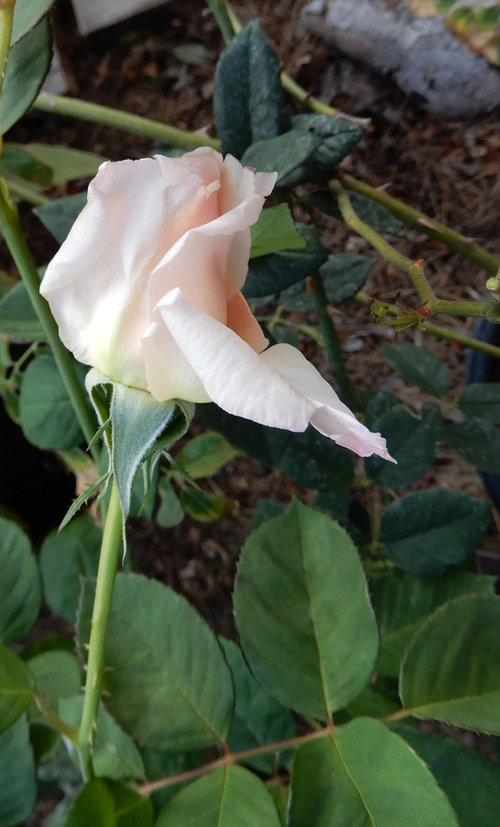
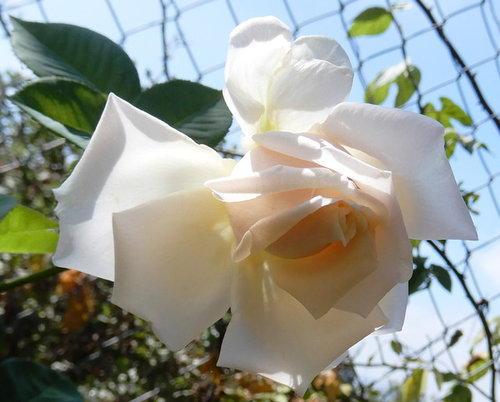
I would truly love to find out more about this rose than the bare facts available on HMF:
http://www.helpmefind.com/gardening/l.php?l=2.62517.3

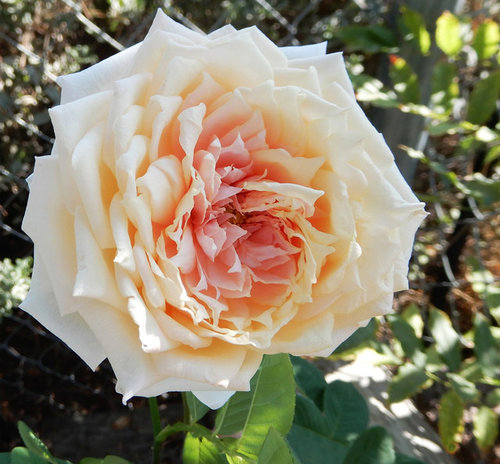
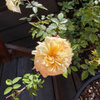
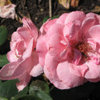
The final photo is of the first bloom I've cut for a vase, and it is on Day 3, though it was pretty well open when cut. This bloom is fully four-inches across.

It's got a strong, sweet fragrance -- with a hint of something like the green-apple fragrance of some of the Wichurana hybrids (like Sombreuil, Cl, or 'Mel's Heritage). I can really smell it!

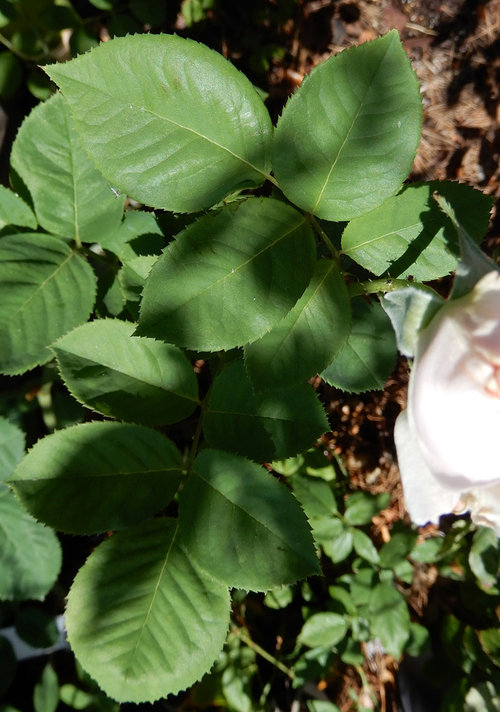
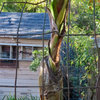
The foliage, as you can see is distinctly un-like any China Rose I've ever seen -- but that's the way it is classed. (Because it came from China?) The leaflets are VERY large, and more or less ovate, and they have a sort of rugose texture that reminds me strongly of the HP, 'Ferdinand Pichard' and his descendants, 'Scentimental' and 'Fourth of July'.

So, if anyone can tell me more about this rose, I'd be grateful.

OH! And it is thus-far thornless, and disease-free here.

Comments (21)

  • 8 years ago

    I reminds me very much of something like 'Souvenir de la Malmaison' -- a Bourbon-Tea. Or perhaps it's something like a bush-form descendant of 'Gloire de Dijon' -- which also descends from SdlM. Or maybe it's something like 'Franz Deegan' -- a Tea-leaning early HT.

    Very beautiful, whatever it is.

    :-)

    ~Christopher

  • 8 years ago

    I sure agree with that.
    I'd sure love to see if DNA testing would turn up ANY confirmed relationships.


  • 8 years ago

    OH, Jeri...that is ethereally lovely. If there were even one temperate garden listed as growing it, I'd be adding it to my Spring list. But every garden listed on HMF as growing it is MUCH warmer than mine :( I need at least some hope it will survive here, lol. If it were a Bourbon Tea, or related to SdlM, I'd chance it. If any one is growing SMR in Z7 I'd love to hear about it. We need info!

    John

  • 8 years ago

    Except for the complete (at least so far) lack of prickles. I'd have expected SOME prickles, if it were one of that group -- Wouldn't you?

    It's really a puzzling rose . . . I look at all of the Chinas-from-China that we've come to know in the last few years . . . 'Yuki's Dream' et al . . . And I just see no point of resemblance.

  • 8 years ago
    last modified: 8 years ago

    Jeri, I see prickles in your pics.....unless there's another rose in the immediate background. But there are also some on the bloom stalk.

    :-)

    ~Christopher

  • 8 years ago

    You're right. But ONLY there. otoh, those are teeny and soft. It is possible that mature wood would have real prickles, but who knows, at this point.


  • 8 years ago

    Possibly it will become more prickly with age. I know I have...

    Howsomever, there is at least one child of GdD that is reported as being "thornless or almost", and there may be others whose smooth canes are not a matter of public record?

    I agree that it would be interesting to know if there's a genetic link, but I won't hold my breath while waiting for that to happen.

    Virginia

  • 8 years ago

    I do not know this rose, but I guess its name is derived from the Chinese pronunciation 睡Sui美Mei人Ren( Sleeping Beauty). what a romantic name, I like that. The second picture is pretty.

  • 8 years ago

    Gardentiller -- I gather that's true. You clearly have enough understanding of the original Chinese to see that.
    One of many things I'd love to know is whether that name is known in China, or whether it was assigned later as a study name.


  • 8 years ago
    last modified: 8 years ago

    It seems, inferred from John Hook's comments in HMF, that this rose among a few others was re-introduced with their old name transcribed, accurately or not, in English.

    The same mystery applies to this rose as to Tipsy. Both of them look like unusual early HT's or Bourbon type roses but they also do not really fit these classes. Why can't we believe that they are really old Chinese hybrids but we insist in assigning them to classes of European breeding? We will never know unless a well informed DNA comparison is done on them.

    I wish that Chinese rose book eventually does get translated into English. It might shed some light to many such questions.

  • 8 years ago

    Nik -- I agree with you. That might help.

    What bugs me, as it stands, is that roses like TIC and SMR are categorized as "Chinas."

    Yes, yes. I KNOW they came from China. But so did the Banksiaes, and the Grandifloras, and and and . . . And we don't call THEM "Chinas." So why are these roses (and one must assume there are others) jammed in with the twiggy roses we know as "Chinas."

    It's likely WAY too much of a culture shock to change what we know as "Chinas" to something else. But perhaps these other sorts of Chinese roses could be called "China Shrubs" -- or SOMETHING.

    I'd also like very much to know (and that book might help, if it could be read by non-Chinese-speakers) what history these roses have in China. They are so different from the greater number of Chinese rose types that there surely must be information on them SOMEWHERE.


  • 8 years ago
    last modified: 8 years ago

    Considering that 'Rose Edouard' and what's going around as "Maggie" are not European in origin -- not to mention that Damasks were brought to Europe from the Near East -- it's very possible, if not completely likely, that types beyond Chinas and Teas and native Chinese species have contributed genetically to old Chinese garden roses. [As an interesting aside, I do recall in some of my readings SOMEWHERE that pink Chinas -- seen to significantly differ from red Chinas in genetic studies -- may have some Rosa lucidissima in them, in addition to R. chinensis, and likely a little R. gigantea] I understand that saying "something like a Bourbon-Tea or Dijon-Tea" makes it sound like these roses are European in origin, but I meant genetically.

    'Rose Edouard' likely was an old Indian cultivar -- or "strain" of cultivars raised from self-set seed -- which were often used as rootstocks. I think the story on Reunion Island was really more about discovering a sucker from 'Rose Edouard' rootstock, rather than an actual seedling from 'Old Blush' and a Damask (or Centifolia). Sure, 'Rose Edouard' could very well be something like that, originally, but it was probably something that arose longer ago and was "refined" through selection of self-set seedlings. I think "Maggie" probably originated similarly. Personally, I think it's something along the lines of 'Rose Edouard' pollinating a triploid red China gave rise to a tetraploid red Bourbon-China.

    Calling it a Bourbon doesn't deny its non-European origin -- it simply classifies it along with others of similar pedigree. And I think the same thing goes for these old Chinese garden roses. If, from a garden and appearance and "behavioral" perspective, these roses fit with Bourbons (or whatever), it's more helpful to call them that.

    :-)

    ~Christopher

  • 8 years ago
    last modified: 8 years ago

    Now, THAT makes sense.

    We really can't categorize them by their point of origin. If we DID, roses like 'Purpurea' could NOT be called Chinas.

    They should be a [Bourbon/Noisette/Tea] -- bred/discovered in China -- Or, "known in China since . . . "

    Note John Hook's post to HMF:
    "From communication with Dr Yoshihiro Ueda a few years ago he informed me he introduced the Chinese ancient roses(Chun Shui Lu Bo,Jin Pin Fan Lu, Qin Lian Xue Shi, Si Chun, Sui Mei Ren, Tian Nu Guang, Ji Nang, Yin Ri He Hua) from Huaian Yueji Yuan(Huaian Rose Garden) in Jiangsu Province of China in 2002 . . . "

    So, I'm going to see what (if anything) I can find about Huaian Yueji Yuan (Huaian Rose Garden" in Jiangsu Province, China.

  • 8 years ago

    It's confusing when a species or class is named for a country of origin. But, we seemed to have gotten over it elsewhere -- we don't naturally assume all French roses are Gallicas -- which comes from the word Gaul, as France was once known. Nor are all Turkish roses Damasks, or any roses from Reunion being Bourbons, etc. Maybe we should make a new hodge-podge class -- "China Mystery Roses", like how there are "Bermuda Mystery Roses" which fall among several different classes. Later, they can get a second classification once we know if they're Bourbons, Teas, HTs, etc.

    :-)

    ~Christopher

  • 8 years ago

    Fine for researchers, Christopher -- but ARS does not recognize "Bermuda Mystery Roses." (Of course, neither do they recognize "Tea-Noisettes" -- which is such a useful designation.)

    It's akin to my Long-Coat Dalmatians whose "coat-type" is "unacceptable" to the Dalmatian Club of America. I guess sometimes you just have to do what you have to do.

  • 8 years ago
    last modified: 8 years ago

    Yes, true. But I don't care much about ARS classifications since I don't exhibit. Those terms aren't written in stone, being as they have changed quite a bit over the years. And, after all, this is just the American Rose Society -- a group of American rose people who got together and wrote their own classifications primarily for the purpose of exhibition. They are not the be-all and end-all. They are just how some people decided to organize things -- and it shows a clear preference for the new roses. I mean, creating Grandifloras for the roses in-between HTs and Floribundas, but then lumping together other formerly separate groups simply because they're not much in favor anymore. In many cases, this contradicts how the roses were introduced by their raisers, or by "rose people" growing what we today call "old" but were new for them.

    I'm actually reading a 19th Century rose book right now -- my "before falling asleep" book -- and that author has several different classes that are no longer used. Sometimes it's because so few survived, so the smaller classes were merged. But I'm finding it very useful when seeing differences in, say, what we today call Gallicas. Quite a few roses today called Gallicas are in this book under Hybrid Gallicas, Hybrid Centifolias, Hybrid Chinas, Damasks, etc. It's also interesting to see things classed differently there than they are now -- such as 'Mme Plantier' not being even Alba-adjacent, but a Hybrid Noisette. Hybrid Perpetuals are divided into groups because, as the author says, it's of no use lumping them together just because they are Autumnals that don't fit in elsewhere -- that's not helpful. That reminded me of the Shrub class today.

    :-)

    ~Christopher

  • 8 years ago
    last modified: 8 years ago

    One thing that this particular rose, and Tipsy, seem to have that 'normal' Bourbons, including Rose Edouards, haven't is a tendency to be very remontant... Interestingly SdlM shares that trait.

  • 8 years ago

    Perhaps it's being a Bourbon-Tea that they have in common.

    :-)

    ~Christopher