

Neglected [Tea] Roses, 1887
From The Garden, December 31, 1887, p.595:
"Neglected Roses" by T. W. Girdlestone.
The question has often been asked whether there are not among old and neglected Roses some which are worth growing, not only for association's sake, but also for their real merits. And there is no doubt that there are a few good varieties which though occasionally seen, remain in a general way in undeserved obscurity.
This arises, perhaps, partly from accident, and partly from the fact that it not infrequently happens that a Rose is raised for which at the moment there is no particular need. Subsequently a purpose for which it would be useful may arise, or altered conditions of culture may render it desirable, but by that time growers probably will be intent upon raising new varieties to fulfil their new wants, instead of looking for what may be of value among existing sorts. Under these circumstances, it is natural that it should be amongst the class, in the extent and conditions of whose cultivation there has been the greatest change of late years, that the majority of neglected varieties of value should be found, namely, amongst the Tea-scented Roses, especially when it is remembered that these include some of the oldest of what are still first-rate Roses, the decade 1844-54 having witnessed the production of half-a-dozen Teas that are still unsurpassed.
Of these elder Teas there are three or four to be mentioned presently, but the more important are some varieties from ten to fifteen years old which appear to have been very generally ignored.
First of all comes Marcelline Roda, a very attractive Rose, sent out by Ducher in 1873. That the Ducher seedlings are worthy of careful consideration and trial is obvious, from the fact that they have included at various times such sterling Roses as Amazone, Anna Ollivier, Bouquet d'Or, Innocente Pirola, Jean Ducher, Jules Finger, Madame Welch, Marie Van Houtte, Perle de Lyon, Rêve d'Or, and William Allen Richardson- a goodly list for a single house. Marcelline Roda is charming, both in the garden and in the cut state, and is also valuable to the exhibitor, its pale yellow flowers somewhat recalling Caroline Kuster in colour, though in form more resembling Innocente Pirola with their pointed centre. They are produced in immense profusion, and being of good size and carried erect upon the plant they are very effective, while from their form they last well in water, and the exhibitor will consequently find them excellent travellers. Why the variety is not more generally grown it is not easy to conceive. Occasionally fine blooms are exhibited, and during the past season a good many handsome examples were seen at various shows, indicating the fact that exhibitors sometimes grow it; but, considering its free-flowering character and habit, Marcelline Roda is deserving of far more extensive cultivation even in gardens where Rose showing is not the main object of the cultivator.
Another handsome Rose but rarely met with is La Princesse Vera (Nabonnand, 1878). Nabonnand has sent out such an enormous number of worthless varieties in his time, that growers in general fight shy of anything with his name attached, and, consequently, when he does distribute a good seedling, its merits fail for some time to obtain recognition. La Princesse Vera, however, although less effective in the garden than Marcelline Roda, owing to its less erect habit, produces a very fine flower, perfect in form, very large and full, and in colour nearly white with a rosy base. That the flowers are not lacking in size or substance, exhibitors will realise when it is stated that during the past season blooms were several times staged in the back row of a winning twenty-four or thirty-six distinct, side by side with such Roses as Her Majesty, Alfred Colomb, Madame Gabriel Luizet, &c., and the plant is of a sturdy branching habit with exceptionally lustrous dark foliage.
A variety sent out at the same time by the same raiser, and called Clement Nabonnand, is very deep-petalled, and has been a good deal admired; but of two distributed the year before, one called Comtesse de Caserta, a somewhat similarly formed flower, is more effective in the garden from its great floriferousness and deeper colour; the other, Abbé Roustan, from the handsomeness of the plant which carries its flowers erect. Comtesse de Caserta produces its very deep, large-petalled blooms in the greatest abundance, and, though not being very full, it is undoubtedly better suited by a cooler season; it was, nevertheless, successfully exhibited last summer, while the number of buds and flowers it furnished for cutting was very large. In colour the flowers are yellowish, shaded at the base with deep coppery rose or red; varying somewhat in tint, but always attractive. Abbé Roustan is very vigorous, and its large blush flowers, borne on stiff stems, are very advantageously displayed above the mass of deep green glossy foliage, in colour and texture almost like that of Portugal Laurel, and very persistent. In this habit of erect flower-stems, this Rose follows a somewhat less vigorous, but good-looking variety sent out by Margottin so long ago as 1859, namely, Duc de Magenta, a Tea which is still very popular in France, though rarely seen in this country, and which produces flowers of good size with a fine petal of great substance, withstanding both heat and wet exceptionally well. In colour it is of a pleasing creamy tint, shaded with salmony yellow, and though the plant is not tall, the growth is sturdy and healthy. This variety has been found a useful addition now that collections of Teas are increasing in extent, and owing to its habit it shows up better in the garden than many larger growers that have pendulous flowers.
A Tea, sent out by Madame Ducher two years after her husband's death, namely Marquis de Sanima (Veuve Ducher, 1876), is a Rose which at its best is extremely beautiful, and during the past season it was very good, being finely shown at South Kensington and elsewhere. It is a handsome, full flower, of those mingled shades of copper and gold and red only to be found among Tea-scented Roses; in colour somewhat after Reine de Portugal, but with a deeper coppery red tint, and opening more easily than that fine, though rather fickle variety.
Another Rose from the same raiser, Comte de Sembui (1874), of the same type of colour, is more pointed in form, and perhaps a little thinner in petal, but in dry weather opens fair and is very pretty. Louis Gigot (Ducher, 1872), though a dwarf grower, has a pretty white flower of good size and softly tinted with pale rose; while the only objection to the older Louise de Savoie (Ducher, 1854), which makes a handsome, vigorous plant, and produces very attractive well-formed pale sulphur-yellow flowers, is a slight tenderness when exposed to great cold.
An old and excellent Rose, of which the recent American novelty The Bride has reminded a good many growers, is Cornelia Koch (Koch, 1855), generally classed as a Noisette, but for all practical purposes a Tea. In colour, the ivory-white flowers with a yellowish base closely resemble those of The Bride, as they sometimes do also in form, and though probably not so constant as the newer Rose, the variety affords a good many superb blooms and is especially valuable in autumn.
Socrate (Robert, 1858) is a Tea that everybody ought to grow who cares about fragrance in Roses. It is without exception the most highly scented of all the Teas, and though somewhat irregular in form, the flowers are freely produced and beautiful in colour, being of mingled yellow and rose with an apricot centre, while the plant is a good grower and autumnal. For cutting, a purpose for which the irregularity of form of the expanded blossoms is no objection, there are few Roses more desirable than Socrate, or more distinct in colour and fragrance, and even though in France it is well known and highly appreciated, and a few growers over here cultivate a considerable number of plants to ensure a good supply of its flowers for the house, yet it is not grown nearly so extensively as it deserves to be, and, in fact, in this country can hardly be said to be otherwise than generally neglected.
Comments (29)
 8 years ago
Quite verbose weren't they, those Victorians, but it's a refreshing change to read of someone daring to criticise a breeder quite so frankly as that. I don't think you would see this today. Nabonnand roses - worthless!.. what a cheek.
Knowing the climate here, I'm always amazed at how they could write so effusively about Tea roses. Where did it all go wrong?
User thanked User 8 years agolast modified: 8 years ago
I enjoy that style of writing, where people still seemed to have to time to write in a leisurely fashion, and I really enjoyed reading this. I couldn't find many of the names so perhaps these roses really are gone unless some are lurking around under study names like Jesse Hildreth.
User thanked ingrid_vc so. CA zone 9Related Professionals
Louisville Landscape Architects & Landscape Designers · Worthington Landscape Architects & Landscape Designers · Brooklyn Landscape Architects & Landscape Designers · Murrieta Landscape Architects & Landscape Designers · Salinas Landscape Architects & Landscape Designers · Medford Landscape Architects & Landscape Designers · Salem Landscape Architects & Landscape Designers · Daytona Beach Landscape Contractors · Sarasota Landscape Contractors · Spartanburg Landscape Contractors · Victoria Landscape Contractors · Green Bay Landscape Contractors · Platteville Landscape Contractors · Panama City Home Builders · Aurora Home Builders 8 years ago
I suspect that at least some of these not-well-known roses ARE things that now circulate under study names. The trouble is that, lacking any sort of accurate images of them, and descriptions being somewhat imprecise, who could know?
I'm surprised, though, at the animus directed at the Nabonnand roses. WOW ... I never met a Nabonnand rose I could not love! Maybe they're just not well-suited to Girdlestone's conditions.User thanked jerijen 8 years ago
Jeri, I was thinking exactly the same thing, with the added possibility that only the best Nabonnand roses survived the test of time to come down to us. The "worthless" just aren't around any longer, and what we're left with is the cream of the crop, lol. I'm quite enamored with every Nabonnand rose I know of!
John
User thanked fig_insanity Z7b E TN- 8 years ago
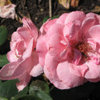
In fact, the more I look at "Florence Bowers Pink Tea" the more I think she looks like a Nabonnand rose.
User thanked jerijen User
Original Author8 years agolast modified: 8 years agoI would really like to get a whiff of 'Socrate'...
This article probably extended the lifespan of some of these neglected roses, but I still couldn't find any illustrations of the featured roses to decorate the post.
Marlorena, have you ever read any of Georgia Torrey Drennan's writings about the hardiness of Tea Roses? She might overstate the case for Teas as hardy Roses, but I do think that with proper culture many Teas could withstand the occasional cold winters of a temperate climate. I'd guess the successful gardeners had winter protection methods for their most tender roses, which would've been planted in a sheltered spot to begin with...?
Ingrid, I have wondered if 'Cornelia Koch' (AKA 'Cornelia Cook') could be Jesse's alter ego. That was a rose that was widely grown in many different countries, and was THE white Tea for decades. A beautiful white rose, good for forcing, a good buttonhole rose, a good cut rose, and a good garden rose (albeit with a reputation for growing slowly at first- even by Tea standards).
Virginia
Rose Georgina Kingsley also makes a case for growing Teas outdoors in English gardens (see Chapter 7 of her book, Eversley Gardens...)
User
Original Author8 years agolast modified: 8 years agoI feel that the writer was defending the Nabonnands a bit; saying that because their reputation was so bad (at least in England), that folks were missing out on some good roses. Most likely, their roses would have- as a general rule- been better suited to the French Riviera (or Jeri's conditions) than to English gardens. Girdlestone was saying that some of these neglected Nabonnand Teas would be more suitable pour les Anglaises.
- 8 years ago
Virginia, no I've not read those books, although I see they are available. I just tend to think like most people would here, who have an interest in roses, that the ones we have now are more suitable for our climate, and we don't need to grow those any more, which as Mr Girdlestone found out, was more trial and error in any case, they're not reliable roses for us as regards offering dependable garden value, except a few readily out there, really just a handful. I would also claim Tea roses lack aesthetic appeal to a modern eye attuned to the hybrid tea as they are [not mine I should add].
He would probably be swooning over Austins if he came back today. So I've more or less answered my own question as to ''what went wrong'' in that it eventually all went right, as local 20th century breeders bred for our climate. That's how I see it. You wouldn't get a 'Devoniensis' today would you? not here... I don't think so.
User thanked User User
Original Author8 years agoSpeaking of "FBPT", Jeri, I just (today) happened upon the following description of a coppery Tea in an 1888 American rose catalog, and thought the bristly flower stalks sounded... familiar:
"A new French Tea Rose, of much more than ordinary merit. Very bright carmine rose, tinted and shaded with saffron, the base of the petals being copper yellow, with reverse a rosy bronze; large, pointed, very double, and very sweet-scented; flower stem roughened like a moss-rose; the coloring is entirely new and very brilliant. The open rose reminds one of a ripe, red peach."
This is not described as a climber, however...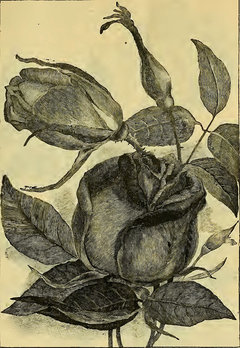
Virginia
- 8 years ago
And FBPT is DEFINITELY a Climber. I was sort of wondering about 'Paul Nabonnand,' to be honest.
User thanked jerijen User
Original Author8 years agolast modified: 8 years agoIs 'Paul Nabonnand' a climber? The flowers look similar, but the HMF photos of 'PN' don't show the bristly flower-stem and receptacle that is so distinctive with 'FBPT'. Instead it looks quite smooth. Which is why the above description and illustration of 'Luciole' caught my attention.
Of course, in either case, a climbing sport is a possibility...
I would also love to get a good look at (the Nabonnand climber) Wasily Chludoff's receptacles/sepals to see if they are smooth or glandular. The photos I've found online mostly show flowers & habit...
Virginia
Edited to add: I do see that there was a Grimpant Paul Nabonnand. And the smooth receptacles on the non-climbing form may not have been a trait that carried over to the climbing form? Hmmmm....
- 8 years ago
Hmmmmm . . . It's hard to be sure -- particularly because I've not seen PN "in the flesh" -- there's a similarity, though, isn't there? Maybe it's not PN, but something in the same family? It's just got that Nabonnand "feel" to it.
User thanked jerijen  8 years agolast modified: 8 years ago
Hmmmm, not many climbing REAL Teas, are there? Not many climbing sports either... Could FBPT be an early HT or something in the mold of SdM Leonie Viennot?
- 8 years ago
Sure it could, Nik. Whether it's a Nabonnand or something else, it may easily be something other than a Tea that's "all Tea".
(AAMOF, at least some of the Nabonnand roses are sort of borderline, released in the early 20th Century, and far from the mold of things like 'Mlle. de Sombreuil'. )
Another rose in the same mold is "Tamalpais Homestead Tea":
In my friend Holly's Ventura, CA garden this thing grows 8-ft. x 8-ft. And, no. Probably not "all Tea". - 8 years ago
Can anyone tell me please, is this 'clg Lady Hillingdon' really a Tea rose, or a mixture? I'm not sure what I'm supposed to think of it. Someone told me, forget who, that it was half and half something else.
- 8 years ago
I've never heard that anyone thought Lady Hillingdon was NOT a Tea. ????
It's bred from two Teas, after all, what else could it be?
The Climber is a sport of the bush, ergo, it's a Climbing Tea.  8 years agolast modified: 8 years ago
Most Teas are not "all Tea", being as they have Noisette and Bourbon ancestry. Personally, I think that when a handful of traits predominate in a diploid -- or, sometimes, a triploid -- rose which has Tea ancestry, it's called a Tea. From what I've gathered in my readings and observations, some of those traits are:
"weak" peduncles causing flowers to nod -- which may be less-pronounced in triploids and tetraploids
cymose inflorescences, meaning new growth ends in flower buds, which is related to a propensity toward producing "candelabras"
a growth habit based more on building upon flowering shoots by further branching than by pushing new growth from the roots that won't flower until the following year
dormancy initiation more from lack of water than lack of heat
There are other traits that I can't properly delineate, falling into a sort of "you know it when you see it" idea. But once enough characteristics are there, something can be called a Tea even if it has non-Tea ancestors. Most of the yellow Teas we see today descend from Noisettes. Whenever you see "...descends from 'Adam'" in a Tea's description, know that that means it has 'Rose Edouard' as an ancestor. The Dijon Teas descend from 'Souvenir de la Malmaison'. Some of the later Teas have HT ancestry, such as 'Lady Mary Fitzwilliam' being a grandparent to 'Clementina Carbonieri'. About the only Teas today without such ancestry would be things like "Bermuda Spice".
I posted this as a Facebook comment earlier, but I think it's worth repeating here -- it's a shame that the path of "Hybrid Teas" followed exhibition, favoring plants appearing as "lollipops on sticks" for producing big blooms to cut, rather than by maintaining the Teas' elegant shrub habits and selecting for more cold hardiness. I think that could have been possible if they used Bourbons rather than Hybrid Perpetuals.
The few Bourbon-Teas we see today are real beauties. 'Burbank' / 'Santa Rosa' is one example. 'Mme d'Enfert' is a Bourbon/Tea-Noisette. Another Bourbon-Tea is 'Mistress Bosanquet' -- which makes me wonder, if it was tetraploid like most Bourbons, rather than diploid like most Teas, would its blooms nod, or would they be presented like "regular" Bourbons? And if one were to take a typical diploid Tea and double its chromosomes to make it tetraploid, would that make it carry its blooms more upright? And, of course, there's 'Souvenir de la Malmaison'. Why were they called Bourbons instead of Teas? Because they didn't quite have all the "necessary" Tea characteristics -- though if you look at them, they surely have some.
Just for further head-scratching, here are some triploid Teas that aren't Dijon Teas:
'Adam'
'Comtesse Festetics Hamilton'
'Homere'
'Lady Hillingdon'
'Papa Gontier'
'Paul Nabonnand'And even one that's tetraploid -- 'Souvenir de Gilbert Nabonnand'.
:-)
~Christopher
- 8 years ago
Christopher/ Jeri, that's really interesting thanks....although I admit I get confused with all this ploidy business but understand it's to do with chromosomes. I'll take it it's a Tea..
I've searched this forum to find who told me it wasn't really a Tea, which is why it's hardier than so many others, but no luck, but I know someone did say something like that and I took note.
- 8 years agolast modified: 8 years ago
Anyway, getting back to the point of this thread..........
When I see old references mentioning roses that are no longer "with us", I wonder if it's necessarily a bad thing. Yes, it's a "bad thing", in my opinion, when roses are gone simply because fashions changed, despite being good garden plants. But even now, many similar roses are released, perhaps attempting to latch onto the popularity of the first of that type to be introduced. Over time, gardeners declare which are the better garden plants of that group, and discard the rest.
As an example, think of all the HTs and Grandifloras chasing "blue" -- in shades of silvery lavender through purple. If we were to list every individual of this "color genre" introduced, surely we'd find some that were not so hot in the garden, and also offered nothing novel compared to their peers. Many have ancestry in common, so it's not even a case of an entire line going extinct if one is outperformed by another.
Let's say 100 years from now someone comes across references of a popular lavender HT named for a beloved singer/actress of her time. The reader is intrigued, and searches for this cultivar, only to discover it is now extinct. "Oh, how sad....to have lost a beautiful rose named for Barbara Streisand." Other lavender HTs survived to this future date, but 'Barbara Streisand' wasn't one of them. Was it because it was more dependent upon fungicides? Was it because others of its genre eventually outclassed it? Or was it because, as a whole, the lavender HTs went out of style, and only a handful of the best survived?
There will be those future-people bemoaning us living now for not saving this rose. Of course, nostalgia has an effect of minimizing faults. Despite other lavender HTs surviving to 100 years from now, rose lovers of the future will mourn for those which haven't.
This is completely different, however, from an entire class of roses dropping from favor simply because of a fashion for something different, especially when roses of that class were once highly praised for their garden performance. To me, it's a bit sad to read of distinctive old roses that are gone, but many I read about were just subtle variations from roses that did survive to today. When 'Park's Yellow Tea-Scented China' first came to Europe, it was a novelty. Over time, other yellow Teas emerged, many simply "seedling of..." others already introduced. There is a historical loss with 'Park's Yellow', for sure....but I think losing some of the others wasn't as critical -- especially when healthier yellow Teas survived. Or, in another area, how many "...seedling of 'La Reine'"-type roses must be preserved, when so many are so similar, the main differences being their health in the garden?
One more thing to keep in mind -- for every rose introduced, many other seedlings were culled. For all those seeds germinated, many others were discarded. For every hip ripened, many others were dead-headed. Selection occurred -- and continues to occur -- at many levels beyond just the nursery deciding what to carry.
:-)
~Christopher
- 8 years ago
Another Bourbon-Tea is 'Mistress Bosanquet' -- which makes me wonder, if it was tetraploid like most Bourbons, rather than diploid like most Teas, would its blooms nod, or would they be presented like "regular" Bourbons?
'Mistress Bosanquet' of-commerce is probably not the best example, for purposes of this discussion, as its true identity is unknown. It is a Found Rose, whose ploidy and breeding may only be speculated at.
It was collected from a grave in NoCal.Personally, I'd have kept its primary study name, "Legacy of Samuel Briggs #2" since it has ALSO been ID'd as 'Mme. Breon fils," 'Pauline Bonaparte', and 'Thé Sapho':
• "Cottonwood Cemetery Blush Rose"
• "Legacy of Samuel Briggs #2"
• "Mme Bréon fils"
• Mrs. Bosanquet
• Pauline Bonaparte (bourbon, Laffay, 1832)
• "Petaluma Blush"
• Thé Sapho
SEE: http://www.helpmefind.com/gardening/l.php?l=2.4304.1
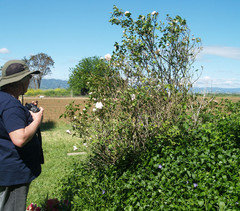
- 8 years ago
"although I admit I get confused with all this ploidy business but understand it's to do with chromosomes. I'll take it it's a Tea."
*** For me -- since so many of the roses I grow are foundlings of mysterious origin, I don't worry about things like that. I'm not breeding roses, so it's not my primary interest.
Remember, rose breeders and introducers are at liberty to class their creation as they choose ... Thus, Ralph Moore crossed 'Old Blush' [China] x 'Old Blush' [China] and created 'Mr. Bluebird'. Thus, 'Mr. Bluebird' is a China, right? Nope. Mr. Moore registered 'Mr. Bluebird' as a Miniature -- knowing that a Mini would sell, while a China probably would not.
Nor is that the only example of rose assigned to a certain class for reasons other than science. If it looks like a Tea, and grows like a Tea, I will accept it as a "probable Tea Rose" and not worry much beyond that.
- 8 years agolast modified: 8 years ago
Whatever its real name, its ploidy was listed as diploid in 2009 -- on a plant sourced from ARE. Even if its name is incorrect, the plant itself shows characteristics of Bourbon-China-Tea ancestry. It's something I'd expect from a Tea bred with something like 'Mlle Blanche Lafitte' or 'Louise Odier'.
And.....wasn't it determined that 'Mr. Bluebird' was an OP seedling of 'Old Blush', and that it bears a strong resemblance to something descending from one of the purple Multiflora ramblers? I think it was Paul Barden who mentioned that in here a while back.
:-)~Christopher
- 8 years ago
Did they test it genetically? Or derive that from the supposed breeding? I betcha it was derived from the assumed identification.
- 8 years ago
Found it.
http://forums.gardenweb.com/discussions/1664774/the-origins-of-mr-bluebird?n=18
Jeri, you don't see the stubby fringes on the stipules? Or how the clusters of blooms resemble Multiflora-derived Polyanthas? What about the box-like leaflets? Compare it to things like 'Baby Faurax', or the purple Multiflora ramblers themselves.
I wasn't aware of the controversy until after I looked at 'Mr. Bluebird' and already "assumed" its Multiflora blood based on its traits. I know how Ralph Moore classified it, and what he said of its ancestry, but it wouldn't be the first time an assumed paternity was incorrect.
;-)
~Christopher  8 years ago
Christopher, maybe you should start a company running rose genetic tests like 23 and me. We could all test our "babies" and find out their real heritage.
- 8 years ago
I think it's interesting that some "unconventional" ancestry can be involved in what we consider "conventional" examples of particular types. It's more apparent with modern roses, such as infusing non-traditional rose species into lines producing Floribundas. We have this classic definition of that class as arising from crosses between Hybrid Teas and Polyanthas. Today, there's more in the pot. But so long as the result is something that looks and functions like a Floribunda, it's released as such. I think something similar occurred with the older roses, but on a lesser scale. One example that comes to mind is 'Zephirine Drouhin', which is classed as a Bourbon, despite it probably arising from a cross between a Hybrid Perpetual and a Boursault.
:-)
~Christopher - 8 years agolast modified: 8 years ago
Christopher and John,
Your theory that many older roses are 'culled' by the fact that they may not be not too worthy and are superseded by newer better ones should be valid though, particularly for the Teas, I'm of the opinion that they were most unlucky to be created and grown by people in mostly unfriendly climates.. Should the main markets for roses were more southerly at the time than England, the north of France, Germany, central Europe and the NE of the US, many more Teas would have survived and more would have been created. The same continues to be true even today, despite large markets for warm weather roses like California.
What has been a blessing for Marlorena has been a curse for us southern folks.. Serious rose breeding should have started a few centuries earlier, at the time the Med was still the center of the world.... Maybe the Chinese and the Indians will take up rose breeding again, in a serious way, not caring if their creations will do well in a garden in England or in Munich.. there's still hope..



fig_insanity Z7b E TN