Software
Houzz Logo Print
webuser_1169439

Issues with Dryer and Dryer vent

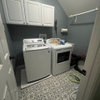
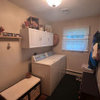
I've been having issues with my dryer. Issue number 1 when I put my load on a full cycle I need run another 30 min after full cycle is done to get things dry. I cleaned tube and vent and inside the dryer and have made sure that the exhaust tube is straight and not kinked and that it has the shortest route to outside. Issue number 2 it is on the north side and it lets in a tone of cold air, making the floor almost painfully cold to walk across and since the laundry and guess bathroom share one room it never seem comfortable for my guests and I worry about heat escaping and in the summer it constantly sounds like there are things rustling in the tube like leaves. Previous owners cut vent as close to the floor as possible I'm happy for any advice on this.

Comments (14)

  • 8 years ago

    Regards to cleaning the "tube and vent" is that just the length of ducting between the dryer and the wall? What distance is the ducting run from the wall to the exhaust hood outside the house? Did you also clean that span?

    Regards to incoming cold air, what kind of exhaust hood is at the outside? Can you post a picture? There are various choices of hoods available, some seal better than others.

  • 8 years ago

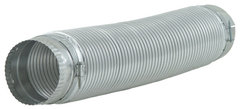
    Megan Morrill-Denton, we recently exchanged our top loads with front loads (after years) and DH discovered several issues with our venting... and we changed some things. The venting pipe in our crawlspace was ALL this type:


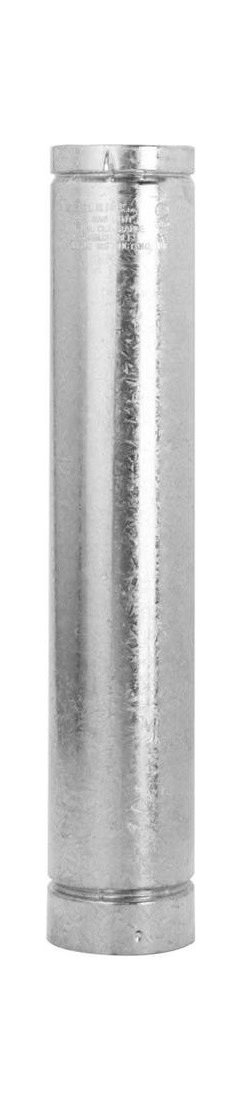
    and it should really isn't ideal at all except right at the wall going to your dryer. This type ducting will collect lint badly in the ridges. When it was removed, despite running a long wire cleaning brush through it, it was filled with lint - a huge fire hazard. We replaced any duct that was in the walls and in our crawlspace with this galvanized straight piping:


    It helps vent better, and isn't a fire hazard, although will need to be cleaned on occasion also. I wish DH were here, as he said you are ideally only supposed to have a certain number of 90 degree bends per feet/yards of ducting, and I can't remember what it was...

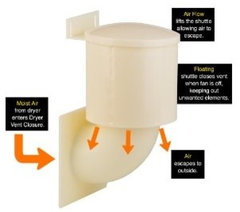
    In addition, we took out those vent flaps at the outside wall (they get stuck, etc.) and replaced it with this Heartland vent cover:


    Actually, ours was over 10 years old, still in the box, and had been stored in a non-heated hanger, so I can vouch for it. There's another cheaper one on Amazon, which is apparently thinner and brittle. Prior to changing the vent cover out, I could easily feel all the cold air rushing into the house from the old slat style vent at the outside wall - this does a far better job. Thus far, we've improved out drying time, and the exterior venting is great.

  • 8 years ago
    thank you both for responding I will definitely change our my tube my run is about ten inches to the out side vent imams I switch the out side part I have this one the curved one you posted sounds like it'll do the trick thank you both
  • 8 years ago

    I have an exhaust hood like the Heartland shown above. I don't recall if I got it directly from Heartland or elsewhere. It's reasonably sturdy but has deteriorated somewhat from UV exposure. The installation instructions state that it should be painted both for durability and aesthetics (to match the house trim) which I didn't do that.

    My exhaust is on the north side of the house and the old style (with louvers) flapped madly in a strong wind. This one is silent and there's no cold flow of air into the dryer. It does need occasional cleaning to clear lint accumulation but the top piece is a hinged lid with a snap-tab for easy access (the tab on mine broke so I set a rock on top to hold the lid down, LOL).

    Note also that it doesn't include an attached length of 4" duct. Installation calls for a separate piece, or the existing 4" duct can be reused by cutting the hood off of it.

  • 8 years ago

    Go to In-o-vate dryer products on you tube. Then choose best vent for best efficiency and fastest drying. ( That may not be exact wording but close because you will see the choices)

    It shows the plastic one above and the guy says it is very inefficient because it creates too much back pressure. They demo all of them and show the readings and tell which works best. Just thought you might be interested in this.

  • 8 years ago

    I've seen those In-o-Vate videos, and it is a valid concern. The hoods they demonstrate for the backpressure readings are for rooftop exhausts. Not suitable for side-wall mounting. There is one side-wall product mentioned in another video and promoted at DryerWallVent.com

  • 8 years ago

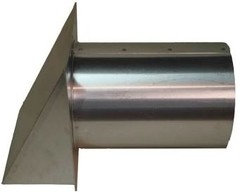
    The one I watched had the Heartland looking one plus some of those with the little louvers and one with just the flapper under the hood like the aluminum one above. I don't care either way,( don't mean that ugly) just thought I'd point out the easiest opening ones so dryer might be more efficient.

  • 8 years ago

    Megan Morrill-Denton, several people here offering a lot of good points. Since you've cleaned your ducting, I can't think of any other ways to improve drying, and you've mentioned you really don't have any length to the outside except 10" - though if you've got the 'corrugated' type ducting, straight galvanized might help a little. You've also mentioned that the ducting to the dryer isn't kinked... so I've no further help on that other than to suggest you use electric foil tape when you connect it to the dryer - we only had the clamp initially and it did a poor job of holding the duct leak-free to the dryer.

    You mentioned a cold floor... we had that issue - the whole room actually. When we pulled out our old dryer, I noted cold air flooding from the corrugated duct coming out from the wall (actually placed a baggie over it, taped it close to keep cold air from flooding into the room - the baggie stayed puffed with air until we replaced the outdoor vent cap). I can't really speak for the Heartland style outdoor vent other than to say once we installed that, I noticed the baggie no longer inflated with air from the outside. That was a plus for us. We previously had the slat-style outdoor vent. As dadoes mentioned, it needs painted if you don't want it to stick out like a sore thumb (it's rather big), and I used a can of plastic approved Krylon Fusion paint from Lowe's for ours.

    Keeping any part of your ducting and vent cap clear of lint is important, and reduces fire hazards - sounds like you are doing this. Good luck on your situation.


  • 8 years ago

    Every one has given you good vent information but there is a lot of information missing to be able to diagnose your long drying times.

    1) What brand and model is your dryer?

    2) What do you mean when you select "Full Cycle"? Is this the Auto cycle or a timed cycle?

    3) How long does it run before you have to add 30 more minutes to the timer?

    4) Did this recently start happening or has been this way for a long time?

    These questions need answers before anyone can determine what might be happening with your dryer.

  • 8 years ago
    it's a whirlpool about 8 years old cycle is a timed cycle a full 70 min then I run it for another 30 min it was a new issue this fall
  • 8 years ago
    thank you I will do that
  • 8 years ago

    In case it's a gas dryer make sure the room is well ventilated by opening a window a bit.

  • 8 years ago

    She said above that the exhaust ducting is approx 10" to the exterior, presumably straight through an outside wall, so seems unlikely she can't visually confirm that it's not clogged. Or maybe she means that the duct between the dryer and wall is 10" and hasn't checked/confirmed the distance from the wall connection to the outside hood .... ?

    Megan, Whirlpool produces two dryer designs ... one has the lint filter on top, the other has it at the front inside the drum. Which is yours?