Software
Houzz Logo Print
alex_alubaidi

Is My Rubber Tree Dying??

8 years ago
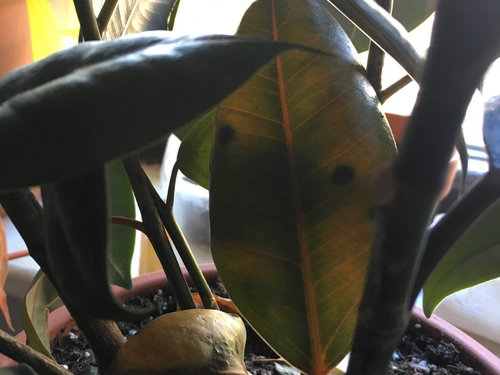
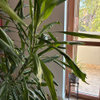
So I bought a rubber tree plant about two weeks ago. It sits next to a west facing window in a terra-cotta pot. Since I’ve had it, I’ve watered it twice. I’ve noticed over the past couple days that it has dropped about 10 or 15 leaves (near the base) and some of the larger leaves are yellowing and getting these ugly dark brown spots? Initially I thought it was just in shock from getting re-potted. I’m very confused because every time I water it the soil seems pretty dry, but I’m wondering now if I’m over watering? I was so excited to get this plant because it’s one of my favorites and I really want to fix the problem before it spreads. Here are some pictures. I’d love it if someone could give me some advice! Thanks

Comments (3)

  • 8 years ago

    So you've purchased a tree two weeks ago and have repotted it, watered it twice, and the plant is shedding leaves. Where do you live? Did you repot or pot-up to a larger size pot. leaving the root/soil mass generally intact? Have you fertilized? Provide details if you did, please.

    There are MANY cultural considerations that could be causal. A chill during transport. A reduction in light levels between nursery/greenhouse and the point of sale, or between point of sale and its new home. Over-watering is a distinct potentiality, with the added soil mass used when potting up or repotting an exacerbating factor. A reduction in light levels can cause the preexisting level of salts in the soil solution to become too high. IOW, a plant that functions at luxury level fertility status in bright light and warm temps can have difficulty taking up water in lower light and cooler temps. This can cause a drought response, which includes shedding of leaves - especially older leaves and the leaves most proximal to the growing tips of branches (apices). You might be under-watering if the soil has become dry enough to be hydrophobic (water repellent). When this occurs, water can run across the top of the soil without penetrating the soil, and run down the space between the soil mass and the pot wall, barely contributing to soil moisture existing immediately prior to your watering effort.

    Your best bet now, is to review the cultural conditions you're providing and make sure you're not asking the plant to deal with what it's not genetically programmed to tolerate. IOW, start working toward finding the sweet spot. Once you understand where that sweet spot is, easily 90% of the plants (excluding cacti and succulents that actually need a consequential and usually dry dormancy) will suddenly become much, much easier to maintain in a high state of vitality.

    How specific and applicable the advice you get depends in large part on how much information there is 'to go on'. One thing that is certain, you need to manage your watering schedule and methods to the best advantage of the plant, which is an important discussion in its own right.

    Al

  • 8 years ago

    Thanks for the response. I live in Chicago. We haven’t been getting a ton of sunny days lately, but I have it sitting next to a west facing window. so it gets an okay amount of morning light almost every day. When I re-potted it, I used an all purpose potting soil (miracle-gro which i know isn’t the best choice, but it was leftover from another plant i re-potted, and i potted up to an 8” pot. I didn’t damage the root ball or anything when I re-potted. It was actually quite a smooth process. The plant looked like it had been watered maybe only a day prior, and I guess I made a rookie mistake and watered it again the next day. I have not fertilized it since I got it. One thing I know for sure is the soil isn’t hydrophobic. You’re definitely right, I do need to work on finding the sweet spot. I checked on it this morning, and it’s growing a new leaf, which is giving me a little bit of hope. Just sort of concerned that it initially dropped so many

  • 8 years ago
    last modified: 8 years ago

    Since it's a small pot, try watering over the sink and flushing the soil as you water; then, when the pot stops draining, tip the pot at a 45* angle and not how much excess water exits through the drain hole. You can even employ a wick, which, when combined with the tilting, will rid the pot of a lot of excess water. See B + E as a visual aid to what tilting and a wick can do. The dark area represents a 'perched water table', which is water that remains in the pot to fully saturate a layer of soil, and will not drain by the force of gravity alone. IOW, it needs your help if you are to rid the pot of the excess water.

    If the pot is manageable enough, and for the more proactive crowd, you can water/flush over the sink, then start moving the pot up and down over the sink. You'll note on the reversal of direction from downward to upward, some water will exit the pot, and, the faster the movement and sharper the reversal of direction, the more water you can convince to leave the pot. This later trick borrows from Newton's First Law of Motion.

    You also might find these threads helpful:

    Ficus trees in containers.

    Trees in containers for the long term.

    Al

Sponsored
Whisler Home Improvement
Average rating: 5 out of 5 stars9 Reviews
Franklin County's Committed Home Improvement Professionals