Software
Houzz Logo Print
rmverb

Floor contracting/large gaps

8 years ago
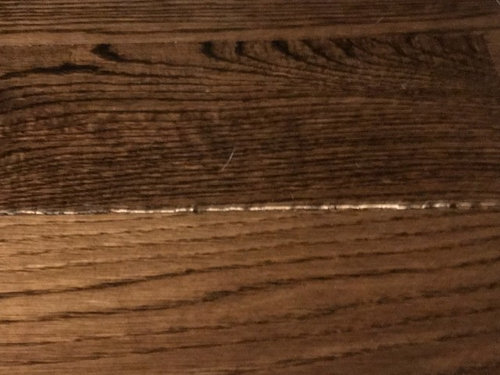
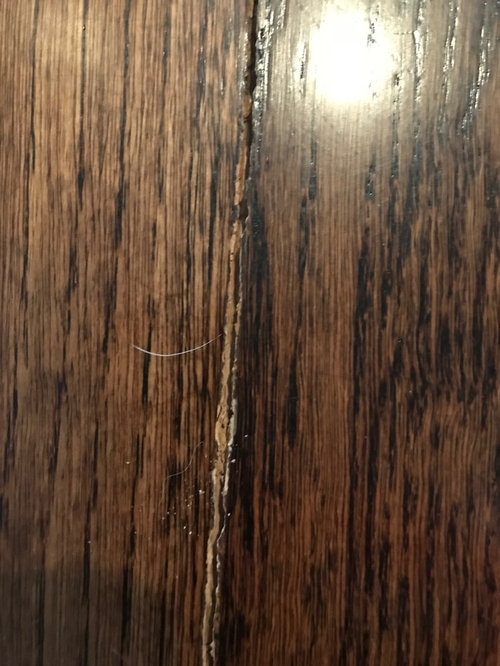
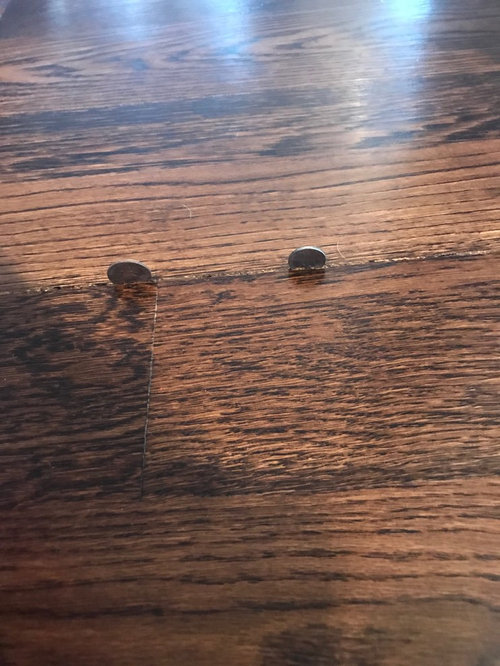
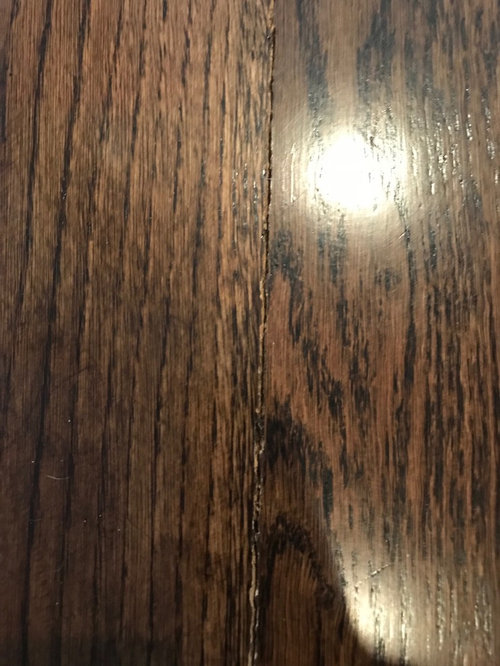
We recently built a new home and these floors were finished in August. We’re seeing large gaps between several boards with the poly cracking abs peeling. I understand that some degree of contraction/expansion is normal but what is acceptable? This seems excessive and we think there might be an issue with the floors. Any input would be greatly appreciated.

Comments (17)

  • 8 years ago

    Inside air is TOO DRY! August can be the most humid time of the year (some parts of N. America are 90% humidity!!!! Winter air (heating systems on for months on end) is DRY!

    The home is now to blame = heating/cooling system owned and operated by the homeowner. Please look to your HVAC HUMIDITY CONTROL (ie. You have a humidistat attached to the HVAC system = $6K upgrade when the house was built).

    You should be able to add humidity at the touch of a button on your control pad for your heating system. If you do not, then you do NOT have the humidity control needed for hardwood floors.

    Buy a hygrometer at HD for $30 and start taking measurements. You want to be ABOVE 35%. In fact you want to be IDENTICAL to the humidity found in August (could be as high as 65%). That's your goal. To mimic the indoor humidity found on the days leading UP TO and the day the floor was laid.

    Good luck. This is lack of humidity. The wood and the finish are doing everything 'normally'. Nothing is wrong with the floor nor the finish. Lack of household humidity is the problem. Fix the humidity (for the next 80 years) and you fix the problem you are seeing now.

  • PRO
    8 years ago

    It doesn't look excessive to me. Note that some gaps appear to have been filled originally. Now that the floor has seasonal shrinkage, the filler is crumbling, making it look like the gaps have grown more than they have.

    What is the indoor and outdoor humidity? If you don't know, buy a thermo-hygrometer.

  • 8 years ago

    If you don’t know your humidity levels, and don’t have a system to manage them, that’s the problem.

  • 8 years ago

    To be honest I don't know if we have a humidifier. I will investigate.

  • 8 years ago

    If you don't think you have one....it means you do not have a whole-home humidifier (called a Humidistat). The portable "room" humidifiers won't work for very long. You can buy several of them ($199 each) and place them around the house (depends on how big the house is). This will "get you through" the winter. This is a short term fix - and a possible waste of several hundreds of dollars.

    You can call your HVAC professional (the people you purchased from and installed your unit) to come out and to give you a quote for adding the whole home humidifier.

  • 8 years ago

    If the house was done in August the floors should still be under warranty. I’d contact your builder.

  • 8 years ago

    It isn't the floors that are the issue. They are not "failing". The HUMIDITY levels are tooooooo low. That does not fall under "floor failure". It falls under "low humidity levels". And low humidity levels fall on the homeowner.

    If the HVAC system that was purchased (ahem....this decision was made WELL before the floors were chosen...cough cough) does NOT have the appropriate humidity control, it is not the fault of the floors.

    And the HVAC system isn't "failing" if it did not have the humidifier attached in the first place. The humidifier had to be specified and paid for (much, much more expensive model) months before the floors were chosen.

  • PRO
  • 8 years ago

    If the builder put in the floors and the HVAC then he should back the warranty of them. If the floors require a special humidity control and he wasn’t installing that, then he shouldn’t have installed those floors. I have never heard of anyone have a humidity system because they have wood floors (or for any other reason) and I know a lot of people with wood floors. Is that common in certain parts of the country because it isn’t in AZ?

  • 8 years ago
    last modified: 8 years ago

    Humidity control is required by all wood flooring manufacturers, all cabinet manufacturers, and all furniture manufacturers. Read your fine print. A humidifier in winter, and AC in summer.

    Wood is hygroscopic and will move quite a bit. That creates gaps in moldings, cracks in cabinets, gaps in flooring, and shrunken doors in winter. And sticking doors, cupping floors, warped cabinet doors, and moldings sitting proud in summer. If proper humidity isn’t maintained. That’s Mother Nature at work. And you have to tame her through Science.

  • 8 years ago

    Sophie is once again correct. Home builders often spend a little "here and there" and then cut costs "here and there". It all works out in the wash so to speak. Sadly, the HVAC system, being a LARGE purchase loses out because it is "behind the scenes". Out of sight is out of mind. The $6,000 humidifier rarely makes it into the final build. Simply because it is a big ticket item that is not "necessary". It can be left off the list without damage. You can't do that with a roof or plumbing or electrical. But you CAN do that with the HVAC.

    The appliances in the kitchen are often big and beautiful and expensive. They complete the look of the kitchen and therefore they get more attention than the HVAC system.

    It is simple economics. Low humidity is causing the shrinkage. Add more humidity and you will stop/reverse this trend. It is an easy (yet expensive) fix.

  • PRO
    8 years ago

    $6000.00? Where do you get that price from? I see the item below plus installation and it's a long way from $6000.00. Am I overlooking something?
    https://www.amazon.com/Aprilaire-700-Automatic-Humidifier/dp/B00K8FPSSG

  • 8 years ago

    Whole home humidifiers that are tied into the HVAC system purchased and installed by the HVAC company can be a $6K up charge. In Canada this is a normal up-charge.

  • PRO
    8 years ago

    Looks like one can get the whole thing with installation from Amazon for less than $600.00.

  • 8 years ago

    I agree it looks much better on Amazon. I wonder if the HVAC company will offer warranty if something like this is added to their unit.

  • PRO
    8 years ago
    last modified: 8 years ago

    SJ McCarthy is pretty accurate with the cost of a new humidity system of $6000. But this is typical for it being built into the home's HVAC system and not a stand alone purchase. Also, depending on the type of water you have, a water softening system may even be needed bringing the cost to around $8000+.

    The meter that Johnson Flooring Co. linked is the same one we use and provide to our clients.

    To answer your question, your flooring seems to be contracting from the low humidity levels as SJ pointed out. It is a very common occurrence in the winter months. They will expand once again when the humid summer months are upon us.