Software
Houzz Logo Print
rosefollyz5

'Little John' Callistemon or a dwarf grevillea

8 years ago
last modified: 8 years ago

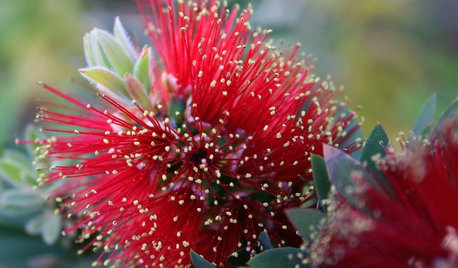
Much as I love roses, I am removing a thorny rose hedge that wants to grow too big for its position. There are plenty of roses elsewhere in my garden but just there I need something low growing, low care, drought tolerant, flowering, and thornless. I really like the look of 'Little John' callistemon which I saw growing at the Huntington. However I read that it grows 4 feet tall, though other sources say 3 feet. Two feet would be ideal for me. Would I be better off one of the dwarf grevilleas? Or would occasionally light pruning keep 'Little John' truly little?

Rosefolly

Comments (5)

  • 8 years ago

    I was told by the master gardner at Green Thumb that Little John is slow growing, so will stay small for a long time. I don't know how it takes to pruning. I will ask next time I'm there. I need to know, because I'm growing Little John myself.

    Rosefolly z5 thanked Jasminerose, California, USDA 9b/Sunset 18
  • 8 years ago

    I have a Little John that's about 10 years in the ground. It grows very slowly and it still under 3 feet tall - maybe 2 1/2. It's easy to prune and blooms frequently. I don't use fertilizer in my front yard because I have all drought tolerant plants, so maintenance is easy.

    Rosefolly z5 thanked lgteacher
  • 8 years ago

    I have a little john 8 yrs old and is 4x4x4 plus. I keep it trimmed back a little each year.

    They are slow to start but after about 4 yrs it seem to take off. I have others 1-4 yrs old and still small. I've read not to cut back into the wood as they won't grow new back. So I think if you kept it trimmed every year you would be ok. My city has put them everywhere and less then 2 feet apart but they keep them cut back like hedges in medians alongside parkways/streets etc.

  • 8 years ago

    I have about 20 of these, I love them. They take very well to pruning, and the growth rate is moderate. The largest one that I have seen is about a 4' cube, but that one had never been touched. You can likely keep them to 2-2 1/2 feet, although I wouldn't hedge them, I'd hand prune and retain some natural shape.

    You can cut into the wood with impunity; Callistemon have many epicormic buds (those dormant beneath the bark). This is a characteristic shared by many Australian plants.

    I find many Grevillia to be short-lived in the garden (5 years or so).

    And NEVER fertilize Australians. Australian soil has no phosphorus and the plants have evolved to exist without it. Even a trace amount will kill the plants. And I've never yet grown an Australian that needed supplemental nitrogen or potassium.

    Rosefolly z5 thanked Sara Malone Zone 9b
  • 8 years ago

    While Australian natives are adapted to very low phosphorus soil conditions, only a minority of them are truly P-sensitive. Others don't need it, but can tolerate it in the soil, especially if the roots have adapted to those conditions (as opposed to sudden fertilization) and depending upon the availability of the phosphorous (some soils have higher fixation levels, making the nutrient less able to be taken up by plants). Protaceae is probably the most sensitive to phosphorous (Grevilleas are included here), as are many members of the Rutaceae family. It is also seen in some Mimoaceae and Fabaceae.

    I have had to fertilize some Australian plants, but it needs to be done carefully and with the correct ratios for the conditions and species. Although they don't tend to die with some deficiencies of Nitrogen, Potassium and micronutrients, their growth rate can be slowed. Plants that are being grown in areas where they are likely to experience P-toxicity often respond very well to supplements of chelated iron or iron sulphate.

    Rosefolly z5 thanked gyr_falcon