Software
Houzz Logo Print
cristina_s37

Any help for my Camellia bush?

Hello,

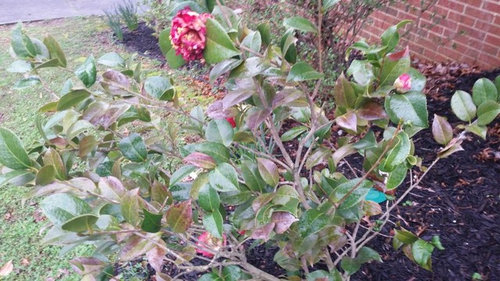
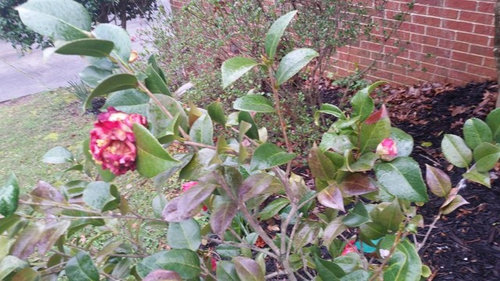
I am writing to ask for some help with a camellia bush which I got from Pikes a couple of years ago. I think this is its third Spring in my yard.

I had it planted in a flower bed in front of our house where it gets some afternoon sun (Atlanta area). Our lawn/garden guy planted it.

I am not sure what I did wrong right after planting - but in 2-3 years, it never looked good.

The first year it hardly had any bloom. Same last year - not much.

I remember I didn't really have it on a watering schedule the first year right after planting - so this might have been the problem.

I also never pruned it because I don't quite understand how.

I remember adding some Osmocote fertilizer last year around the roots - and this year it DID flower more.

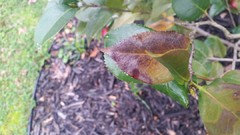
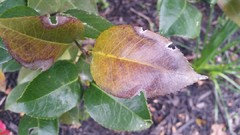
The problem is the leaves have always been rusty and the shrub is sparse and not looking very good. I saw some Camellias in planters at some outdoor mall in our area and I got downright jealous. :-)

Any ideas what I could do to turn it around?

What may have been the culprits since it was planted, considering I hardly did anything to it (kind of left it to get established on its own and grow like a weed)?

- Too little water right after planting (as it tried to become established)?

- Too little water, in general, especially in the hot Atlanta summers? We sometimes travel over the summer for longer periods of time.

- Planted in wrong spot (facing west, afternoon sun, Atlanta)?

- Too little fertilizer?

- No pruning?

- Maybe a disease?

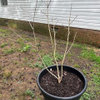
I attached some pictures from this Spring.

It is still blooming some but the the leaves bother me. It is also kind of sparse.

I adore Camellia blooms - so any help would be much appreciated.

Thank you!


Comments (9)

  • 8 years ago
    last modified: 8 years ago

    Luis_pr,

    Thank you so much for the time you took to write such a detailed answer.

    I will definitely use this great information to educate myself on how to restore my Camellia.

    Considering it was not planted in the best spot to begin with (faces west, gets afternoon southern sun), I wonder if I could get away with leaving it where it is for another year - while doing everything else right.

    Because there have been other things I have done wrong since it was planted - such as not following a regular water schedule during the first year and not fertilizing regularly.

    I want to start doing everything right including regular watering and fertilizing, mulching and pruning after it stopped blooming (which I just did) - and see if I can get away with NOT moving it in the back.

    I know it would do better in morning sun and afternoon shade somewhere in the back yard facing east, close to my hydrangeas and azalea bushes; but I want to give it another chance were it took roots before dislocating it.

    I understood moving it can be quite problematic; but then again, the location may be what she dislikes most so I may have to do it anyway.

    I also wonder whether these browning/rusty leaves show any sign of disease too - or it's just signs of distress / neglect /scorching...lack of nutrients?


    Thank you for letting me know that the soil I have it in is likely acidic enough.

    It is Georgia thick, dense, reddish clay. A pleasure to work with (sarcasm here). I bought a soil testing kit and I was going to check - but it will probably come out acidic.

    It did bloom more this early Spring but it ended up with flowers that were too heavy for the stems that carried them and they browned really quickly. Most recently I cut a few as they were too heavy and I placed them as fresh cuts inside.

    The fact that it still bloomed gives me some hope - but I need to get it back to some level of health because it looks sparse, yellowing and in overall poor health.

    It is also barely growing.

    Thank you again for any additional tips, do's and don'ts!

  • 8 years ago
    last modified: 8 years ago

    The leaf damage and the bronzing resembles that of sunburn. This eventually causes leaf drop and the sparse look that says 'should there not be some leaves in here?'. ;o) Bronzed leaves may recover but orangey/brown ones do not. These may also develop fungal issues.

    The soil "used to be" acidic when I was in GA so it should still be. I was not aware of locations in the area that were not acidic but you could always ask a nearby plant nursery and save some money.

    Camellias typically grow very slowly. Usually... with few exceptions. Maybe 1-2" a year here. They are not like roses, which throw canes more than a foot long "suddenly". Ha!

    Enjoy those blooms!

  • 8 years ago

    Well...I think it's going to have to be transplanted in my back yard then because I don't think it's going to make it with that afternoon southern sun blazing right on it.

    When I told my yard guy to plant it there I didn't know any better - but I am thinking HE should have.

    He could have maybe told me that this is not the best spot to place a camellia...but maybe he is not quite a horticulturalist... just a yard/landscape guy?

    I heard camellias do not exactly like being disturbed and transplanted.

    When might be the best time to do the relocation?

  • 8 years ago

    A few inches at a time is slower than usual for camellias.

  • 8 years ago
    last modified: 8 years ago

    "The" best time to move just about any plant is when the plant is dormant, meaning in the winter time, when camellias are semi-dormant. The number two time is in early Spring or late in the Fall. Moving as much as you can of the root system will help greatly. The small roots in the top 4" help absorb moisture so they are important. Try to move the shrub without breaking the root ball. Some people dig the hole first, water the plant the night before moving it and then move it with assistance of others. If it weighs a lot due to the soil, consider using a sheet to help move it. Once moved, add mulch again and maintain the soil as evenly moist as you can.

    See more planting info here:

    https://www.americancamellias.com/care-culture-resources/general-culture-requirements/planting-camellias

  • 8 years ago

    Thanks Luis too. I think I have not been watering mine enough. Perhaps Camellias are too fussy for me until I install drip irrigation.

  • 8 years ago
    last modified: 8 years ago

    Like many plants, they prefer the soil to be as evenly moist as possible so whatever you can do towards that end, it will help.

    One word of caution from someone with drip who managed to almost kill a hydrangea.... if the shrub is planted in soil that slants downwards, put the drip above the shrub, not below the shrub. Duuuuh! At first, I could not figure out then why it kept wanting more water even after I watered extra times with the drip. Oh, me! How embarrassing.

    An alternative to a single tubing: put drip in a circle or square around the shrub instead of on only one side of the bush. You can keep two parallel running drip tubings at least one foot apart (test and experiment) or more.

    Another drip warning: when the plant has just been initially planted, the roots only cover the diameter of the pot that the shrub came in so... in the summer of year one, also water manually from the camellia trunk's location outwards. Also, if the drip tubings are not close to the camellia root ball, a newly planted camellia's roots may not be able to get to the sufficient water from the drip tubings.

  • 8 years ago

    Good advice thanks!

Sponsored
Peabody Landscape Group
Average rating: 3.5 out of 5 stars8 Reviews
Franklin County's Reliable Landscape Design & Contracting
More Discussions