Software
Houzz Logo Print
thowell_stout

Blueberry Dieback?

8 years ago
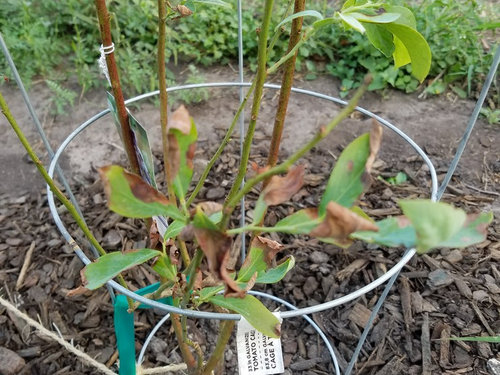
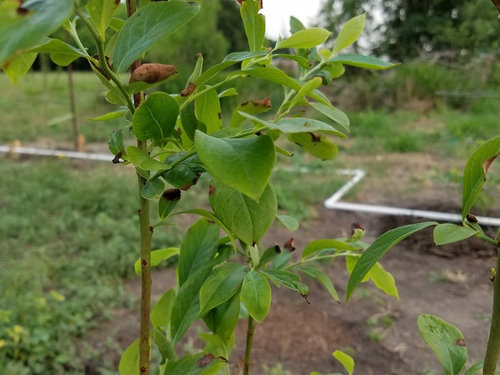
Based on the pictures, should I be worried? A little info: the blueberry bush was just planted a month ago. It was doing extrememy well. I did recently prune hanging branches because they were laying on the floor. I water once a week for a few hours (extremely small-slow stream out of pvc).


I am in south Texas. Yes it has been hot the last few weeks, but they couldn't t have browned that much that quickly due to heat? Maybe they are stressed (hoping that's it)?


Any ideas?


Comments (10)

  • 8 years ago

    There is a bit of a 'mystique' about growing blueberries that is quite unfounded :-) While they need an acidic soil, it doesn't have to be extremely acidic....somewhere in the 5.5 to 6.5 range is perfectly acceptable for nearly any variety. And nitrates won't kill the plant although it is not a highly encouraged product. Actually blueberries do not require a lot of fertilizing and are very sensitive to any over-fertilizing, regardless of product.......a rhododendron and azalea fertilizer is ideal, applied in spring, as is compost or cottonseed meal. What they really need is full sun and consistently moist soil. Once a week watering in TX may not be enough - soil in photo looks very dry.

    All this is supported by Fall Creek Nursery, the largest wholesale commercial grower of blueberry plants for the entire US. And by my own experience of many years both growing and selling blueberries in the PNW, where our soils are far from extremely acidic :-) But quite richly organic and consistently moist under most conditions.

    Thowell Stout thanked gardengal48 (PNW Z8/9)
  • 8 years ago

    The variety is powerblue. As far as either pH, I didn't think to do either, which I am now regretting.

    Forgive my amateur-ness. First time really taking the plunge and attempting to try my hand at gardening fruits.

    The soil is sandy loam, which is why I didn't amend the soil for better drainage or nutrients as the current soil drains quite well and should be acidic (maybe too much?). And that is exactly why I should have amended the soil, as I now read nutrients are washed away quicker due to the soil drainage.

    The water being used is well water.

    I'll make it my next task to check pH.

    Also, I have just fertilized once and it was with the fertilizer shown in the picture.

  • 8 years ago
    last modified: 8 years ago

    I just have a minute so I will post a link or two that should be climate appropriate for south Texas http://www.creekwoodfarmstx.com/home-gardener      and http://urbanharvest.org/documents/118591/5124168/Blueberries+2016+-+Edited.pdf/0b27eae4-2997-4072-a3cd-cb46fa2df1aa

    I am also a bit concerned about Powder Blue long term in south Texas depending on where you are in the state, as it is a 600 chill hour variety see texas chill hour map here http://www.creekwoodfarmstx.com/home-gardener

    sorry have to run now

    Thowell Stout thanked Ike Stewart
  • 8 years ago

    The first link doesn't work, but the second does and is very informative. It does sound like maybe I wasn't providing enough water. I will change that up (instead of once every 7 days, once every 5 days), and then go from there.

    I was just afraid to over water. I'd imagine during summer when the TX heat is hammering down I will probably have to water every 3rd day.

    Is it possible for drainage to be "too" good?

    I am not too worried about the chill time as well. We should get enough down here. It might not get super cold, but sub-45 during winter from evening to late morning is the norm. Of course, during the day it is back to the 70/80s. Gotta love TX

  • 8 years ago

    The problem will be those temperatures in the 70s negating those sub 45 degree chill hours. As to moisture using pine bark mulch will help with moisture retention

  • 8 years ago

    We grow southern highbush in southern California and use soil sulfur in the planting hole. We aim for a pH of 4.5. This is from our Agriculture and Natural Resources small farm advisor who taught our Master Gardener class about growing blueberries.

    You have a rabbiteye variety, which should take the heat, but still needs an acidic soil. You can use soil sulfur or cottonseed meal sprinkled on top and watered in. Once a week is not enough water.

    Thowell Stout thanked lgteacher
  • 8 years ago

    How often would you recommend doing either, soil sulfer or cottonseed meal?

    Also, I am currently trying an every 4 day approach to watering. I know it gets hot in Cali as well. How often do you all water?

  • 8 years ago

    Do a soil test before adding either sulphur or cottonseed meal. I wouldn't add anything other than mulch until the plant has fully recovered from transplanting and the effect of losing branches.

    You need to water when the soil in the root zone is dry. Low rain, high temperatures and high winds all cause low soil moisture, so the watering need will vary. Monitor the amount of rainfall you are getting and the moisture level in the soil and go from there. I grow mostly woody shrubs and perennials which need about an inch a week. I write down rainfall amounts on the calendar for each of the 3 large gardens I maintain (they are in 3 different cities!).

    When I water i give each bush a good soaking; when the water starts to, stand on the surface of the soil, I move on. This ensures that areas with tree root competition get as much as they need.

    You can purchase a moisture meter, but I generally just run a narrow trowel about 6 inches into the soil. That's the 6 inches where most of the roots are. If it looks dry, I water.

  • 8 years ago
    last modified: 8 years ago

    Do not amend individual planting holes for woody or other long term plants. Plant in loosened existing soil and then mulch well immediately afterward. You want organic material on top of the planting hole and not in it. The worst combination is an amended planting hole with no mulch. Amending of planting holes frequently has adverse effects on how water enters and exits them - university level trials have repeatedly found initial growth of trees and shrubs in amended holes to be less than control plants planted in the same plots without any amendments.

    As mentioned above fertilization is best undertaken after soils on planting sites have been sampled and analyzed. Particularly in those areas where soils vary from one site to the next, or even within the same site (for instance hilltops, hillsides and stream-sides often all have markedly different soils from one another).

    Effective pH adjustment is a long term prospect as each pH point represents an increment in the thousands - if enough chemical is applied during a short period of time to change the pH of a soil even one or two points then the involved soil community will be subjected to a massive chemical bombardment in the process.

    If you have continuing difficulties ask at your nearest USDA Cooperative Extension Service branch office for guidance.