Landscape Message: Apr 6, 2018
edit note: As usual, I intend to post excerpts from these Landscape Messages for general information. I know it's from Massachusetts but other New England states should have similar conditions. Please go to the links for further details.
-Claire
''''''''''''''''''''''''''''''''''''''''''''''''''''''''''''''''''''''''''''''''''''''''''''''''''''''''''''''''''''''''''''''''''''''''''''''''''
''''''''''''''''''''''''''''''''''''''''''''''''''''''''''''''''''''''''''''''''''''''''''''''''''''''''''''''''''''''''''''''''''''''''''''''''''
From the Cape Cod Region (Barnstable) Regional notes:
"The cleanup from the string of storms in March continues, the sound of chainsaws can be heard anytime it isn’t raining or snowing and sometimes even when it is. There are a large number of pitch pine, Pinus rigida that have been uprooted or have damaged crowns from the storms. The damage is likely to attract black turpentine beetle, Dendroctonus terebrans."
''''''''''''''''''''''''''''''''''''''''''''''''''''''''''''''''''''''''''''''''''''''''''''''''''''''''''''''''''''''''''''''''''''''''''''''''''
See the Winter Moth and Gypsy moth updates under the Insect section.
"Winter Moth: (Operophtera brumata) The winter moth population is at a record low! The 2018 outlook concerning winter moth caterpillar population numbers in Massachusetts is very positive for those of you in the eastern areas of the state accustomed to dealing with damaging populations of this insect. Dr. Joseph Elkinton, Professor of Environmental Conservation at the University of Massachusetts, Amherst, MA, has excellent news: data from his lab’s research locations in eastern Massachusetts suggest that this invasive pest’s population size is at an all-time low. In fact, the 2017 winter moth population was the lowest they have seen since studying and working toward the biological control of this insect for the past 13 years. The populations of winter moth are so low in Massachusetts at this time, that Dr. Elkinton’s lab and scouts for UMass Extension’s Landscape Message are having a very difficult (to impossible) time locating winter moth eggs to monitor egg color change, development, and hatch for the 2018 season."
'''''''''''''''''''''''''''''''''''''''''''''''''''''''''''''''''''''''''''''''''''''''''''''''''''''''''''''''''''''''''''''''''''''''''''''''''
"Gypsy Moth:(Lymantria dispar) The outlook for the 2018 season in regard to gypsy moth is significantly better than it would have been if Entomophaga maimaiga didn’t impact the gypsy moth caterpillar population in late June of 2017. At that time, many dead caterpillars were seen hanging from tree trunks and branches, killed by the fungus, which was aided by the wet spring weather earlier in the year."
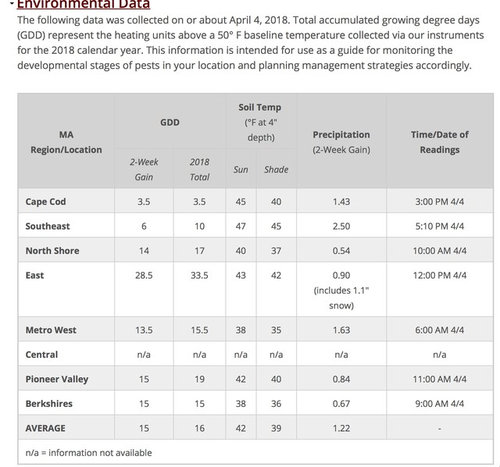
"Egg hatch for this insect is also not yet upon us, and occurs after winter moth egg hatch. Gypsy moth egg hatch typically occurs between 90-100 Growing Degree Days, using a base of 50°F and average temperatures. This is usually around the first week in May in Massachusetts, but variations in temperature may lead to early egg hatch in the last week in April."









Related Professionals
Mobile Landscape Architects & Landscape Designers · Pine Bluff Landscape Architects & Landscape Designers · Lake City Landscape Architects & Landscape Designers · Quincy Landscape Architects & Landscape Designers · Alexandria Landscape Architects & Landscape Designers · Edison Landscape Architects & Landscape Designers · Ardmore Landscape Contractors · Charleston Landscape Contractors · Chula Vista Landscape Contractors · Salinas Landscape Contractors · Panama City Tile and Stone Contractors · Pittsburg Tile and Stone Contractors · Kankakee Tile and Stone Contractors · Kingman Tile and Stone Contractors · San Diego Tile and Stone Contractors