Software
Houzz Logo Print
longwaygone

Vinyl Asbestos Tile?

8 years ago
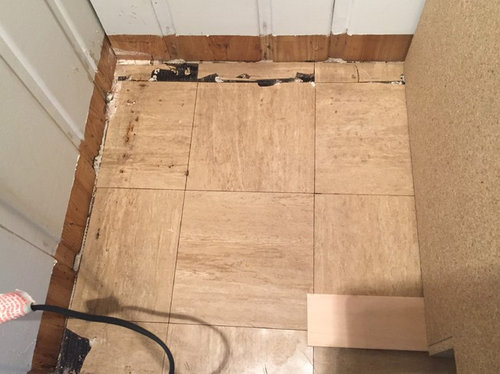
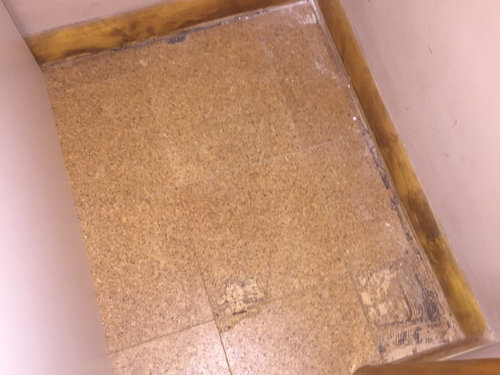
I was helping a friend do some work at their house (built in 1957), and I saw it had these two kinds of tiles. They are different, but I have heard that asbestos could be a concern. Does anybody know if there is a good way to visually identify these tiles?


Comments (18)

  • 8 years ago

    Go to the home center or a hardware store; there are home test kits for asbestos, about $10. Do your own test.

    Erica Leigh thanked tatts
  • 8 years ago
    last modified: 8 years ago

    I need to point out that there is no such thing as a "home test kit" for asbestos that allows you to make a determination. These kits involve you taking a sample and sending the material off to a test lab where you pay an extra fee for the analysis. It's impossible to make a visual determination about whether floor tile does or does not contain asbestos. If it were me, I'd use a local lab that's certified for asbestos analysis.

    Having said that, and looking at the apparent age of those tiles, I would say that the probability of those tiles containing asbestos is high because of how common it was decades ago. Even if they contain asbestos, those tiles are not a big concern if they aren't disturbed, sanded, or torn out. However, since there is some cracking at the edges, they are obviously deteriorating and it would be best to cover them with vinyl flooring if they are otherwise well-adhered. If they are going to be removed, be aware that the glue also could contain asbestos. Here is some helpful info: Floor tile removal

    And, finally, be advised that if the home is ever sold, you do not have to disclose materials that you only suspect are asbestos-containing, but you do have to disclose materials that have been tested to contain asbestos.

  • 8 years ago

    Don't touch them any more than you have to since they are cracking. Just place new floor over them.

  • 8 years ago

    Exactly, no concern unless you mess with them. Just cover them up and it's fine.

  • PRO
    8 years ago

    Cover them up .

  • 8 years ago

    If they are 9"x9", the probability of asbestos in the tile or the adhesive is extremely high. If they are 12"x12", it depends on the age.

    I wanted to have 12"x12" tile removed in my 1940 house, so I sent fragments out to a lab for testing. The test was more expensive than I expected (seems like about $130), but they confirmed that the tile was fine, but the adhesive had enough asbestos content to be a moderate hazard. I contracted with an abatement company and had both tile and adhesive removed. I also read multiple articles online about methods for encapsulation (sub-floor on top, self leveling concrete over the tile, etc.), but decided to bite the bullet and pay for removal by a licensed contractor.

    When they got done with the removal, the floor just looked like it was slightly dirty concrete. It was very easy to paint with standard concrete paint (paint flowed and adhered well) .

    Asbestos is not a hazard unless it becomes friable and then suspended in the air you are breathing. However, its very hard to do much work on floors without causing any dust.

    Bruce

  • 8 years ago

    A lot of folks here disagree with me, but I personally don't worry much about asbestos. It's a fact that the people who got asbestosis were those who worked in the industry. Casual exposure, IMO, is not hazardous as long as you take reasonable precautions.

    But as I say, my opinion is not a popular one, so if you're highly cautious, the safe solution is to call a pro to remove the tile. Note that this may be expensive. Thanks to the asbestos fear campaigns, abatement contractors pretty much have the field to themselves. When I had to do a similar job in a cellar a few years ago, almost every flooring contractor I called ran in circles crying "Asbestos! Asbestos!" It's OK, I understand, it's that liability thing.

    But if you're reasonably courageous (or in some people's view, crazy), you can safely do the job yourself, providing the tile is over a slab. (Don't try the following if the subfloor is wood.)

    Unless you're sure your tile and adhesive don't contain asbestos, your first step is to contact your city or county to find out how you can legally dispose of ACM (asbestos containing materials).

    Get yourself some Bean-e-doo. You'll probably have to order it. I suspect that it's nothing more than soybean oil at an insane price, and wonder if jugs of generic soybean oil from the grocery store might not work just as well. But I digress (as usual).

    You'll need to somehow protect the walls from the Bean-e-doo. I will leave this up to your ingenuity. Since I was working in a cellar, in my case, it didn't matter.

    Pour the Bean-e-doo on the floor and spread it around. I mean puddles, not just damp. The thick oil will keep any asbestos particles you free up out of the air and your lungs. Keep the floor wet the entire time you're working. Gently pry up the tiles with a putty knife, and dispose of them as your local laws require.

    Once you get the tile off, you'll most likely find that most of the mastic used to fix it in place is left on the floor. Just pour on more Bean-e-doo so the mastic is sitting in a big puddle. You'll need more than the stated coverage claims. I did an area about 10' x 25', and 5 gallons was barely enough.

    Let it sit and soak for a LONG time. I don't recall what the instructions say, just that it wasn't nearly long enough. I left it soaking for 48 hours, and I think a week wouldn't have been any too long. It has to stay liquid and pooled the whole time.

    After the oil has softened the mastic, go over the floor with a scraper. The mastic should mostly come right off. If it doesn't, let it soak another 24 hours or so. As the mastic dissolves in the oil, the result will be greasy black glop all over your floor. Soak it up with kitty litter or floor-dry, and dispose of it the same way you did the tile.

    Finally, you have to remove greasy residue it leaves before you can lay a new floor. I used lots of TSP substitute and clear water rinses with a wet-vac. If I had to do it again, and I hope I never do, I'd probably try the concentrated purple degreaser that restaurants use for their kitchen floors and parking lots.

    Back in the 1960s, I heard about another way to remove tile like this that sounds way easier, but is probably much more hazardous as far as dispersing any asbestos that might be in the tile or adhesive. I therefore present this strictly for entertainment purposes, mostly because it sounds like so much fun. (I haven't tried this myself. I'm crazy, but not quite that crazy.)

    All you need is dry ice. Get a big batch and spread it all over the floor. Within minutes, the tiles shrink from the cold, and pop off like popcorn. Supposedly more dry ice will cause the remaining adhesive to fracture and let go, too.

    But as I say, don't try this at home. :)

  • 8 years ago

    Or if you do, use adequate ventilation, since the subliming dry ice will fill the room with carbon dioxide and you'll be sitting there like the guys on Apollo 13, without even a square peg air filter to stick into a round hole to filter it out. LOL

  • 8 years ago

    I've used a clothes iron to remove individual and small sections of tile. Use a scrap of an old 100% cotton sheet over the tile and use the iron to soften up the mastic so you can use a putty knife/ scraper to peel them up. Let it get warm enough so you can scrape up the bulk of the mastic, too.

    The main concern with asbestos IMO is removing friable material like asbestos ceiling tiles. Floor tile, not so much.

  • 8 years ago

    It doesn't actually have to go to a hazardous waste landfill. However it does have to be handled properly. The friable asbestos (which tile is not) is Special Waste which can go to a regular landfill with special handling. Your tile can most likely go to the curbside with proper labeling. Residents can remove their own asbestos without a license (if you hire a contractor they must be licensed, but you can do it yourself), and it must be double bagged and clearly labeled. In this case NON-FRIABLE VINYL ASBESTOS TILE should do it. If you have questions or want to confirm that, you can call your waste hauler or your state env. agency.

  • 8 years ago

    I agree that it's imperative to contact your state or local environmental authority as requirements vary and not all landfills are authorized to receive this kind of waste. Simply bagging, labeling, and setting it out is not adequate in many areas. Here is what my county authority requires for vinyl asbestos tiles:

    "If you choose to remove asbestos yourself, you take on the legal liability of ensuring proper bagging and identification of
    asbestos debris, correct transport (in a covered vehicle), and disposal ONLY at disposal sites or transfer stations licensed
    to receive such waste."

  • 8 years ago

    > If you choose to remove asbestos yourself, you take on the legal liability...

    As I see it, this is bad policy. It wouldn't surprise me if the legislation was written in consultation with (or even by) an asbestos abatement contractor -- who of course wants the business.

    They think they're urging you to use a contractor, but they're wrong. All this does is prompt DIYers to quietly bag their hazardous waste, unlabeled, and put it in the trash.

    What they should say instead is something like this:

    "If you choose to remove asbestos yourself, see our removal guidelines at [link].

    "Double-bag the waste, using heavy duty trash bags of at least 2 mil thickness. Suitable bags are available for sale at City Hall, 789 Main Street. Label the bags clearly, describing the contents.

    "You can dispose of the waste for free at our homeowner's hazardous waste collection site, 12345 Bedrock Road. It's open Monday through Friday, 1 pm to 7 pm. Please note that this site is strictly for homeowners disposing of limited quantities of asbestos, heavy metals, leftover paint, pesticides, household and automotive chemicals, and other potentially hazardous materials. It's not for commercial use, and please don't dispose of your non-hazardous waste there."

  • 8 years ago

    Actually, I am quite familiar with the origins of that regulation and, even though I didn't work for them, I was aware of the public process that resulted in it. It was not written at the behest of private contractors.

  • 8 years ago

    ...and to think we rode our bikes barefoot and without helmets. Another case of asbestos hysteria. Simple care taken with removal and proper disposal is all that's necessary.

  • 8 years ago

    ...and some people would have benefited from wearing helmets. I don't see this as asbestos hysteria. There's nothing wrong with minimizing risk. I don't think anyone is calling for folks in moon suits to address this.

  • 8 years ago

    > It was not written at the behest of private contractors.

    Glad to hear it!

    IMO it would still be better to offer DIYers positive help with doing the right thing, instead of trying to scare them into using a contractor. Unfortunately, it's not too common for the folks making the laws to think that way. Making not-so-vague threats is cheap; establishing and running public hazardous waste disposal sites takes money.

  • 8 years ago

    Even if there is no abatement contractor involved, there are still at least 3 parties: the home owner, the waste hauler (could be the city, or a private one), and the landfill (which may or may not be connected with the waste hauler). Everyone has responsibilities under federal and state law and regulations. They're not always easy to find and figure out, and the homeowner has the worst of it, because they don't deal with it day in and day out.