Software
Houzz Logo Print
fritzgarden

to rototill or not

8 years ago

after reading an interesting article on compost in the Times Mag and elsewhere with regard to rototilling I was thinking I'd forego the idea.

Last year I took a mattock to the roots from nearby trees that were just under the surface of the garden. That was because I couldn't figure out why our small garden wasn't outputting like it once did. Everything was getting choked for water. Took days.

So this year I was thinking I'd rototill which I haven't done in years.

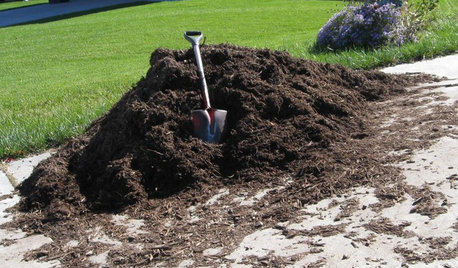
But after reading the above article, I'm thinking perhaps I'd be better off with dumping a lot of composted horse manure and clean topsoil on top instead of rototilling.

I suppose, eventually, the tree roots will find their way up again. But, in the meantime.

Anyone with small garden experience like this care to weigh in ...... or other?


Comments (14)

  • 8 years ago
    last modified: 8 years ago

    Rototilling is like anything else... it's a 'tool' that a gardener can use if it's the best way to accomplish a task. Are there other methods that can be employed? Yep... as long as the goal is reached, one's choice to rototill is their own to make.

    That said: there are pros and cons, and it's best to weigh these in making the decision. As an example... I borrowed a tiller to initially make my first beds. Why? Because it was fast and efficient. The tiller though, was never again used in those beds, but until my amendments have their long-term desired effect, they get turned by hand with a digging fork. I now have enough beds started that I don't use a tiller anymore to start new beds. I now just use a pick-mattock and a digging fork to expand 2 - 3 beds each year.


    Edit... Dave typed faster... also... what he said.

  • 8 years ago

    unfortunately, very small yard with little if any available movement do to sun, trees, blah, blah, blah. Isolation trench might be workable.
    I have expanded one site a little this year away from trees.

    But I guess I'll compost, clean topsoil and till this year and see what comes.
    Thanks.

  • 8 years ago

    If the tree is in an irrigated area, like a lawn, the tree roots will be close to the surface, and compete with crops. In fact, once you have a bed near a tree, the tree roots will try to migrate to the surface. Because that's where the water and nutirents will be. In that case, you have no choice but to till. As noted, in general, there are reasons to till and not to till. But when you're competing with tree roots, the choice is already made. That article never referred to competition by tree roots.

  • 8 years ago

    Ditto on Dan's comments. If you do nothing, the tree roots will continue to siphon away water & nutrients from your garden... and few vegetables can compete with a hungry tree. Adding any fertilizer will only increase the problem, since the roots will aggressively seek the increased nutrients (spoken from experience). Tilling will at least break off most of the roots at the surface, and give the vegetables a fighting chance.

    Note that depending upon the tree, this may only be a temporary reprieve. The tree may eventually form deeper roots below the till depth, and quickly send feeder roots up into the cultivated soil to replace the ones lost. I have been in a multi-year battle with a mulberry tree which has done just that; every year, I find a few more finger-width roots. It even sent roots up into pots which I had placed on bricks! At some point, you may be forced to choose between the garden, and the tree.

    And about mulberry roots... the tree is located on a corner of my property, about 70 feet from my home. The roots have reached to my foundation, and sent up shoots!!! When the lot on the other side was being excavated for a new home, they dug up the bright yellow mulberry roots... which reached all the way to the culvert, 100' away! Conventional wisdom is that tree roots extend to the drip line, but obviously some trees haven't learned that yet. ;-)

    If the mulberry was producing berries, I might tolerate it... but it is a male. I will be taking that tree down this year, as soon as the ground dries out enough to allow access. That will allow me to extend the garden further, into the area presently dominated by the tree.

  • 8 years ago

    the trees are at least 30' from the garden, but make their presence known.

    One is on the other side of the garage that has a cement platform that I guess isn't deep enough to be of any help.

    The other 2 are tall and not likely going anywhere soon.

  • 8 years ago

    Some trees are worse than others about roots. Bad ones are mulberry, sycamore, silver maple, and even english walnut. One of my walnut trees sends out a root about the size of a garden hose at 8 inches deep and 60 feet and more probably if allowed.

  • 8 years ago

    Well, he found roots just under the surface with a mattock. So the roots are there. The question is what to do about them. Till till till.

  • 8 years ago

    Trees are enemies of vegetable farming. Nothing good comes out from under a tree.

  • 8 years ago
    last modified: 8 years ago

    ...except my hammock ;-)

    Wayne you are so right about Mulberry tree roots. I have 2 "Paper Mulberries" (fruitless) which are the best shade tree for hammocks (even Thomas Jefferson said so) but they have huge gnarly roots which hide well underground and go for very long distances.

  • 8 years ago
    last modified: 8 years ago

    If you want Paper Mulberries, come on over and take a few. They're an invasive species here in Tn. I've been beating them back for a decade. Those roots travel miles lol. And new trees constantly spring up from those runners. I'm almost rid of them from my property, but the neighbor decided to let them grow along a hedge row and top them for fuller growth. His 'hedge' is just 25' from the edge of my property, I'll be pulling those stupid things the rest of my life. Blink, and they've grown 3'! I've even considered digging down 3' and putting some sort of sheet metal barrier lol.

  • 8 years ago

    How bad would a Pinus strobus be? I did break a few small roots at one end of my garden about 30’ from a mature Eastern White Pine.

  • 8 years ago

    rented a Mantis XP today. Much more efficient than the smaller Mantis I rented last time. Layered 3-6" of composted manure on top and chewing thru.

  • 8 years ago

    the spiders have made their presence known again.
    would a buried 1/8" rubber pond liner prevent spider roots from showing up next time around?