Software
Houzz Logo Print
bclay29

Japanese Holly Rapid Decline

8 years ago
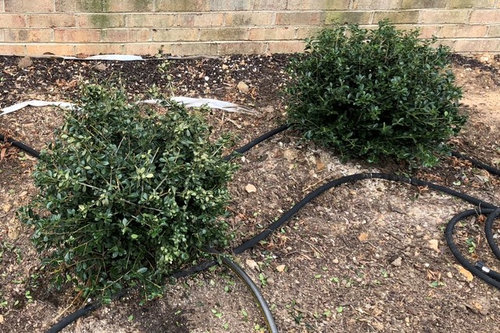
About one month ago, I purchased six Ilex crenata 'Green Lustre' Japanese Hollies (3 gallon). I installed them all as foundation plants, dug the planting holes 2x wide, amending the soil with a little compost, and loosened the rootballs prior to planting.


Just last week, one of the six began to rapidly drop leaves, and turned from a deep shiny green to a pale, dull olive color. I have been carefully watering them about once a week - being sure to soak the rootball without overwatering. The soil and rootballs have been moist, but not wet, between waterings. Do you suspect the shrub just is dying from transplant, or is it something potentially worse in the soil like Black Root Rot (Thielaviopsis)? I have a 100% guarantee on the shrubs, but don't want to replace it with another if the same thing will happen again.


Thank you for any insight.


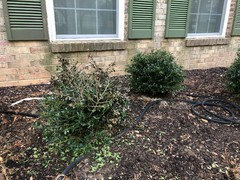
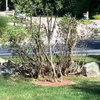
Sick shrub (left), healthy (right)


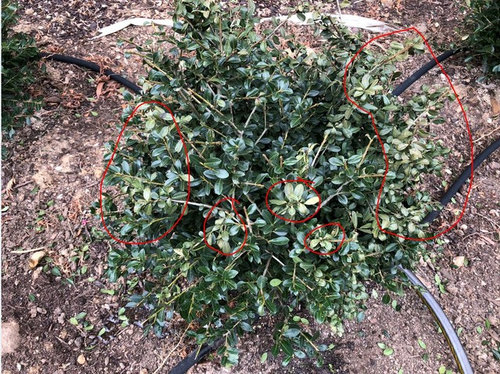
Areas of sick shrub that have turned olive and dull. This has spread to the top half of the plant since this photo was taken 3 days ago.


Comments (8)

  • 8 years ago
    last modified: 8 years ago

    probably just delayed cold damage

    otherwise, overwatering

    I've seen these self-seeding in parts of Maryland, so they should be easy to grow


  • 8 years ago
    last modified: 8 years ago

    Individual branches dying off under damp conditions could be a water mold (such as Phytophthora) infestation, which like many shrubs this species can get. Unless the plants were kept in quite clean situations at all times before you bought them they perfectly well could have become infested before final purchase. In my area many plant sales yards have dirty puddles and other classic sources of infestation present, including watering wands being habitually plopped onto pavement or soil between uses - instead of hung on hooks.

    And if this material happened to have been grown in the South and shipped up to where you are, water molds are a huge problem in southern production operations. Because water molds love hot and wet conditions (this is why most kinds of evergreen rhododendrons cannot be kept alive in the Deep South, even when shaded and planted in raised beds).

    To find out if there is a pathogen at work and which particular one it is, take samples of affected parts to your local USDA Cooperative Extension branch office, see what they can do for you. (You will have to be able to appear there during their weekday open hours).

  • 8 years ago
    last modified: 8 years ago

    Thanks...when I said over-watering, I could have further elaborated to say that is the proximate explanation, with the ultimate one being that the over-watering caused one or more root rot organisms to gain free reign. There's basically no reason to be drip irrigating a shrub like this, with the weather we've been having.

    But you see these all over the place in the mid-Atlantic...wild like I said, and homesites from the lowest classes to the highest...and throughout various commercial plantings. Yes if stressed by whatever, they will get a bit of branch dieback, but it certainly isn't killing them. (the people worried about the wild ones probably wish it did) The plain old "ironclad" Rhododendrons you cited are way more susceptible to it.

  • 8 years ago

    Wetlands can have factors present that result in plants there not being infested, that might rather often have problems in cultivation. Peat bogs for instance can offer "clean" growing situations provided by the sphagnum. And have to be cool enough for the peat moss to grow and the peat to form in the first place.

    The one wild living Japanese holly I know of in my area is sticking out of a floating peat mat. I've also read that the repeatedly mentioned stand of wild star magnolias in Hokkaido - if still extant - is growing with Japanese holly in a peat bog.

  • 8 years ago

    Thank you all for your comments. I agree on not needing the drip irrigation. It seemed like a good idea at first, but after noticing how long the soil stayed wet, I stopped using it and switched to a weekly soak with a regular hose on trickle.

    It could have been overwatered, I tried to be very attentive to NOT doing that by digging down and checking first. The challenge with my clay soils is they always stay between moist and wet, but the planting soil from the nursery pot dries out rapidly. I did my best to shake the nursery soil away before planting.

    Here is a current photo - the decline continues unfortunately. The damage looks to have been done, and when get the replacement shrub I will really hold back on supplemental watering. I'm hoping this shrub was a fluke and not something I did wrong.


  • 8 years ago
    last modified: 8 years ago

    "The challenge with my clay soils is they always stay between moist and
    wet, but the planting soil from the nursery pot dries out rapidly."

    This just underscores why, when planting container stock grown on soilless mixes, you really need to break up/splay etc. the root mass, at the same time you check for circling roots. See other discussions here about this on-going "hidden crisis" in American horticulture LOL. Where's 20/20, Dateline NBC, etc. when you need them.

  • 8 years ago
    last modified: 8 years ago

    Japanese hollies, especially the Helleri, Soft-Touch, etc, lower growers are very finicky about soil. They need excellent drainage, and a bit of shade. They are coming up all over the woods now, but I see them mostly on slopes. Could be your plants were rootbound too, and did not get watered enough initially.