Software
Houzz Logo Print
cercis47

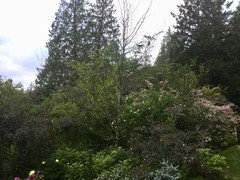
Tri color Beech not leafed out

8 years ago

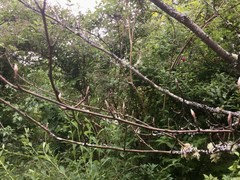
Usually well leafed out by now. Buds look viable but still tightly closed. What gives? Strange gardening season here in Seattle.

Thanks for any reassurance!

Comments (30)

  • 8 years ago

    We have a good amount of this here thanks to some late frosts. how about Seattle this year?

  • 8 years ago

    Mine is in the same state. It means nothing. Just a late spring. My tricolor beach is the last tree on my property to flush each spring.

  • 8 years ago

    Well, starting the grieving process even though the buds still look alive. No leaves yet, not even one. I check every day and no change. Davidfromdetroit, has yours leafed out yet?

  • 8 years ago

    Yes Cercis, mine did leaf-out. I might give yours another week and if no progress, make funeral arrangements.


  • 8 years ago

    ALL trees in the greater Seattle area should be fully leafed out by now. An established beech hedge up the street from me is looking in fine form! I would suspect that there is something amiss with yours, cercis. We did not have any unusual weather conditions through either winter or spring (in fact, winter was extremely mild). I wonder if it is feeling the effects of last summer's prolonged drought...........

  • 8 years ago

    Dang...

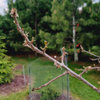
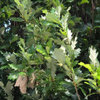
    Here are two photos I took this morning. Ever hopeful..

  • 8 years ago

    Hmmmm.....the buds DO look viable. Have you tried picking one off and opening to see what the tissue looks like?

  • 8 years ago

    Looks pretty normal to me not dessicated or discolored.

  • 8 years ago

    One test is to break one of the buds open. Is it dry and dead, or moist and alive. If it is moist and alive at all, your tree is alive.

    That of course kills off one of your buds. But it will solve your quandary.


  • 8 years ago

    Among other things European beech is drainage sensitive, can die (and topple) unusually quickly if soil conditions not right. For instance a 'Rohanii' grew at my place for many years, only to die completely one year. No idea what happened.

    I left it in place to see how long it would take to go over, after maybe a couple years - if that - it was on the ground.

  • 8 years ago

    Just visited a client's garden today with a stunning tricolor beech in full leaf. So the OP's tree is entirely out of sync with what is going on with other similar trees in the same general area. Without seeing to confirm, I would suspect something a bit more serious going on than just a delayed leafing.........

  • 8 years ago

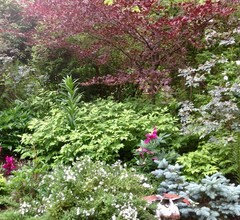
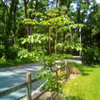
    “Entirely out of sync” - yes, for sure. Below is a photo of the tree on May 24, 2015. What you don’t see is a Kolkwitzia next to it in full bloom really popping out the inner pink of the Beech (she writes as she holds back her tears).

    Weirdly, the buds are still “moist and alive” and some are even swelling but I don’t have much hope for it anymore. Will wait til winter to cut it down as the rest of the bed will resent the tromping around that will require.


    Thanks for all your replies even though they were pretty depressing. Always hard to lose a tree, isn’t it?

  • 8 years ago
    last modified: 8 years ago

    Japanese maple cultivars do this also, that is the tree has apparently been shut down by something but young twigs and unopened stem buds are still not dried out and crispy. Maybe if you cut a branch and take it to the King County Cooperative Extension office (during open hours) somebody there can actually tell you what specific phenomenon is involved. If not at the time of your apperance then later.

    (If it appears after you talk to them it was an attack on the root system, as is often the case when the tops of plants fail suddenly then they may need samples collected from that part of the tree).

  • 8 years ago
    last modified: 8 years ago

    When my root-knotted Fagus 'Rotundifolia' died, per Embo's characterization the buds and stems looked surprisingly normal after it was clear it had died. That one is late, even as beeches go...Wyman says leafing out at least 2 weeks after other cultivars IIRC.

    Given the epidemic of serious issues in container grown stock (AND some B&B stock grown from container stock) I would say unless you know you fixed the root system before planting it, that could be involved in its death. Mine took almost 10 years to die from the problem. Dug it up with my front end loader and the roots had basically been growing in a tangled bowling ball configuration. Made me absolutely sick. Especially if you knew the hassle I'd gone to, to obtain that plant! So it seems beeches might have an ability to 'coast' for a long time with terminal root circling. Mine was B&B but I bet the grower had planted a highly circled container in his field.

    I aggressively fixed one of my 'Dawyck's and a by a couple years later lateral roots spreading straight out tangentially from the trunk were visible. This is now 4 seasons later so it is thickening up quite a bit. In a garden where the water table is alarming high almost everywhere, I reckon seeing something like this is the ONLY sign the roots are growing correctly. It had hardly grown the first 3 years, which I took as a sign of something wrong.

  • 8 years ago

    I agree, David -- my Japanese larch needed surgery on girdling roots after it was several yrs old (I know, my bad), and later was satisfied it was successful as numerous BIG surface roots grew outward in different directions.

  • 8 years ago

    Pretty much given up on it but will not cut down until fall. Very sad....

  • 8 years ago

    davidrt28 I suspect I made such mistake with my tri-color beech last year. I planted "ball" right out of container. Do you suggest to replant it now, or wait for fall to come? It looks nice and healthy right now, but I think it can grow faster.

  • 8 years ago

    beng12 how did you do surgery? Complete replanting, or at the place? and when? thanks!

  • 8 years ago
    last modified: 8 years ago

    Definitely wait until fall.

    You really have to play it by ear. Examine root system, find tangles, and cut them or if you are lucky just unwrap them. But you can't cut too many...I've overdone it and killed some things before. It's tricky to find a balance. Although I "cured" my 'Dawyck Gold' above, I did it to my 'Dawyck Purple' last fall and might have over done it. It seems to be hanging on by a thread now. Ken's link might have more suggestions.

  • 8 years ago

    Thanks Ken & David; I thought I need to completely replant it (trees are very young; remove from soil, clean roots, and plant again), but after some research I think it is better just remove top soil and trim roots if needed, in fall.

    Some authorities advocate to plant grafted trees with graft union below surface that's why I did that. My Tri-Color is grafted. reason is this: you graft it to make it indeed grow, on a short few-inches rootstock. Or maybe on large rootstock, but then you reroot rootstock again, making it 3"-4". The idea is that to make scion grow fast. And then, by burying graft area below surface, you hope that scion will start its' own roots, and will become true specie on its' own roots, and for some species it is important.

    Another reasoning is to save graft union during Winter & Summer. Yes, some nurseries advocate that especially for fruit trees.

    But I saw on Internet pictures of huge trees (meter in trunk diameter) with visible graft union above soil and root crown above, looks amazing.

    For example, I planted few peaches in May, too deep, with graft union about 4" below surface, but replanted properly two weeks later, with roots slightly above the soil. All are leafing now, even (late) flowering.

    So, I thought I need to do the same surgery with Tri-Color Fagus, remove from soil, wash roots, trim, plant again; but will see in fall if I need that. I planted with graft union below surface (I don't even know where graft union is); if I am lucky and it has nice outward roots then nothing to do.

    Thanks!


    P.S.

    I am in Toronto (York), Ontario, our government lists it as Zone 6b, although we may have few days in Winter below 30 C.

    P.P.S.

    Since I am in Zone 6... I planted Morus Macroura (Pakistan Mulberry) and Morus Nigra (King James) let's see :)


  • 8 years ago
    last modified: 8 years ago

    "Some authorities advocate to plant grafted trees with graft union below surface that's why I did that."

    seems like a bad idea to me for most hardy trees and shrubs

  • 8 years ago
    last modified: 8 years ago

    You can plant at normal the normal level at first, gradually fill in over the union during a period of some years in order to attempt to induce the scion to form its own roots - I wouldn't entirely bury the union right off the bat. All the more so because some material I see on the market here has a few inches between the top of the existing root system and the graft union, even though it is what would presumably be considered a basal graft otherwise.

    Best time to cut roots is end of winter, not long before spring bud break. This spring bud break is what induces the growth of new roots out of cut root ends. Roots cut in fall on the other hand are doing to sit there in a damaged condition all winter, until spring bud break.

    Spring: new roots are formed

    Summer: existing roots grow some

    Fall: existing - undamaged - roots grow a lot (60% of the annual increase in length)

    Winter: plant hibernates

  • 8 years ago
    last modified: 8 years ago

    "gradually fill in over the union during a period of some years in order to attempt to induce the scion to form its own roots"

    But with a caveat that increasingly grafting is being done expressly for some beneficial/desirable trait expressed by the rootstock. This is even done in the PNW with IIRC lawson cypress grafted onto 'resistant' rootstocks. (which have been disclosed as just other lawson cypresses, so of course those plants [still fail[(https://www.houzz.com/discussions/chamaecyparis-lawsoniana-on-disease-resistant-rootstock-dsvw-vd~4711310) in the southeast! They are only resistant enough to survive in their native climate.)

    In that case you would not want to start rooting the scion!

    This is even true of beeches in North America, with at least one nursery grafting European cultivars onto American rootstocks. (Though I would wonder about the origins of even those Fagus grandifolias...here in MD I doubt if one from say, Vermont rocky uplands would thrive in MD bottomlands, even though I have wild Fagus near my house that withstand periodic light flooding. There's probably quite a range of adaptation within that one species. )

  • 8 years ago

    Some variegated plants simply cannot survive on their own roots. 'Variegated' => no chlorophyll. If they survive then they won't be so much 'variegated' (will have some greenish chlorophyl). Definitely such plants need 'green' rootstock above surface (to have chlorophyl convert light into sugar if I am not mistaken). Example: cactuses. But I am not very sure about trees.

  • 8 years ago

    Fagus Sylvatica 'Roseo Marginata' (European Tricolor Beech) listed here (nursery in Ontario, Canada; mail order; worldwide shipping):

    http://www.hortico.com/roses/view.asp?action=show&productid=8311

    45mm trunk - CAD$670
    tiny 60cm tree - CAD$66

    Listed as hardy to zone 4.

  • 8 years ago

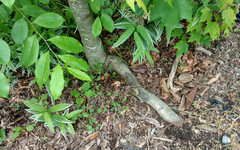
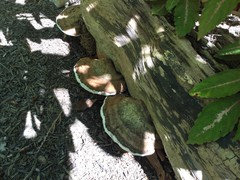
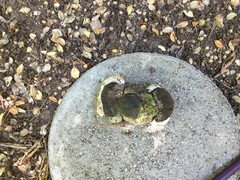
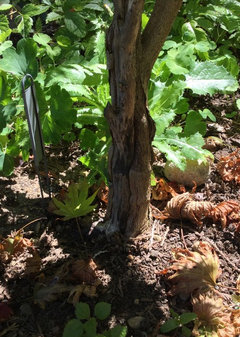
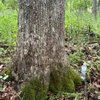
    Back to my original post: I am wondering if the demise of my Tri Color Beech was from Honey Fungus as I am pretty sure this is what is causing the prolonged death throes of a Japanese Maple I previously posted a question about. The young maple is split at the bottom of the trunk with a blackish area and covered in white. This bed was the site of an old Big Leaf Maple we had to cut down due to it’s proximity to the house. The stump also has black areas overlayed with white. The photos are of the trunk of the Japanese maple, the mushrooms on the maple stump and a piece of something I hacked out of the bed. The bed is planted with quite a few ferns, astilbes, azaleas, etc. are these in danger also?

    I haven’t been able to been able to get close to the beech yet due to the summer planings around it, but will examine this fall. I did notice that the some of the neighbor’s Thudercloud Plums have leafless tops (these are quite large trees) as does my Seiboldii Magnolia. Could this be a sign of infection?

    oh, dear.....


  • 7 years ago

    I know this is rather late to the party, but wasn't sure if you know, that to give your tricolor beech the best chance & less stress, one shouldn't underplant it & minimize walking underneath it (sensitive roots to at the surface). This was advice of a local horticultural professor, who brings a class to my garden to see my full grown tricolor beech each spring. Best of luck to you, hope you were able to save your tree. They are really magnificent!

  • last year
    last modified: last year

    Is your Tricolor Beech still alive, six years after your post? My Tricolor Beech was palnted last year and has very tight buds for late March. Worried....

  • last year

    Of course mine are alive, both, 6 years after initial post. By trunk thickness about 3x-4x thicker. Look slightly different, one is slightly weeping.


    Trees love very deep watering first 2-3 years, once a week. So that their roots will grow deep (for water).


    Last Summer I didn't water it at all.


    Toronto, Canada.