Software
Houzz Logo Print
hzdeleted_35844888

Sugar Maple diagnosis requested.

8 years ago
last modified: 8 years ago
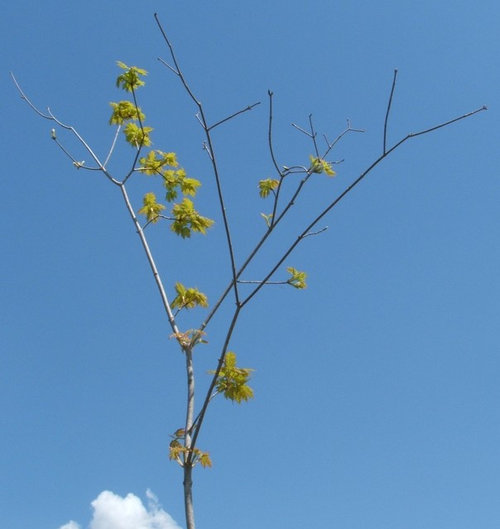
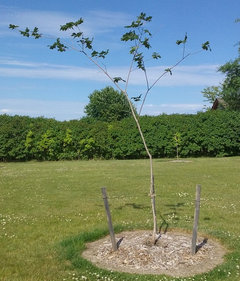
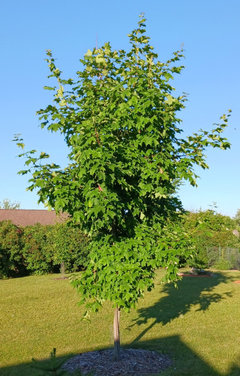
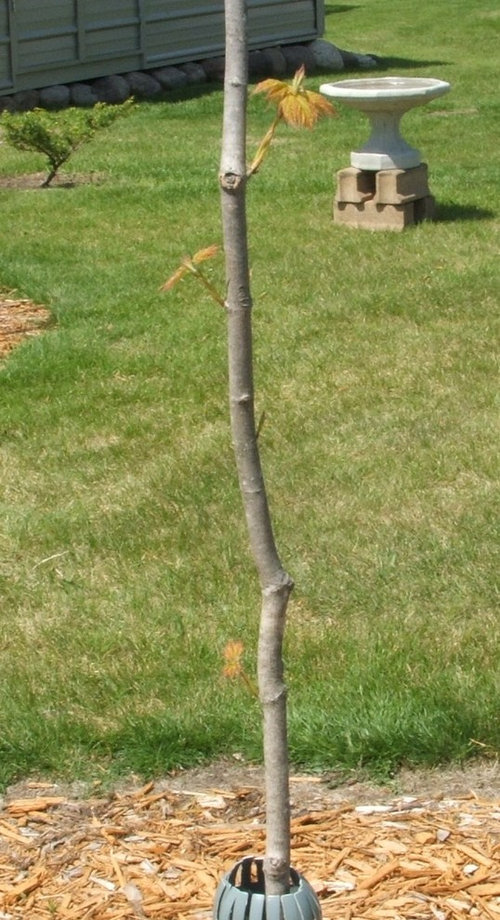
I noticed a few branches on my tree had winter buds like the rest of the tree but then didn't have bud break with the warm weather. The buds that have started growing seem extremely vigorous and healthy. There are new branches sprouting from the base of even the healthy branches and some new shoots coming out from the trunk.

The tree was in the ground since a year ago last fall and I raised the root ball a year ago in March, so this season will be it's second full season in the ground. A few of the unresponsive branch tips are dead brown under the bark but further down the branch it's sort of a dryish green under the bark and there is a few new buds starting about half way up the branch.

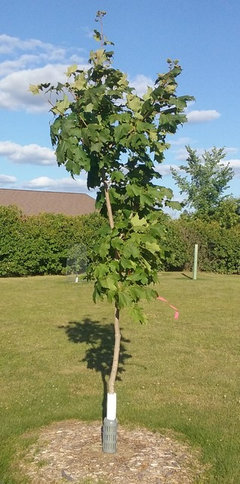
Should I prune things now or give it more time to see if other parts come alive. Any ideas of what might of happened? We did have a hard winter but this is a zone 3 tree. Most of the dead is on the larger "Y" branch in the foreground of the first picture and I'm thinking most of that one should be subordinated anyways. The left side in the first picture with most of the leaves is what I would call "the main tree".


TIA.

Comments (48)

  • 8 years ago
    last modified: 8 years ago
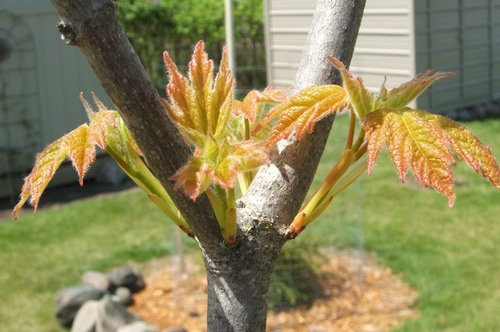
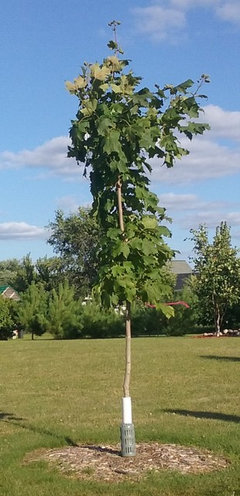
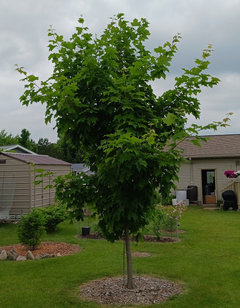
    This next picture will give a better idea of tree structure. The lower right branch is the one in trouble, however the main leader at the top looks dead and a few branch tips on the branch above the lower one on the right look dead also.

    oh yeah, that cluster of new shoots in my second picture above is where the sick branch meets the main trunk, if that means anything.

    I'm glad it came back at all so maybe it will be 'out of the woods' now that it made it through another winter.

  • 8 years ago

    since a year ago last fall and I raised the root ball a year ago in
    March, so this season will be it's second full season in the ground.


    ==>>> i would call that a transplant last spring.. one year in ground ...


    the vigorous growth lower down indicates to me.. that the upper parts are probably dead ... or close ...


    but i would leave the dead stuff alone for now ... who knows.. maybe its just late ...


    second pic.. i would probably rub out 2 of those breaking buds ... in relation to what might end up the live one ... in other words ... leave the two that might replace the dead one ...


    i would also plan on removing the ones coming out in the first few feet of the trunk.. in a few years ...


    right now.. every leaf is a food making machine.. and your roots need the food ...


    and finally.. i dont recommend digging it up again.. lol ...


    what happened ... you bought too big for instant gratification perhaps .... and it was STRESSED .... big time .. and the redo on the planting didnt help ...


    next tree .. buy half the size ... and by now.. it would have been bigger than this one by the end of this summer ...


    ken

    https://www.youtube.com/watch?v=LUvzzEtNevY


    User thanked ken_adrian Adrian MI cold Z5
  • 8 years ago

    Yes, exactly, one full summer in the ground last year.

    I too thought I should wait a while longer but Acer saccharum is a new type of tree for me so I thought it best to get a second opinion.

    There's the beginning of some new buds about half way up the dead branch and they don't seem to be progressing but it's our first day of real heat @86d so things could still happen with more warmth arriving I suppose.

    I'll watch it and trim those extra shoots as recommended.

    The tree is still small so pruning a few small branches & tips won't be evident in a few years anyways and size probably wasn't as much of an issue as the abuse I gave it getting it planted correctly. Turned into a real train wreck for some reason but again I'm glad it's alive for another season bc it was a gift and I'd hate to tell my friend I killed the tree he gave me. :-))

    No worries, I won't be digging on this one anymore. lol!

    Thanks!

  • 8 years ago

    There are so many sugar maple seedlings in my yard, I can't see. Want some? :)

  • 8 years ago

    To tell you the truth beng, I think I could sell every A. saccharum tree I could pot up. I was at WM the other day and they had 3ft A. rubrum whips selling @ $25/ea. Could probably get $50 for A. saccharum. How many can you get into a bundle? :-)

  • 8 years ago

    We've touched on this subject before, sugar maples in west central mn. It's a crap shoot. My experience is...your experience is typical.


    If you think trees read books, raise your hand. If you think temp is the only factor in hardiness, raise your hand.


    I know what winter in central ottertail county was like last year. You got winter dieback. Other factors involved? Hard to say.

  • 8 years ago
    last modified: 8 years ago
    Wayne,

    It is true that I am nearing the west most border of Acer saccharum native range BUT it is still it's native range. And having to remove a few branch tips and possibly one thin branch after an extremely long harsh winter, is really not that big of a deal. In fact, pretty normal in this part of the world.

    And look, I chopped the tap root of a 8' tree, during hot weather, with the leaves still on, then brought it into an entirely different soil type, and fall planted in an open, sunny, windswept area. And then dug it up again the following spring! (because I felt I had planted it too deep). The tree, by all rights, should be dead.

    So just for others reading this thread, I wouldn't call my experience 'typical' by any means. I see plenty of nice examples of this tree around the country side.

    Most maple trees, like Acer rubrum and saccharinum, under the same duress, would've had the entire top die and then start up again from the roots the following season. I've seen that happen many times to novice planters.

    To me, Acer saccharum has showed remarkable resilience and adaptability under duress (torture) and I wouldn't hesitate to choose this type of maple over some of the soft maple varieties mentioned, if I had my druthers.

  • 8 years ago

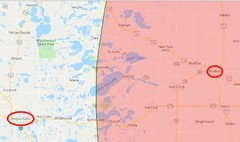
    Interesting link showing native range for Acer saccharum:

    http://www.plantmaps.com/nrm-acer-saccharum-sugar-maple-native-range-map

    Central Ottertail county is the cut off, although there are a couple outlier areas in North and South Dakota. I'm about 35 miles inside native range and Fergus Falls is about 20 miles outside. So Central Ottertail county (battle lake on center line) could definitely be iffy with this tree.

  • 8 years ago

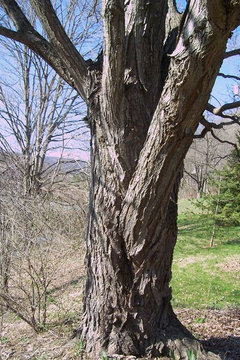
    Thanks, Bill -- saved the detailed range map. Here's one of mine in early spring:

    User thanked bengz6westmd
  • 8 years ago

    We've gone around on this. Take that map out to the tree and give the tree the lecture.


    You show a map that covers a significant porion of north america. You're within 50miles of the edge. Where winters can be brutal and the differemce between suvival and success could be wind protection.


    You keep fussing with the plant and lookig at books. Find the people in the area with experience and pick their brains.


    User thanked waynedanielson
  • 8 years ago

    "Take that map out to the tree and give the tree the lecture."

    I wouldn't be the first: :-)

    https://www.youtube.com/watch?v=Z-tSrilrUI0

    But I understand what you're saying. Dealing with a little winter kill is a routine thing in this part of the world and can be somewhat frustrating at times. That's why I don't zone push anymore.

    Main thing is, I just wanted to expound a little on my tree's history so others reading wouldn't think it was your standard tree nursery purchase. And the map was just for fun.

    beng, nice!

    Do you ever make sugar?

    How old do you think a tree like yours is?

  • 8 years ago
    last modified: 8 years ago

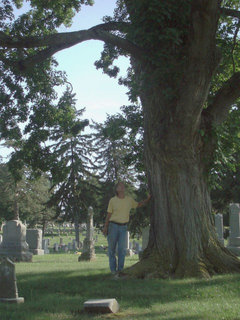
    Never made sugar, but a couple springs back I trimmed off a long-reaching branch. A week later I noticed the end-cut was dripping. Couple weeks later it was STILL dripping slowly. My guess is ~60 yrs old for all 3 on my lot (including the one behind-left in the background). Here's a beauty in a PA cemetery, which may be a century old:

    User thanked bengz6westmd
  • 8 years ago

    Thanks beng, nice trees!

    When talking about boundaries where native ranges end, It's no coincidence, when you look at the natural topography of an area, why that happens. Western and Southwest MN has always been considered a distinct change to the prairie lands, similar to that of Dakotas and Nebraska and many towns in MN use the slogan "where the prairie meets the forest" or something similar. Below is a map of MN during pre European settlement that shows why some trees end at certain places.

  • 8 years ago

    I'd say definitely winter die-back. I have some sugar maples that are bigger than yours (2.5" diameter trunks) that are showing this, Bill. Could be a lot of reasons for it. Lack of snow the first half of winter. Desiccating winter winds at the worst time. Maybe just the right combination of weather extremes during winter in our state.

    User thanked mntreegrower
  • 8 years ago

    Non standard nursery purchase?


    Talk to me about maackia amurensis, magnolia seiboldii, corylus colurna, acer pseudosieboldiana, pseudotsuga menzeizii f. glauca, pinus cembra, thuja koreana. I can show you all of the above growing within 30 miles of wadena, and have been for more than 10 years.


    I fully understand the heartfelt travail of trying to garden in the land between z3 and colder than a ....never mind. Could be worse...could be north dakota.


    When in doubt, go with known hardy material. You'll get little argument from me there. Where i will digress is in what can be grown reliably.


    My source for inspiration: absaraka, nd. It's where ndsu has a research arboretum. Check out the ndsu releases. Also morden research center, out of canada. There was a hardy plant research project that was supposed to be in development near brainerd...but a) i don't know what ever happened to it and b) the principals in this were from the balmy southland of the twin cities. What do those folks know about cold hardy anything? Once again, i'll cite swedberg's in battle lake, chippewa gardens in brandon, and lake country in ottertail as having a selection to compare with just about anything the twin cities has to offer.


    If you want small seedling type things, especially in evergreens, check out itasca greenhouses.


    I currently live in a part of the world somewhere between z5 and z7. Old maps say 5, and in the five years i have lived here, 2 winters concyr. New maps say 6. With wind protection and reflected heat, i have a few z7 rated things going on 4 years. It's a whole new world.


    I have sugar maples like there is no tomorrow. Largest are larger than 4' diameter. I haven't made sugar...have made syrup. It's kinda like growing your own tomatoes...it tastes so much better. I know there are folks around dalton and new york mills who make enough syrup to host open houses in season.

    User thanked waynedanielson
  • 8 years ago

    "Non standard nursery purchase?"

    Yes, it was a 'woods dug' that I got from a friend, from his dads old place, south of Leader MN. Not a purchased cultivar, or anything from a nursery, is what I meant.

    I'll just wait until summer and whatever doesn't send out shoots, I'll prune. The tree is near the bird bath and I noticed today, the birds are using the dead branches for a perch, seemingly while waiting their turn, so at least they'll be put to some use in the meantime and the poop can't hurt. :-)

    mntreegrower, Yes, desiccating winter winds have been a problem here. There are hardly any trees, almost prairie like, caused by devastation from a tornado. Plus there's farm fields a short distance beyond that enhance the problem.

    I've lost count on the number of trees (30+?) I've planted in the yard over the last 5 years but of coarse this all takes time. I've also done a couple of mechanical things to help soften the wind so conditions are improving but still have a ways to go.

    It was a bad winter, so I can be glad the extent of the damage was only what it was.

    The sugar maple has already pushed twice the volume of leaves that it had last year and the leaves are larger so it appears the tree is making progress. I'll try to update later in the summer with a report and picture.

  • 8 years ago

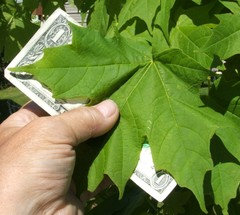
    Just a quick update: the leaves expanded to 3x the size they were last year. That tells me the tree is healthy. If it wasn't there should be other signs of problems. I'm just going to write it off as 'winter kill' on those few branches but I won't be in any hurry to cut anything off for a while.

    This is what the tree looked like in July last year after all the abuse. Didn't think it was going to survive. Leaves were probably 2" across and sparsely distributed.

    Looks way better already and it's only May. The branches are still elongating so by July, we should see much progress. :^)


  • 8 years ago

    I’ll bet it smells pretty good right there, Bill.

    User thanked indianagardengirl
  • 8 years ago

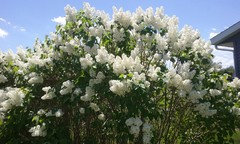
    Yeah, lilacs on both sides of the yard. When the breeze blows your way, it's like being in a perfume factory. :-)

    Late frost took the lilacs before bloom last year so it's like the bushes had extra energy to make up for it this year. West side of yard, north 1/4 of hedge, is all white,

  • 8 years ago

    I find that range maps are never exact. Most maps would suggest that I’m actually just SE of the range of sugar maple in my state, Maryland.

    However, there are documented native stands of sugar maple not only in my county, but in Anne Arundel County to the east, And I even believe there are some native trees within the city limits of Baltimore, so even the powers that be know that the range maps are not exact.

  • 8 years ago
    last modified: 8 years ago

    Correct, I would call the maps more of a generalization. And when you see all the little dots added, that are supposed to be "outlier areas", what's with all that? Sometimes I think we try to be a little 'too scientific' about everything.

    I did find it interesting that the native range followed the biome of the area very closely which is not surprising at all.

  • 8 years ago

    Trimmed up the branches while still in season. Tree is full and leaves are full sized. Staked it after a strong T-storm wind loosened it a little in the ground. :-o Apparently the lush top made it more susceptible to wind/rain. That was a few weeks ago and it already has 'stiffened up'.

  • 7 years ago

    Update:

    In case there was any doubts about the ability for this tree to endure and thrive in our z3 environment. We just had one of the worst winters in memory as far as wind and cold with winter burned pine trees as a result. My native Acer Saccharum came though with no apparent winter damage. Absolutely no dead branches and every single bud on the tree has swelled and all are beginning to unfurl their leaves. So happy dance occurring at the present time! I'll get a picture of the tree later when it leafs out.


  • 7 years ago

    My sugars survived surprisingly well this winter too while the trees I planted around them did not. Nearby young Freeman maples and hackberry all have some varying degree of branch die-back. Heritage oaks have some sunburn on the trunks and are flowering heavily. But the sugars look exactly like yours. Very healthy and ready to grow.

    User thanked mntreegrower
  • 7 years ago

    I noticed my Paper birch is leafing out sporadically with numerous bare twigs and branches. Who would've thought a zone 2 tree would do that. A smaller Betula papyrifera, 20 ft. away didn't sustain any damage.

    Everything else in the yard looks fine but the snow cover came just before the real cold weather hit so none of the roots saw below zero temps.


  • 7 years ago

    Looking good! After the weather decided to warm up and 2" of rain. I made a couple of cuts to prevent formation of a competing leader. Still a windy location but it's what I got. :-)


  • 7 years ago
    last modified: 7 years ago

    Looks good, but maybe a target for strong winds. I had to loosely support a similar looking pond pine for a few yrs before the trunk strengthened enough to stay straight w/o support.

    User thanked bengz6westmd
  • 7 years ago

    Trunks fine. Hope the roots hold.

  • 7 years ago

    Perhaps it's just the camera angle, but I see a lot of wide open space behind this sugar for more trees, Bill. :D

    User thanked mntreegrower
  • 7 years ago
    last modified: 7 years ago

    About as good as it's going to get for this season. We've already had a couple of nights in the mid 40's.

    Not here but out in the countryside, we've had spotty frosts around the middle of August. It didn't end the growing season but.....shades of things to come.


  • 6 years ago

    The A. saccharum came through the winter with no winter damage or dieback and every bud is breaking with healthy new growth. Established roots seem the be the game changer in all the trees I've planted. Just thought I'd share. :o)


  • 6 years ago

    Thanks for the update. All branches look good.

    User thanked bengz6westmd
  • 3 years ago
    last modified: 3 years ago

    8-14-2023:

    Final seasonal update.

    14' 3" tall. Nice thick leathery full-sized leaves. The trunk is 3-1/4" caliper @ 6" up and the bark is thickening up nicely, although I may sunscald tube it one more year JIC.


    :-)

    eta: Original postdate May 16, 2018.

  • 2 years ago

    6-24-2024:

    Time for a seasonal update. ;-)

    6 full seasons in the ground, this season will be 7.


    After last year's drought conditions, this tree really took off.

    Probably helped that we got soaking rains more than once in May and June.

    Some of the new growth is 2 to 3 ft. long.


    I lost a few of the new branches and top leader (hardly noticeable) during a windstorm.


    The lower branches are growing downward.


    Trunk is 4" caliper at 6" up from base.


    If I bought this tree today from a seller and had it planted, you're talking a $1500 tree. :-))


    :-)

  • 2 months ago

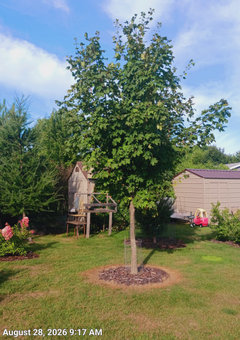
    8-29-2026:

    Just a few comments about this tree, growing in sandy soil in West Central MN.

    It certainly would've done better in a heavier, clay loam soil (where I dug it from). And probably would be appreciably larger by this time than it is now.


    As far as where they grow good as opposed to where they're hard starters with less performance, it most likely has as much to do with the soil type as it does the winter weather conditions. I can attest; they are plenty cold hardy to zone 3.


    Mine, started near 10 years ago as a 7ft. whip, hasn't had any sign of winter damage or late start on spring growth, since those first couple of years talked about earlier in this thread.

    One thing I can say, it hasn't had the continuous seasonal growth, as it would if the soil was more moisture retentive (consistently moist), as a loamy soil type would be.


    But I like the tree, it's healthy and doing well. I water it occasionally mid-summer bc it doesn't like dry and I try to keep the nutrient levels in the soil to be acceptable without getting too carried away with the idea.


    So, with that said, mine doesn't exhibit any of the common symptoms. or defects seen on the sugar maples planted around this town, that were planted along streets that use road salt or left to dry out for months of no rain, by owners who say you don't have to water established trees or the trees that only get lawn fertilizer (with possible 'weed and feed' included) for nutrients.


    Now remember, I'm talking about deep sandy, nutrient poor, leached out, glacial till here and sugar maples are a bit fussier about their growing conditions than that, so, if you want it to work, you have to satisfy a good portion of these requirements.


    If you want to have a tree like this, in the conditions described, it's not a plant it and forget about tree but if you're the type that takes reasonably care of your yard and learn about its growing requirements, it can work for you too.


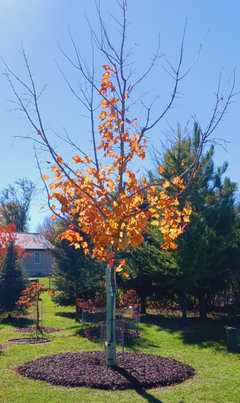
    Guessing 18ft. tall but it did take a beating from the hailstorm we had earlier which reduced its size some. Just some FYI.

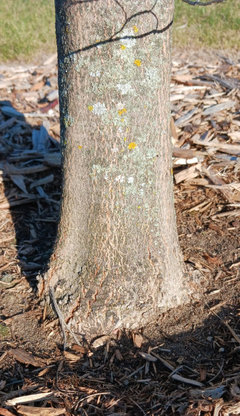
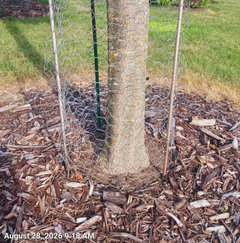
    5" caliper. Good root flare and I'm planning expanding the mulch circle for next season and adding some compost. 😏

    >>>>>>>>>>>>>>>>>>>>>>

  • 2 months ago

    Fantastic tree! You should be very proud of it. Looks like it’s got some lichens on the trunk

  • 2 months ago

    Thanks, L!

    It arrived at my place with a nice covering of thick moss around the base but that slowly receeded down to only traces of that now, but it has endured some plenty dry weather at times and hasn't shown any dieback on the branches since just after this thread began. 😌

  • 2 months ago
    last modified: 2 months ago

    The provenance of sugar maples is important -- their locational origins. Bill, seems like your S maple is from your general region. Wild ones on my lot and adjacent slopes suffer from hot temps w/various extents of leaf browning going on right now (amount of rain doesn't seem to matter much). My guess is that during the little ice age -- 1600s to 1900, they migrated in numbers southward in the Appalachians from New England into this area, and now the prodigy of those are reacting adversely to the now warmer climes. Other planted sugar maples in this area I see that don't suffer are prb'ly originally from more southern provenances.

  • 2 months ago
    last modified: 2 months ago

    I just love the texture and form of sugar maples. For me, maples transport my mind to a verdant, exotic world ha ha. Same with oaks. So wish I could grow a big maple here

  • 2 months ago

    Actually, L, the area where I dug this one was a wonderfully lush and green (it's the soil). ;-)


    beng, mine was dug about 8 miles further north and 20 miles further east from my place.

    The difference that's most visable is again, the soil there.

    12-16" of a blackish, clayish loam on top, with inches deep of leaf littler covering, and coarse, stoney, brownish wet clay below for I'm guessing for many, many yards deep.


    I'm surprised about the heat intolerance there, considering a 3-9b zone classification.

    Could it be the tighter clay soils there?

  • 2 months ago

    Bill, it's the same bottomland soils that honeylocust, Chinese elm, dawn redwood, bur oak and tuliptree have grown to over 50 to almost 70 ft tall in 20 years. The sugars across the road and continuing up the slope, and north in the low areas all show the same symptoms to varying extent, tho every now and then one seems perfectly happy & green. Just a small genetic variance would be my guess, like different people having differing tolerances to cold or heat.

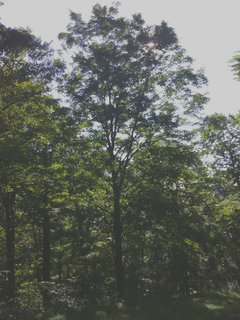
    Here's one across the road that seems to avoid any browning. Sorry, poor lighting conditions.

    And these wild sugars around me do not turn good colors. only rather poor yellow-browns -- prb'ly due to the earlier leaf degradation. But the sugars soldier on, with wild seedlings/saplings everywhere.

  • 2 months ago
    last modified: 2 months ago

    Thanks! beng.

    I did manage to stave off any sapsuckers on this tree again this season, not one hole, I hope I can continue extending that record, at least until the tree gets more size to it. ☺️


    PS: There was an earlier post about this tree so, I'll just add the link CLICK HERE in case anyone is interested.

  • 2 months ago
    last modified: 2 months ago

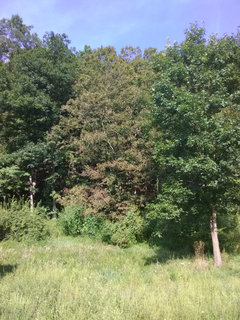
    Below is a pic of one of the examples of nearby sugar maple "browning". A youngish bitternut hickory, a bottomland-type tree, is at the right.

    I'm now beginning to believe that this is not a result of heat -- it's a result of the local frost-hollow. In summer, the frost-hollow, unless the dew-point was unusually low, will have a heavy, even soaking dew on every surface if the nite sky was clear. I'm thinking that this promotes serious fungal/bacteria infection of the leaves over the summer months. I've noticed the same thing on a couple upland tree-species nearby like rock chestnut oak. Seems like bottomland trees (or very adaptable trees like white oak) aren't affected by the repeated heavy morning dews on their leaves. This could even be the issue of needle loss on my Japanese larch -- which I believe is a mountain-tree in Japan.

    PS The sugar maple I posted in an above reply is indeed higher up on the nearby slope, so perhaps not subjected to as much morning dews.

  • 2 months ago

    That would make sense beng. And maybe a combination of things.

    I noticed the later season growth on mine, will have distorted leaves line the otherwise healthy branches. I think this is from the drier soil I have or possibly my soil doesn't deliver proper amount of nutrients fast enough?

    I've read that dense, heavy clay will do that too, when it's really hot and dry.

    But those branches will have normal leaves next season, like the initial new growth will.


  • 2 months ago
    last modified: 2 months ago

    Bill, those newer leaves that come out later are during a time when insects and fungi/bacteria are more numerous and active due to the warmer temps. So they are often attacked much more than the early season leaves (and mature leaves have greater resistance to attack than soft, emerging leaves).

  • 2 months ago
    last modified: 2 months ago

    Thanks!

    Definitely was one of the hottest summers here in a long time.

    Cloudiness and humidity along with it, but it's done this right along, every year.

    It might've affected the growth of the tree, I suppose, but averaging 2 ft. annually isn't too bad considering all the other variables here. 🤷‍♂️

  • 24 days ago
    last modified: 24 days ago

    10-16-2026:

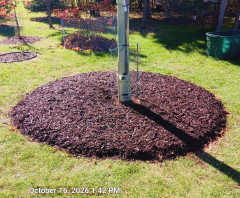
    Re: expansion of mulch ring.

    Recommendations said to go out to the drip line of the tree.

    I made an 8ft. diameter ring and that seemed to be quite large imo.

    So not quite to the drip line but this still emulates a natural, forest floor setting, more closely and the tree should respond to these improved conditions.

    I used my own 'magic formula' with a layer (in order) of composted manure, langbeinite, dried shredded leaves (mostly sugar maple leaves) with a layer of wood mulch covering the top.

    I'll probably use a source of nitrogen too, next spring.

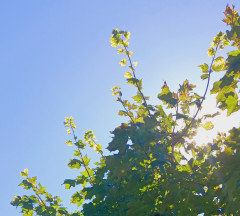
    Pictures: Acer saccharum (sugar maple).


    The A. saccharum is considered one of the 'Jewels' of my yard, so imo, the extra work was warranted. 😁


    Go Sugar Go! 😏