

Lithocarpus henryi
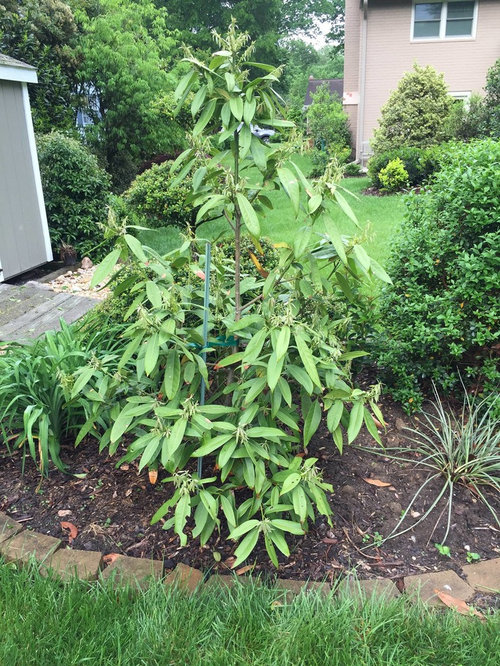
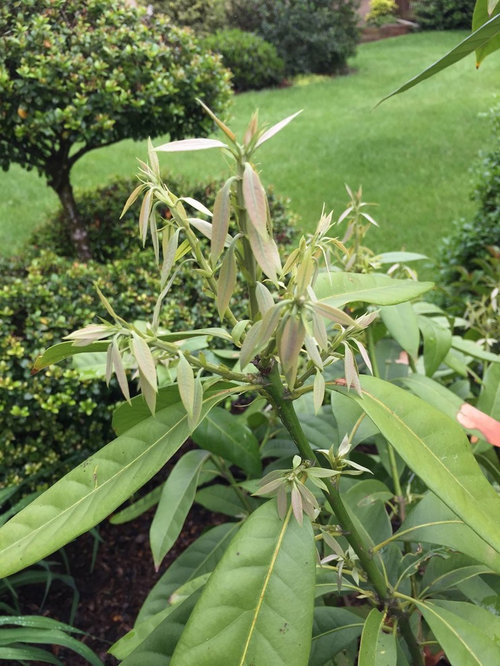
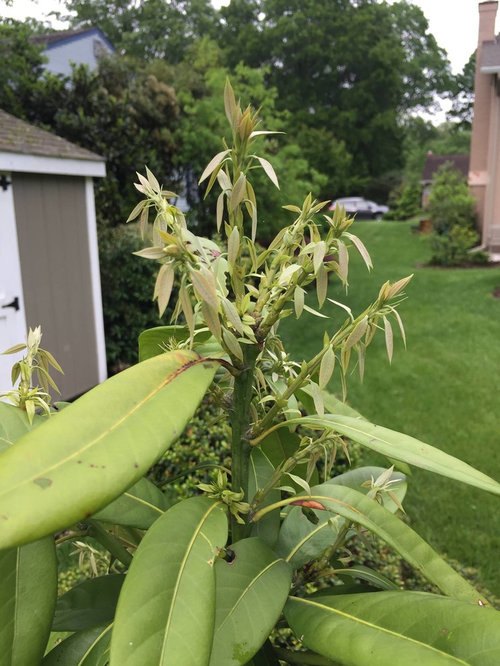
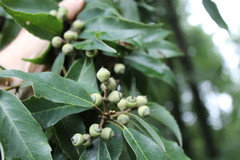
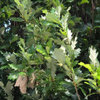
Lithocarpus henryi putting out first new growth of the season here in Northern Virginia (zone 7a). Despite a very cold January with numerous nights of 0ºF (-18ºC) or maybe even a bit colder, combined with lots of wind and many daytime highs below freezing, this plant has not shown any significant cold damage.
Comments (24)
 8 years agolast modified: 8 years ago
Yep, I haven't seen them this year, but the Howard County L. henryi trees were unbothered by the Polar Vortex winters. Surely one of the hardiest, if not the hardiest, evergreen Fagaceae. Those survived -16F in the past, and there are reports of them surviving similar temps in Kansas. I'll try to get a picture of them this summer. The owner has done quite a bit of clearing up so they are no longer choked with vines and weed trees. Hopefully it will also help them produce more viable acorns.
For the longest time I preferred this to Q. myrsinifolia. I now think it was because the only Q. myrsinifolia I'd seen for the first decades of my life was a kind of dumpy, badly pruned one in Williamsburg. But, now that I've seen the Udel Q. myrsinifolia grow so quickly into a large tree, I think it's really "six of one, half a dozen of another". They complement each other well. Both will clearly become massive and impressive trees in zone 7. They are both a bit gangly when young. There is still something classic and timeless about the shape of Q. virginiana, but I myself wouldn't bother with them north of the urban heat island of DC. Even the protected site of the Udel one couldn't protect it from severe injury in the 3 recent cold winters. And I'd be pretty sure they planted a northern strain.
After a great deal of thought as to the best location, I finally planted my L. henryi out in a position of prominence - can't wait for it to start growing!
Dave in NoVA • N. Virginia • zone 7A
Original Author8 years agolast modified: 8 years agodavidrt28: After what I've seen this winter (although every year is different), I think L. henryi is a bit hardier than Q. myrsinifolia. I do find Lithocarpus to be a bit coarse in the landscape though. Myrsinifolia has a more refined look.
By the way, have noticed two types of myrsinifolia? One with narrow, more willow-like leaves and one with wider leaves -- more like Q. glauca?
Related Professionals
Cambridge Landscape Architects & Landscape Designers · Edison Landscape Architects & Landscape Designers · Utica Landscape Architects & Landscape Designers · San Luis Obispo Landscape Architects & Landscape Designers · Sarasota Landscape Contractors · Cumberland Landscape Contractors · Lawrenceburg Landscape Contractors · Traverse City Landscape Contractors · Montréal Landscape Contractors · Huntsville Home Additions · Miami Home Additions · Elizabeth City Home Additions · Syracuse Home Additions · Mission Viejo Home Additions · Orange County Home Additions 8 years agolast modified: 8 years ago
After a broad-leaf evergreen tree collector garden out here developed a honey fungus problem golden chinkapin was the first to go, followed I am pretty sure by Lithocarpus henryi. These were specimens that had been around quite awhile. Later the owner died and his widow sold the property, so I have not seen what additional effects the infestation may have produced.
Of course, when an aggressive armillaria patch gets going what it kills may perhaps often be due as much or more to where the unfortunate specimens happened to be located as to what particular species they were.
- 8 years ago
My seedling myrsinifolia didn’t make it.
If your L. henryii gets acorns I want some!!
- 8 years agolast modified: 8 years ago
Basically none of the acorns of L. henryi I collected in HoCo going back to 2008 or so passed the float test...or germinated when I tried them anyhow. I'm hoping/wondering if the improved growing conditions will result in more viable acorns?
Embo, thanks for the buzz kill (LOL)...but it seems like Armillaria is more of an issue in maritime climates. In terms of taking out perfectly healthy plants at least...I've never heard or read of an account of that happening. Surely we make up for it with Phytophthora, with things are that are susceptible. Maybe those other things kill plants here that would eventually be killed by honey fungus, before it has a chance to. At Greer Gardens I saw rhodies planted almost at the bottom of swales, where they wouldn't last for one summer somewhere on the east coast, even an ironclad.
- 8 years agolast modified: 8 years ago
Dave have not noticed different forms.
Although Lithocarpus is definitely more coarse in texture, I think it evens out when they get much bigger. The 'texture to overall plant size' ratio changes. It's not like they would look very different, when mature and at 40-50 ft. of viewing distance, compared to say, Magnolia macrophylla. The HoCo trees are starting to look really good and I wish I'd taken a picture of them in the fall when I went to get scions and acorns but I didn't have time.
(btw just saw the Magnolia macrophyllas at Udel recently, which are blooming. My god - somehow I did not know about the flower odor! Since Woodlanders was selling mine as an ashei X macrophylla, I wonder which it will smell like. M. ashei is supposedly pleasant)
Dave in NoVA • N. Virginia • zone 7A
Original Author8 years agohairmetal: I wouldn't hold your breath for acorns. It could be 15 years yet!
davidrt: did you collect your acorns on the tree or on the ground? Maybe try to get there earlier in the season next time?
Dave in NoVA • N. Virginia • zone 7A
Original Author8 years agoI tried one from cuttings once. It actually grew roots, then died. They are slow, slow. Perhaps a commercial propagator would have better success.
- 8 years agolast modified: 8 years ago
Before Kathy died she was able to root some although 1) she got low yield % 2) they grew very slowly 3) rats ate them one year and 4) when I had the rooted plants in my unprotected potted plant storage zone, they were attacked and eaten by squirrels or rats!!! Apparently, for most of the world's Rodentia*, they taste like "sweet acorn parfait". Needless to say the one that survives, barely, is now in my rodent protection box.
* - and Cervidae. The original plant I had from Woodlanders was one of the only I've ever had to protect from deer. Sadly it died due to an erstwhile unknown drainage problem in that part of the yard...in addition to, probably, having been eating down to a stub by deer, the year it was planted. I think PV-1 was the icing on the cake...but now am not actually sure if it was already dead or not. I need to add a field to my plant spreadsheet, "date of death" lol. At any rate bought around about 2008 and deceased by 2013. In the meantime I became aware of the HoCo trees and got obsessed with rooting the one with the biggest leaves.
- 8 years ago
Here is Q. myrsinifolia in Morris Arboretum in Phila, I think I posted this pic here before.
 Following pix of Q. myrsinifolia taken near the lilac grove @ Nat'l Arboretum. This is a part of the arboretum where nobody ever goes. It is weedy, overgrown and nothing is labeled. I find this oak to be rounded in outline, pleasing in texture and perfectly winterhardy here.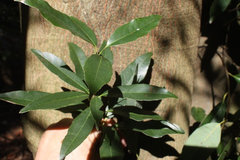
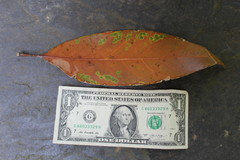
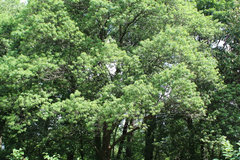 There is at least one more tree in this general area which struck me as very coarse. It had large, strap-like leaves which hang down. Under the tree was a carpet of brown, plastic leaves from previous years and LOTS of spent acorns. Another feature of the mystery tree was prominent vertical striations in the bark. Did I mention that this is a weedy, unkept part of the arboretum? This mystery tree produced dozens of volunteers of all sizes. I took no pictures of the tree because it did not appeal to me. I did however retrieve one leaf. Dave in NoVA Pleeeeeease reassure me this is not Lithocarpus henryi.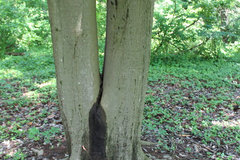
- 8 years agolast modified: 8 years ago
Too coarse for comfort? You decide! http://rslandscapedesign.blogspot.com/2010/08/lithocarpus.html
Obviously, Randy's tree cannot be one sam is talking about, since it is next to part of the visitor's center. Anyhow coarse is obviously a somewhat arbitrary characterization. Magnolia grandiflora is perhaps the quintessential native American tree, elsewhere in the world, and is certainly as coarse if not more so. A focus of the handful of remaining US rhodie hybridizers outside the PNW is a "hardy bigleaf" - and those are certainly coarse! But I really doubt anybody seeing the R. protistum X grande hybrids at Berkeley instantly thinks "coarse" LOL. It could just be that, like a lot of the arboretum's trees, it isn't well taken care of.
The arboretum has many weedy corners and I don't think plants in those areas ought to be automatically disregarded. For example quite a few of the firs are in a gloomy, out of the way section, and heavily weed infested. And they are not only holding up but competing with the weeds! 'Cause that's where I found quite a few seedlings years ago, some of which had scent tho otherwise looking like Abies firma. Making me wonder if they were hybrids involving A. firma and something else like A. alba.
- 8 years ago
I’ve been to the national Arboretum, and I’ve never seen that tree. Either of the ones you posted.
Dave in NoVA • N. Virginia • zone 7A
Original Author8 years agolast modified: 8 years ago"....This is a part of the arboretum where nobody ever goes..."
Hah! Sam, not necessarily!
Sam, was the 'tree in question' growing in sun or shade? It could be Lithocarpus, but it's hard to tell from one dried up leaf. Not sure where 'Lilac Grove' is. But there is a large Lithocarpus near the large myrsinifolia. Lithocarpus 'acorns' are quite rounded, large, and distinctive, if you saw them.
I guess when I use the word 'coarse', I not only mean the leaves are unusually large, but the tree tends to not be densely branched. May depend on the care it gets, available moisture, sun/shade, etc.
- 8 years ago
Obviously, Randy's tree cannot be the one sam is talking about ……
Here is the scene this morning, notice the empty spot? No tanbark to be found here.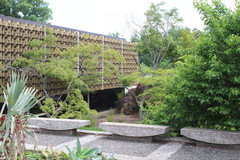
- 8 years ago
Here you go NoVA Dave, I parked at the capital columns and walked downhill through the lilac collection. Tree not in good shape, not sure what the problem is. What would you call this tree?
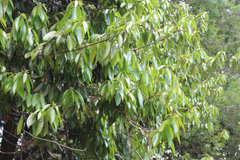
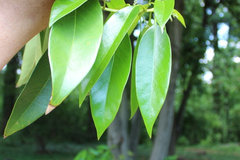
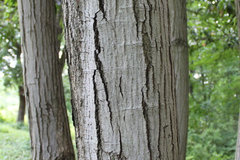
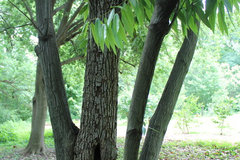
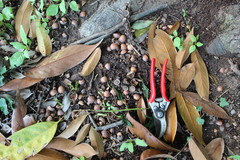 lots of volunteers of various sizes.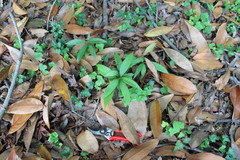
Dave in NoVA • N. Virginia • zone 7A
Original Author8 years agoThat looks like the henryi I know. Right next to a myrsinifolia right? And some of those seedlings coming up may be myrsinifolias.
Dave in NoVA • N. Virginia • zone 7A
Original Author8 years agoCan I ask why you were hauling a clippers around with you? Oh, it was for scale, right?
- 7 years ago
Abundant acorns on tanbark oak, same one mentioned earlier on this thread. Am guessing they will be ripe next month?
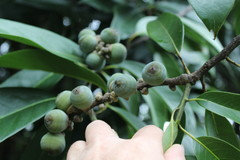
Below are abundant acorns of Q. myrsinifolia , same one mentioned earlier on this thread. Really small, I assume they mature this year.
 2 years ago
Do you kno of a current source for Lithocarpus henryi? I would love to buy a tree or some acorns.
- 2 years ago
The two nurseries most likely to carry something like that are Cistus in Portland, OR, and Woodlanders in SC. Woodlanders had been "going out of business" for a few years now, but it looks like they found a new owner, perhaps?
https://www.woodlanders.net/index.cfm?fuseaction=plants.main
We are thrilled to announce that Woodlanders is relocating to a new and expanded nursery in Aiken! We appreciate your patience as all mail orders placed after June 5th will not ship until late summer.
That's good news.
Nurseries caroliniana could conceivably have them, too, although I've only seen the fancy variegated leafed L. edulis for sale there, which I have, and am going to allow to size up for a few years before planting out here in 7a, as it has a rep. for being less hardy.
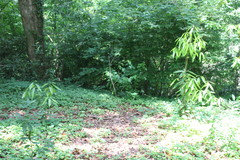


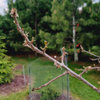
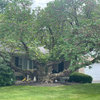
Dave in NoVA • N. Virginia • zone 7AOriginal Author