Software
Houzz Logo Print
buttoni_8b

Possible snake damage?

8 years ago

Drove down to the cabin yesterday to water all my new plants and shrubs. The Vitex I just planted 10 days ago looked nearly dead, with all leaves and bloom pods wilting as if it was dried out from lack of water. No yellowing; no leaf browning or curl. Then, as I got walked closer to it, I saw some 5-6" out from the trunk, what was clearly a snake hole (too small for mole or gopher). We have seen a snake out there. It had burrowed straight toward the plant, from the angle of the excavation. I guess it created a huge air pocket at the root ball that allowed it to totally dry out the roots. I watered the heck out of it and plugged the existing hole as best I could. Man, I worry about our resident gopher and deer, but never THOUGHT a snake would be the worst of my issues. Guess he was seeking out the cool ground I created when I planted and soaked it in. I sure hope the tree perks back up and that I didn't get back down too late to save it.


On a more positive note, all the potted plants I topped with a coir layer held up fine. The Desert Willow planted the same day as the Vitex is looking very happy in its new hole. Guess Mr. Snake didn't find that one yet. And my Mountain Laurel, which was struggling in its pot of Lord knows how long, is looking healthier for planting it out in the ground. Both the leaves and it has set new growth in just 10 days. :)


Any suggestions on the snake problem, other than trying to catch/kill it? I kind of hate to think the badly needed water I must drive down and give the new plantings will actually be their undoing.

Comments (21)

  • 8 years ago
    last modified: 8 years ago

    One idea is mulch around the Vitex with some sort of rock/gravel, leaving no space in between for anything to burrow in. Maybe put cardboard under the stone and metal edging/other (to keep it all contained). It wouldn’t have to be a large area, just enough to deter critters from the root area.

    buttoni_8b thanked User
  • 8 years ago

    I like your ideas. I had initially thought about those round recycled tire tree planks I used years ago, but also thought he might just get underneath those and burrow anyway. Gravel might be even better, as that gets hot in the sun. The recycle mats might just cool the ground below even more, attracting him even more. I do have some limestone heavier rocks of various sizes I could set on top of the 1/2" gravel as well. Every time I dig a hole in my yard in Temple I shovel up the largest pieces of limestone and save for various uses. And I think the edging idea is brilliant. Why didn't I think of that? Thanks, Miz_G.

  • 8 years ago
    last modified: 8 years ago

    Roselee, we do have a mole and gopher we have actually seen, along with their tunnels and holes, always surrounded by mounds of excavated dirt. These holes are very different, with smooth exposed edges and no excavated sandy soil around the opening as one sees with moles and gophers. My mother always called these neat dugouts snake holes, so I instantly thought a big snake (the holes are 1½"-2" in diameter). I've not seen any turtles on the property as yet, as the cabin and inner yard where these holes appear are way far away from our pond. Did see a baby froggie peeking back up at me when I disturbed him in one of my potted plants I transplanted yesterday. :) I suppose a larger frog could be digging these holes I keep seeing around shrubs. But I wouldn't think a frog would dig a hole large enough to allow so much air in as to kill off my 3' Vitex. This 1-gal. tree already had multiple branches fully hardwood, so the plant is at least 1 year old, maybe even older than that, I would guess. I was just astounded any burrowing critter could kill such a large specimen.

  • 8 years ago

    The hole you describe sound's like a crawfish. As a kid,I lowered string with raw bacon on the end into these holes,waited for a tug and slowly pulled mr pinchers to the surface. Why???? I haven't a clue,boys just do that kind of stuff when bored. I shouldn't mention the dare when 2 or more bored boys were fishing in these crawdad holes. I marvel at how they can appear in open field with no standing water in sight.

  • 8 years ago
    last modified: 8 years ago

    Snakes don’t burrough but they use existing holes sometimes.

  • 8 years ago

    "Snakes don’t burrough but they use existing holes sometimes."

    That's true but if one were to enter a hole like Rose described,it couldn't turn around to exit.

  • 8 years ago
    last modified: 8 years ago

    Klem, I wonder if the can back up once they realize hole is to nowhere. I was thinking they use hole for temporary protection, focus on temporary

  • 8 years ago

    If you notice how snakes wiggle side to side as they move,I doubt there's room for that. I don't think snakes have reverse. Carful observation when one retreat's will show they withdraw front half of body while rear stay's put then swing front of their body around over tail so they can retreat head first. Had this question been posed when I was a kid,I would likely have attempted putting a chicken snake down one to see if he could get himself out. (:

  • 8 years ago

    Just so you know, I never intend to be that close for any amount of time to watch whether they have reverse. I was hoping you knew and would take your word for it.

  • 8 years ago

    I'm looking forward to hearing if the hole has reappeared on Rose's next visit. If so, I would use a hoe handle to pack paper towels,plastic bags or something in it. Whatever live's in there would know I don't approve of them bothering my tree. I was always lead to belive sap suckers are harmless to trees. They girdled my newly planted live oaks killing the tops. Some sap suckers died from lead poison.

  • 8 years ago

    Please don't be too hard on the poor snake. More likely culprits: Did you backfill only with the soil that came out of the hole? Adding potting soil, compost or other amendments that give the roots an easier run is an excellent way to invite root girdle. To overcome transplantation shock, a tree planted in this heat should be watered every day for the first two weeks. A 10-day hiatus is asking for trouble.

    buttoni_8b thanked Irving Ragweed (Austin 8b)
  • 8 years ago
    last modified: 8 years ago

    Speaking of mysterious little holes in the ground several years ago I spotted a neat little hole about 3/4 an inch in diameter. I kept watching it to see what kind of critter made and occupied it. One day to my surprise what we commonly call a rhinoceros beetle, the kind that come from those enormous grubs we sometimes find in our compost heap, appeared at the entrance and quickly backed down when it saw me. I saw it several times after that, but never observed another one.

  • 8 years ago

    Snakes don't make holes, they use existing holes.

  • 8 years ago

    You guys are cracking me up. :) I'm hoping our next trip down there the Vitex will have recovered. And Irving, you might just be right. Water alone might be the cause of the leaves wilting. I soaked it real good last Saturday. Keeping my fingers crossed it holds up until next trip.

  • 8 years ago

    The 1 1/2" holes I get are from beetles that look a lot like June bugs except they are a shiny jet black and really huge. I don't think the adult beetles damage plants from burrowing and laying their eggs but the larvae grow about 3" long looking a lot like a large shrimp and can eat the roots off a well established shrub. I deal with them by watching out for the holes and pouring liquid Sevin down the holes. They also seem to avoid burrowing around plants that have been treated with a systemic insecticide. But then Vitex is prone to rot in highly organic or soggy soils.

    buttoni_8b thanked Steverino z9b Texas
  • 8 years ago

    Good grief,I can't even keep up with who planted the tree then discovered the hole,how should I know who live's in the hole? (: Buttoni,you might beg,borrow or steal one of those water bags for newly planted trees. I move trees in late fall in N. Tx and it's still a struggle getting them through the first summer.

    buttoni_8b thanked klem1
  • 8 years ago

    Our vitex needed a good amount of water initially. But you are likely right on the animal damage concern. Best of luck on that! Vitex are so beautiful during the hot summer

    buttoni_8b thanked Tiffany
  • 8 years ago

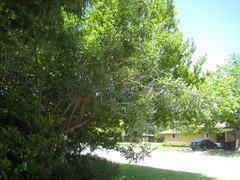
    Here's my Vitex in Temple. It's in my corner bed, sandwiched underneath a redbud tree, squeezed between a group of ligustrum and a big Cherry Laurel. Poor thing leans out to get to the sunshine and does the best it can each year. I did not plant this here. Former owner did. But the part that can find sunlight blooms nicely and adds a bit of color as cars turn the corner there. :)


  • 8 years ago

    Nice!

    I finally got mine planted yesterday. I put it where I can see it outside our bedroom window, and the patio. Bad pic, it was so bright out ...

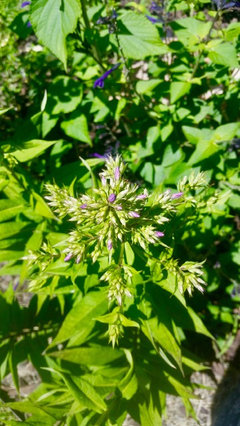
    O/T, sorry, but noticed my Phlox about to bloom. :)

  • 8 years ago

    Pretty! Your Vitex will love that focal, sunny spot.

Sponsored
Franklin County's Heavy Timber Specialists | Best of Houzz 2020!