Software
Houzz Logo Print
jacoblockcuff

What Is This?

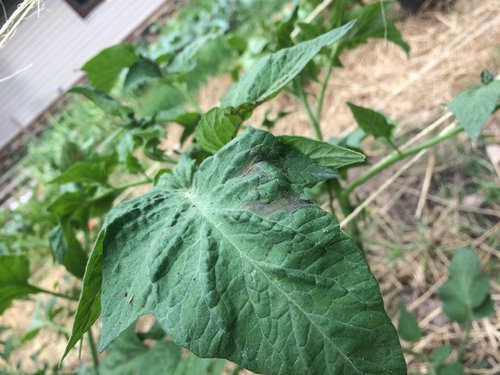
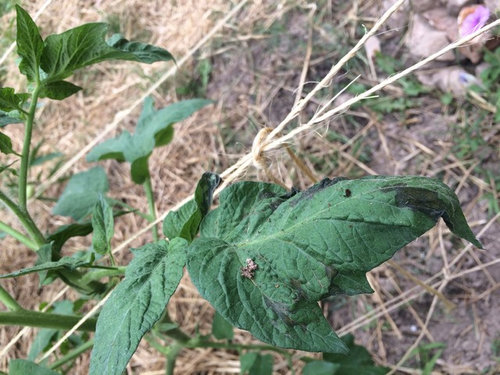
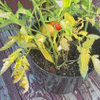
Hey. I sprayed my tomatoes with Daconil last night and have found this all over one of my plants today! Never seen it before. I'm wondering if maybe I sprayed a bit too much on the plant? It was pretty well shaken but I may have slacked a bit towards the end at keeping it shaken up. This was the last tomato I sprayed. No other plant seems to have this, and this is the first time I'm seeing it. It broke out overnight.

Comments (14)

  • 8 years ago

    EDIT: I found two more plants showing symptoms. What in the world?

  • 8 years ago
    last modified: 8 years ago

    I have used Serenade and BT before Dave, but other than that nothing. This was the first Daconil spraying, and I'll admit that I did drench the plants as I've always done with Serenade. I will just mist them next time. The instructions didn't mention misting or drenching. I'm wondering if that should be included.

    I remember reading that thread, and that is what has sparked my suspicion for that cause this time around. Reading through the threads on this forum in free time can be very helpful in situations like this!

    Thanks!

  • 8 years ago

    If it was poorly mixed Daconil, yes, you will lose some leaves, but the plant will be fine. Took a few weeks for my plants to shake off the damage. Dave, what do you mean "never drench the plants"? You mean the foliage shouldn't have Daconil dripping off of it?

    jacoblockcuff (z5b/6a CNTRL Missouri thanked daninthedirt (USDA 9a, HZ9, CentTX, Sunset z30, Cfa)
  • 8 years ago

    You mean the foliage shouldn't have Daconil dripping off of it?

    Exactly. Not only isn't it necessary for effectiveness (and yes I know what others say) but it wastes product and can damage the leaves as you know. The leaves need only be lightly coated and a fine mist does that quite well.

    Dave

    jacoblockcuff (z5b/6a CNTRL Missouri thanked digdirt2
  • 8 years ago

    Great information Dave. Complete opposite of what I was thinking. I will keep that in mind in the future. Thank you!

  • 8 years ago
    last modified: 8 years ago

    Would be nice if the instructions on the Daconil said that. Now, they do say, in big bold letters, "Shake well before using" . My bad.


  • 8 years ago

    Sad that specific directions aren’t provided on labels for home gardeners or even commercial growers who use backpack sprayers for varying areas. What is provided is the lb/acre of material. It’s assumed that everyone will measure row dimensions and calculate the amount and concentration of spray to apply.

    The problem of over application with the spray material by home gardeners has been going on for a very long time and will continue. Its human nature.

  • 8 years ago

    Most fungicides recommend spraying the leaves to runoff. That would be more than just a mist. If mixed properly, "drenching" leaves to runoff will cause no damage.

    Your pictures do indeed look like chemical burn.

  • 8 years ago

    I agree that some labels do recommend spraying the leaves to runoff. But no offense, golly gee I wonder why they recommend that amount of product use? ;-)

    But when one thinks about it why would such wasteful application be needed? Is it truly impossible to sufficiently coat the leaf surface using only a fine mist? Isn't the purpose to coat the leaf surface to prevent fungi attachment? Is the tip of the leaf so much more susceptible that it needs a really thick coating? Do the "run-off" drips somehow catch spores as they fall or kill spores when they hit the ground?

    Let's say for example that the fine mist fails to coat a few of the leaf stomata and a spore blowing by manages to latch on to that particular bare stomata. How long is it going to survive, much less thrive, when surrounded by all that fungicide?

    And since many of the products used are so difficult to keep properly mixed and properly in suspension is there any evidence that "drenching to the point of runoff" can damage plants but is still a better approach than misting?

    Your choice.

    Dave

  • 8 years ago

    Fungicides work by having to come in contact with the fungus. No contact, no kill. To me, a mist is defined as individual drops, with each drop separated by space from the next drop. That would leave plenty of non treated space left.

    Maybe your definition of a mist is different than mine. To me, "spraying to runoff" means using just enough spray to see that first drop come off the leaf.

  • 8 years ago

    This is a big discussion topic even for commercial pesticide application. Often spray nozzle choice determines droplet size, smallest droplets giving more uniform coverage of surface area. But smallest droplets also have adverse effects such as pesticide drift.

    But often fungus growth is on the undersides of leaves and none of the fungicides mentioned on this thread are translaminar (moving through leaf) so a blast of fine particles is far better than a drench of top leaf surface.

  • 8 years ago

    "To me, a mist is defined as individual drops, with each drop separated
    by space from the next drop. That would leave plenty of non treated
    space left."

    Yeah we define mist very differently. Proper misting creates a fine spray cloud of mist/fog around the entire plant. You move the nozzle in a circular motion and there is little to no untreated surface left.

    Dave

  • 8 years ago

    For pesticides and herbicides, drift can be an issue. For fungicides, I think not. It should be understood that even if the leaf is drenched, rivulets of product can slide off the leaves leaving parts of the leaf untouched. In fact, leaves with a waxy coating will repel the liquid entirely, and what you've got to count on are small droplets sitting on that waxy surface. Those small droplets evaporate in place. Does the surface get completely covered with each spray? No, but repeated sprays will eventually protect the whole surface, and the surface that catches the small droplets won't be feeding fungus to the rest of the plant.

    Daconil is white, and I can see the distribution of white deposits on my leaves where the sprayed-on liquid has evaporated. Looks pretty uniform.

    But that's a good point that the target of the spray has to be both the tops and bottoms of the leaves.

Sponsored
Trish Takacs Design
Average rating: 4.9 out of 5 stars36 Reviews
Award Winning & Highly Skilled Kitchen & Bath Designer in Columbus