Software
Houzz Logo Print
elisa_quinzi

rubber tree stopped growing

8 years ago
last modified: 8 years ago

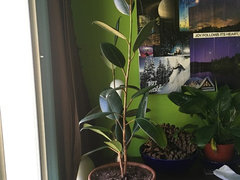
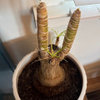
hi all. my rubber tree was growing great until i repotted it. no new leaves have opened. it doesnt look like its dying but it also doesnt look like its growing considering how fast it grew before repotting. its been over 3 weeks now! also i cant post a pic. it wont post. this has happened a number of times now.

Comments (24)

  • 8 years ago

    It is normal after a repot. If there are no additional signs of stress etc, it's all good. Try attaching pics as a comment

    Elisa Quinzi thanked somegu7
  • 8 years ago

  • 8 years ago

    looks good. give it time.

  • 8 years ago

    It looks very dry. seems like a very small pot for that plant. Have you watered it well since repotting?

  • 8 years ago

    Does it get any direct light? I'm used to seeing much shorter internodal lengths (the space on the trunk between leaves), which means the tree is stretching wayyy up in search of sunlight. The problem with that is it tends to create a very narrow trunk that will need to be staked to support the weight of the leaves. If you can move it into a brighter window, that would help.

  • 8 years ago

    i've def watered it a couple of times since repotting, including when i repotted but because of this being a terra cotta pot (with one hole) it doesnt drain as quickly as the plastic pot with multiple holes that it originally came in. this pot is not much deeper than the original pot, but its wider. i went wider rather than taller as it sits on my kitchen table and looks nicer in a wider pot. also it gets the same amount of light as before repotting. same window. good light. it was opening leaves like crazy in the plastic pot.

  • 8 years ago

    i just gave a good watering with fertilizer so we'll see what happens. if it stays the same would it be bad to repot into a larger pot this soon? i mean it was thriving in its original pot. so i'm not sure the size of pot is the problem so much as the kind of pot maybe. i notice terra cotta stays damp for a few days after watering and that could affect it...(?)

  • 8 years ago

    that was a great article! very helpful. wonder how to follow him or subscribe. so knowledgable.

  • 8 years ago

    Cases that find us doing a full repot, which includes bare-rooting, root pruning, and a complete chance of soil, always include something of a recovery period. This is because the plant's chemical messengers advise plant central to cut back on all new top growth until the root system is able to support the new growth. If you DIDN'T do a full repot, and repotted instead, your plant's roots might have a significant amount of soil saturation to deal with. The lack of oxygen due to soil saturation limits root function and can destroy root health. For that reason, you should use a 'tell' to 'tell' you when it's time to water. More on using a 'tell' (forgive the odd formatting, please)

    Over-watering
    saps vitality and is one of the most common plant assassins, so
    learning to avoid it is worth the small effort. Plants make and store
    their own energy source – photosynthate - (sugar/glucose).
    Functioning roots need energy to drive their metabolic processes, and
    in order to get it, they use oxygen to burn (oxidize) their food.
    From this, we can see that terrestrial plants need air (oxygen) in
    the soil to drive root function. Many off-the-shelf soils hold too
    much water and not enough air to support good root health, which is a
    prerequisite to a healthy plant. Watering in small sips leads to a
    build-up of dissolved solids (salts) in the soil, which limits a
    plant's ability to absorb water – so watering in sips simply moves
    us to the other horn of a dilemma. It creates another problem that
    requires resolution. Better, would be to simply adopt a soil that
    drains well enough to allow watering to beyond the saturation point,
    so we're flushing the soil of accumulating dissolved solids whenever
    we water; this, w/o the plant being forced to pay a tax in the form
    of reduced vitality, due to prolong periods of soil saturation.
    Sometimes, though, that's not a course we can immediately steer,
    which makes controlling how often we water a very important factor.


    In
    many cases, we can judge whether or not a planting needs watering by
    hefting the pot. This is especially true if the pot is made from
    light material, like plastic, but doesn't work (as) well when the pot
    is made from heavier material, like clay, or when the size/weight of
    the pot precludes grabbing it with one hand to judge its weight and
    gauge the need for water.


    Fingers
    stuck an inch or two into the soil work ok for shallow pots, but not
    for deep pots. Deep pots might have 3 or more inches of soil that
    feels totally dry, while the lower several inches of the soil is 100%
    saturated. Obviously, the lack of oxygen in the root zone situation
    can wreak havoc with root health and cause the loss of a very
    notable measure of your plant's potential. Inexpensive watering
    meters don't even measure moisture levels, they measure electrical
    conductivity. Clean the tip and insert it into a cup of distilled
    water and witness the fact it reads 'DRY'.


    One
    of the most reliable methods of checking a planting's need for water
    is using a 'tell'. You can use a bamboo skewer in a pinch, but a
    wooden dowel rod of about 5/16” (75-85mm) would work better. They
    usually come 48” (120cm) long and can usually be cut in half and
    serve as a pair. Sharpen all 4 ends in a pencil sharpener and
    slightly blunt the tip so it's about the diameter of the head on a
    straight pin. Push the wooden tell deep into the soil. Don't worry,
    it won't harm the root system. If the plant is quite root-bound, you
    might need to try several places until you find one where you can
    push it all the way to the pot's bottom. Leave it a few seconds, then
    withdraw it and inspect the tip for moisture. For most plantings,
    withhold water until the tell comes out dry or nearly so. If you see
    signs of wilting, adjust the interval between waterings so drought
    stress isn't a recurring issue.


    This might be helpful, too: Just the Basics


    Al

    Elisa Quinzi thanked tapla (mid-Michigan, USDA z5b-6a)
  • 8 years ago

    wow thanks for all that info. i appreciate it.

  • 6 years ago


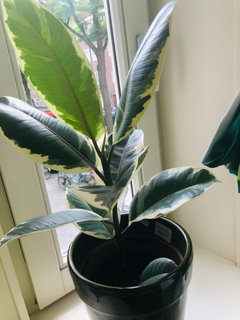
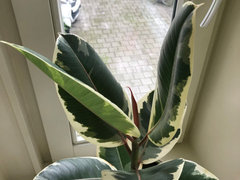
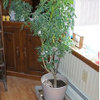
    My ficus elastica tineke has been dropping leaves they jst get so brown en as if rotting and I just removed them I said mayb I was overwatering I stopped for like 2weeks but my top isn’t growing anymore en as u can see in the picture the top is green en dying instead of red or pink.any advice is highly appreciated

  • 6 years ago
    last modified: 6 years ago

    ithinkalottapeepsrgonnapassritebyuroffrngbcuzitssohard2deciferpersonallyiwant2casmuchconsiderationgivn2thequestions&thoseanswringthemaswedbgiving2theanswrs

    The order of most commonly causal from most to least, shedding is usually induced by A) a change in light - particularly from bright to dim, but the reverse can also cause shedding; B) over-watering causes the same drought response as under-watering, so adverse watering habits or an overly water-retentive medium will always be in close competition with light issues; C) root congestion often causes shedding of older leaves and leaves closest to the trunk, and is also right up there with low light and over-watering as a top cause; D) fertility, particularly deficiencies of the more mobile nutrients N,P, K,Mg; an overly high level of TDS (total dissolved solids), which would primarily consist of residues from fertilizer solutions and tapwater that linger in the substrate if you're watering in small sips to avoid over-watering. Also, allowing the pot to sit in the effluent that exits the drain hole (if your pot doesn't have one, it's probably a serious issue) should be avoided, as it provides a pathway by which dissolved solids flushed from the soil can make their way from the collection saucer back into the substrate.

    The list isn't comprehensive, but covers the most common causes of shedding.

    Plants need to capture a certain amount of the sun's energy (as they make their own food) in order to keep their systems orderly. When the amount of carbohydrate produced via photosynthesis = the amount of carbohydrates burned during respiration, the plant is said to be at it's LCP or light compensation point. It's only when plants produce carbohydrate at a rate greater than the LCP that growth can occur. That your plants aren't growing means they are currently existing at roughly the break even point, which requires action from the grower if things are to end well.

    This will be helpful.

    Al

  • 6 years ago
    last modified: 6 years ago

    Hi Uncle Al,

    "ithinkalottapeepsrgonnapassritebyuroffrngbcuzitssohard2deciferpersonallyiwant2casmuchconsiderationgivn2thequestions&thoseanswringthemaswedbgiving2theanswrs"

    Funny ;>)

    PS: Annie, that's a beautiful plant, I love its variegation. Your plant is far from dying, pls try to calm down a bit.

  • PRO
    6 years ago
    last modified: 6 years ago

    Hello and many thanks for all the really helpful, real-life information posted here. All gardening centre/sites ought to have such feedback forums by law, if this planet is to be saved by plants!

    I have about a 4.5 ft high rubber plant (bottle green leaf) whose main stem, about halfway up, has been woody. I placed small cuts above the leaf nodes (where earlier leaves had shed before I received it) in order to encourage (horizonta) branching. Instead a couple of apex leaf buds have from this time(over 4 weeks ago) have remained unopened whereas previously they had been opening every few days. The leaves are drooping (bar 1 which has remained perked up) but not discoloured or curling. I water it cautiously making sure the soil is dry at least 5 inches from the surface and as it is a more clay based soil. As I say despite it was thriving quite well albeit from a main stem that was mostly bare- the growth was all happening at the top.

    I think I‘m going to have to examine the root system, much as I would not like to disturb it.

    I’d be very grateful for advice as to how I can kickstart the regrowth. What should I be doing people?

  • 6 years ago

    hey,thank u so much for your piece of advice my plant is coming back to life I basically started giving it less water en more light en ts starting to show impr cudnt be more happier thank u guys t was so helpful

  • 6 years ago


  • 6 years ago

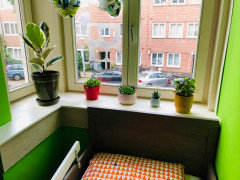
    I changed the position en gave it more light en less water en ts so happy en growing.my sons window is has the best light so yea we have healthy plants now


  • 6 years ago

    Strong work, Annie. Looks good where she is! Did you know plants are assigned the adjectives feminine and masculine in the world of bonsai, this, based on leaf shape, leaf color, and whether they have soft or angular lines. Their assigned gender determines what color and shape the pot should be, even whether the pot is glazed or unglazed.


    N/a - says: I have about a 4.5 ft high rubber plant (bottle green leaf) whose main stem, about halfway up, has been woody. I placed small cuts above the leaf nodes (where earlier leaves had shed before I received it) in order to encourage (horizontal) branching. This often works, and works best in the summer, but the notches need to be deeper than most think they need to be. The notch should be at least 1/8" in height, slightly wider than the leaf/bundle scar, the bottom of the notch 1/4 -3/8" above the top of the scar, and all cambial tissues including the cambium should be cut away cleanly down to sapwood. Instead a couple of apex leaf buds have from this time(over 4 weeks ago) have remained unopened whereas previously they had been opening every few days. This confuses me. Each branch has a single apex (or none, if it's been pruned/pinched off). Immediately proximal (toward the trunk) to the apex is the area where extension growth occurs. I'm guessing you're saying you have some axillary buds near the top of the tree that normally open in a few days, but these are stalled and not growing? The leaves are drooping (bar 1 which has remained perked up) but not discoloured or curling. Leaves of several of the popular larger leaf Ficus (elastica, lyrata, benghalensis, .....) tend to change their spatial attitude after wilting occurs; and the duration and severity of the wilt plays a big part in how close to their original spatial position they can be restored. I water it cautiously making sure the soil is dry at least 5 inches from the surface and as it is a more clay based soil. By "clay" do you mean its a baked clay soil (like Turface MVP?) or clay soil from the landscape? As I say despite it was thriving quite well albeit from a main stem that was mostly bare- the growth was all happening at the top. Once you answer the questions I had, I'll be able to address that point.

    I think I‘m going to have to examine the root system, much as I would not like to disturb it. If the exam shows the tree needs a full repot (includes bare-rooting, root-pruning, and a change of soil) it might be a stroke of good fortune for the tree.


    Al

  • 5 years ago

    Hiii! I have a same issue like you had. 😭 my rubber plant was growing well and fast until I repotted it. Its in the same location as it was receiving the same light. in your case, how long it took until it started growing leaves again? it has been almost 2 weeks since I repotted it and it ooks healthy so far. Just stopped growing like how it used to be. Heeeeeelp! Thank you!

  • 5 years ago

    Ohhh hi so in my case I dint repot it but when I read comme here i reduced the watering en gave it more light I changed it from the position it was cz it seems it wasn’t getting enough light en started watering once a week till I see the soil being a bit dry en I use warm water en in a week or probably 2 it started growing agai.i hope it helps.thank you

  • 5 years ago

    Gosh!! A little bit of sentence structure, using real words and some punctuation wouldn't go amiss :-) I can barely follow what is trying to be said!!

  • PRO
    5 years ago

    Thank you so much AI for your points- much appreciated! Yes I did mean axillary buds and the soil was clay landscape( i.e. natural) soil. The clay is soft and now more porous with sand mixed in -checked with a tell. Maybe it needs more 360 degree light because that is the one thing that has reduced from its nursery life. Also, because this has happened previously -what does it signify when then no sap oozes or is seen from broken leaves even though outwardly they look normal before the mainstem eventually starts to shrivel? Does it indicate the are roots dying off?

  • 5 years ago

    It means the plant's level of turgidity (internal water pressure) is low, which means the roots are functioning poorly, and soil compaction is limiting your plant's supply of oxygen, which is absolutely essential to good root health and normal root function.

    You can't amend a clay soil by adding sand because no matter how much sand you add, there is still going to be enough clay to fill all air space between the sand particles. BBs in a jar have large air pores between the BBs, but add them to a jar of sand and the sand fills all the air space. There would need to be a much larger fraction of BBs than sand, and the mix would need to remain homogeneous in order to realize any advantage. You're working with a zero sum arrangement. I suggest you seriously consider a full repot.

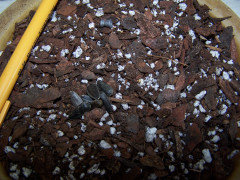
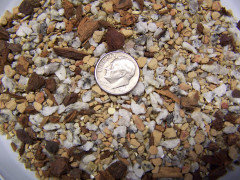
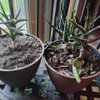
    I make all my own media and they look like this:


    Al

Sponsored
Whisler Home Improvement
Average rating: 5 out of 5 stars9 Reviews
Franklin County's Committed Home Improvement Professionals